Arroz Rojo (Mexican Red Rice)
Mexican Recipe
Overview
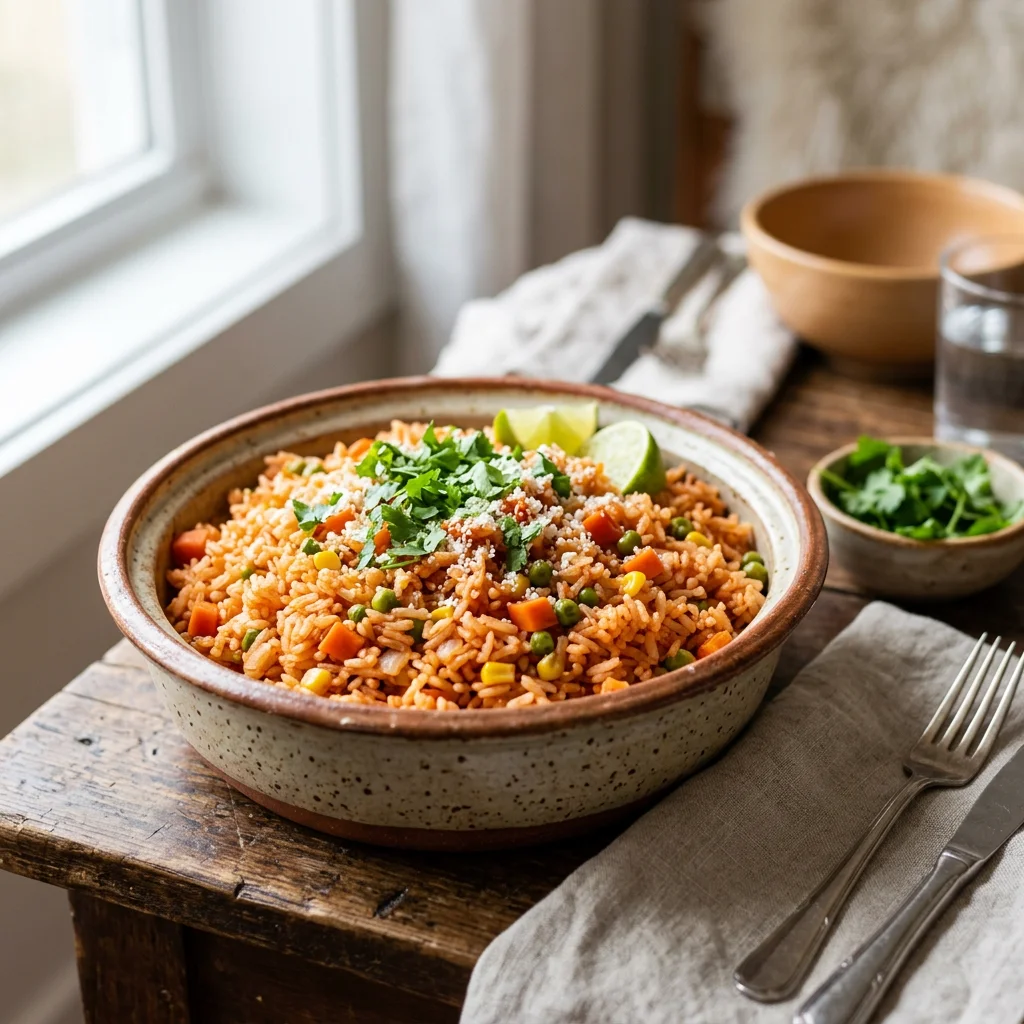
Arroz rojo — Mexican red rice — is the daily companion to beans in Mexican cuisine, forming half of the foundational pairing that anchors nearly every meal. The rice is first toasted in oil until golden, then simmered in a sauce of pureed tomatoes, onion, and garlic until each grain absorbs the color and flavor of the sauce, turning a deep sunset orange-red. Done well, the grains are fluffy, separate, and intensely flavored — nothing like the plain steamed rice it might superficially resemble. The technique of toasting rice in fat before adding liquid is shared across many Latin American and Mediterranean cuisines, but the Mexican version is distinctive for its use of pureed fresh tomato as the primary cooking liquid. This transforms the rice from a neutral starch into a flavorful dish in its own right. Many Mexican cooks add vegetables — peas, carrots, corn — making it a complete side dish that provides color, nutrition, and satisfaction alongside the main course. Ayurvedically, arroz rojo demonstrates how simple cooking techniques can shift a food's energetic profile. Plain white rice is sweet, cooling, and light. Toasting it in oil adds a warming quality, while the tomato sauce brings sour and pungent tastes. The result is a preparation that is more warming, more stimulating to agni, and more grounding than plain rice — better suited to the cooler months and to constitutions that need more fire.
Good for Vata due to warmth and oil. Can increase Pitta in excess due to tomato and heating quality. Generally acceptable for Kapha in moderate portions.
Ingredients
- 2 cups Long-grain white rice (rinsed until water runs clear)
- 3 medium Ripe tomatoes (roughly chopped)
- 1/2 medium Onion (roughly chopped)
- 2 cloves Garlic
- 2 cups Chicken or vegetable broth
- 3 tbsp Vegetable oil or lard
- 1 whole Serrano chile (optional)
- 1 small Carrot (diced small)
- 1/3 cup Peas (fresh or frozen)
- 3 sprigs Fresh cilantro (optional, for cooking)
- 1.5 tsp Sea salt
- 1/2 tsp Cumin (optional)
Instructions
- Blend the tomatoes, onion, and garlic with 1/2 cup of the broth until completely smooth. Set aside.
- Rinse the rice in a fine-mesh strainer under cold water until the water runs clear. Drain well and let air-dry for a few minutes — wet rice will splatter in hot oil.
- Heat the oil in a heavy-bottomed pot or deep skillet over medium-high heat. Add the rice and toast, stirring frequently, until golden and fragrant, about 5-7 minutes. The rice should darken a shade and smell nutty.
- Pour in the tomato puree (it will bubble vigorously). Stir and cook for 2 minutes until the liquid is mostly absorbed and the rice turns red-orange.
- Add the remaining broth, salt, cumin if using, the serrano chile, diced carrot, and cilantro sprigs. Stir once to distribute evenly.
- Bring to a boil, then immediately reduce heat to the lowest possible setting. Cover tightly with a lid and cook for 15-18 minutes without lifting the lid.
- Remove from heat and let rest, still covered, for 5 minutes. Remove the chile and cilantro sprigs. Fluff gently with a fork, folding in the peas (they will warm through from residual heat). Serve immediately.
How This Recipe Affects Each Dosha
Vata
The toasted, oiled rice with warming tomato sauce provides the warm, grounding quality Vata needs. The sweet post-digestive effect nourishes tissues, and the pungent elements stimulate digestion. This is a far better rice preparation for Vata than plain steamed rice.
Pitta
The tomato, garlic, and toasting add heating quality that plain rice lacks. Pitta types should moderate portions or adjust the recipe. The sweet base of the rice itself is Pitta-soothing, but the overall preparation leans heating.
Kapha
White rice is generally Kapha-neutral to mildly increasing due to its starchy sweetness. The toasting and spicing here are beneficial for Kapha, adding warmth and lightness. Keep portions moderate and serve as a side rather than the main component.
Mildly stimulates agni. The toasting process gives the rice a warming quality absent in plain preparations, and the tomato-garlic sauce adds gentle digestive fire. The cumin, when included, further supports agni. This preparation digests more easily than plain rice for many people because the toasting pre-breaks down some of the starch.
Nourishes: Rasa (plasma), Mamsa (muscle), Meda (fat)
Adjustments by Constitution
For Vata Types
Add a tablespoon of extra oil or a pat of butter when fluffing. Include the cumin and add extra carrot for sweet, grounding quality. Serve alongside beans with avocado slices.
For Pitta Types
Omit the serrano chile and cumin. Reduce the garlic to one clove. Add a squeeze of lime at serving and extra cilantro. Use zucchini instead of carrot for a more cooling vegetable addition.
For Kapha Types
Use brown rice (longer cooking time needed). Add the serrano chile and increase the garlic. Include corn kernels and diced bell pepper for extra vegetables. Reduce the oil to 2 tablespoons and use a very light hand with portions.
Seasonal Guidance
Arroz rojo is a year-round preparation in Mexico, served at virtually every comida (midday meal). In winter, it is particularly welcome for its warming quality and pairs naturally with hearty stews and braised meats. In summer, lighten it by reducing the oil and increasing the vegetables — a generous addition of peas, corn, and diced zucchini makes a more seasonal version. The adaptability of this dish to any season is part of its genius as a foundational everyday food. In very hot weather, some cooks prepare arroz blanco (white rice with just onion and garlic) instead, saving the tomato version for cooler days.
Best time of day: Midday comida, the main meal of the day in Mexican tradition
Cultural Context
Arroz rojo is so ubiquitous in Mexican cuisine that asking a Mexican cook for the recipe is like asking an Italian how to boil pasta — it is assumed knowledge, passed down by observation rather than instruction. Rice arrived in Mexico with the Spanish in the 16th century and was rapidly adopted into the indigenous culinary framework. The Mexican technique of toasting rice in fat likely draws from both Spanish paella traditions and indigenous techniques for toasting corn and seeds. Today, arroz rojo appears at the comida alongside beans, a guisado (stew), tortillas, and salsa — the structure of Mexican daily eating that has endured for centuries.
Chef's Notes
Two things make or break arroz rojo: the toast and the timing. Toasting the rice until genuinely golden — not just warm — develops the nutty flavor base that distinguishes excellent Mexican rice from mediocre. Rinsing the rice first removes excess starch and ensures fluffy, separate grains. Once the lid goes on, do not lift it. The steam trapped inside is doing precise work, and releasing it disrupts the cooking. The 5-minute rest after cooking is not optional — it allows the bottom grains to finish steaming and prevents sticking. If the rice is mushy, you used too much liquid or the heat was too high. If it is crunchy, the heat was too low or the cooking time too short. Practice calibrates this.
Frequently Asked Questions
Is Arroz Rojo (Mexican Red Rice) good for my dosha?
Good for Vata due to warmth and oil. Can increase Pitta in excess due to tomato and heating quality. Generally acceptable for Kapha in moderate portions. The toasted, oiled rice with warming tomato sauce provides the warm, grounding quality Vata needs. The tomato, garlic, and toasting add heating quality that plain rice lacks. White rice is generally Kapha-neutral to mildly increasing due to its starchy sweetness.
When is the best time to eat Arroz Rojo (Mexican Red Rice)?
Midday comida, the main meal of the day in Mexican tradition Arroz rojo is a year-round preparation in Mexico, served at virtually every comida (midday meal). In winter, it is particularly welcome for its warming quality and pairs naturally with hearty stews an
How can I adjust Arroz Rojo (Mexican Red Rice) for my constitution?
For Vata types: Add a tablespoon of extra oil or a pat of butter when fluffing. Include the cumin and add extra carrot for sweet, grounding quality. Serve alongside b For Pitta types: Omit the serrano chile and cumin. Reduce the garlic to one clove. Add a squeeze of lime at serving and extra cilantro. Use zucchini instead of carrot
What are the Ayurvedic properties of Arroz Rojo (Mexican Red Rice)?
Arroz Rojo (Mexican Red Rice) has Sweet, Sour, Pungent taste (rasa), Heating energy (virya), and Sweet post-digestive effect (vipaka). Its qualities (gunas) are Light, Warm, Slightly Oily. It nourishes Rasa (plasma), Mamsa (muscle), Meda (fat). Mildly stimulates agni. The toasting process gives the rice a warming quality absent in plain preparations, and the tomato-garlic sauce adds gentle digestive fire. The cumin, when included, further supports agni. This preparation digests more easily than plain rice for many people because the toasting pre-breaks down some of the starch.
What should you eat today?
This recipe has specific effects on each dosha, and the right meal depends on more than general guidelines. Your constitution, the current season, your birth chart's active planetary period, what you ate yesterday, how you slept — it all matters.
With Personal Alignment, you get daily food and meal guidance tailored to:
- Your prakriti and current vikriti
- Your Vedic birth chart and active planetary cycles
- The season, weather, and time of day
- Your food preferences, allergies, and restrictions
- Your feedback — it learns what works for your body and adapts
Not a generic diet plan. A living system that gets smarter about you every day.