Avgolemono (Greek Egg-Lemon Soup)
Greek Recipe
Overview
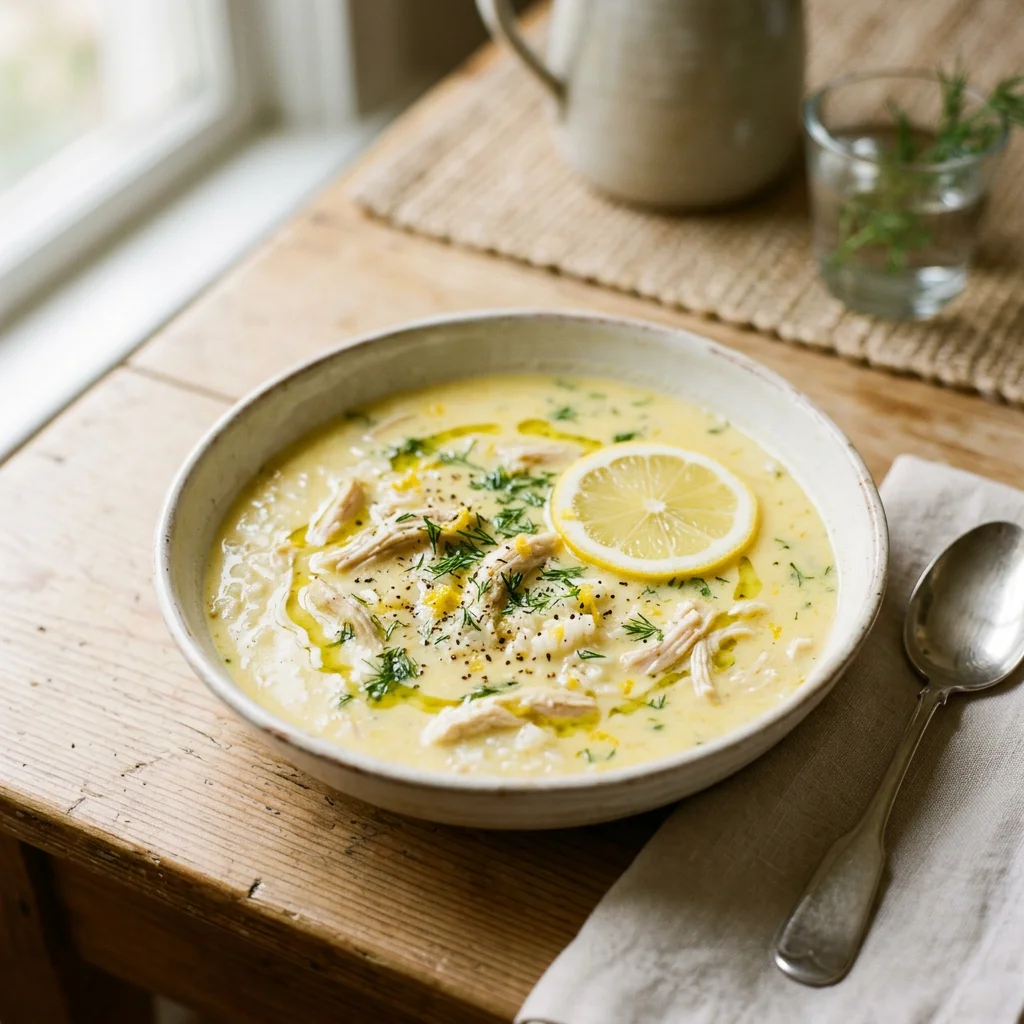
Avgolemono is the Greek answer to chicken soup — a silky, golden broth thickened with eggs and brightened with lemon, often enriched with rice or orzo. The name comes directly from its two defining ingredients: avgo (egg) and lemoni (lemon). Where other cultures turn to brothy soups for comfort and healing, Greeks reach for this particular alchemy of protein, acid, and warmth, and it delivers with remarkable efficiency. The technique behind avgolemono is one of the most elegant in Mediterranean cooking. Hot broth is slowly whisked into beaten eggs tempered with lemon juice, creating an emulsion that transforms a simple chicken soup into something luxuriously creamy without a drop of cream. The result is simultaneously rich and light, warming and bright, substantial and soothing — a combination of contradictions that makes it uniquely therapeutic. Ayurvedically, avgolemono is a near-perfect healing food. The bone broth provides deep tissue nourishment, the eggs contribute building energy for recovery, and the lemon stimulates agni while cutting through any heaviness. The rice or orzo adds grounding sweetness. This is a soup that Ayurvedic practitioners would recognize immediately as balya (strengthening) and deepana (digestive-kindling) — restorative medicine in a bowl.
Pacifies Vata excellently. Can increase Pitta due to sour and heating qualities. Generally neutral to mildly beneficial for Kapha in moderate amounts.
Ingredients
- 1.5 L Chicken broth (homemade preferred)
- 300 g Chicken breast or thigh (bone-in for extra flavor)
- 100 g Rice (short grain or orzo pasta)
- 3 large Eggs
- 2 large Lemons (juiced (about 80 ml))
- 1 small Onion (whole, peeled)
- 1 medium Carrot (optional, for the broth)
- 1 leaf Bay leaf
- 1.5 tsp Sea salt
- 1/2 tsp White pepper
- 2 tbsp Fresh dill (finely chopped, for garnish)
Instructions
- If using raw chicken, place it in a pot with the broth, whole onion, carrot, and bay leaf. Bring to a boil, skim any foam, then simmer for 20 minutes until the chicken is cooked through. Remove the chicken, shred the meat, and strain the broth. Discard the onion, carrot, and bay leaf.
- Return the strained broth to the pot and bring to a gentle boil. Add the rice and cook until tender, about 15 minutes for rice or 8 minutes for orzo.
- While the rice cooks, beat the eggs in a large bowl until frothy. Add the lemon juice gradually while whisking continuously.
- When the rice is tender, reduce the heat to low. Ladle about 250 ml of hot broth into the egg-lemon mixture one spoonful at a time, whisking constantly. This tempers the eggs and prevents curdling.
- Slowly pour the tempered egg-lemon mixture back into the pot, stirring continuously. Keep the heat low — the soup must not boil again or the eggs will curdle.
- Return the shredded chicken to the soup. Stir gently over low heat for 2-3 minutes until the soup thickens to a velvety consistency. Season with salt and white pepper.
- Serve immediately, garnished with fresh dill and an extra squeeze of lemon if desired.
How This Recipe Affects Each Dosha
Vata
Outstanding for Vata. The warm, oily, smooth broth with nourishing eggs and grounding rice directly addresses every Vata imbalance. The sour taste of lemon stimulates digestive fire while the chicken broth provides deep tissue nourishment. This is one of the best soups for Vata recovery.
Pitta
The strong sour taste from lemon and the heating virya can aggravate Pitta, particularly in summer or during inflammatory conditions. However, the nourishing, smooth quality of the broth is soothing. Moderate the lemon for Pitta types.
Kapha
The light, warm quality and sour taste are beneficial for Kapha. The broth is not overly heavy, and lemon helps cut through any mucus-forming tendency. However, the rice adds some heaviness that Kapha types should balance.
Strongly kindles agni. The sour lemon juice is one of the most effective digestive stimulants, and the warm broth carries this quality deep into the digestive tract. The light, easily absorbed nature of the soup means it nourishes without taxing digestion.
Nourishes: Rasa (plasma), Rakta (blood), Mamsa (muscle), Majja (nerve), Shukra (reproductive)
Adjustments by Constitution
For Vata Types
This soup is already ideal for Vata. For extra grounding, use bone-in thigh meat rather than breast. Add a pinch of dried dill to the broth while cooking for deeper warmth.
For Pitta Types
Use only one lemon instead of two and add a handful of fresh dill to the broth. Replace rice with orzo, which is lighter. Garnish with cooling cucumber slices on the side.
For Kapha Types
Use only the breast meat (leaner) and reduce the rice by half. Increase lemon juice slightly and add freshly ground black pepper. A pinch of dried oregano in the broth enhances the stimulating quality.
Seasonal Guidance
Avgolemono is a three-season soup, best from autumn through spring. In winter, it provides warming nourishment and supports immunity during cold and flu season. In spring, the lemon brightness aligns with the season's need for lighter, cleansing foods. Summer is the only season to avoid it, as the heating quality and sour taste can aggravate Pitta during hot weather. In Greece, avgolemono is the soup mothers make when children are sick, regardless of season — its healing reputation overrides seasonal considerations when recovery is the goal.
Best time of day: Lunch for everyday nourishment; dinner when recovering from illness
Cultural Context
Avgolemono is the Greek healing soup — the first thing Greek mothers and grandmothers make when someone is unwell, recovering from surgery, or simply needs comfort. The egg-lemon technique is a cornerstone of Greek cooking that appears in many dishes beyond soup, including sauces for dolmades and lamb fricassee. The technique likely entered Greek cuisine from Sephardic Jewish cooking traditions in Thessaloniki, where a similar preparation called agristada has been made for centuries. Today it is so deeply embedded in Greek culture that most Greeks consider it an ancient Hellenic tradition.
Chef's Notes
The entire success of avgolemono rests on the tempering step. Rushing it — pouring hot broth too quickly into the eggs, or letting the soup boil after adding the egg mixture — will produce scrambled egg threads instead of a silky emulsion. Whisk constantly and keep the heat low. Use white pepper instead of black for a cleaner look and smoother taste. The soup thickens considerably as it cools, so serve it slightly thinner than your target consistency. Avgolemono does not reheat well (the emulsion can break), so make only what you plan to eat. Fresh lemon juice is essential — bottled will not produce the same brightness.
Frequently Asked Questions
Is Avgolemono (Greek Egg-Lemon Soup) good for my dosha?
Pacifies Vata excellently. Can increase Pitta due to sour and heating qualities. Generally neutral to mildly beneficial for Kapha in moderate amounts. Outstanding for Vata. The strong sour taste from lemon and the heating virya can aggravate Pitta, particularly in summer or during inflammatory conditions. The light, warm quality and sour taste are beneficial for Kapha.
When is the best time to eat Avgolemono (Greek Egg-Lemon Soup)?
Lunch for everyday nourishment; dinner when recovering from illness Avgolemono is a three-season soup, best from autumn through spring. In winter, it provides warming nourishment and supports immunity during cold and flu season. In spring, the lemon brightness aligns
How can I adjust Avgolemono (Greek Egg-Lemon Soup) for my constitution?
For Vata types: This soup is already ideal for Vata. For extra grounding, use bone-in thigh meat rather than breast. Add a pinch of dried dill to the broth while cook For Pitta types: Use only one lemon instead of two and add a handful of fresh dill to the broth. Replace rice with orzo, which is lighter. Garnish with cooling cucumbe
What are the Ayurvedic properties of Avgolemono (Greek Egg-Lemon Soup)?
Avgolemono (Greek Egg-Lemon Soup) has Sour, Sweet, Salty taste (rasa), Heating energy (virya), and Sour post-digestive effect (vipaka). Its qualities (gunas) are Light, Warm, Oily, Smooth. It nourishes Rasa (plasma), Rakta (blood), Mamsa (muscle), Majja (nerve), Shukra (reproductive). Strongly kindles agni. The sour lemon juice is one of the most effective digestive stimulants, and the warm broth carries this quality deep into the digestive tract. The light, easily absorbed nature of the soup means it nourishes without taxing digestion.
What should you eat today?
This recipe has specific effects on each dosha, and the right meal depends on more than general guidelines. Your constitution, the current season, your birth chart's active planetary period, what you ate yesterday, how you slept — it all matters.
With Personal Alignment, you get daily food and meal guidance tailored to:
- Your prakriti and current vikriti
- Your Vedic birth chart and active planetary cycles
- The season, weather, and time of day
- Your food preferences, allergies, and restrictions
- Your feedback — it learns what works for your body and adapts
Not a generic diet plan. A living system that gets smarter about you every day.