Ayurvedic Morning Porridge
Ayurvedic Recipe
Overview
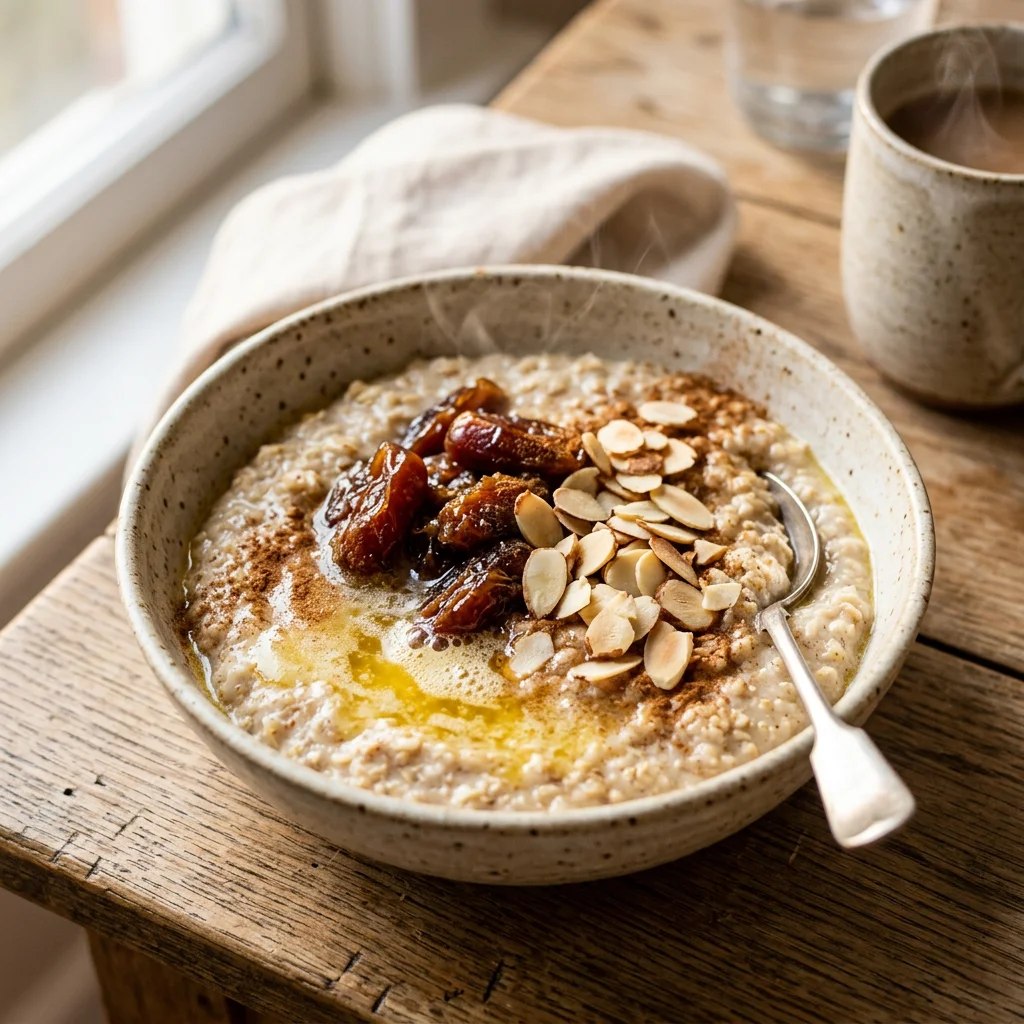
This is the breakfast Ayurveda was built around. Warm oatmeal cooked with ghee, soaked dates, and cardamom is not a recipe so much as a principle made edible — sweet rasa to ground Vata, warm quality to kindle the morning's nascent agni, ghee to lubricate tissues still dry from the night's fast, and dates to deliver iron, natural sugar, and ojas (vital essence) in a form the body can absorb immediately upon waking. The logic runs deeper than comfort. The sweet taste is the first rasa the body craves in the morning because it builds tissue, calms the nervous system, and provides the glucose the brain needs after hours of fasting. But Ayurveda insists this sweetness come from whole, warm, cooked sources — not cold cereal, not raw fruit smoothies, not granola bars. A warm porridge cooked in ghee is the delivery system that allows sweetness to nourish rather than congest. The ghee is not optional garnish; it is the vehicle (anupana) that carries the nutrients of the oats and dates into the deeper tissues. Without fat, the sweet rasa stays superficial — satisfying momentarily but failing to build ojas. Cardamom serves a dual purpose: it is one of the finest digestive spices in the Ayurvedic pharmacopoeia, capable of kindling agni without adding heat, and it transforms the dish from plain porridge into something aromatic and elevated. The soaked dates dissolve into the porridge during cooking, creating pockets of caramel sweetness that make additional sweetener unnecessary. This is breakfast as medicine — every ingredient chosen not for trend but for thousands of years of observed effect on the human body at dawn.
Powerfully pacifies Vata. Balances Pitta when cardamom is generous. May mildly increase Kapha if portions are large or milk is heavy.
Recommended as a daily Vata-pacifying breakfast during autumn and winter. Used therapeutically for recovery from illness, postpartum nourishment, nervous exhaustion, and chronic dryness. The oat-ghee-date combination builds ojas and supports the adrenals during periods of depletion.
Ingredients
- 1 cup Rolled oats (not instant — steel-cut also works but needs longer cook time)
- 2 cups Water
- 1/2 cup Whole milk or plant milk (optional, for creaminess)
- 1 tbsp Ghee (stirred in during cooking, not after)
- 3 whole Medjool dates (soaked 10 minutes in warm water, pitted and chopped)
- 3 whole Green cardamom pods (cracked, or 1/4 tsp ground cardamom)
- 1/4 tsp Cinnamon (Ceylon preferred)
- 1 pinch Pinch of salt
- 1 tsp Raw honey (optional, added after cooking — never heat honey)
- 6 whole Almonds (soaked overnight and peeled, sliced)
Instructions
- If using whole dates, soak them in warm water for 10 minutes while you prepare everything else. Pit and chop into small pieces. If using steel-cut oats, soak them overnight for best results.
- Bring the water to a gentle boil in a heavy-bottomed pot. If using cardamom pods, add them now so they infuse the water as it heats.
- Add the oats, chopped dates, ghee, cinnamon, and salt. Stir to combine. The ghee should melt into the porridge immediately — this is not a garnish, it cooks with the oats to create a silky, nourishing base.
- Reduce heat to low and cook for 8-12 minutes (rolled oats) or 20-25 minutes (steel-cut), stirring occasionally. The porridge should become thick and creamy, with the dates breaking down into the mixture.
- Add milk in the last 2-3 minutes of cooking if you want a creamier consistency. Stir gently.
- Remove from heat and let rest for 2 minutes. Remove cardamom pods if using whole.
- Serve warm in a bowl. Top with sliced soaked almonds. If adding honey, drizzle it on now — never cook honey, as Ayurveda considers heated honey toxic (ama-producing). A small extra pat of ghee on top is traditional.
How This Recipe Affects Each Dosha
Vata
This is the ideal Vata breakfast. Every quality Vata lacks — warmth, heaviness, oiliness, softness — is present here. The ghee lubricates Vata's characteristic dryness, the warm temperature counters Vata's cold nature, and the sweet taste is the primary rasa for building Vata's depleted tissues. The dates provide iron and ojas, both of which Vata types chronically need. Eating this within an hour of waking anchors the entire day.
Pitta
The sweet taste and sweet vipaka are Pitta-pacifying, and cardamom is one of the few spices that cools while still supporting digestion. Pitta types do well with this porridge, especially when they replace cinnamon with extra cardamom and use a lighter hand with ghee. The dates provide sustained energy without the blood sugar spike that irritates Pitta.
Kapha
The heavy, sweet, and oily qualities can increase Kapha if not adjusted. Kapha types should eat smaller portions, reduce ghee, skip the milk, and add warming spices like ginger and black pepper. Switching to millet porridge or lighter grains is advisable during Kapha season (spring).
The ghee gently kindles agni without overpowering it. Cardamom is considered tridoshic among digestive spices — it stimulates the digestive fire while keeping it even and controlled. Cooking the oats thoroughly pre-digests the starches, reducing the burden on morning agni, which is naturally gentler than midday agni.
Nourishes: Rasa (plasma), Rakta (blood), Mamsa (muscle), Majja (nervous tissue), Shukra (reproductive tissue)
Adjustments by Constitution
For Vata Types
Increase ghee to 2 tablespoons and add a pinch of nutmeg for deeper grounding. Use warm whole milk instead of water for the last half-cup of liquid. Add 2 soaked walnuts alongside the almonds. This is already Vata's ideal meal — lean into the richness.
For Pitta Types
Replace cinnamon with 1/2 teaspoon ground cardamom and add a few threads of saffron soaked in warm milk. Use coconut oil instead of ghee during hot months. Top with cooling shredded coconut and raisins instead of almonds. Avoid honey; use maple syrup if sweetener is needed.
For Kapha Types
Reduce to 1/2 tablespoon ghee or use a thin drizzle of flaxseed oil. Skip the milk entirely and cook only with water. Add 1/2 teaspoon dry ginger powder and a generous pinch of black pepper. Reduce dates to 1 and add a grated apple during the last few minutes of cooking. Use buckwheat flakes or millet instead of oats in spring.
Seasonal Guidance
This porridge is most essential during Vata season (autumn and early winter) when the body craves warmth, sweetness, and grounding nourishment. Continue through late winter with extra warming spices. In spring (Kapha season), lighten it by reducing ghee and dates, adding ginger, and considering a switch to lighter grains. In summer, the porridge may be too heavy for some — Pitta types can try room-temperature overnight oats instead, or simply reduce the ghee and increase cardamom.
Best time of day: Breakfast, within one hour of waking. This is a morning food — the sweet, heavy qualities that nourish at dawn would burden digestion if eaten at night.
Cultural Context
Warm grain porridge at dawn is one of the oldest human food traditions, and it persists across nearly every culture for a reason the body understands before the mind does. In Ayurvedic tradition, the morning meal should be sweet, warm, and easy to digest — qualities that the ancient texts prescribe for kindling the day's agni without overwhelming it. The specific combination of grain, ghee, and soaked dried fruit appears in texts like the Ashtanga Hridayam as a model for balancing Vata during the Brahma muhurta (pre-dawn hours). The Scottish, the Chinese, the Scandinavians, and the Indian sages all arrived at the same conclusion: cooked grain in the morning sustains.
Chef's Notes
The overnight-soaked almonds are worth the effort — soaking removes the tannin-rich skin, making the nut easier to digest and its nutrients more bioavailable. This is a classical Ayurvedic practice, not a modern wellness trend. For deeper flavor, toast the cardamom pods in the dry pot for 30 seconds before adding water. If you find the porridge too thick, add warm water (never cold) to thin it. This porridge keeps for one day in the refrigerator but is best made fresh each morning — Ayurveda considers reheated food lower in prana (life force). During Vata season (autumn/winter), this breakfast is non-negotiable.
Frequently Asked Questions
Is Ayurvedic Morning Porridge good for my dosha?
Powerfully pacifies Vata. Balances Pitta when cardamom is generous. May mildly increase Kapha if portions are large or milk is heavy. This is the ideal Vata breakfast. The sweet taste and sweet vipaka are Pitta-pacifying, and cardamom is one of the few spices that cools while still supporting digestion. The heavy, sweet, and oily qualities can increase Kapha if not adjusted.
When is the best time to eat Ayurvedic Morning Porridge?
Breakfast, within one hour of waking. This is a morning food — the sweet, heavy qualities that nourish at dawn would burden digestion if eaten at night. This porridge is most essential during Vata season (autumn and early winter) when the body craves warmth, sweetness, and grounding nourishment. Continue through late winter with extra warming spices.
How can I adjust Ayurvedic Morning Porridge for my constitution?
For Vata types: Increase ghee to 2 tablespoons and add a pinch of nutmeg for deeper grounding. Use warm whole milk instead of water for the last half-cup of liquid. A For Pitta types: Replace cinnamon with 1/2 teaspoon ground cardamom and add a few threads of saffron soaked in warm milk. Use coconut oil instead of ghee during hot mo
What are the Ayurvedic properties of Ayurvedic Morning Porridge?
Ayurvedic Morning Porridge has Sweet taste (rasa), Heating energy (virya), and Sweet post-digestive effect (vipaka). Its qualities (gunas) are Warm, Heavy, Oily, Soft. It nourishes Rasa (plasma), Rakta (blood), Mamsa (muscle), Majja (nervous tissue), Shukra (reproductive tissue). The ghee gently kindles agni without overpowering it. Cardamom is considered tridoshic among digestive spices — it stimulates the digestive fire while keeping it even and controlled. Cooking the oats thoroughly pre-digests the starches, reducing the burden on morning agni, which is naturally gentler than midday agni.
What should you eat today?
This recipe has specific effects on each dosha, and the right meal depends on more than general guidelines. Your constitution, the current season, your birth chart's active planetary period, what you ate yesterday, how you slept — it all matters.
With Personal Alignment, you get daily food and meal guidance tailored to:
- Your prakriti and current vikriti
- Your Vedic birth chart and active planetary cycles
- The season, weather, and time of day
- Your food preferences, allergies, and restrictions
- Your feedback — it learns what works for your body and adapts
Not a generic diet plan. A living system that gets smarter about you every day.