Bessara
Moroccan Recipe
Overview
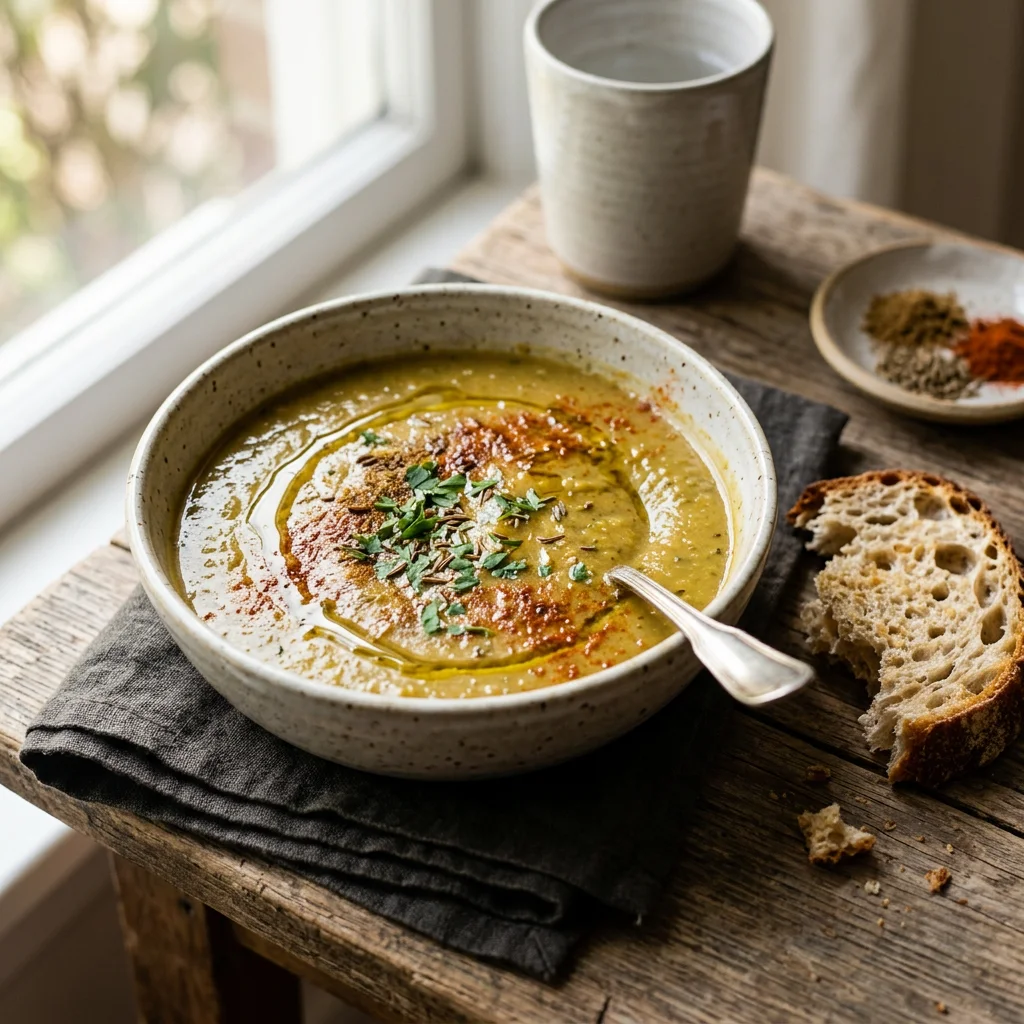
Bessara is Morocco's humble, earthy fava bean soup — a thick, nourishing puree of dried split fava beans (ful) simmered with garlic, cumin, and olive oil until velvety smooth. It is the food of Morocco's working class, served from steaming cauldrons at street stalls in the early morning to laborers, students, and anyone who needs fuel for a hard day. In the northern cities of Fez, Meknes, and Chefchaouen, bessara stalls open before dawn, and the smell of cumin-scented fava puree drifts through the medina as the city wakes. The dish is almost ascetically simple — dried fava beans, garlic, cumin, paprika, olive oil, and little else. But this simplicity is deceptive, because the quality depends entirely on the cooking. The beans must be simmered long enough to dissolve completely into a smooth, creamy mass that pours like thick soup. The olive oil must be good and generous, drizzled on top in a heavy green stream. The cumin must be freshly ground and toasted. When these elements align, bessara transcends its ingredients entirely. Ayurvedically, fava beans are an underappreciated legume. They are grounding and strengthening, with a sweet-astringent taste that nourishes mamsa dhatu (muscle tissue) and provides sustained energy. They are heavier than lentils but lighter than kidney beans, occupying a middle ground that makes them suitable for most constitutions when properly prepared. The cumin and garlic in bessara serve a specific digestive function — they counteract the gas-producing tendency of beans by reducing vata in the lower digestive tract. The generous olive oil makes the dish unctuous and soothing, preventing the drying effect that legumes can have on vata-type digestion. This is working-class food that is also, quite inadvertently, sophisticated medicine.
Grounding and nourishing for Vata when prepared with adequate oil and spice. Neutral for Pitta. May increase Kapha in excess due to heaviness, though the warming spices help.
Ingredients
- 2 cups Dried split fava beans (soaked overnight and drained)
- 6 cloves Garlic (roughly chopped)
- 2 tsp Ground cumin
- 1 tsp Sweet paprika
- 4 tbsp Olive oil (plus extra for drizzling)
- 2 tbsp Lemon juice
- 1.5 tsp Salt
- 6 cups Water
- 1/4 tsp Cayenne pepper (optional)
- 1 loaf Crusty bread (for serving)
Instructions
- Drain the soaked fava beans and place them in a large pot with the garlic and 6 cups of fresh water. Bring to a boil over high heat, skimming any foam that rises to the surface.
- Reduce heat to low, cover partially, and simmer for 45-55 minutes until the beans have completely broken down and the mixture has become a smooth, thick puree. Stir occasionally, especially toward the end, to prevent sticking. Add more water if needed — the beans absorb a great deal.
- Using an immersion blender or transferring to a regular blender in batches, puree the soup until completely smooth and velvety. It should pour like thick cream.
- Return the puree to the pot over low heat. Stir in 2 tablespoons of olive oil, the cumin, paprika, salt, and lemon juice. Cook for another 5 minutes, stirring constantly, to let the spices bloom in the hot puree.
- Taste and adjust — the soup should be earthy, warmly spiced, and lightly tangy from the lemon. If too thick, thin with hot water to a pourable but substantial consistency.
- Ladle into bowls. Drizzle each bowl generously with the remaining olive oil — this is not optional, the oil is an essential part of the dish. Dust with extra cumin and a pinch of cayenne if desired. Serve immediately with torn bread for dipping.
How This Recipe Affects Each Dosha
Vata
Fava beans are heavier and more grounding than lentils, which can be deeply satisfying for Vata's need for substance and stability. The generous garlic and cumin directly address Vata's tendency toward gas and bloating from legumes. The olive oil makes the dish unctuous and lubricating. However, Vata types with very weak digestion should start with small portions, as fava beans are more challenging to process than mung dal.
Pitta
Bessara is relatively neutral for Pitta. The sweet taste of the fava beans and the sweet vipaka are calming, while the garlic and cumin add a moderate amount of heat. The lemon juice aids digestion without being overly acidic. Pitta types can enjoy this freely during cooler months and in moderation during summer.
Kapha
The heaviness and density of fava beans can increase Kapha if portions are large. However, the warming spices (cumin, paprika, cayenne) and the pungent quality of garlic work to counteract this tendency. For Kapha types, bessara is best as a modest portion alongside lighter vegetables rather than as the main event with bread.
The cumin and garlic are the key digestive agents here — without them, fava beans can be quite heavy on agni. Cumin is one of Ayurveda's premier digestive spices, specifically indicated for legume-induced gas. The lemon juice adds an acidic element that mirrors stomach acid, further supporting protein breakdown. The long cooking time pre-digests the beans, making their nutrients available even to weaker digestive fires.
Nourishes: Rasa (plasma), Mamsa (muscle), Asthi (bone)
Adjustments by Constitution
For Vata Types
Increase the garlic to 8 cloves and add 1/2 teaspoon of ground ginger during cooking. Drizzle argan oil at serving instead of or in addition to olive oil — its rich, nutty warmth is deeply Vata-pacifying. Add extra lemon juice, and serve with warm bread dipped in a mix of olive oil and cumin for maximum grounding.
For Pitta Types
Reduce garlic to 3 cloves and omit the cayenne entirely. Add a teaspoon of ground coriander during cooking for its cooling, digestive quality. Drizzle with extra olive oil and garnish with fresh cilantro. A splash of orange blossom water stirred in at the end adds a cooling floral note that Pitta types will appreciate.
For Kapha Types
Reduce olive oil to 2 tablespoons and increase cayenne to 1/2 teaspoon. Add a teaspoon of harissa and extra cumin. Serve a smaller portion in a cup rather than a bowl, and skip the bread — eat alongside raw vegetables or a pungent carrot-lemon salad. The beans provide enough substance on their own without the additional heaviness of wheat.
Seasonal Guidance
Best in autumn and winter when the body craves dense, warming, grounding foods. The heavy quality of fava beans is exactly right for Vata season (autumn) when lightness and dryness need to be countered with substance. In spring, lighten with extra lemon and serve in smaller portions. Not ideal for summer — the heaviness and heating quality can be too much when agni is naturally lower in hot weather.
Best time of day: Early morning or lunch. Traditionally a dawn food in Morocco, served to workers before their day begins. The sustained energy from the fava bean protein carries through hours of physical labor. Also excellent as a warming lunch.
Cultural Context
Bessara is the food of the Moroccan people — not the tagines that appear in tourist restaurants or the pastilla served at feasts, but the everyday sustenance that has fed workers, farmers, and families for centuries. In the medinas of Fez and Meknes, bessara stalls are institutions, some operating for generations in the same spot, ladling soup from the same blackened pots. The dish represents a truth about Moroccan food culture that outsiders often miss: beneath the elaborate spice blends and dramatic presentation, the foundation is peasant food — simple, nutritious, and engineered for survival. A bowl of bessara with bread and olive oil costs almost nothing and provides complete nutrition. It is democracy in a bowl.
Chef's Notes
The overnight soak is essential — dried fava beans are among the hardest legumes and will not cook properly without it. If you forget to soak, a quick-soak method works: cover with water, bring to a boil, cook 2 minutes, then cover and let sit for 1 hour. Split fava beans are easier to find and cook faster than whole ones; they are available at Middle Eastern markets. The olive oil drizzle at serving must be generous — it is what makes the difference between a plain bean puree and bessara. Some street vendors in Fez serve bessara with a separate small bowl of olive oil, cumin, and chili flakes for each person to season their own.
Frequently Asked Questions
Is Bessara good for my dosha?
Grounding and nourishing for Vata when prepared with adequate oil and spice. Neutral for Pitta. May increase Kapha in excess due to heaviness, though the warming spices help. Fava beans are heavier and more grounding than lentils, which can be deeply satisfying for Vata's need for substance and stability. Bessara is relatively neutral for Pitta. The heaviness and density of fava beans can increase Kapha if portions are large.
When is the best time to eat Bessara?
Early morning or lunch. Traditionally a dawn food in Morocco, served to workers before their day begins. The sustained energy from the fava bean protein carries through hours of physical labor. Also excellent as a warming lunch. Best in autumn and winter when the body craves dense, warming, grounding foods. The heavy quality of fava beans is exactly right for Vata season (autumn) when lightness and dryness need to be countere
How can I adjust Bessara for my constitution?
For Vata types: Increase the garlic to 8 cloves and add 1/2 teaspoon of ground ginger during cooking. Drizzle argan oil at serving instead of or in addition to olive For Pitta types: Reduce garlic to 3 cloves and omit the cayenne entirely. Add a teaspoon of ground coriander during cooking for its cooling, digestive quality. Drizzle
What are the Ayurvedic properties of Bessara?
Bessara has Sweet, Astringent, Pungent taste (rasa), Heating energy (virya), and Sweet post-digestive effect (vipaka). Its qualities (gunas) are Heavy, Warm, Slightly Oily, Dense. It nourishes Rasa (plasma), Mamsa (muscle), Asthi (bone). The cumin and garlic are the key digestive agents here — without them, fava beans can be quite heavy on agni. Cumin is one of Ayurveda's premier digestive spices, specifically indicated for legume-induced gas. The lemon juice adds an acidic element that mirrors stomach acid, further supporting protein breakdown. The long cooking time pre-digests the beans, making their nutrients available even to weaker digestive fires.
What should you eat today?
This recipe has specific effects on each dosha, and the right meal depends on more than general guidelines. Your constitution, the current season, your birth chart's active planetary period, what you ate yesterday, how you slept — it all matters.
With Personal Alignment, you get daily food and meal guidance tailored to:
- Your prakriti and current vikriti
- Your Vedic birth chart and active planetary cycles
- The season, weather, and time of day
- Your food preferences, allergies, and restrictions
- Your feedback — it learns what works for your body and adapts
Not a generic diet plan. A living system that gets smarter about you every day.