Bibimbap (Mixed Rice Bowl)
Korean Recipe
Overview
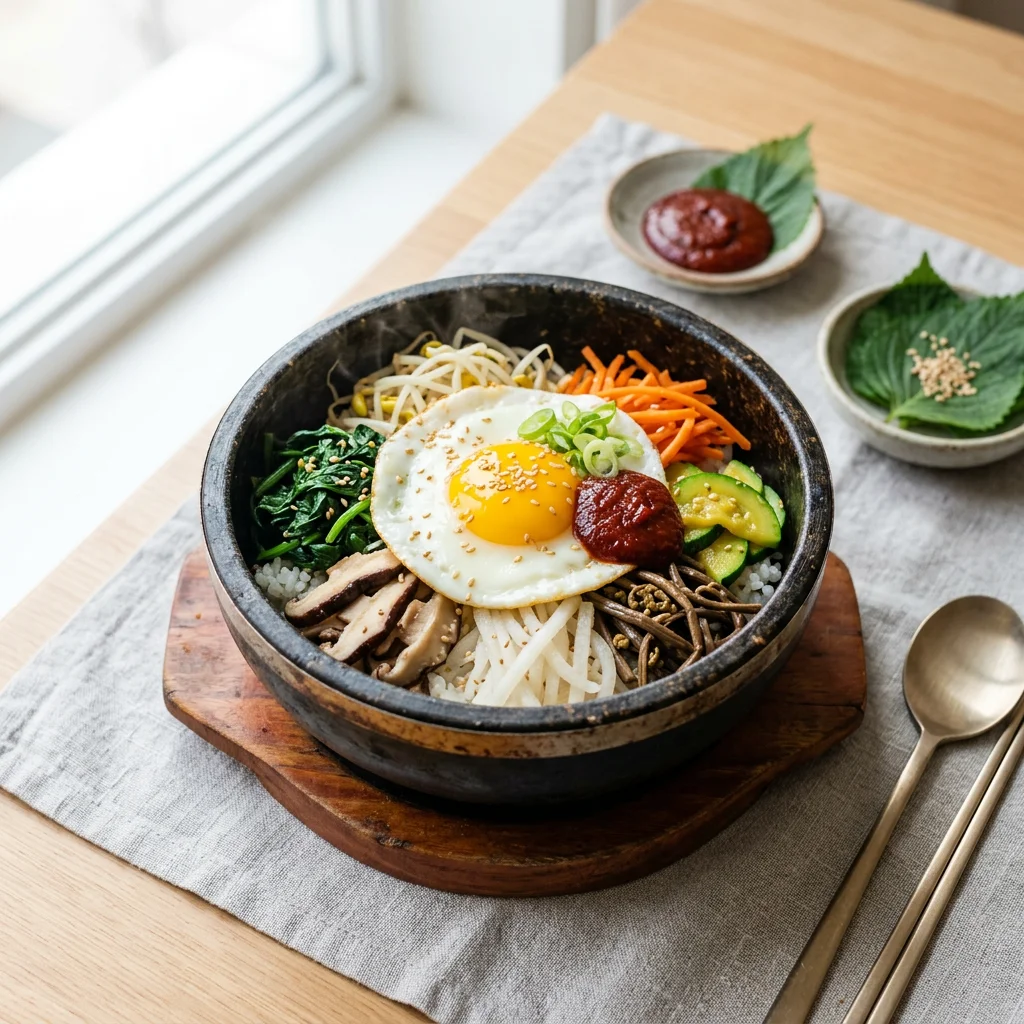
Bibimbap — literally "mixed rice" — is Korea's most internationally recognized dish, a vibrant bowl of steamed rice topped with an array of seasoned vegetables, protein, a fried egg, and the unmistakable crimson heat of gochujang. What makes bibimbap remarkable from a traditional medicine perspective is its inherent balance: a single bowl delivers all six tastes recognized in Ayurveda. The sweet rice and carrots, sour pickled radish, salty seasoned spinach, pungent gochujang and garlic, bitter fernbrake or greens, and astringent sprouts create a complete taste profile that leaves the eater deeply satisfied. Each component is prepared separately — the vegetables blanched or sauteed with sesame oil and garlic, then arranged in distinct sections over the rice — creating what Koreans call a five-color harmony (obangsaek). This isn't mere aesthetics. The five colors (white, green, red, yellow, black) correspond to five elements in Korean philosophy and ensure a diversity of nutrients and medicinal properties. The final mixing at the table, when the diner breaks the egg and stirs everything together with gochujang, is both ritual and practical: it distributes the flavors evenly and tempers the heat of the pepper paste with the cooling rice and vegetables. The Ayurvedic beauty of bibimbap lies in its modularity. Every component can be adjusted for constitution — making it one of the most dosha-adaptable meals in any cuisine.
Balancing for all three doshas in its complete form. The six-taste profile and modularity allow natural tridoshic balance.
Ingredients
- 2 cups Short-grain white rice (rinsed and cooked)
- 200 g Spinach (blanched and seasoned)
- 2 medium Carrots (julienned)
- 1 medium Zucchini (half-moon sliced)
- 200 g Soybean sprouts (blanched)
- 6 large Shiitake mushrooms (sliced)
- 4 large Eggs (fried sunny-side up)
- 3 tbsp Toasted sesame oil (divided among vegetables)
- 4 cloves Garlic (minced, divided)
- 2 tbsp Soy sauce (for seasoning vegetables)
- 3 tbsp Gochujang (Korean fermented red pepper paste)
- 2 tbsp Toasted sesame seeds
- 1/2 tsp Sea salt
Instructions
- Cook rice according to package directions. Keep warm.
- Blanch spinach in boiling water for 30 seconds, shock in ice water, and squeeze dry. Toss with 1 tsp sesame oil, 1 minced garlic clove, a pinch of salt, and a sprinkle of sesame seeds.
- Saute julienned carrots in 1 tsp sesame oil over medium-high heat for 2 minutes until just tender. Season lightly with salt.
- Saute zucchini half-moons in 1 tsp sesame oil until lightly golden on each side, about 2 minutes per side. Season with salt.
- Blanch soybean sprouts in boiling salted water for 3 minutes with the lid on. Drain and toss with 1 tsp sesame oil, 1 minced garlic clove, and salt.
- Saute sliced shiitake mushrooms in 1 tsp sesame oil with 1 minced garlic clove and a splash of soy sauce until golden and fragrant, about 4 minutes.
- Fry eggs sunny-side up in a lightly oiled pan, keeping the yolks runny.
- Divide warm rice among 4 bowls. Arrange each vegetable in its own section on top of the rice, creating a colorful wheel pattern.
- Place a fried egg in the center of each bowl. Add a generous spoonful of gochujang to the side.
- Sprinkle toasted sesame seeds over everything. Serve immediately, instructing diners to mix everything together before eating.
How This Recipe Affects Each Dosha
Vata
The warm rice, sesame oil, and cooked vegetables provide excellent grounding for Vata. The egg adds needed protein and unctuousness. The gochujang brings digestive warmth. This is one of the most Vata-friendly Korean dishes when eaten warm with generous sesame oil and a runny egg stirred through the rice.
Pitta
The cooling qualities of rice and most vegetables balance the heat of gochujang. The variety of tastes — particularly the sweet, bitter, and astringent components — prevent any single quality from dominating. Pitta types should moderate the gochujang and add extra cooling vegetables to maintain balance.
Kapha
While rice is heavy for Kapha, the abundance of lightly cooked vegetables and pungent gochujang compensate. The dish provides stimulating variety and the pepper paste's heating quality helps counter Kapha stagnation. Reducing rice and increasing the vegetable-to-grain ratio makes this well-suited for Kapha constitutions.
The combination of warming gochujang and garlic with cooling rice creates a balanced agni effect. The paste's fermented quality provides beneficial pre-digested compounds that support the gut microbiome, while the pungent heat stimulates secretion of digestive enzymes. The variety of textures and flavors encourages mindful eating and thorough chewing, both of which strengthen agni over time.
Nourishes: Rasa (plasma), Rakta (blood), Mamsa (muscle), Meda (fat), Asthi (bone)
Adjustments by Constitution
For Vata Types
Use extra sesame oil when seasoning each vegetable. Add a drizzle of sesame oil over the finished bowl. Include the egg with a runny yolk for added richness. Use the full amount of gochujang. Consider adding sauteed marinated beef (bulgogi-style) for additional grounding protein and warmth.
For Pitta Types
Reduce gochujang to 1 tablespoon or replace with doenjang (fermented soybean paste) thinned with a little sesame oil. Add extra cucumber and fresh perilla leaves as cooling toppings. Use less garlic in the vegetable seasonings. The egg can remain — its sweet, cooling quality balances Pitta.
For Kapha Types
Reduce rice by half and pile on extra vegetables, especially the sprouts and spinach. Use the full amount of gochujang plus extra minced garlic. Replace the fried egg with a poached egg to reduce oil. Add thinly sliced Korean radish (mu) for its pungent, lightening quality.
Seasonal Guidance
Bibimbap is a true all-season dish because of its modularity. In spring, emphasize bitter greens like fernbrake (gosari) and fresh sprouts to clear accumulated winter Kapha. Summer bibimbap calls for extra cooling ingredients — cucumber, perilla, reduced gochujang — and can even be served as a cold version over chilled rice. In autumn, lean into warming elements: more garlic, generous sesame oil, and the hot-stone-pot version to ground rising Vata. Winter calls for the full dolsot treatment with extra protein and a heartier gochujang ratio.
Best time of day: Lunch, when digestive fire is strongest and can handle the substantial combination of grains, vegetables, and protein
Cultural Context
Bibimbap originated as a practical way to use leftover side dishes (banchan), but it evolved into one of Korea's most refined culinary expressions. The Jeonju style — featuring 30 or more toppings, bean sprout broth instead of plain rice, and a raw egg yolk — is considered the apex of Korean bowl cuisine. The dish encodes the Korean philosophical principle of harmony through diversity: disparate elements maintaining their individual identity while creating something greater when combined. Korean Air famously serves bibimbap in business class, making it perhaps the most internationally traveled Korean dish. The tradition of mixing the bowl yourself before eating reflects the Korean culinary philosophy that the diner completes the dish, becoming an active participant rather than a passive recipient.
Chef's Notes
The secret to great bibimbap is treating each vegetable as its own small dish — seasoned and cooked individually to highlight its unique flavor and texture. Resist the temptation to stir-fry everything together. The separate preparation preserves each ingredient's distinct rasa and ensures the final mixed bowl has layers of flavor rather than a uniform mush. For dolsot (hot stone pot) bibimbap, heat a stone bowl with sesame oil until smoking, add rice, and press down to create a golden crust before topping. The crispy rice (nurungji) at the bottom is considered the best part and adds a roasted, warming quality that benefits Vata types.
Frequently Asked Questions
Is Bibimbap (Mixed Rice Bowl) good for my dosha?
Balancing for all three doshas in its complete form. The six-taste profile and modularity allow natural tridoshic balance. The warm rice, sesame oil, and cooked vegetables provide excellent grounding for Vata. The cooling qualities of rice and most vegetables balance the heat of gochujang. While rice is heavy for Kapha, the abundance of lightly cooked vegetables and pungent gochujang compensate.
When is the best time to eat Bibimbap (Mixed Rice Bowl)?
Lunch, when digestive fire is strongest and can handle the substantial combination of grains, vegetables, and protein Bibimbap is a true all-season dish because of its modularity. In spring, emphasize bitter greens like fernbrake (gosari) and fresh sprouts to clear accumulated winter Kapha. Summer bibimbap calls for
How can I adjust Bibimbap (Mixed Rice Bowl) for my constitution?
For Vata types: Use extra sesame oil when seasoning each vegetable. Add a drizzle of sesame oil over the finished bowl. Include the egg with a runny yolk for added ri For Pitta types: Reduce gochujang to 1 tablespoon or replace with doenjang (fermented soybean paste) thinned with a little sesame oil. Add extra cucumber and fresh per
What are the Ayurvedic properties of Bibimbap (Mixed Rice Bowl)?
Bibimbap (Mixed Rice Bowl) has Sweet, Sour, Salty, Pungent, Bitter, Astringent taste (rasa), Neutral energy (virya), and Sweet post-digestive effect (vipaka). Its qualities (gunas) are Heavy, Warm, Oily, Moist. It nourishes Rasa (plasma), Rakta (blood), Mamsa (muscle), Meda (fat), Asthi (bone). The combination of warming gochujang and garlic with cooling rice creates a balanced agni effect. The paste's fermented quality provides beneficial pre-digested compounds that support the gut microbiome, while the pungent heat stimulates secretion of digestive enzymes. The variety of textures and flavors encourages mindful eating and thorough chewing, both of which strengthen agni over time.
What should you eat today?
This recipe has specific effects on each dosha, and the right meal depends on more than general guidelines. Your constitution, the current season, your birth chart's active planetary period, what you ate yesterday, how you slept — it all matters.
With Personal Alignment, you get daily food and meal guidance tailored to:
- Your prakriti and current vikriti
- Your Vedic birth chart and active planetary cycles
- The season, weather, and time of day
- Your food preferences, allergies, and restrictions
- Your feedback — it learns what works for your body and adapts
Not a generic diet plan. A living system that gets smarter about you every day.