Bun Cha
Vietnamese Recipe
Overview
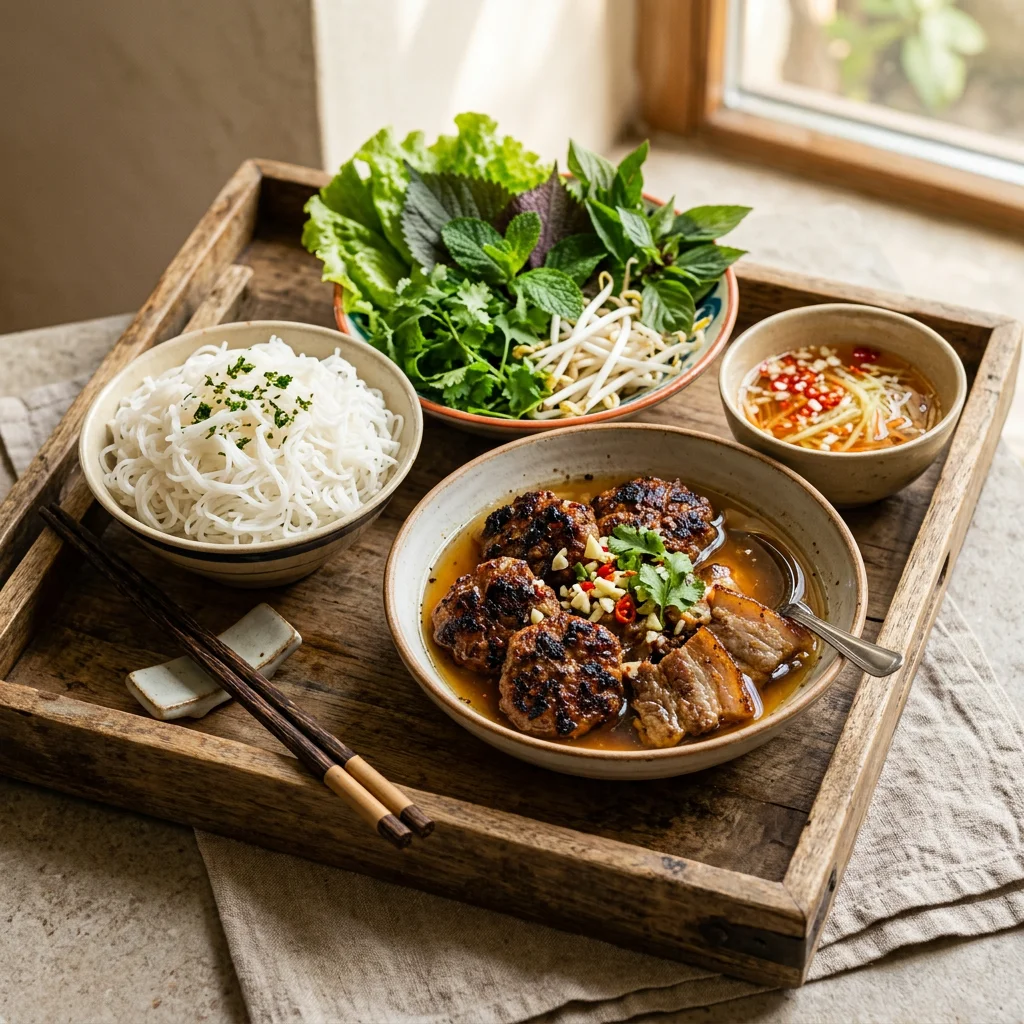
Bun cha is Hanoi's signature lunch — charcoal-grilled pork patties and sliced pork belly served in a bowl of warm, sweet-sour dipping broth alongside cold rice vermicelli and a towering plate of fresh herbs and lettuce. It is street food elevated to art, the smoky char of the pork meeting the bright acidity of the broth and the raw vitality of the herb plate in every bite. Unlike pho, which is found everywhere, bun cha remains stubbornly northern — a dish that Hanoians claim as their own. The preparation involves two forms of pork: thin slices of fatty pork belly and hand-formed patties made from ground pork seasoned with shallot, garlic, fish sauce, and sugar. Both are grilled over charcoal until caramelized and smoky, then dropped into the dipping broth — a warm (not hot) mixture of fish sauce, sugar, rice vinegar, lime, garlic, and chili, with pickled green papaya and carrot floating within. The noodles are served separately at room temperature, and diners dip them into the broth along with the grilled meat and herbs. From an Ayurvedic lens, bun cha is a masterful exercise in taste balance. The grilled pork carries sweet and salty rasas intensified by the Maillard reaction of charcoal grilling. The dipping broth concentrates sour (vinegar, lime), sweet (sugar), salty (fish sauce), and pungent (chili, garlic). The fresh herbs contribute bitter and astringent notes. All six tastes are present across the plate, fulfilling the Ayurvedic ideal of a complete meal.
Grounding and nourishing for Vata due to warmth, oiliness, and protein density. May aggravate Pitta from charred, oily, and sour qualities. Can increase Kapha from heaviness and fat content.
Ingredients
- 300 g Ground pork (not too lean, 20% fat ideal)
- 300 g Pork belly (sliced 1/4 inch thick)
- 3 whole Shallots (minced)
- 4 cloves Garlic (minced)
- 5 tbsp Fish sauce (divided between marinade and broth)
- 4 tbsp Sugar (divided between marinade and broth)
- 3 tbsp Rice vinegar
- 2 tbsp Lime juice
- 2 whole Fresh chili (sliced)
- 400 g Rice vermicelli (cooked and cooled)
- 1 cup Green papaya or carrot (julienned and lightly pickled)
- 1 head Lettuce leaves (washed and separated)
- 1 bunch Fresh mint
- 1 bunch Fresh cilantro
- 1 bunch Thai basil
Instructions
- Marinate the sliced pork belly: combine 2 tablespoons fish sauce, 1 tablespoon sugar, half the minced garlic, and half the minced shallots. Toss with the pork belly slices and marinate for at least 20 minutes.
- Make the patties: mix the ground pork with the remaining shallots and garlic, 1 tablespoon fish sauce, 1 tablespoon sugar, and a generous grind of black pepper. Form into small, flat patties about 2 inches across and 1/2 inch thick — they should be rustic, not perfectly uniform.
- Prepare the dipping broth: dissolve 2 tablespoons sugar in 1 cup warm water. Add 2 tablespoons fish sauce, the rice vinegar, lime juice, sliced chili, and a clove of minced garlic. The broth should be warm (not hot) and taste bright, sweet, sour, and salty in balanced measure. Add the pickled papaya or carrot.
- Grill the pork: if using charcoal, let coals develop a white ash coating. Grill the pork belly slices and patties over high heat, turning frequently, until caramelized and slightly charred on the edges — about 3-4 minutes per side for belly, 4-5 minutes per side for patties. The fat should render and the surfaces should develop a deep golden-brown crust.
- As each piece comes off the grill, drop it directly into the bowl of warm dipping broth. The broth absorbs the smoky flavor and the pork stays warm.
- Arrange the cold rice vermicelli on a plate. Arrange the lettuce, mint, basil, cilantro, and any other herbs on a separate plate.
- Serve the pork in its broth in individual bowls. Each person takes noodles, wraps them in a lettuce leaf with herbs, and dips the bundle into the broth with the pork.
- Eat by alternating bites of herb-wrapped noodles dipped in broth with pieces of smoky grilled pork, adjusting chili and lime to personal taste.
How This Recipe Affects Each Dosha
Vata
The warm, oily, heavy quality of grilled pork belly is deeply grounding for Vata. The sour dipping broth stimulates Vata's often irregular appetite. The smoky, caramelized flavors satisfy Vata's need for complex taste experiences. The rice noodles provide easy-to-digest carbohydrates. This is a substantial, satisfying meal for the Vata constitution.
Pitta
Several elements aggravate Pitta: the charred, smoky cooking method generates heat; pork belly is one of the more heating meats; the vinegar and lime concentrate sour taste; and garlic and chili add pungent fire. Pitta types with strong digestion can enjoy bun cha occasionally, but it is not a therapeutic food for Pitta aggravation.
Kapha
The fatty pork belly and sweet rice noodles increase Kapha's heavy, sweet, oily qualities. However, the pungent chili and garlic, the sour broth, and the abundance of fresh herbs provide some counterbalance. Kapha types should eat this in moderation, favoring the patties over the fatty belly slices and loading up on herbs.
The charcoal-grilled preparation concentrates heating energy in the meat. The sour, pungent dipping broth further kindles agni. Combined, this is a strongly agni-stimulating meal — the warming protein and the digestive broth work together to ensure the heavy pork is properly digested. The fresh herbs at the table lighten the post-meal digestive load.
Nourishes: Rasa (plasma), Rakta (blood), Mamsa (muscle), Meda (fat)
Adjustments by Constitution
For Vata Types
Use both pork belly and patties generously. Add extra sesame oil to the dipping broth. Serve the noodles warm rather than cold. Reduce the vinegar slightly to soften the sharpness, and increase the lime for a gentler sour note. Enjoy the full herb plate — the warming Thai basil is especially beneficial.
For Pitta Types
Replace pork belly with grilled chicken breast or shrimp, which are lighter and less heating. Reduce vinegar and chili in the dipping broth. Omit garlic or reduce by half. Increase fresh mint and cilantro on the herb plate — these are powerfully cooling. Add cucumber slices alongside the lettuce for extra cooling.
For Kapha Types
Use only the lean pork patties, skip the pork belly entirely. Reduce rice noodles by half and double the lettuce and herbs. Make the dipping broth with extra chili and garlic. Add fresh ginger slices to the broth. Focus on the herbs and lettuce wraps as the primary vehicle, with pork as the accent rather than the centerpiece.
Seasonal Guidance
Best in cooler months when the body craves warming, substantial, protein-rich meals and agni is naturally stronger. The heavy, oily quality of grilled pork belly is best supported by winter's strong digestive fire. In spring, this meal becomes heavy — reduce pork belly and increase herbs. In summer, the charred, heating quality is too much for Pitta season — switch to lighter grilled proteins or seafood-based preparations. In Vietnam, bun cha is eaten primarily at lunch (never dinner), and Hanoians eat it year-round because the robust lunchtime appetite handles its richness.
Best time of day: Lunch — the only traditional time for bun cha in Hanoi. The midday sun corresponds to the strongest agni, which is necessary to properly digest the rich grilled pork.
Cultural Context
Bun cha is inseparable from Hanoi. While pho travels freely across Vietnam and the world, bun cha stays loyal to the capital, served from lunchtime street stalls where the smell of pork grilling over charcoal draws crowds. The dish is typically prepared by women who tend small charcoal grills on the sidewalk, fanning the coals and turning the meat with practiced speed. Hanoi's bun cha street (Hang Than, Le Van Huu) is legendary, and local devotion to favorite stalls borders on religious. The "Obama bun cha" at Huong Lien in 2016 introduced the dish to an international audience, but for Hanoians, the dish has needed no outside validation — it has been their definitive lunch for generations.
Chef's Notes
Charcoal grilling is non-negotiable for authentic bun cha — the smoke and char flavor define the dish. If a charcoal grill is unavailable, a very hot cast iron grill pan is the best alternative, though the result will lack the smoky depth. The patties should be slightly fatty; lean ground pork makes dry, sad patties. Sugar in the marinade is essential for caramelization. The dipping broth should be warm, not hot or cold — warm broth keeps the pork tender and allows the flavors to meld. This dish gained international fame when Anthony Bourdain and President Obama ate bun cha at Huong Lien restaurant in Hanoi in 2016.
Frequently Asked Questions
Is Bun Cha good for my dosha?
Grounding and nourishing for Vata due to warmth, oiliness, and protein density. May aggravate Pitta from charred, oily, and sour qualities. Can increase Kapha from heaviness and fat content. The warm, oily, heavy quality of grilled pork belly is deeply grounding for Vata. Several elements aggravate Pitta: the charred, smoky cooking method generates heat; pork belly is one of the more heating meats; the vinegar and lime concentrate sour taste; and garlic and chili add pungent fire. The fatty pork belly and sweet rice noodles increase Kapha's heavy, sweet, oily qualities.
When is the best time to eat Bun Cha?
Lunch — the only traditional time for bun cha in Hanoi. The midday sun corresponds to the strongest agni, which is necessary to properly digest the rich grilled pork. Best in cooler months when the body craves warming, substantial, protein-rich meals and agni is naturally stronger. The heavy, oily quality of grilled pork belly is best supported by winter's strong d
How can I adjust Bun Cha for my constitution?
For Vata types: Use both pork belly and patties generously. Add extra sesame oil to the dipping broth. Serve the noodles warm rather than cold. Reduce the vinegar sli For Pitta types: Replace pork belly with grilled chicken breast or shrimp, which are lighter and less heating. Reduce vinegar and chili in the dipping broth. Omit garl
What are the Ayurvedic properties of Bun Cha?
Bun Cha has Sweet, Sour, Salty, Pungent, Bitter, Astringent taste (rasa), Heating energy (virya), and Sweet post-digestive effect (vipaka). Its qualities (gunas) are Heavy, Warm, Oily, Sharp. It nourishes Rasa (plasma), Rakta (blood), Mamsa (muscle), Meda (fat). The charcoal-grilled preparation concentrates heating energy in the meat. The sour, pungent dipping broth further kindles agni. Combined, this is a strongly agni-stimulating meal — the warming protein and the digestive broth work together to ensure the heavy pork is properly digested. The fresh herbs at the table lighten the post-meal digestive load.
What should you eat today?
This recipe has specific effects on each dosha, and the right meal depends on more than general guidelines. Your constitution, the current season, your birth chart's active planetary period, what you ate yesterday, how you slept — it all matters.
With Personal Alignment, you get daily food and meal guidance tailored to:
- Your prakriti and current vikriti
- Your Vedic birth chart and active planetary cycles
- The season, weather, and time of day
- Your food preferences, allergies, and restrictions
- Your feedback — it learns what works for your body and adapts
Not a generic diet plan. A living system that gets smarter about you every day.