Calabacitas (Mexican Squash with Corn and Cheese)
Mexican Recipe
Overview
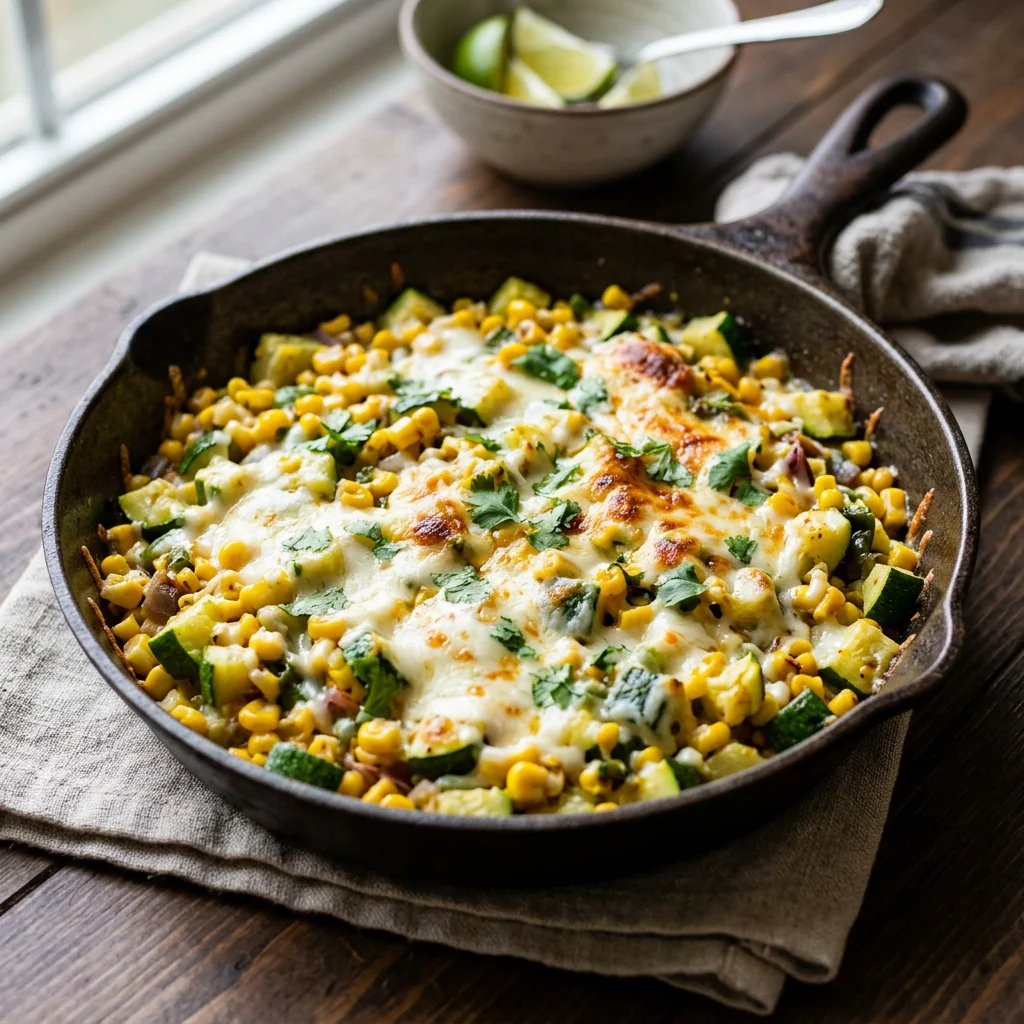
Calabacitas is the quintessential Mexican vegetable dish — tender rounds of zucchini and summer squash cooked with fresh corn kernels, tomatoes, and green chiles, finished with a blanket of melted cheese. The name means "little squashes," and the dish celebrates the Mesoamerican trinity of squash, corn, and beans (though this version focuses on the first two). It is home cooking at its most unpretentious, the kind of side dish that appears on the table without ceremony but that everyone finishes first. The preparation bridges pre-Columbian and Spanish-influenced cooking. Squash and corn were cultivated together in milpa farming systems for thousands of years before the Spanish arrived, and the two ingredients have a natural affinity — the sweet starchiness of corn against the mild, watery squash. The addition of cheese (queso fresco or Oaxacan cheese) and the saute technique came with European influence, creating a cross-cultural dish that feels entirely, authentically Mexican. Ayurvedically, calabacitas is one of the most balanced preparations in Mexican cuisine. Zucchini is sweet, light, and cooling. Corn is sweet, warm, and grounding. The tomato and chile add sour and pungent tastes. The cheese provides salty, sweet heaviness. Together, these create a dish that touches multiple rasas without dominating any, making it suitable for a wide range of constitutions — an unusually adaptable food.
Balancing for all doshas with appropriate adjustments. The mixed vegetable profile creates broad compatibility.
Ingredients
- 4 medium Zucchini (cut into half-moons)
- 2 ears Fresh corn kernels (cut from the cob)
- 2 medium Tomato (diced)
- 1 medium Onion (diced)
- 2 cloves Garlic (minced)
- 1 large Poblano chile (roasted, peeled, and diced)
- 100 g Queso fresco or Oaxacan cheese (crumbled or cubed)
- 2 tbsp Vegetable oil or lard
- 2 tbsp Fresh cilantro (chopped)
- 1 tsp Sea salt
- 1/2 tsp Black pepper
- 1 sprig Fresh epazote (optional)
Instructions
- If using a fresh poblano, char it over an open flame or under a broiler until blackened all over. Place in a bowl covered with plastic wrap for 10 minutes, then peel off the skin, remove seeds, and dice.
- Heat the oil in a large, deep skillet over medium heat. Cook the onion until translucent, about 5 minutes.
- Add the garlic and cook for 30 seconds. Add the diced tomato and cook until it breaks down into a sauce, about 3-4 minutes.
- Add the zucchini half-moons, corn kernels, roasted poblano, and epazote if using. Stir to coat everything in the tomato sauce.
- Season with salt and pepper. Cover and cook over medium-low heat for 10-12 minutes, stirring occasionally, until the zucchini is tender but not mushy and the corn is cooked through.
- Remove the lid, scatter the cheese over the top, and cover again for 2 minutes until the cheese softens.
- Garnish with fresh cilantro and serve immediately alongside warm tortillas and rice.
How This Recipe Affects Each Dosha
Vata
Generally acceptable for Vata due to the cooked preparation, warming corn, and grounding cheese. The zucchini is light and cooling, which can mildly aggravate Vata, but the other ingredients compensate. The overall dish is adequately warming and moist for Vata comfort.
Pitta
Good for Pitta. The zucchini is cooling, the corn is only mildly warming, and the cheese adds satisfying richness. The roasted poblano is very mild in heat. The sweet overall rasa soothes Pitta without creating excess heaviness.
Kapha
The light quality of zucchini and the moderate heaviness of corn make this acceptable for Kapha. The cheese adds some Kapha-increasing quality, but the overall preparation is lighter than bean or meat dishes. The pungent elements from the chile and garlic support Kapha digestion.
Gentle on agni. The cooked vegetables are easy to digest, and the garlic and chile provide mild digestive support. This is one of the most digestively friendly preparations in Mexican cuisine, suitable for moderate agni. The corn adds a grounding sweetness that is neither stimulating nor dampening.
Nourishes: Rasa (plasma), Rakta (blood), Mamsa (muscle)
Adjustments by Constitution
For Vata Types
Add extra cheese and a tablespoon of butter at serving. Include a pinch of cumin while cooking the onions. Serve with warm tortillas brushed with butter for maximum grounding.
For Pitta Types
Omit the poblano chile or use a very mild one. Increase the zucchini and add extra cilantro at serving. A squeeze of lime brightens the dish while adding cooling sour taste.
For Kapha Types
Reduce or omit the cheese. Add an extra poblano chile and include diced bell pepper for more vegetables. Use minimal oil and add dried oregano to the cooking. Serve without tortillas, letting the vegetables stand alone.
Seasonal Guidance
Calabacitas is a celebration of the summer garden, best from June through September when zucchini, corn, and tomatoes are at peak ripeness. The dish's fresh, light quality matches the body's summer need for less heavy food. In early autumn, when nights cool but summer vegetables are still available, it makes a perfect transitional dish. During winter, substitute butternut squash for zucchini and use frozen corn — the dish becomes heartier and more warming. Spring calabacitas with tender young zucchini and early corn is a delicate, lovely version.
Best time of day: Midday or early evening, as a side dish accompanying the main meal
Cultural Context
Calabacitas represents the pre-Columbian agricultural heritage of Mexico more directly than almost any other dish. Squash and corn were two of the "three sisters" cultivated in milpa farming systems for at least 5,000 years — planted together because corn provides a structure for beans to climb and squash leaves shade the soil, reducing water evaporation. This agricultural symbiosis produced a culinary one, and calabacitas is its expression at the table. The dish is found across Mexico with regional variations — some add cream, others use different chiles, and coastal versions might include shrimp — but the squash-corn combination is universal and ancient.
Chef's Notes
The key to calabacitas is restraint — the vegetables should be tender but retain their shape and distinct identities. Overcooking turns this into a mush. Cut the zucchini into thick half-moons (about 1 cm) so they hold up during cooking. Fresh corn, cut from the cob, is vastly superior to frozen — the milk from the cob adds sweetness and body. The roasted poblano provides a gentle, smoky warmth that defines the dish; raw green bell pepper is not a true substitute, but can be used in a pinch. Queso fresco crumbles over the top; Oaxacan cheese melts into strings. Both work, and many families use whichever is on hand.
Frequently Asked Questions
Is Calabacitas (Mexican Squash with Corn and Cheese) good for my dosha?
Balancing for all doshas with appropriate adjustments. The mixed vegetable profile creates broad compatibility. Generally acceptable for Vata due to the cooked preparation, warming corn, and grounding cheese. Good for Pitta. The light quality of zucchini and the moderate heaviness of corn make this acceptable for Kapha.
When is the best time to eat Calabacitas (Mexican Squash with Corn and Cheese)?
Midday or early evening, as a side dish accompanying the main meal Calabacitas is a celebration of the summer garden, best from June through September when zucchini, corn, and tomatoes are at peak ripeness. The dish's fresh, light quality matches the body's summer ne
How can I adjust Calabacitas (Mexican Squash with Corn and Cheese) for my constitution?
For Vata types: Add extra cheese and a tablespoon of butter at serving. Include a pinch of cumin while cooking the onions. Serve with warm tortillas brushed with butt For Pitta types: Omit the poblano chile or use a very mild one. Increase the zucchini and add extra cilantro at serving. A squeeze of lime brightens the dish while add
What are the Ayurvedic properties of Calabacitas (Mexican Squash with Corn and Cheese)?
Calabacitas (Mexican Squash with Corn and Cheese) has Sweet, Sour, Pungent, Salty taste (rasa), Neutral to mildly Cooling energy (virya), and Sweet post-digestive effect (vipaka). Its qualities (gunas) are Light, Moist, Slightly Warm. It nourishes Rasa (plasma), Rakta (blood), Mamsa (muscle). Gentle on agni. The cooked vegetables are easy to digest, and the garlic and chile provide mild digestive support. This is one of the most digestively friendly preparations in Mexican cuisine, suitable for moderate agni. The corn adds a grounding sweetness that is neither stimulating nor dampening.
What should you eat today?
This recipe has specific effects on each dosha, and the right meal depends on more than general guidelines. Your constitution, the current season, your birth chart's active planetary period, what you ate yesterday, how you slept — it all matters.
With Personal Alignment, you get daily food and meal guidance tailored to:
- Your prakriti and current vikriti
- Your Vedic birth chart and active planetary cycles
- The season, weather, and time of day
- Your food preferences, allergies, and restrictions
- Your feedback — it learns what works for your body and adapts
Not a generic diet plan. A living system that gets smarter about you every day.