Canh Chua (Sweet and Sour Tamarind Soup)
Vietnamese Recipe
Overview
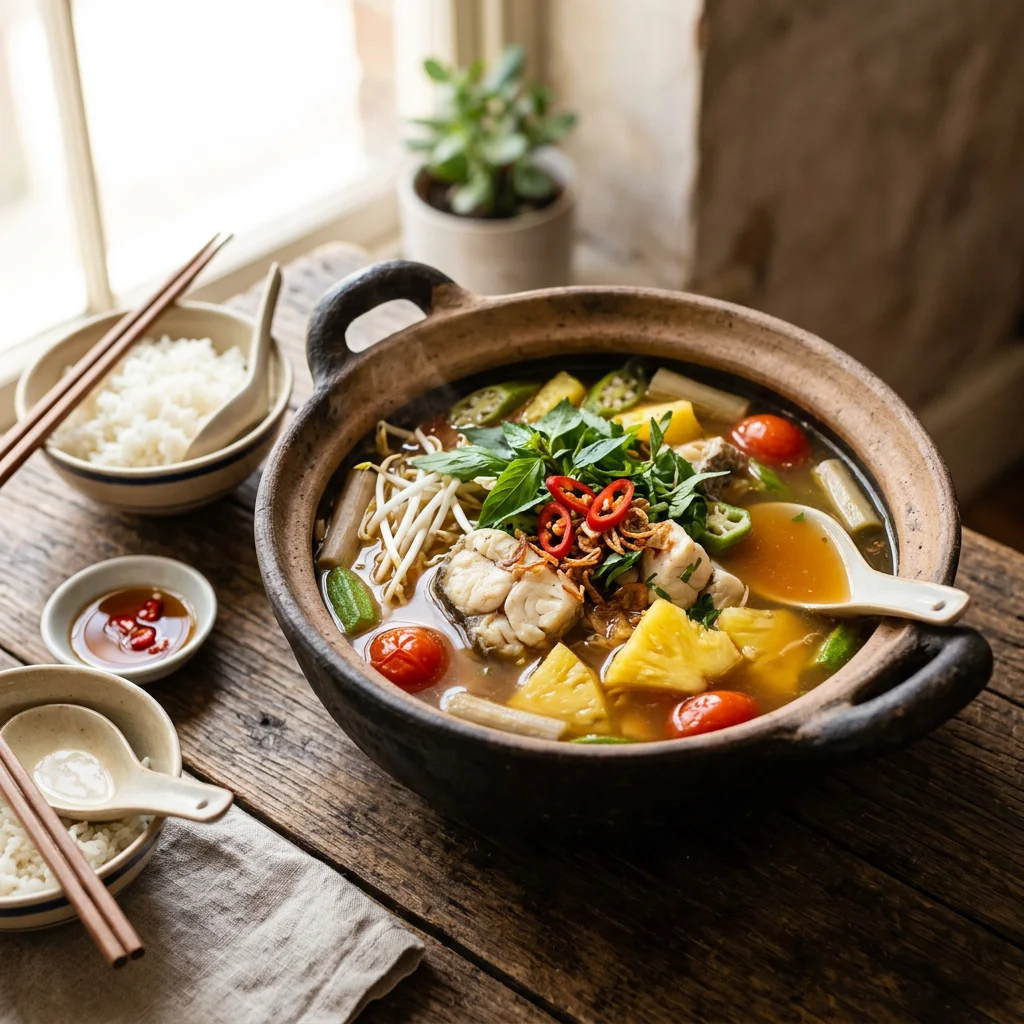
Canh chua is the sweet and sour soup of the Mekong Delta — a bright, tangy broth built on tamarind, pineapple, tomato, and fish, fragrant with rice paddy herb (ngo om), Vietnamese cilantro, and sometimes a whisper of shrimp paste. It is comfort food of the southern Vietnamese table, served in a communal pot alongside steamed rice, and is one of the dishes that most vividly captures the flavor philosophy of the delta: bold, fresh, aromatic, and balanced across all taste dimensions. The foundation is tamarind water, which provides the signature sour backbone. Pineapple adds a tropical sweetness that plays against the tartness, while tomato contributes body and a gentle acidity. The fish — traditionally catfish, snakehead fish, or shrimp — swims in this tangy broth alongside bean sprouts, okra, and elephant ear stems (bac ha), a crunchy, spongy vegetable unique to Vietnamese cooking. The soup is finished with a shower of herbs: rice paddy herb, culantro, and scallions. Ayurvedically, canh chua is a fascinating preparation because its dominant taste is sour — the rasa most directly connected to agni stimulation and Vata pacification. Tamarind is recognized in both Ayurveda and traditional Vietnamese medicine as a digestive aid. The combination of sour (tamarind, pineapple, tomato), sweet (pineapple, sugar), and pungent (garlic, chili) creates a dish that powerfully stimulates appetite and digestion while the fresh herbs at the end introduce a raw, pranic quality that cooked soup alone lacks.
Pacifies Vata through sour taste, warmth, and liquid quality. May increase Pitta due to sour and heating nature. Good for Kapha due to lightness and stimulating quality.
Ingredients
- 2 tbsp Tamarind paste (dissolved in 1/2 cup warm water and strained)
- 400 g White fish fillets (catfish, basa, or tilapia) (cut into 2-inch pieces)
- 1 cup Pineapple (cut into thin wedges)
- 2 medium Tomato (cut into wedges)
- 6 whole Okra (halved lengthwise)
- 2 cups Bean sprouts
- 3 cloves Garlic (minced)
- 2 tbsp Fish sauce (or to taste)
- 1 tbsp Sugar
- 1 whole Fresh chili (sliced)
- 3 tbsp Fresh cilantro (chopped)
- 3 whole Scallions (cut into 2-inch lengths)
- 1/4 cup Fresh Thai basil (for garnish)
- 6 cups Water or light stock
Instructions
- Dissolve the tamarind paste in warm water, pressing and stirring to extract maximum flavor. Strain through a fine sieve, discarding the solids. Reserve the tamarind water.
- Heat a tablespoon of neutral oil in a soup pot over medium heat. Saute the minced garlic until fragrant, about 30 seconds.
- Add the water or stock and bring to a boil. Add the tomato wedges and pineapple. Simmer for 5 minutes until the tomato begins to soften and release its juices.
- Add the tamarind water, fish sauce, and sugar. Stir to combine. Taste the broth — it should be distinctly sour with a background sweetness. Adjust tamarind and sugar until the balance pleases your palate.
- Add the okra and simmer for 3 minutes. Then gently slide in the fish pieces, taking care not to break them. Simmer for 5-7 minutes until the fish is just cooked through and opaque.
- Turn off the heat. Stir in the bean sprouts and scallions — they should wilt slightly in the residual heat but remain crisp.
- Ladle into a large communal bowl or individual bowls. Top generously with fresh cilantro, Thai basil, and sliced chili.
- Serve immediately alongside steamed jasmine rice. The soup is eaten spooned over rice, not drunk separately.
How This Recipe Affects Each Dosha
Vata
The sour taste is one of Vata's best allies — it stimulates appetite, kindles agni, and grounds the nervous system. The warm, liquid broth directly counteracts Vata's dry, cold tendencies. The fish provides easily digestible protein. Tamarind and pineapple both carry the sour rasa that Vata craves. This soup is deeply satisfying for Vata constitutions.
Pitta
The dominant sour taste (tamarind, pineapple, tomato) directly increases Pitta. Sour is one of the three tastes that aggravate Pitta, and this soup concentrates it. The heating spices compound this effect. Pitta types should consume this soup in moderation and only when they are not experiencing acid reflux, skin irritation, or other Pitta symptoms.
Kapha
The light, liquid, warming quality of canh chua is beneficial for Kapha. The sour taste stimulates sluggish digestion, and the pungent chili and garlic help move stagnant Kapha. The fish is a lighter protein than red meat. However, the sweetness from pineapple and sugar should be minimized for Kapha types.
Strongly kindles agni. The sour taste of tamarind is a powerful digestive stimulant in both Ayurvedic and Vietnamese traditions. Combined with garlic and chili, this soup ignites sluggish digestion. The warm, liquid form makes nutrients immediately accessible. Ideal before or during a meal to prime the digestive fire.
Nourishes: Rasa (plasma), Rakta (blood), Mamsa (muscle)
Adjustments by Constitution
For Vata Types
Add an extra tablespoon of tamarind and a squeeze of lime at serving. Use a fattier fish like salmon or mackerel for extra oiliness. Drizzle a teaspoon of sesame oil into each bowl. Serve with plenty of steamed rice to absorb the tangy broth. Garnish with extra Thai basil, which is gently warming.
For Pitta Types
Reduce tamarind by half and increase pineapple for a sweeter, less sharp sourness. Omit chili entirely. Use a mild white fish like cod or sole. Add coconut milk (1/4 cup) to soften the acidity. Increase fresh cilantro garnish generously, as cilantro is one of the most Pitta-cooling herbs.
For Kapha Types
Omit the sugar entirely and reduce pineapple. Increase garlic and add fresh ginger slices to the broth. Use shrimp instead of fish for a lighter protein. Add extra chili. Double the bean sprouts for crunch without heaviness. Serve with less rice or over cauliflower rice.
Seasonal Guidance
Best during cooler months when the warming, agni-stimulating qualities are most therapeutic. In autumn, the sour taste grounds Vata energy. In winter, the hot broth and pungent spices counteract cold and stagnation. In spring, the lightness helps clear accumulated Kapha. In summer, the sour and heating quality can aggravate Pitta — if eaten during hot weather, reduce tamarind and chili significantly and increase cooling herbs. In Vietnam, this soup is eaten year-round because the tropical climate supports its digestion.
Best time of day: Lunch or early dinner, served hot alongside steamed rice as part of a multi-dish Vietnamese family meal
Cultural Context
Canh chua is the signature soup of southern Vietnam and the Mekong Delta, where the abundance of freshwater fish, tropical fruit, and water vegetables shaped a cuisine built around sweet-sour contrasts. In Vietnamese food philosophy, every meal should contain a soup (canh), and canh chua is the most beloved of the southern repertoire. The tamarind sour broth tradition connects Vietnam to a wider Southeast Asian sour soup lineage that includes Thai tom yum and Filipino sinigang — each culture's expression of the universal craving for hot, sour, aromatic broth. In Vietnamese households, canh chua made with catfish from the Mekong is considered the definitive version, and family recipes for the tamarind-to-sweetness ratio are passed down through generations.
Chef's Notes
The sour-sweet balance is everything — start with less tamarind and add more gradually. Different tamarind products vary enormously in sourness. Pineapple should be ripe but still firm, not mushy. The fish goes in last and cooks quickly; overcooking makes it fall apart and cloud the broth. If you can find elephant ear stems (bac ha) at an Asian market, add them with the okra — their spongy, crunchy texture is characteristic of authentic canh chua. Rice paddy herb (ngo om) is the signature garnish in Vietnam; if available, it adds an irreplaceable citrusy, cumin-like aroma.
Frequently Asked Questions
Is Canh Chua (Sweet and Sour Tamarind Soup) good for my dosha?
Pacifies Vata through sour taste, warmth, and liquid quality. May increase Pitta due to sour and heating nature. Good for Kapha due to lightness and stimulating quality. The sour taste is one of Vata's best allies — it stimulates appetite, kindles agni, and grounds the nervous system. The dominant sour taste (tamarind, pineapple, tomato) directly increases Pitta. The light, liquid, warming quality of canh chua is beneficial for Kapha.
When is the best time to eat Canh Chua (Sweet and Sour Tamarind Soup)?
Lunch or early dinner, served hot alongside steamed rice as part of a multi-dish Vietnamese family meal Best during cooler months when the warming, agni-stimulating qualities are most therapeutic. In autumn, the sour taste grounds Vata energy. In winter, the hot broth and pungent spices counteract cold
How can I adjust Canh Chua (Sweet and Sour Tamarind Soup) for my constitution?
For Vata types: Add an extra tablespoon of tamarind and a squeeze of lime at serving. Use a fattier fish like salmon or mackerel for extra oiliness. Drizzle a teaspoo For Pitta types: Reduce tamarind by half and increase pineapple for a sweeter, less sharp sourness. Omit chili entirely. Use a mild white fish like cod or sole. Add co
What are the Ayurvedic properties of Canh Chua (Sweet and Sour Tamarind Soup)?
Canh Chua (Sweet and Sour Tamarind Soup) has Sour, Sweet, Salty, Pungent taste (rasa), Heating energy (virya), and Sour post-digestive effect (vipaka). Its qualities (gunas) are Light, Warm, Liquid, Sharp. It nourishes Rasa (plasma), Rakta (blood), Mamsa (muscle). Strongly kindles agni. The sour taste of tamarind is a powerful digestive stimulant in both Ayurvedic and Vietnamese traditions. Combined with garlic and chili, this soup ignites sluggish digestion. The warm, liquid form makes nutrients immediately accessible. Ideal before or during a meal to prime the digestive fire.
What should you eat today?
This recipe has specific effects on each dosha, and the right meal depends on more than general guidelines. Your constitution, the current season, your birth chart's active planetary period, what you ate yesterday, how you slept — it all matters.
With Personal Alignment, you get daily food and meal guidance tailored to:
- Your prakriti and current vikriti
- Your Vedic birth chart and active planetary cycles
- The season, weather, and time of day
- Your food preferences, allergies, and restrictions
- Your feedback — it learns what works for your body and adapts
Not a generic diet plan. A living system that gets smarter about you every day.