Caprese Salad
Italian Recipe
Overview
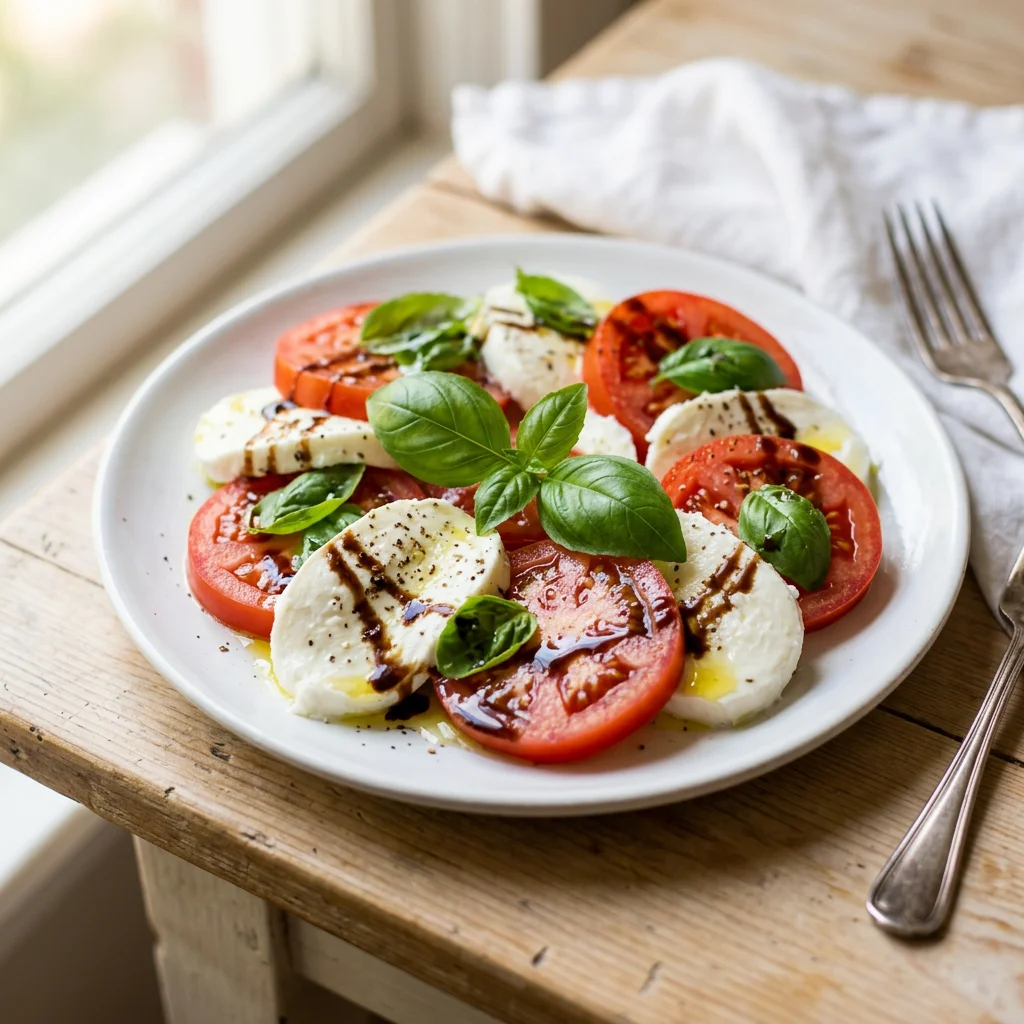
Insalata caprese is the Italian art of restraint — nothing more than ripe tomatoes, fresh mozzarella, basil leaves, olive oil, and salt arranged on a plate. Named for the island of Capri in the Bay of Naples, it is a dish that cannot be improved by addition, only ruined by substitution. Every ingredient must be at its absolute peak: tomatoes sun-warmed and bursting with juice, mozzarella pulled fresh that morning from a caseificio (cheese maker), basil fragrant and bright, and olive oil fruity enough to taste on its own. The genius of caprese lies in contrast — the cool, milky sweetness of the mozzarella against the acidic warmth of ripe tomato, the aromatic anise of fresh basil against the grassy bite of olive oil, the yielding textures of both cheese and fruit against the slight resistance of a basil leaf. It is a dish that teaches the Italian principle of quality over technique: if your ingredients are extraordinary, the cook's only job is not to interfere. Ayurvedically, caprese presents an interesting profile. Fresh mozzarella is sweet, heavy, cool, and Kapha-increasing — a fresh cheese that builds tissue. Tomato is sour, slightly heating, and can aggravate Pitta. Basil is warming and Vata-pacifying. Olive oil is heavy and warming. The combination is cooling overall due to the raw preparation, best suited for Pitta season (summer) when all the ingredients are naturally at their peak.
Increases Kapha due to the heavy, cool, moist qualities of fresh cheese and raw tomato. Mildly aggravates Pitta from tomato acidity. Can aggravate Vata due to the cold, raw nature.
Ingredients
- 4 large Ripe tomatoes (heirloom or beefsteak, sliced 1/4 inch thick)
- 350 g Fresh mozzarella (buffalo or fior di latte, sliced 1/4 inch thick)
- 1 bunch Fresh basil (whole leaves)
- 3 tbsp Extra-virgin olive oil (best quality available)
- 1/2 tsp Flaky sea salt (Maldon or similar)
- 1/4 tsp Black pepper (freshly ground, optional)
Instructions
- Remove the tomatoes and mozzarella from the refrigerator 30 minutes before serving. Cold kills the flavor of both — they must be at room temperature.
- Slice the tomatoes and mozzarella into rounds of equal thickness, about 1/4 inch.
- Arrange alternating slices of tomato and mozzarella on a serving plate, overlapping slightly. Tuck whole basil leaves between the slices.
- Drizzle generously with olive oil, allowing it to pool on the plate.
- Season with flaky sea salt and a few grinds of black pepper if desired.
- Serve immediately — caprese does not sit well, as salt draws water from the tomatoes and the mozzarella dries out.
How This Recipe Affects Each Dosha
Vata
Raw, cold food is generally unfavorable for Vata, and caprese is entirely uncooked and often served cool. The heavy mozzarella provides some grounding, and the olive oil offers lubrication, but the overall cold quality can disturb Vata digestion. Vata types should eat this in small amounts, during warm weather, and at midday only.
Pitta
Tomato is sour and mildly heating, which can aggravate Pitta, but the cooling mozzarella and raw preparation balance this somewhat. The basil provides a warming aromatic note. Overall, caprese is acceptable for Pitta in moderate amounts, especially in summer when the cooling quality is welcome — but the tomato acidity warrants attention during inflammatory states.
Kapha
Fresh mozzarella is one of the most Kapha-increasing foods in Western cuisine — sweet, heavy, cool, moist, and mucus-producing. Combined with the wet, heavy nature of raw tomato, caprese will increase Kapha significantly. Kapha types should treat this as a small side or occasional indulgence, never a main course.
Raw food does not stimulate agni and requires existing digestive strength to process. The olive oil and basil provide mild support, but overall this is not a dish that kindles digestive fire. Best eaten as a side when agni is already strong.
Nourishes: Rasa (plasma), Meda (fat), Shukra (reproductive)
Adjustments by Constitution
For Vata Types
Drizzle with extra olive oil and add a generous grind of black pepper. Include fresh oregano alongside the basil for warmth. Eat at room temperature or slightly warm — never cold. Pair with warm bread to balance the raw quality.
For Pitta Types
Choose the mildest, sweetest tomatoes available. Use fior di latte (cow's milk mozzarella) rather than the tangier buffalo mozzarella. Add fennel fronds or mint leaves alongside the basil for additional cooling. Omit black pepper.
For Kapha Types
Reduce the mozzarella to a thin slice per serving and increase the tomato and basil. Add arugula for its bitter, peppery drying quality. Use only a light drizzle of olive oil. Add cracked black pepper generously. Consider making this without cheese at all — just tomatoes, basil, oil, and salt.
Seasonal Guidance
Caprese is a summer dish and should be made only during tomato season — roughly July through September. This aligns perfectly with the Pitta season when the body can handle cooling, raw foods and digestive fire is at a moderate steady state. Making caprese in winter with pale, mealy tomatoes is not just disappointing — it is nutritionally and energetically inappropriate. In late summer and early autumn, when the last tomatoes are ripening, is peak caprese time.
Best time of day: Lunch, when the sun is warm and digestive fire is strong enough to handle raw food
Cultural Context
Though now served worldwide, insalata caprese is a dish of the Campania region — specifically the island of Capri and the Amalfi Coast. It gained popularity in the mid-twentieth century as Italian cuisine became globally fashionable, but in its homeland it is simply what you eat in August when the tomatoes are so heavy on the vine they fall of their own accord. The colors of the dish — red, white, and green — mirror the Italian flag, which has made it a symbol of Italian national identity in food, though this was coincidence rather than design. In Naples and the surrounding region, the arrival of buffalo mozzarella at the market each morning is a daily event, and caprese is how that cheese is most commonly eaten — within hours of being made.
Chef's Notes
This dish lives and dies by ingredient quality. Supermarket tomatoes in January will produce a sad plate — make caprese only when local tomatoes are in season (July through September in most climates). Buffalo mozzarella (mozzarella di bufala) from Campania is the gold standard, with a tangier, richer flavor than cow's milk fior di latte. Tear the mozzarella rather than slicing for a more rustic presentation. Some add a drizzle of balsamic vinegar, but this is not traditional and purists consider it heresy. A balsamic reduction is more acceptable if you must. Never refrigerate the assembled salad.
Frequently Asked Questions
Is Caprese Salad good for my dosha?
Increases Kapha due to the heavy, cool, moist qualities of fresh cheese and raw tomato. Mildly aggravates Pitta from tomato acidity. Can aggravate Vata due to the cold, raw nature. Raw, cold food is generally unfavorable for Vata, and caprese is entirely uncooked and often served cool. Tomato is sour and mildly heating, which can aggravate Pitta, but the cooling mozzarella and raw preparation balance this somewhat. Fresh mozzarella is one of the most Kapha-increasing foods in Western cuisine — sweet, heavy, cool, moist, and mucus-producing.
When is the best time to eat Caprese Salad?
Lunch, when the sun is warm and digestive fire is strong enough to handle raw food Caprese is a summer dish and should be made only during tomato season — roughly July through September. This aligns perfectly with the Pitta season when the body can handle cooling, raw foods and dige
How can I adjust Caprese Salad for my constitution?
For Vata types: Drizzle with extra olive oil and add a generous grind of black pepper. Include fresh oregano alongside the basil for warmth. Eat at room temperature o For Pitta types: Choose the mildest, sweetest tomatoes available. Use fior di latte (cow's milk mozzarella) rather than the tangier buffalo mozzarella. Add fennel fron
What are the Ayurvedic properties of Caprese Salad?
Caprese Salad has Sweet, Sour, Pungent (from basil) taste (rasa), Cooling energy (virya), and Sweet post-digestive effect (vipaka). Its qualities (gunas) are Heavy, Cool, Oily, Moist. It nourishes Rasa (plasma), Meda (fat), Shukra (reproductive). Raw food does not stimulate agni and requires existing digestive strength to process. The olive oil and basil provide mild support, but overall this is not a dish that kindles digestive fire. Best eaten as a side when agni is already strong.
What should you eat today?
This recipe has specific effects on each dosha, and the right meal depends on more than general guidelines. Your constitution, the current season, your birth chart's active planetary period, what you ate yesterday, how you slept — it all matters.
With Personal Alignment, you get daily food and meal guidance tailored to:
- Your prakriti and current vikriti
- Your Vedic birth chart and active planetary cycles
- The season, weather, and time of day
- Your food preferences, allergies, and restrictions
- Your feedback — it learns what works for your body and adapts
Not a generic diet plan. A living system that gets smarter about you every day.