Chapati
Indian Recipe
Overview
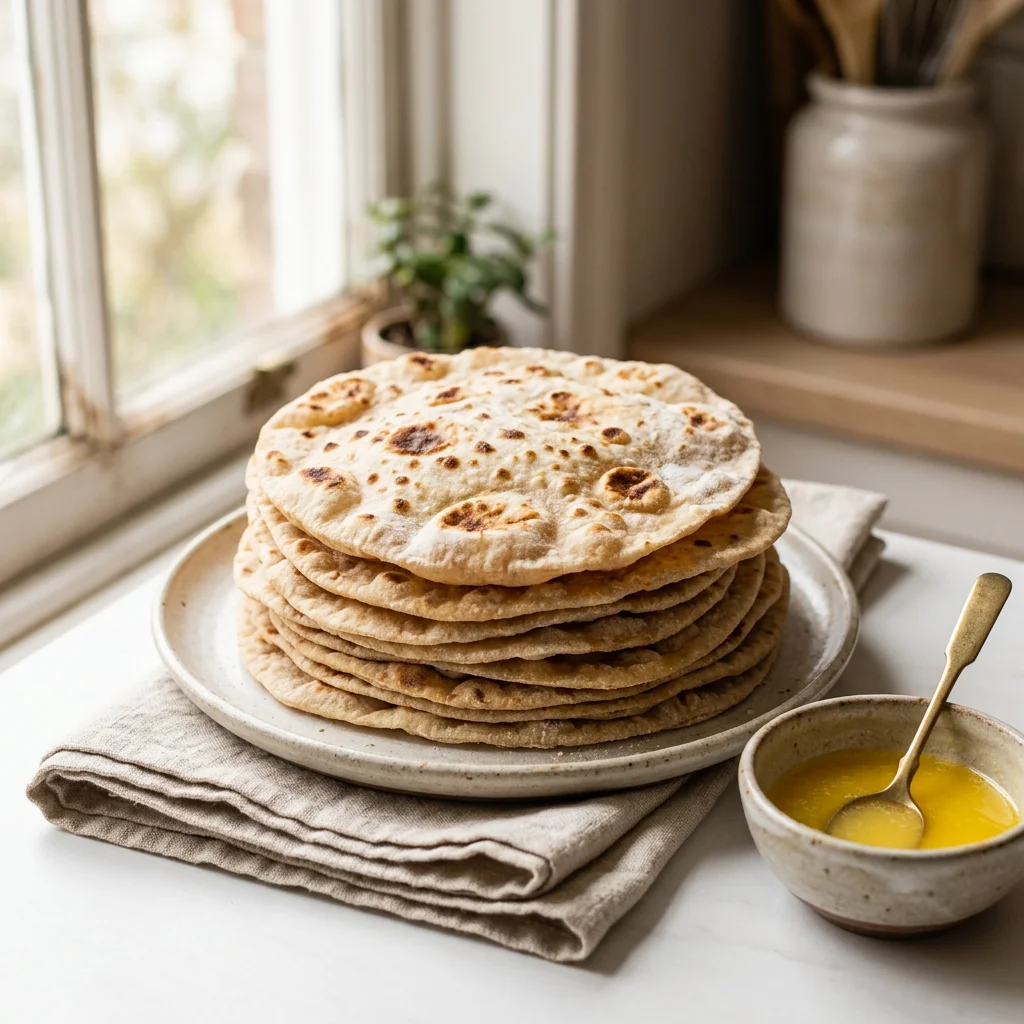
Chapati is the daily bread of India — an unleavened whole wheat flatbread cooked on a dry griddle until it puffs with steam. It is the most fundamental bread on the subcontinent, made from just two ingredients (whole wheat flour and water) and present at virtually every meal in North and Central India. Unlike naan, which requires a tandoor oven and often includes refined flour, yogurt, and fat, chapati is austere in its simplicity. The art of chapati lies entirely in technique: kneading the dough until it is silky smooth, resting it to develop gluten, rolling it thin and perfectly round, and cooking it on a hot tawa (flat griddle) with precise timing. A well-made chapati will puff into a balloon on the flame — a moment of small magic that signals perfect execution. The steam trapped inside creates layers and ensures the bread is soft rather than tough. Ayurvedically, whole wheat is one of the most nourishing grains — sweet in taste, grounding in energy, and tissue-building in its post-digestive effect. Chapati serves as the vehicle for all the complex flavors of Indian cooking, and its simplicity makes it a stabilizing foundation for any meal.
Balances Vata when served warm with ghee. May increase Kapha in excess due to heaviness. Neutral for Pitta.
Ingredients
- 2 cups Whole wheat flour (atta)
- 3/4 cup Water (warm)
- 1/2 tsp Salt
- 1 tbsp Ghee (for brushing (optional))
Instructions
- Combine the whole wheat flour and salt in a large bowl. Make a well in the center and gradually add warm water while mixing with your other hand.
- Knead the dough vigorously for 8-10 minutes until it is smooth, soft, and springs back when pressed with a finger. The dough should not be sticky or dry — adjust with small amounts of water or flour as needed.
- Cover the dough with a damp cloth and rest for at least 15 minutes (up to 30 minutes). This relaxes the gluten and makes rolling easier.
- Divide the dough into 8 equal portions. Roll each into a smooth ball between your palms.
- Dust a ball lightly in flour and roll it out on a flat surface into a thin, even circle about 6-7 inches in diameter. Rotate the dough 90 degrees with each roll to keep it round.
- Heat a tawa (flat griddle) over medium-high heat until a drop of water sizzles and evaporates on contact. Place the rolled chapati on the dry tawa.
- Cook for 30-40 seconds until small bubbles appear on the surface and the underside has light brown spots. Flip and cook the second side for 30 seconds.
- Using tongs, place the chapati directly over an open flame for a few seconds on each side — it will puff into a full balloon. If cooking on electric, press gently with a folded cloth to encourage puffing.
- Brush with a thin layer of ghee if desired and stack in a cloth-lined container to keep warm. Serve immediately.
How This Recipe Affects Each Dosha
Vata
Whole wheat's sweet, heavy, grounding qualities are stabilizing for Vata — this is one of the best grains for Vata types. The warmth of freshly cooked chapati and the addition of ghee add moisture and lubrication that Vata needs. Chapati with ghee is a classic Vata-pacifying combination.
Pitta
Wheat is generally neutral to cooling for Pitta. The sweet taste and sweet vipaka are Pitta-balancing. The dry cooking method (no oil in the pan) keeps it from becoming too heavy or oily. Pitta types do well with chapati as their daily bread.
Kapha
Wheat is one of the heavier grains and can increase Kapha if consumed in excess. The sweet taste and heavy quality contribute to Kapha accumulation. However, the dry cooking method and thin preparation make chapati better for Kapha than thicker breads like paratha or naan.
Requires moderate agni to digest. Whole wheat is heavier than rice and takes longer to break down. Eating chapati with heating condiments like pickles or dal supports its digestion.
Nourishes: Rasa (plasma), Mamsa (muscle), Meda (fat), Shukra (reproductive)
Adjustments by Constitution
For Vata Types
Add 1 teaspoon of ghee or oil to the dough while kneading for extra softness. Always brush finished chapatis with ghee. Serve warm — cold chapati is difficult for Vata to digest.
For Pitta Types
No modifications needed. Chapati is naturally well-suited to Pitta. For variety, mix in a tablespoon of coriander powder or dried fenugreek leaves (kasuri methi) into the dough.
For Kapha Types
Mix in a portion of barley flour or millet flour (up to 1/4 of the total) to lighten the dough. Skip the ghee brushing. Add a pinch of ajwain (carom seeds) to the dough for digestive support. Consider millet roti as a regular alternative.
Seasonal Guidance
Chapati is appropriate year-round as a staple bread. In cooler months, serve it generously brushed with ghee for extra nourishment and warmth. In summer, it pairs well with cooling sides like raita and salads. During the damp, heavy days of late winter and spring, consider alternating with lighter grain breads (bajra roti, jowar roti) to avoid excess Kapha. Always serve warm — stale or cold chapati loses both taste and digestibility.
Best time of day: Lunch or dinner. Best freshly made — chapati quality degrades within hours.
Cultural Context
Chapati is more than food in India — it is a daily ritual. In traditional households, the making of chapati is often the last step of meal preparation, done fresh so it arrives at the table warm. The ability to make perfectly round, fully puffed chapatis is a point of pride, and the rhythmic pat-pat of dough being shaped is a signature sound of Indian kitchens. The word comes from the Hindi "chappatna," meaning to flatten. In many Indian languages, the phrase "dal-roti" (lentils and bread) is synonymous with a basic meal — the bare minimum to sustain life.
Chef's Notes
The dough should be as soft as your earlobe — this is the traditional Indian test. If it feels tough, add a teaspoon of water at a time and knead more. A longer rest (30 minutes) yields softer chapatis. Use minimal flour for dusting while rolling; excess flour creates dry, crackly bread. The tawa must be properly hot before the first chapati goes on — too cool and it won't puff. Stack finished chapatis in a cloth-lined casserole or wrap in a clean towel to stay soft. They firm up within minutes if left exposed.
Frequently Asked Questions
Is Chapati good for my dosha?
Balances Vata when served warm with ghee. May increase Kapha in excess due to heaviness. Neutral for Pitta. Whole wheat's sweet, heavy, grounding qualities are stabilizing for Vata — this is one of the best grains for Vata types. Wheat is generally neutral to cooling for Pitta. Wheat is one of the heavier grains and can increase Kapha if consumed in excess.
When is the best time to eat Chapati?
Lunch or dinner. Best freshly made — chapati quality degrades within hours. Chapati is appropriate year-round as a staple bread. In cooler months, serve it generously brushed with ghee for extra nourishment and warmth. In summer, it pairs well with cooling sides like raita an
How can I adjust Chapati for my constitution?
For Vata types: Add 1 teaspoon of ghee or oil to the dough while kneading for extra softness. Always brush finished chapatis with ghee. Serve warm — cold chapati is d For Pitta types: No modifications needed. Chapati is naturally well-suited to Pitta. For variety, mix in a tablespoon of coriander powder or dried fenugreek leaves (ka
What are the Ayurvedic properties of Chapati?
Chapati has Sweet taste (rasa), Heating energy (virya), and Sweet post-digestive effect (vipaka). Its qualities (gunas) are Heavy, Warm, Dry. It nourishes Rasa (plasma), Mamsa (muscle), Meda (fat), Shukra (reproductive). Requires moderate agni to digest. Whole wheat is heavier than rice and takes longer to break down. Eating chapati with heating condiments like pickles or dal supports its digestion.
What should you eat today?
This recipe has specific effects on each dosha, and the right meal depends on more than general guidelines. Your constitution, the current season, your birth chart's active planetary period, what you ate yesterday, how you slept — it all matters.
With Personal Alignment, you get daily food and meal guidance tailored to:
- Your prakriti and current vikriti
- Your Vedic birth chart and active planetary cycles
- The season, weather, and time of day
- Your food preferences, allergies, and restrictions
- Your feedback — it learns what works for your body and adapts
Not a generic diet plan. A living system that gets smarter about you every day.