Chicken Noodle Soup
American Recipe
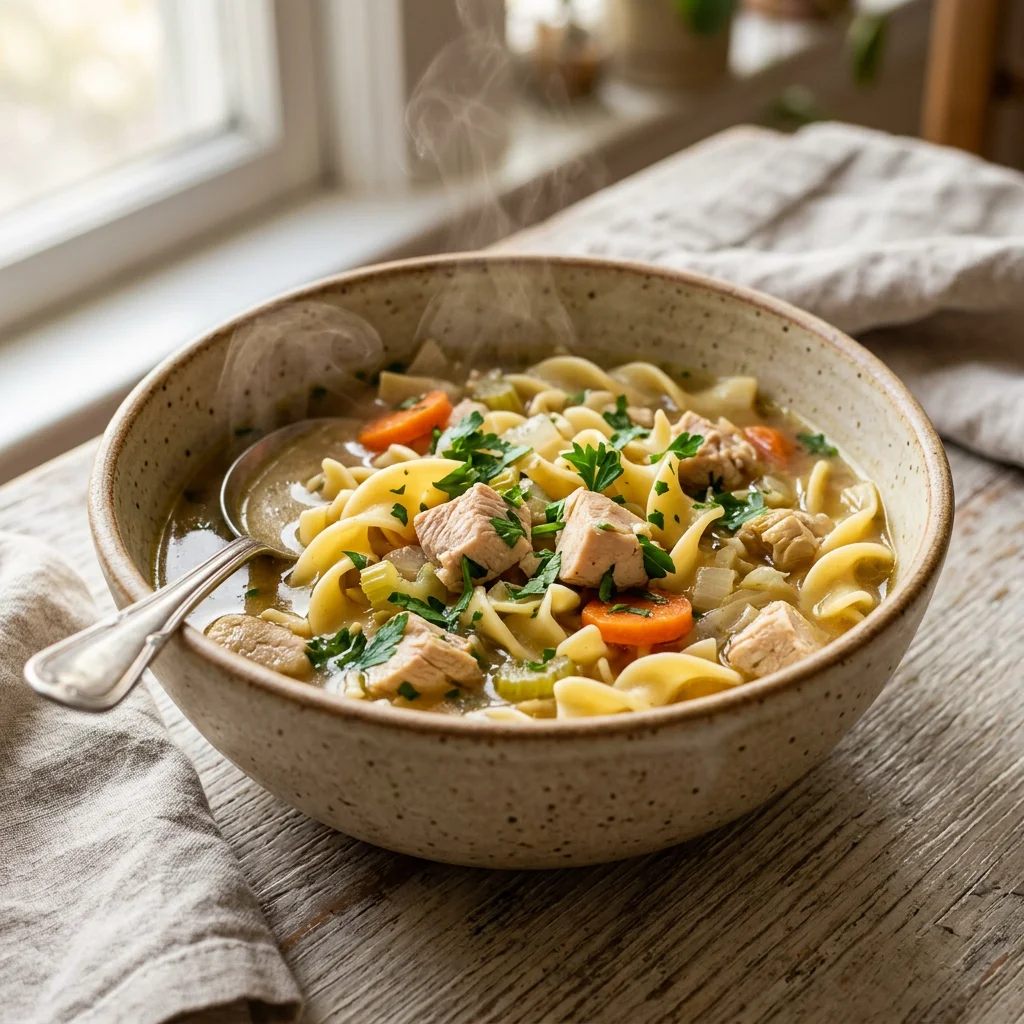
Overview
Chicken noodle soup is America's kitchari. That statement will make Ayurvedic purists uncomfortable, but it is functionally true. When Americans get sick, they do not reach for a detox smoothie or a complex herbal remedy — they make chicken noodle soup. And the reason it works, the reason it has earned its reputation as medicine in a bowl, is that it follows Ayurvedic principles almost perfectly, even though nobody who invented it had ever heard of Ayurveda. Consider what the soup actually is: a warm, clear broth rich in minerals and gelatin (which Ayurveda would recognize as building rasa dhatu and lubricating joints), aromatic vegetables simmered until soft (easy on digestion, no raw or cold qualities), mild spices or herbs (supportive of agni without aggravating it), and a modest amount of protein and starch. It is warm, liquid, lightly oily from the chicken fat, easy to digest, and mildly sweet and salty. These are precisely the qualities Ayurveda recommends during illness: warm, liquid, light, easy to digest, and nourishing without being heavy. The bone broth base — when made properly by simmering bones for hours — is remarkably close to the Ayurvedic concept of mamsa rasa, the essence extracted from meat that nourishes deep tissues without requiring intense digestive effort. Modern science has confirmed what grandmothers always knew: chicken soup contains compounds that mildly inhibit neutrophil migration (reducing inflammation), the steam opens nasal passages, the salt and liquid combat dehydration, and the warmth raises core body temperature to support immune function. Ayurveda would simply say: it kindles agni, clears ama, and nourishes rasa dhatu. Same truth, different vocabulary.
Gently pacifies Vata with warmth and nourishment. Generally neutral for Pitta in moderate amounts. Mild enough for Kapha when broth-heavy and not overloaded with noodles. One of the more balanced American dishes.
Ingredients
- 1 small Whole chicken (about 3-4 lbs, or equivalent bone-in pieces)
- 10 cups Water
- 3 medium Carrots (peeled and sliced into rounds)
- 3 stalks Celery (sliced)
- 1 large Onion (diced)
- 3 cloves Garlic (minced)
- 2 cups Egg noodles (wide or medium)
- 2 whole Bay leaves
- 3 sprigs Fresh thyme (or 1 tsp dried)
- 1/4 cup Fresh parsley (chopped)
- 2 tsp Salt (or to taste)
- 1/2 tsp Black pepper
- 1 tbsp Lemon juice (optional, brightens the broth)
Instructions
- Place the whole chicken in a large pot with the water, bay leaves, and thyme sprigs. Bring to a boil over high heat, then reduce to a gentle simmer. Skim off any foam that rises to the surface in the first 10 minutes — this clarifies the broth.
- Simmer the chicken for 30-35 minutes until the meat is cooked through and pulls away from the bone. Remove the chicken to a cutting board and let it cool enough to handle. Keep the broth simmering.
- While the chicken cools, add the onion, carrots, celery, and garlic to the broth. Simmer for 10-12 minutes until the vegetables are tender but still have a slight bite.
- Shred or chop the chicken meat, discarding the skin and bones. Return the meat to the pot. If you have time, return the bones to the broth and simmer for another 20 minutes for deeper flavor, then remove them.
- Add the egg noodles to the soup and cook for 6-8 minutes until tender. The noodles will absorb broth as they cook, so if the soup seems thick, add a cup of hot water.
- Remove the bay leaves and thyme sprigs. Stir in the fresh parsley, salt, black pepper, and lemon juice if using. Taste and adjust the salt — good chicken soup needs more salt than you expect.
- Ladle into bowls and serve steaming hot. The soup should be brothier than you think — the noodles will continue to absorb liquid as it sits.
How This Recipe Affects Each Dosha
Vata
Chicken noodle soup addresses Vata imbalance beautifully. The warm broth hydrates dry tissues, the chicken fat provides gentle oleation, and the overall lightness means it nourishes without overwhelming. During illness — which Ayurveda often attributes to Vata pushing agni out of balance — this soup provides exactly what the body needs: easy nutrition, warmth, and hydration. The key for Vata types is the broth-to-solid ratio: more broth means easier digestion and better absorption.
Pitta
The mildness of this soup keeps it in safe territory for Pitta. Chicken is slightly heating, but the predominantly sweet and salty flavors without strong spice keep Pitta calm. The liquid base disperses heat rather than concentrating it. Pitta types may want to skip the black pepper and go lighter on garlic. During Pitta aggravation (inflammation, fever, irritability), this is far better than most American meals.
Kapha
Chicken noodle soup is one of the few American comfort foods that Kapha types can eat without immediate regret. The warm, liquid quality helps move stagnation rather than creating it. The key is proportion: Kapha types should eat it broth-heavy with fewer noodles and more vegetables. The warming nature of chicken, garlic, and black pepper mildly stimulates sluggish Kapha digestion. It is not ideal as a daily meal for Kapha, but it is leagues better than most American comfort foods.
Gently supports agni without suppressing or overstimulating it. The warm liquid base is easy to process, and the aromatic vegetables and black pepper provide mild digestive stimulation. This is why chicken soup works during illness — it feeds the body without demanding much from already-weakened digestion. The gelatin in bone broth coats and soothes the digestive tract.
Nourishes: Rasa (plasma), Rakta (blood), Mamsa (muscle), Asthi (bone — from bone broth gelatin)
Adjustments by Constitution
For Vata Types
Add extra garlic and a tablespoon of butter or ghee stirred in at the end. Increase the noodle portion for more grounding substance. A squeeze of lemon juice at serving time supports Vata digestion and absorption. Use wider egg noodles for a more satisfying, substantial texture.
For Pitta Types
Omit or reduce the garlic and black pepper. Use white meat only (breast) for less heating quality. Add cooling vegetables like zucchini or green beans. Replace egg noodles with rice noodles for a lighter, less heating starch. Stir in fresh dill or cilantro instead of parsley.
For Kapha Types
Increase the garlic to 5-6 cloves and add an inch of fresh ginger to the broth. Reduce noodles by half and add more vegetables — leafy greens, celery, and mushrooms. Skim all the fat from the broth surface. Add a pinch of cayenne or a generous grind of black pepper to each bowl. Use the darkest meat for more flavor without needing more volume.
Seasonal Guidance
Most therapeutic during cold and flu season (late autumn through early spring), when the body needs warming, immune-supportive food. In autumn, it counters rising Vata with warmth and nourishment. In winter, it maintains hydration and warmth through the coldest months. In spring, make it lighter with more vegetables and less noodle to support the body's natural spring cleansing. In summer, it is generally too warming as a regular meal, though a lighter version still works when air conditioning creates artificial cold.
Best time of day: Lunch for everyday eating. During illness, small cups throughout the day are more therapeutic than one large bowl — the continuous warmth and hydration supports healing better than intermittent heavy meals.
Cultural Context
Chicken soup as medicine predates American culture by millennia — the 12th-century physician Maimonides prescribed it for respiratory illness, and variations appear in traditional Chinese, Korean, and Jewish food cultures. But America made it a commercial institution. Campbell's condensed chicken noodle soup, introduced in 1934, became so embedded in the cultural fabric that a 1998 study published in the journal Chest found that homemade chicken soup genuinely inhibited the movement of white blood cells associated with cold symptoms. The study confirmed what the Yiddish proverb already knew: it is "Jewish penicillin." In American culture, chicken noodle soup means someone cares about you. It is what your mother made when you were sick, what neighbors bring when there is a death in the family, and what you make yourself when no one else is there to take care of you. Its healing power is partly pharmacological and partly psychosomatic — and Ayurveda would say both matter equally.
Chef's Notes
The secret to great chicken noodle soup is the broth. If you have the time, use a whole chicken or bone-in thighs instead of boneless breasts — the bones release gelatin that gives the broth body and a silky mouthfeel. If the broth tastes flat, it almost always needs more salt and a squeeze of lemon — acidity lifts the entire flavor. Cook the noodles directly in the soup for the most flavorful result, but know they will continue absorbing liquid. For meal prep, store the noodles separately and add them when reheating. Leftover soup without noodles keeps for 5 days refrigerated or 3 months frozen.
Frequently Asked Questions
Is Chicken Noodle Soup good for my dosha?
Gently pacifies Vata with warmth and nourishment. Generally neutral for Pitta in moderate amounts. Mild enough for Kapha when broth-heavy and not overloaded with noodles. One of the more balanced American dishes. Chicken noodle soup addresses Vata imbalance beautifully. The mildness of this soup keeps it in safe territory for Pitta. Chicken noodle soup is one of the few American comfort foods that Kapha types can eat without immediate regret.
When is the best time to eat Chicken Noodle Soup?
Lunch for everyday eating. During illness, small cups throughout the day are more therapeutic than one large bowl — the continuous warmth and hydration supports healing better than intermittent heavy meals. Most therapeutic during cold and flu season (late autumn through early spring), when the body needs warming, immune-supportive food. In autumn, it counters rising Vata with warmth and nourishment. In
How can I adjust Chicken Noodle Soup for my constitution?
For Vata types: Add extra garlic and a tablespoon of butter or ghee stirred in at the end. Increase the noodle portion for more grounding substance. A squeeze of lemo For Pitta types: Omit or reduce the garlic and black pepper. Use white meat only (breast) for less heating quality. Add cooling vegetables like zucchini or green beans
What are the Ayurvedic properties of Chicken Noodle Soup?
Chicken Noodle Soup has Sweet, Salty taste (rasa), Heating energy (virya), and Sweet post-digestive effect (vipaka). Its qualities (gunas) are Warm, Light, Liquid, Slightly Oily. It nourishes Rasa (plasma), Rakta (blood), Mamsa (muscle), Asthi (bone — from bone broth gelatin). Gently supports agni without suppressing or overstimulating it. The warm liquid base is easy to process, and the aromatic vegetables and black pepper provide mild digestive stimulation. This is why chicken soup works during illness — it feeds the body without demanding much from already-weakened digestion. The gelatin in bone broth coats and soothes the digestive tract.
What should you eat today?
This recipe has specific effects on each dosha, and the right meal depends on more than general guidelines. Your constitution, the current season, your birth chart's active planetary period, what you ate yesterday, how you slept — it all matters.
With Personal Alignment, you get daily food and meal guidance tailored to:
- Your prakriti and current vikriti
- Your Vedic birth chart and active planetary cycles
- The season, weather, and time of day
- Your food preferences, allergies, and restrictions
- Your feedback — it learns what works for your body and adapts
Not a generic diet plan. A living system that gets smarter about you every day.