Doro Wot
Ethiopian Recipe
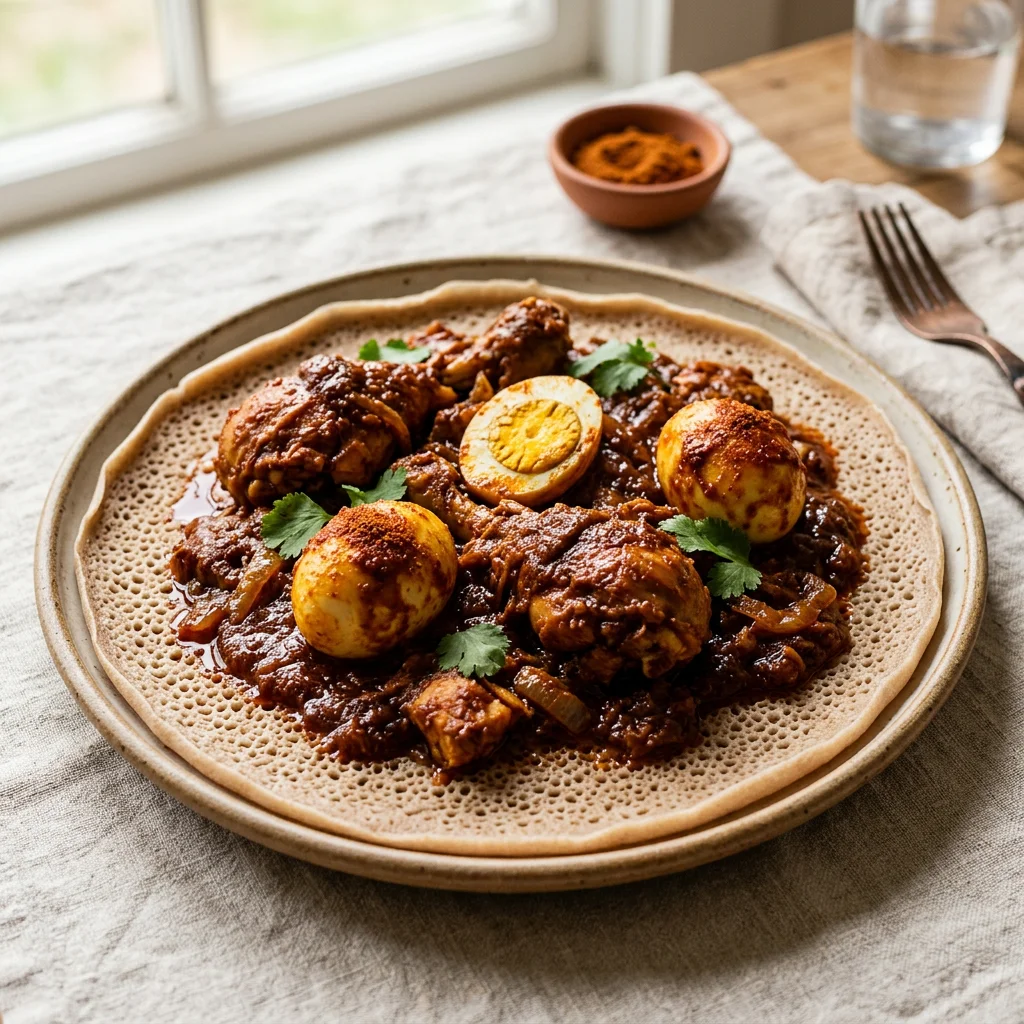
Overview
Doro wot is the crown jewel of Ethiopian cooking — a deeply complex chicken stew considered the most ceremonial and revered dish in the national cuisine. Whole chicken legs are simmered in a rich, brick-red sauce of slow-caramelized onions, an extraordinary quantity of berbere, niter kibbeh (spiced clarified butter), and hard-boiled eggs that are scored and added during the final simmer to absorb the sauce. It is the dish prepared for holidays, weddings, the breaking of fasting seasons, and honored guests — making doro wot is an act of devotion that takes hours and fills the entire house with its distinctive, intoxicating fragrance. The preparation demands patience and generosity with ingredients. The onion base alone requires nearly an hour of slow cooking — sometimes six or more large red onions, finely diced and stirred patiently until they transform from raw allium into a deeply sweet, jammy concentrate. The berbere goes in by the handful, not the teaspoon, creating a sauce so concentrated with spice that each bite delivers wave after wave of layered heat and warmth. The chicken is traditionally marinated in lemon juice and salt before joining the sauce, a technique that both tenderizes the meat and brightens the final dish. From an Ayurvedic perspective, doro wot is one of the most agni-kindling preparations in world cuisine. The sheer concentration of heating spices — chili, ginger, black pepper, fenugreek, bishop's weed, korarima — infused into protein-rich chicken and eggs creates a powerfully nourishing, deeply warming meal. The niter kibbeh parallels ghee as a carrier of fat-soluble medicinal compounds, and the onion base provides the same grounding, sweet quality that Ayurveda values in long-cooked preparations.
Strongly pacifies Vata. Increases Pitta significantly. May increase Kapha due to heaviness, though the intense spicing partially compensates.
Ingredients
- 8 pieces Chicken legs and thighs (skin removed, scored with a knife)
- 6 large Red onions (very finely diced — this is not a typo)
- 1/2 cup Berbere spice blend (yes, half a cup)
- 1/4 cup Niter kibbeh (Ethiopian spiced butter)
- 3 tbsp Tomato paste
- 6 cloves Garlic (minced)
- 2 tbsp Fresh ginger (grated)
- 6 whole Hard-boiled eggs (peeled and scored with a fork)
- 3 tbsp Lemon juice (for marinating chicken)
- 1/2 tsp Fenugreek powder
- 1/4 tsp Cardamom (ground korarima preferred)
- 1/4 tsp Nigella seeds
- 1.5 tsp Salt (or to taste)
- 1 cup Water
Instructions
- Marinate the chicken pieces in lemon juice and 1 teaspoon of salt for at least 30 minutes, or up to 2 hours in the refrigerator. This step tenderizes the meat and brightens the final flavor.
- Place the very finely diced onions in a large, heavy-bottomed pot (a Dutch oven is ideal) over medium heat with no oil or butter. Cook dry, stirring every few minutes, for 30-45 minutes. The onions will release moisture, soften, caramelize, and eventually form a deep brown, jammy paste. This is the foundation of the wot and cannot be rushed.
- Add the niter kibbeh to the caramelized onions and stir to combine. Reduce heat to medium-low and add the berbere, stirring constantly for 5 minutes. The mixture will become a thick, fragrant, deeply rust-colored paste. Add the garlic, ginger, fenugreek, cardamom, and nigella seeds, stirring for another 2 minutes.
- Stir in the tomato paste and cook for 2 minutes. Add the water and bring to a gentle simmer.
- Drain the chicken from its marinade and nestle the pieces into the sauce. Spoon the sauce over the chicken to coat completely. Cover and simmer on low heat for 45-50 minutes, turning the pieces occasionally, until the chicken is very tender and the sauce has thickened considerably.
- Gently add the scored hard-boiled eggs to the stew, nestling them between the chicken pieces. Spoon sauce over the eggs. Cover and simmer for another 15 minutes so the eggs absorb the flavors and turn reddish-brown.
- Adjust salt and add a splash of water if the sauce is too thick. Doro wot sauce should be rich and clingy, coating the chicken in a thick, spiced blanket.
- Serve on a large platter of injera, with the eggs placed prominently alongside the chicken. Each guest should receive one piece of chicken and one egg — this portioning is traditional and significant.
How This Recipe Affects Each Dosha
Vata
Doro wot is among the most Vata-pacifying dishes in world cuisine. The heavy, warm, oily qualities of slow-cooked chicken in niter kibbeh provide deep nourishment and grounding. The protein from both chicken and eggs feeds mamsa and asthi dhatus, which are chronically depleted in Vata types. The rich onion base and generous fat content lubricate dry tissues from the inside out.
Pitta
The sheer volume of berbere — half a cup of concentrated heating spices — makes doro wot strongly Pitta-aggravating. The garlic, ginger, onion, and chili compound the heat. Pitta types should enjoy this only on special occasions and in moderate portions, ideally during cold weather, and always with cooling sides like ayib and gomen.
Kapha
The heaviness and oiliness of doro wot can increase Kapha, but the powerfully heating spice content partially offsets this. Kapha types can enjoy moderate portions if the dish is very well-spiced and served with generous sides of gomen rather than extra injera.
The most powerful agni-kindling dish in Ethiopian cuisine. The concentration of berbere spices creates an intense digestive stimulus, while the long cooking time and fat content ensure the spice compounds are fully extracted and bioavailable. The onion base enhances absorption of all nutrients.
Nourishes: Rasa (plasma), Rakta (blood), Mamsa (muscle), Meda (fat), Asthi (bone), Shukra (reproductive)
Adjustments by Constitution
For Vata Types
This dish is already ideal for Vata. If anything, add an extra tablespoon of niter kibbeh at the end and serve with warm, fresh injera. The combination of spiced butter, slow-cooked protein, and eggs is deeply nourishing for depleted Vata.
For Pitta Types
Reduce berbere to 3 tablespoons and increase the sweet, aromatic spices — extra korarima (Ethiopian cardamom) and a pinch of cinnamon. Use plain ghee instead of niter kibbeh to remove the additional heating spice infusion. Serve with a generous portion of ayib and gomen to cool the meal.
For Kapha Types
Use only 2 tablespoons of niter kibbeh and increase berbere to 3/4 cup. Add a generous pinch of mitmita at serving for extra pungency. Skip the eggs and use only chicken breast (leaner) instead of legs and thighs. Serve with gomen and a small portion of injera.
Seasonal Guidance
Best in the coldest months when the body needs deep nourishment, strong warming, and heavy, grounding food. In autumn and winter, doro wot is ideal. Not appropriate for regular summer consumption — reserve it for special occasions during warm months. In spring, lighter Ethiopian dishes like gomen and misir wot are preferable as Kapha season calls for lighter foods.
Best time of day: Lunch or early afternoon dinner for a ceremonial meal, when digestion is robust enough to handle the richness
Cultural Context
Doro wot is served at the most significant moments in Ethiopian life: the breaking of the Lenten fast (after 55 days of strict veganism), Christmas (Genna), Timkat (Epiphany), weddings, and when honored guests are received. Preparing doro wot is traditionally the wife's or mother's role, and the quality of her doro wot is a matter of family pride. The dish is always served communally on injera, and the tradition of gursha — feeding a morsel of food by hand to someone you love or wish to honor — reaches its highest expression with doro wot. Each guest receiving exactly one chicken piece and one egg is deeply symbolic, representing the host's intentional care for each individual at the table.
Chef's Notes
Doro wot is a labor of love and should not be attempted in a hurry. The most common mistake is under-cooking the onion base or under-using the berbere — both lead to a thin, unremarkable stew. A half cup of berbere seems excessive, but it mellows dramatically during the long simmer. Scoring the hard-boiled eggs allows the sauce to penetrate, creating beautiful red-stained eggs that are one of the dish's visual signatures. Traditional Ethiopian cooks use a clay pot called a "shekla dist" which adds an earthy dimension. Niter kibbeh is essential — plain butter or ghee produces a noticeably different (and lesser) result. The dish improves overnight as the spices continue to develop.
Frequently Asked Questions
Is Doro Wot good for my dosha?
Strongly pacifies Vata. Increases Pitta significantly. May increase Kapha due to heaviness, though the intense spicing partially compensates. Doro wot is among the most Vata-pacifying dishes in world cuisine. The sheer volume of berbere — half a cup of concentrated heating spices — makes doro wot strongly Pitta-aggravating. The heaviness and oiliness of doro wot can increase Kapha, but the powerfully heating spice content partially offsets this.
When is the best time to eat Doro Wot?
Lunch or early afternoon dinner for a ceremonial meal, when digestion is robust enough to handle the richness Best in the coldest months when the body needs deep nourishment, strong warming, and heavy, grounding food. In autumn and winter, doro wot is ideal. Not appropriate for regular summer consumption — re
How can I adjust Doro Wot for my constitution?
For Vata types: This dish is already ideal for Vata. If anything, add an extra tablespoon of niter kibbeh at the end and serve with warm, fresh injera. The combinatio For Pitta types: Reduce berbere to 3 tablespoons and increase the sweet, aromatic spices — extra korarima (Ethiopian cardamom) and a pinch of cinnamon. Use plain ghee
What are the Ayurvedic properties of Doro Wot?
Doro Wot has Pungent, Sweet, Salty taste (rasa), Heating energy (virya), and Pungent post-digestive effect (vipaka). Its qualities (gunas) are Heavy, Warm, Oily. It nourishes Rasa (plasma), Rakta (blood), Mamsa (muscle), Meda (fat), Asthi (bone), Shukra (reproductive). The most powerful agni-kindling dish in Ethiopian cuisine. The concentration of berbere spices creates an intense digestive stimulus, while the long cooking time and fat content ensure the spice compounds are fully extracted and bioavailable. The onion base enhances absorption of all nutrients.
What should you eat today?
This recipe has specific effects on each dosha, and the right meal depends on more than general guidelines. Your constitution, the current season, your birth chart's active planetary period, what you ate yesterday, how you slept — it all matters.
With Personal Alignment, you get daily food and meal guidance tailored to:
- Your prakriti and current vikriti
- Your Vedic birth chart and active planetary cycles
- The season, weather, and time of day
- Your food preferences, allergies, and restrictions
- Your feedback — it learns what works for your body and adapts
Not a generic diet plan. A living system that gets smarter about you every day.