Fasolada (Greek White Bean Soup)
Greek Recipe
Overview
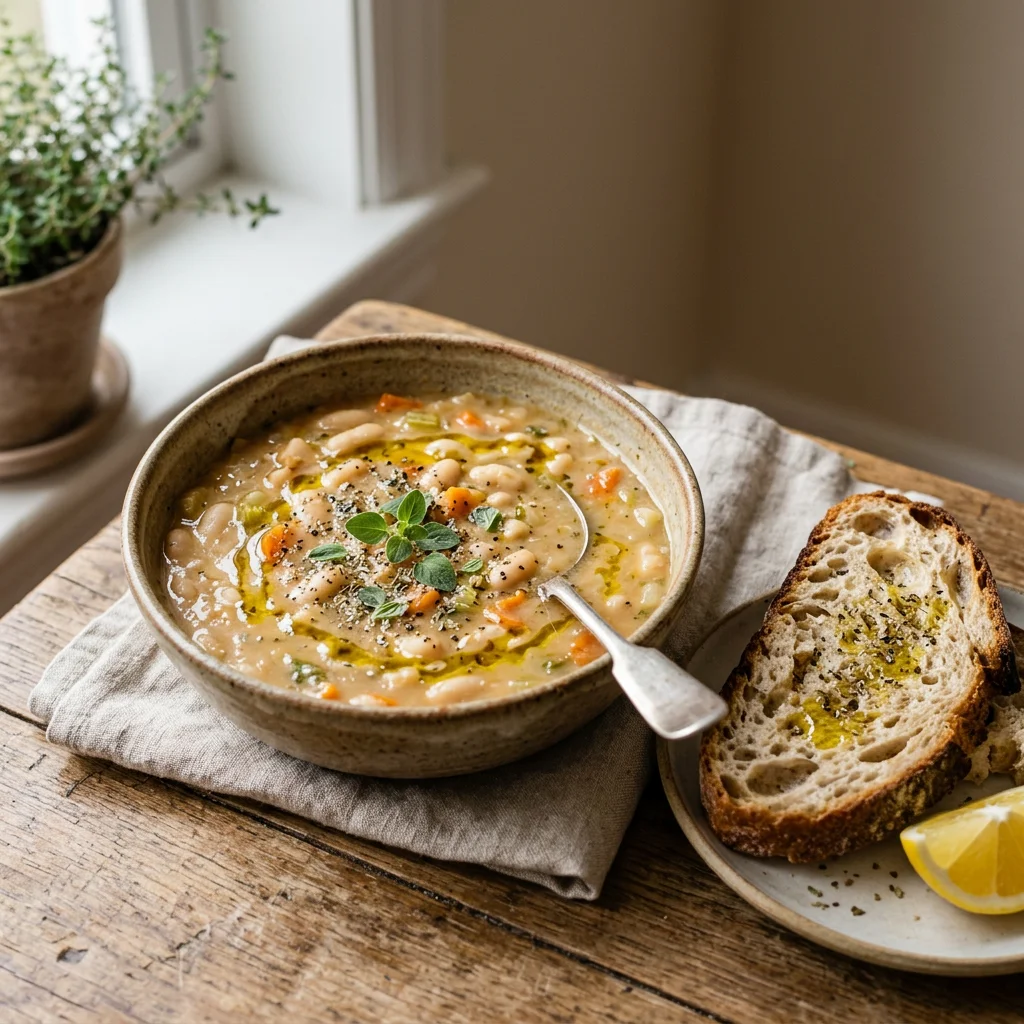
Fasolada is Greece's unofficial national dish, a humble white bean soup that has nourished Mediterranean families for centuries. Long before Greece became associated with grilled meats and seafood in the popular imagination, it was a nation of bean eaters, and fasolada was the centerpiece of everyday cooking. The dish traces its roots to ancient Greece, where beans and legumes formed the dietary foundation for common people, and its simplicity reflects the agrarian wisdom of making deeply satisfying food from pantry staples. The soup brings together dried white beans with tomatoes, carrots, celery, and generous amounts of olive oil, simmered slowly until the beans become creamy and the broth turns silky. Every Greek household has its own version — some add a stick of cinnamon, others a dried chili, and coastal families might finish with a squeeze of lemon. What remains constant is the long, slow cooking that transforms simple ingredients into something profoundly warming and grounding. From an Ayurvedic perspective, fasolada is a masterful cold-weather dish. The long-cooked beans become easier to digest than their raw form suggests, while the combination of warming spices, root vegetables, and olive oil creates a deeply nourishing preparation that builds tissue and settles the nervous system. It is peasant food at its most therapeutic — grounding without heaviness, warming without aggression.
Excellent for pacifying Vata. Generally good for Pitta in moderate portions. May increase Kapha if consumed in excess due to heaviness.
Ingredients
- 500 g Dried white beans (navy or cannellini) (soaked overnight and drained)
- 120 ml Olive oil
- 2 large Onion (finely diced)
- 2 medium Carrot (diced)
- 2 stalks Celery (diced)
- 4 cloves Garlic (minced)
- 2 tbsp Tomato paste
- 400 g Crushed tomatoes
- 2 leaves Bay leaves
- 1 tsp Dried oregano
- 1 tsp Sweet paprika
- 1.5 L Water
- 2 tsp Sea salt
- 1 tsp Black pepper (freshly ground)
- 1 whole Lemon (for serving)
- 1 bunch Fresh parsley (chopped for garnish)
Instructions
- Soak the white beans overnight in plenty of cold water. Drain and rinse thoroughly the next day.
- In a large heavy-bottomed pot, warm the olive oil over medium heat. Add the onion, carrot, and celery, stirring occasionally until softened, about 8 minutes.
- Add the garlic and cook for 1 minute until fragrant. Stir in the tomato paste and paprika, cooking for another minute to develop the flavor.
- Add the drained beans, crushed tomatoes, bay leaves, and oregano. Pour in the water, ensuring the beans are well covered.
- Bring to a boil, then reduce heat to a gentle simmer. Cover partially and cook for 60-75 minutes, stirring occasionally, until the beans are completely tender and the broth has thickened.
- Season with salt and black pepper in the final 15 minutes of cooking. Remove the bay leaves.
- Ladle into bowls and finish with a generous drizzle of raw olive oil, a squeeze of lemon, and chopped fresh parsley.
How This Recipe Affects Each Dosha
Vata
Highly beneficial for Vata. The combination of long-cooked beans, warming spices, and generous olive oil creates a deeply grounding, nourishing meal. The sweet and heavy qualities directly counter Vata's lightness and dryness, while the warm broth soothes the nervous system.
Pitta
Generally supportive for Pitta when served without excessive black pepper. White beans have a cooling post-digestive effect that balances the warming nature of the tomatoes and onions. The lemon garnish adds welcome cooling sour taste.
Kapha
The heaviness and sweet taste can increase Kapha, particularly if consumed in large portions or with excessive oil. The warming nature and pungent garnishes help somewhat, but this is not an ideal daily dish for Kapha-dominant individuals.
Moderately stimulates agni. The long cooking breaks down the beans' complex starches, making them far more digestible than quick-cooked preparations. Oregano and black pepper support the digestive fire without overwhelming it.
Nourishes: Rasa (plasma), Mamsa (muscle), Meda (fat), Asthi (bone)
Adjustments by Constitution
For Vata Types
Add extra olive oil and a pinch of cinnamon stick during cooking. Serve with warm crusty bread. A squeeze of lemon at the table enhances digestibility.
For Pitta Types
Reduce the black pepper and omit paprika. Add extra celery and a handful of fresh dill at the end. Use the lemon generously — its cooling quality balances the warming beans.
For Kapha Types
Use half the olive oil and add a generous pinch of dried oregano and crushed red pepper flakes. Skip the bread accompaniment and serve with a side of bitter greens dressed in lemon juice.
Seasonal Guidance
Fasolada is a cold-weather staple, best enjoyed from late autumn through winter when the body craves warming, substantial nourishment. In spring, lighten the soup by using fewer beans and more vegetables, and increase the lemon. During summer, fasolada is traditionally set aside in favor of lighter fare, though a room-temperature version with extra lemon and fresh herbs can work as an evening meal when nights cool down. Greek households typically begin making fasolada in October and continue through March.
Best time of day: Lunch, when agni is strongest, allowing full digestion of the heavy beans
Cultural Context
Fasolada holds a unique place in Greek culture as the dish that sustained the nation through wars, poverty, and Ottoman occupation. It was declared the national dish not by chefs or food critics but by common consensus — every Greek grandmother makes it, and it appears on nearly every taverna menu in winter. During Lent and other fasting periods in the Greek Orthodox calendar, fasolada becomes essential, as it provides substantial nourishment without any animal products. The dish connects modern Greeks to ancient dietary traditions, as bean soups were a staple of classical Athens.
Chef's Notes
The secret to exceptional fasolada is patience and olive oil. Do not rush the cooking — low, slow simmering allows the beans to release their starch and create a naturally creamy broth. Add salt only toward the end, as early salting can toughen the bean skins. The finishing drizzle of raw olive oil is not optional; it transforms the soup, adding a peppery richness that cooked oil cannot replicate. Greek cooks often serve this with crusty bread, olives, and raw onion slices on the side. Leftover fasolada thickens overnight and is considered even better the next day.
Frequently Asked Questions
Is Fasolada (Greek White Bean Soup) good for my dosha?
Excellent for pacifying Vata. Generally good for Pitta in moderate portions. May increase Kapha if consumed in excess due to heaviness. Highly beneficial for Vata. Generally supportive for Pitta when served without excessive black pepper. The heaviness and sweet taste can increase Kapha, particularly if consumed in large portions or with excessive oil.
When is the best time to eat Fasolada (Greek White Bean Soup)?
Lunch, when agni is strongest, allowing full digestion of the heavy beans Fasolada is a cold-weather staple, best enjoyed from late autumn through winter when the body craves warming, substantial nourishment. In spring, lighten the soup by using fewer beans and more vegetab
How can I adjust Fasolada (Greek White Bean Soup) for my constitution?
For Vata types: Add extra olive oil and a pinch of cinnamon stick during cooking. Serve with warm crusty bread. A squeeze of lemon at the table enhances digestibility For Pitta types: Reduce the black pepper and omit paprika. Add extra celery and a handful of fresh dill at the end. Use the lemon generously — its cooling quality bala
What are the Ayurvedic properties of Fasolada (Greek White Bean Soup)?
Fasolada (Greek White Bean Soup) has Sweet, Astringent taste (rasa), Heating energy (virya), and Sweet post-digestive effect (vipaka). Its qualities (gunas) are Heavy, Warm, Oily. It nourishes Rasa (plasma), Mamsa (muscle), Meda (fat), Asthi (bone). Moderately stimulates agni. The long cooking breaks down the beans' complex starches, making them far more digestible than quick-cooked preparations. Oregano and black pepper support the digestive fire without overwhelming it.
What should you eat today?
This recipe has specific effects on each dosha, and the right meal depends on more than general guidelines. Your constitution, the current season, your birth chart's active planetary period, what you ate yesterday, how you slept — it all matters.
With Personal Alignment, you get daily food and meal guidance tailored to:
- Your prakriti and current vikriti
- Your Vedic birth chart and active planetary cycles
- The season, weather, and time of day
- Your food preferences, allergies, and restrictions
- Your feedback — it learns what works for your body and adapts
Not a generic diet plan. A living system that gets smarter about you every day.