Fosolia
Ethiopian Recipe
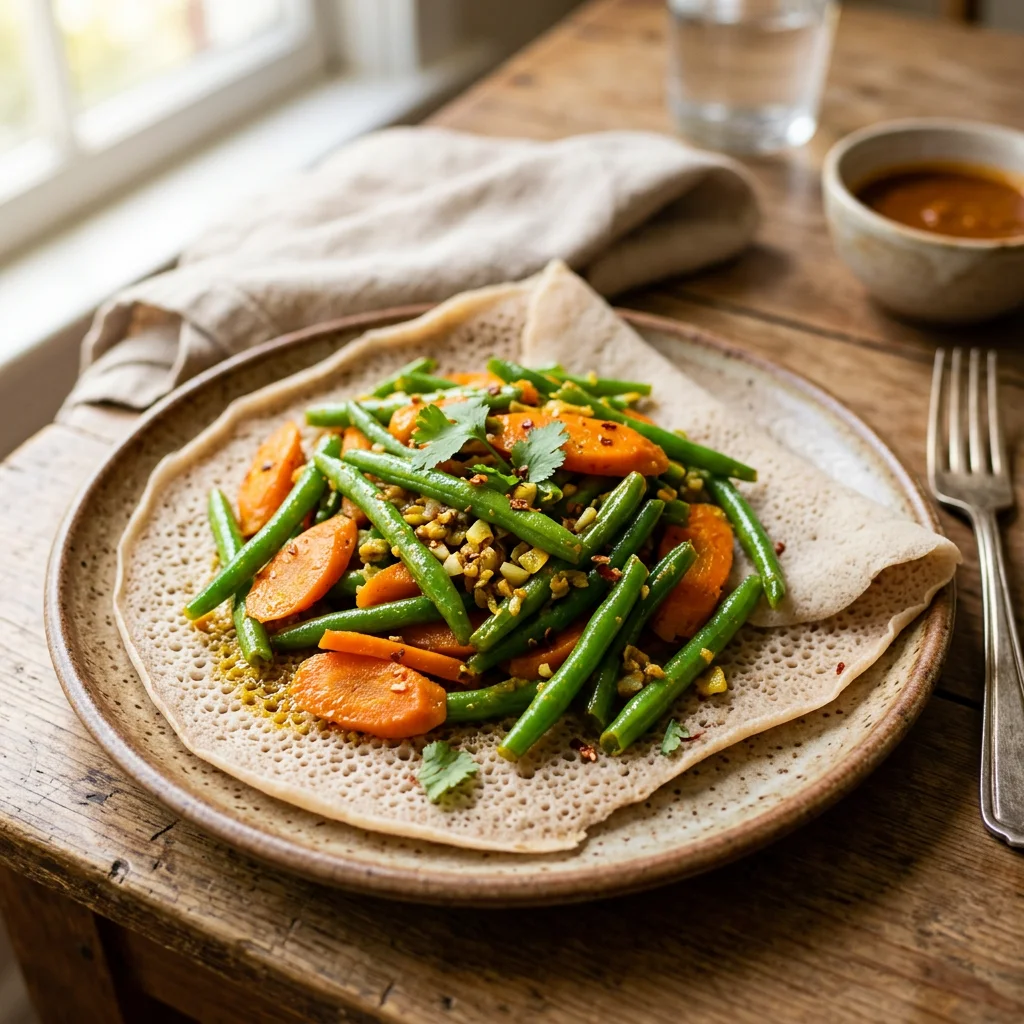
Overview
Fosolia is the Ethiopian preparation of green beans and carrots — diced and sauteed with onions, garlic, and a gentle seasoning of ginger and turmeric until tender-crisp. It is one of the mildest, most accessible dishes on the Ethiopian table, deliberately understated in a cuisine known for its bold spicing. On the communal injera platter, fosolia provides a zone of calm — a sweet, simple, vegetable-forward resting point between the fiery reds and oranges of berbere-laced stews. The technique reflects Ethiopian cooking's foundational principle of layered aromatics: onions are softened first, then garlic and ginger are added to build a fragrant base before the vegetables go in. Unlike many Ethiopian dishes, fosolia uses no berbere, no chilies, and minimal fat — it relies instead on the natural sweetness of the carrots, the fresh snap of the green beans, and the gentle warmth of ginger and turmeric. It is a dish that children love, that recovering patients eat without hesitation, and that anchors every fasting platter. From an Ayurvedic perspective, fosolia is a model of balanced, sattvic cooking. The combination of sweet vegetables (carrots), slightly astringent green beans, pungent ginger, and anti-inflammatory turmeric creates a dish that supports all three doshas without aggravating any. The minimal oil and gentle cooking preserve the prana (life force) of the vegetables while making them warm and digestible — the Ayurvedic ideal for vegetable preparation.
Tridoshic — balances all three doshas. One of the most universally appropriate dishes in Ethiopian cuisine.
Ingredients
- 300 g Green beans (trimmed and cut into 1-inch pieces)
- 2 large Carrots (peeled and diced)
- 1 medium Red onion (finely diced)
- 3 cloves Garlic (minced)
- 1 tsp Fresh ginger (grated)
- 1/2 tsp Turmeric powder
- 2 tbsp Vegetable oil
- 3/4 tsp Salt
- 1/4 tsp Black pepper
- 3 tbsp Water
Instructions
- Heat the oil in a large skillet over medium heat. Add the diced onion and cook for 3-4 minutes until softened and translucent.
- Add the garlic and ginger, stirring for 30 seconds until fragrant.
- Add the carrots and stir to coat with the aromatic oil. Cook for 3 minutes, allowing the carrots to begin softening.
- Add the green beans, turmeric, salt, and black pepper. Toss to combine and coat everything in the golden turmeric.
- Add the water, cover, and reduce heat to medium-low. Steam for 8-10 minutes, stirring once halfway through, until the carrots are tender and the green beans are cooked but still have a slight snap.
- Remove the lid and cook for another 1-2 minutes if there is excess moisture. The vegetables should be dry-ish, not soupy.
- Adjust seasoning and serve as part of the communal platter, placed alongside spicier stews for contrast.
How This Recipe Affects Each Dosha
Vata
The sweet carrots, gentle ginger, and warm preparation make this accessible for Vata. The light quality is Vata's only concern — serve alongside a heavier stew for grounding. The turmeric and ginger warm the digestive tract, and the oil provides mild oleation.
Pitta
Excellent for Pitta. Sweet carrots and green beans are naturally Pitta-pacifying, and the absence of chili, berbere, or heavy spicing makes this one of the safest Ethiopian dishes for aggravated Pitta. The turmeric is anti-inflammatory without being excessively heating.
Kapha
Green beans are slightly astringent and drying, making them Kapha-friendly. The light preparation with minimal oil and no heavy sauces is ideal. The ginger and turmeric provide enough warmth to support Kapha digestion without excess.
Mildly supportive of agni through the ginger and turmeric. The light, easy-to-digest nature of the vegetables means fosolia does not burden digestion. It is an ideal accompaniment for heavier, richer dishes.
Nourishes: Rasa (plasma), Rakta (blood), Asthi (bone)
Adjustments by Constitution
For Vata Types
Use niter kibbeh instead of plain oil for added warmth and richness, and increase to 3 tablespoons. Add a pinch of korarima (Ethiopian cardamom) and extra black pepper. Cook the vegetables a few minutes longer until very soft. Pair with a heavier wot for a complete, grounding meal.
For Pitta Types
This dish is already ideal for Pitta. Keep the garlic minimal and the ginger gentle. A squeeze of lemon at the end adds brightness without heat. Double the portion if the rest of the platter is heavily spiced.
For Kapha Types
Reduce oil to 1 tablespoon. Add a pinch of nigella seed and bishop's weed (ajwain) with the garlic for their sharp, stimulating properties. Increase black pepper and add a small pinch of dried ginger powder for extra metabolic fire. Increase the green bean ratio and decrease the carrots.
Seasonal Guidance
Fosolia is appropriate year-round due to its neutral, balanced nature. In autumn and winter, add extra ginger and use niter kibbeh for warmth. In spring, serve as-is — the light, slightly drying quality is perfect for clearing spring Kapha. In summer, it provides gentle nourishment without excess heat. This is one of the few Ethiopian dishes that needs no seasonal modification.
Best time of day: Lunch or dinner, as a side dish — excellent at any time of day
Cultural Context
Fosolia is the gateway dish for those new to Ethiopian food — its familiar vegetables, mild seasoning, and approachable flavor make it welcoming for any palate. On the beyaynetu fasting platter, it holds an important structural role: positioned between the intensely spiced misir wot and the rich, thick shiro, fosolia provides visual and gustatory contrast that makes the entire platter more pleasurable. In Ethiopian households, fosolia is often the first dish children learn to cook, and its simplicity teaches the foundational technique of Ethiopian aromatics — onion, garlic, ginger, turmeric — that underpins the entire cuisine.
Chef's Notes
Fosolia should be al dente rather than mushy — the vegetables should hold their shape and have a pleasant texture. Cut the carrots and green beans to similar sizes so they cook evenly. Some versions add a diced potato for extra substance, which works well for the fasting platter when more filling options are needed. Fosolia is one of the few Ethiopian dishes that works well at room temperature, making it excellent for meal preparation and packed lunches. A small pinch of nigella seed added with the turmeric gives a subtle, distinctive flavor that signals Ethiopian origin.
Frequently Asked Questions
Is Fosolia good for my dosha?
Tridoshic — balances all three doshas. One of the most universally appropriate dishes in Ethiopian cuisine. The sweet carrots, gentle ginger, and warm preparation make this accessible for Vata. Excellent for Pitta. Green beans are slightly astringent and drying, making them Kapha-friendly.
When is the best time to eat Fosolia?
Lunch or dinner, as a side dish — excellent at any time of day Fosolia is appropriate year-round due to its neutral, balanced nature. In autumn and winter, add extra ginger and use niter kibbeh for warmth. In spring, serve as-is — the light, slightly drying quali
How can I adjust Fosolia for my constitution?
For Vata types: Use niter kibbeh instead of plain oil for added warmth and richness, and increase to 3 tablespoons. Add a pinch of korarima (Ethiopian cardamom) and e For Pitta types: This dish is already ideal for Pitta. Keep the garlic minimal and the ginger gentle. A squeeze of lemon at the end adds brightness without heat. Doubl
What are the Ayurvedic properties of Fosolia?
Fosolia has Sweet, Astringent, Pungent taste (rasa), Neutral energy (virya), and Sweet post-digestive effect (vipaka). Its qualities (gunas) are Light, Warm, Slightly Moist. It nourishes Rasa (plasma), Rakta (blood), Asthi (bone). Mildly supportive of agni through the ginger and turmeric. The light, easy-to-digest nature of the vegetables means fosolia does not burden digestion. It is an ideal accompaniment for heavier, richer dishes.
What should you eat today?
This recipe has specific effects on each dosha, and the right meal depends on more than general guidelines. Your constitution, the current season, your birth chart's active planetary period, what you ate yesterday, how you slept — it all matters.
With Personal Alignment, you get daily food and meal guidance tailored to:
- Your prakriti and current vikriti
- Your Vedic birth chart and active planetary cycles
- The season, weather, and time of day
- Your food preferences, allergies, and restrictions
- Your feedback — it learns what works for your body and adapts
Not a generic diet plan. A living system that gets smarter about you every day.