Gigantes Plaki (Giant Baked Beans)
Greek Recipe
Overview
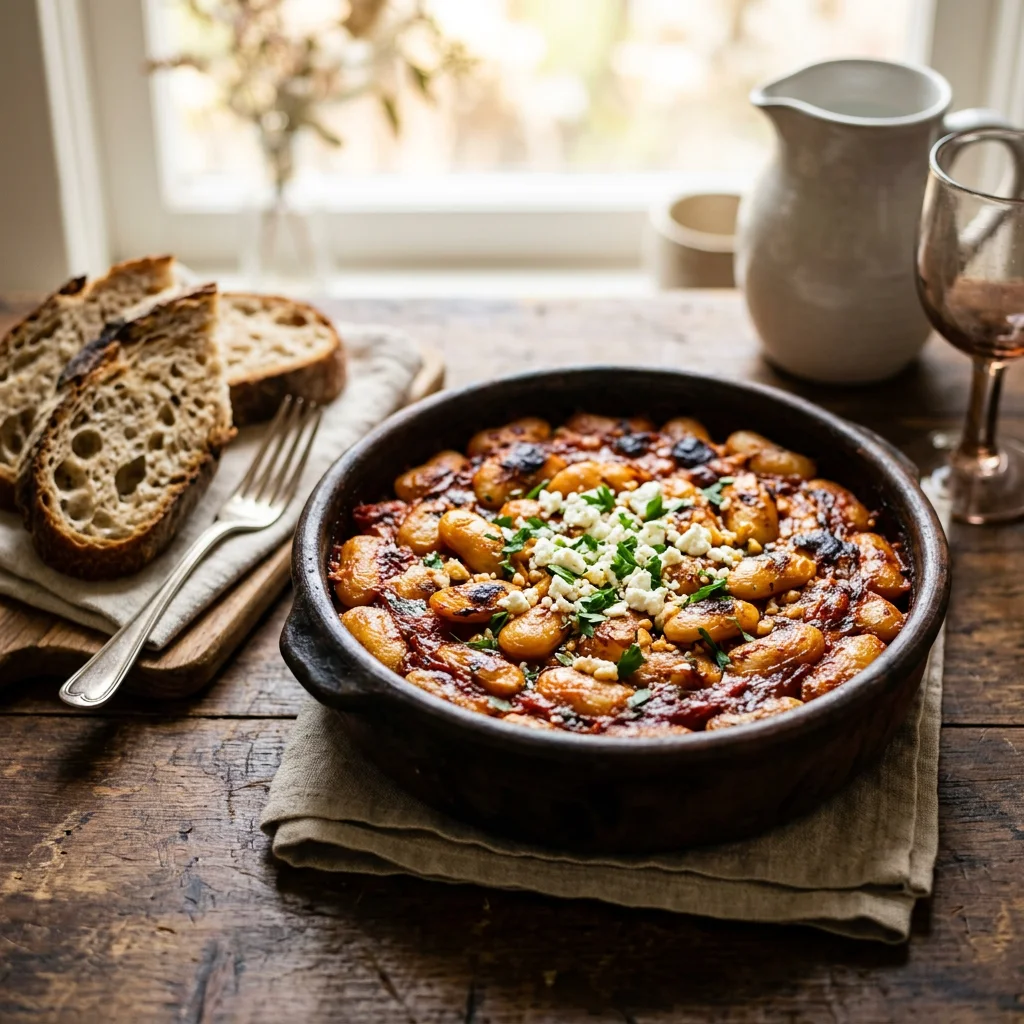
Gigantes plaki is one of Greece's most beloved comfort foods — enormous white beans baked slowly in a rich tomato sauce until they become creamy, almost buttery, with edges that caramelize against the baking dish. The name translates simply as "giant beans baked," and the dish delivers on that promise with satisfying directness. These are not ordinary beans; gigantes are a specific variety of large white runner beans grown primarily in northern Greece, prized for their size and their remarkable ability to absorb flavors while maintaining a creamy, yielding texture. The preparation follows a pattern common to Greek home cooking: simple ingredients, generous olive oil, and patient oven time. Onions, garlic, and tomatoes form the sauce, while parsley and sometimes dill provide herbal brightness. The beans bake uncovered so the top develops a slight crust while the interior stays saucy and lush. It is a dish that improves with standing and tastes even better the day after. From an Ayurvedic standpoint, gigantes plaki is a powerfully building food. The large beans carry strong sweet and astringent tastes with heavy, grounding qualities. Baked with tomatoes and generous olive oil, they become a deeply nourishing preparation that builds all seven dhatus progressively. The slow baking transforms what would otherwise be a difficult-to-digest food into something remarkably gentle on the system.
Strongly pacifies Vata. Moderately increases Kapha due to heaviness. Generally neutral for Pitta.
Ingredients
- 500 g Giant white beans (gigantes or large butter beans) (soaked overnight and drained)
- 150 ml Olive oil
- 2 large Onion (finely diced)
- 4 cloves Garlic (minced)
- 400 g Crushed tomatoes
- 2 tbsp Tomato paste
- 1 large Carrot (grated)
- 1 stalk Celery (finely diced)
- 1 large bunch Fresh parsley (finely chopped)
- 1 tsp Dried oregano
- 1 tsp Sweet paprika
- 1 leaf Bay leaf
- 1 tsp Honey (optional, balances tomato acidity)
- 2 tsp Sea salt
- 1 tsp Black pepper (freshly ground)
- 500 ml Water
Instructions
- Soak the beans overnight in plenty of cold water. Drain, rinse, and place in a large pot. Cover with fresh water by 5 cm, bring to a boil, and simmer for 30-40 minutes until the beans are partially tender but still firm. Drain, reserving some cooking liquid.
- Preheat the oven to 180C (350F). In a large skillet, warm half the olive oil over medium heat. Cook the onion, carrot, and celery for 8 minutes until softened.
- Add the garlic and cook for 1 minute. Stir in the tomato paste, paprika, and oregano, cooking for another minute.
- Add the crushed tomatoes, water, bay leaf, honey (if using), salt, and pepper. Simmer for 5 minutes.
- Place the partially cooked beans in a large baking dish. Pour the tomato sauce over them and stir gently to combine. The liquid should just barely cover the beans — add reserved cooking liquid if needed.
- Drizzle the remaining olive oil over the top. Bake uncovered for 60-75 minutes, stirring once halfway through, until the beans are completely tender, the sauce has thickened, and the top has a light golden crust.
- Remove the bay leaf. Let rest for 10 minutes, then scatter generously with fresh parsley. Serve warm or at room temperature.
How This Recipe Affects Each Dosha
Vata
Excellent for Vata. The large, creamy beans with generous oil provide exactly the heavy, warm, grounding qualities that Vata needs. The sweet post-digestive effect nourishes tissues deeply, and the slow baking makes the beans far more digestible than boiled preparations.
Pitta
Generally suitable for Pitta. The beans themselves are cooling in post-digestive effect, and the tomato sauce is only mildly heating. The sweet overall taste is soothing. Avoid adding too much black pepper or paprika for Pitta-sensitive individuals.
Kapha
The heaviness, sweetness, and oiliness of this dish are the primary Kapha-increasing qualities in Greek cuisine. While nourishing, it can promote sluggishness and congestion in Kapha types. Best eaten in small portions or reserved for cold, dry days.
Moderately supportive of agni. The slow baking and tomato-based sauce make the beans easier to digest than boiled preparations. Oregano and black pepper provide gentle digestive support. However, the overall heaviness means this dish requires reasonably strong agni.
Nourishes: Rasa (plasma), Mamsa (muscle), Meda (fat), Asthi (bone), Majja (nerve)
Adjustments by Constitution
For Vata Types
Add a pinch of cinnamon to the sauce and extra parsley at the end. Serve warm with a drizzle of lemon juice. A side of warm bread completes the grounding meal.
For Pitta Types
Reduce the tomato paste and add a grated zucchini to the sauce for cooling sweetness. Replace paprika with a pinch of dried mint. Finish with extra parsley and lemon.
For Kapha Types
Cut the olive oil in half. Add extra dried oregano, a pinch of crushed red pepper, and some chopped celery leaves. Serve a smaller portion alongside a large green salad with lemon dressing.
Seasonal Guidance
Gigantes plaki is best suited to autumn and winter, when the heavy, warming qualities satisfy the body's need for substance and grounding. In spring, it can still be enjoyed but consider lighter portions. In summer, this is traditionally set aside in favor of lighter fare, though room-temperature leftovers with extra lemon can work for a cool evening meal. In northern Greece, where the best gigantes beans are grown, the dish follows the harvest cycle — new-crop beans arriving in autumn signal the start of baking season.
Best time of day: Lunch, allowing the heavy beans adequate time for full digestion
Cultural Context
Gigantes plaki is inextricably linked to the bean-growing regions of northern Greece, particularly Kastoria and Prespes in Macedonia, where the cool climate and mineral-rich soil produce the country's most prized beans. The dish is central to Greek Orthodox fasting traditions — it is vegan, satisfying, and appears on the table during Lent and the many other fasting days that punctuate the Orthodox calendar. Greek families often make enormous batches that last several days. It is also a standard meze dish in tavernas, served at room temperature alongside bread, olives, and wine.
Chef's Notes
The pre-boil is essential — skipping it and trying to bake raw soaked beans results in unevenly cooked, sometimes chalky beans. But do not overcook them on the stovetop; they should still have firmness, as the oven time finishes the job. The amount of olive oil may seem extravagant, but it is what makes gigantes plaki what it is — the oil creates the sauce's richness and gives the beans their silky finish. Greek cooks always serve this at room temperature or warm, never piping hot, which allows the flavors to settle and deepen. It is traditionally served with crusty bread, olives, and a slab of feta on the side.
Frequently Asked Questions
Is Gigantes Plaki (Giant Baked Beans) good for my dosha?
Strongly pacifies Vata. Moderately increases Kapha due to heaviness. Generally neutral for Pitta. Excellent for Vata. Generally suitable for Pitta. The heaviness, sweetness, and oiliness of this dish are the primary Kapha-increasing qualities in Greek cuisine.
When is the best time to eat Gigantes Plaki (Giant Baked Beans)?
Lunch, allowing the heavy beans adequate time for full digestion Gigantes plaki is best suited to autumn and winter, when the heavy, warming qualities satisfy the body's need for substance and grounding. In spring, it can still be enjoyed but consider lighter porti
How can I adjust Gigantes Plaki (Giant Baked Beans) for my constitution?
For Vata types: Add a pinch of cinnamon to the sauce and extra parsley at the end. Serve warm with a drizzle of lemon juice. A side of warm bread completes the ground For Pitta types: Reduce the tomato paste and add a grated zucchini to the sauce for cooling sweetness. Replace paprika with a pinch of dried mint. Finish with extra pa
What are the Ayurvedic properties of Gigantes Plaki (Giant Baked Beans)?
Gigantes Plaki (Giant Baked Beans) has Sweet, Astringent, Sour taste (rasa), Heating energy (virya), and Sweet post-digestive effect (vipaka). Its qualities (gunas) are Heavy, Oily, Warm. It nourishes Rasa (plasma), Mamsa (muscle), Meda (fat), Asthi (bone), Majja (nerve). Moderately supportive of agni. The slow baking and tomato-based sauce make the beans easier to digest than boiled preparations. Oregano and black pepper provide gentle digestive support. However, the overall heaviness means this dish requires reasonably strong agni.
What should you eat today?
This recipe has specific effects on each dosha, and the right meal depends on more than general guidelines. Your constitution, the current season, your birth chart's active planetary period, what you ate yesterday, how you slept — it all matters.
With Personal Alignment, you get daily food and meal guidance tailored to:
- Your prakriti and current vikriti
- Your Vedic birth chart and active planetary cycles
- The season, weather, and time of day
- Your food preferences, allergies, and restrictions
- Your feedback — it learns what works for your body and adapts
Not a generic diet plan. A living system that gets smarter about you every day.