Goi Cuon (Fresh Spring Rolls)
Vietnamese Recipe
Overview
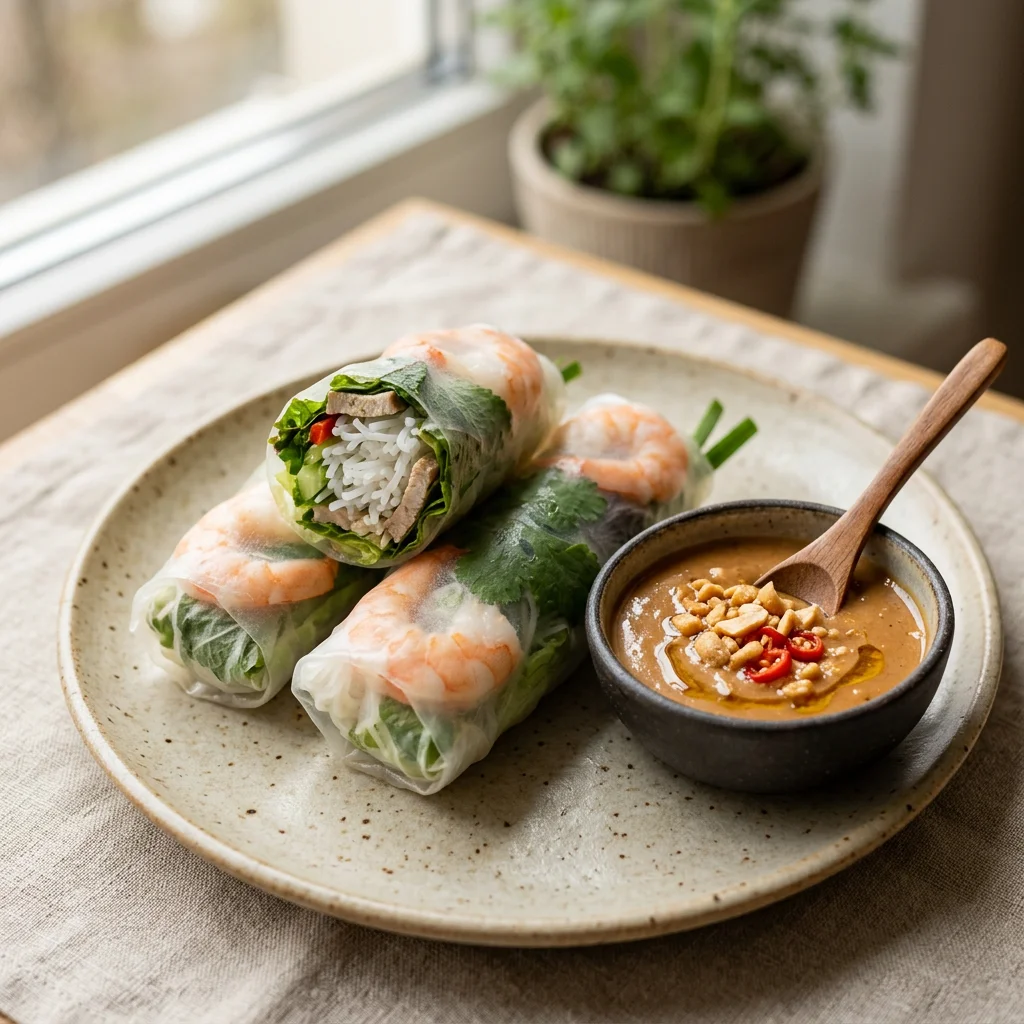
Goi cuon — Vietnamese fresh spring rolls — are translucent parcels of rice paper wrapped around rice vermicelli, shrimp, pork, and a profusion of raw herbs and lettuce. Unlike their deep-fried cousins (cha gio), these rolls are uncooked, making them one of Southeast Asia's lightest, most refreshing preparations. The rice paper wrapper, softened in warm water for mere seconds, becomes a delicate, slightly chewy skin that reveals the colorful layers within: the pink of shrimp, the white of noodles, the vivid green of herbs. The genius of goi cuon lies in the herb selection. A proper roll contains Thai basil, cilantro, and mint at minimum, with regional variations adding perilla (tia to), Vietnamese balm (kinh gioi), fish mint (diep ca), or sawtooth coriander (ngo gai). Each herb contributes its own medicinal quality — mint cools, basil warms gently, cilantro detoxifies, perilla is anti-inflammatory. The dipping sauce, nuoc cham (lime, fish sauce, sugar, garlic, chili), ties everything together with a sweet-sour-salty-pungent explosion. Ayurvedically, fresh spring rolls are a study in lightness and cooling. Raw vegetables and herbs carry prana (life force) that cooking destroys. The rice paper and vermicelli are among the lightest grain preparations. The shrimp adds a sweet, slightly warming protein. For constitutions prone to heat and inflammation, this is one of the most therapeutic preparations in any cuisine — a delivery system for raw, living herbs in an easily digestible form.
Strongly pacifies Pitta due to cooling herbs and raw freshness. May aggravate Vata due to cold, raw, light qualities. Generally neutral for Kapha in moderate amounts — light but sweet.
Ingredients
- 12 sheets Rice paper wrappers (22cm rounds)
- 150 g Rice vermicelli (cooked and cooled)
- 12 whole Cooked shrimp (halved lengthwise)
- 200 g Pork belly or pork loin (boiled, cooled, and thinly sliced)
- 12 leaves Lettuce leaves (soft butter lettuce or red leaf)
- 1 bunch Fresh mint (leaves picked)
- 1 bunch Thai basil (leaves picked)
- 1 bunch Fresh cilantro (sprigs)
- 1 cup Bean sprouts
- 2 cloves Garlic (minced, for nuoc cham)
- 3 tbsp Fish sauce (for nuoc cham)
- 3 tbsp Lime juice (for nuoc cham)
- 2 tbsp Sugar (for nuoc cham)
- 1 whole Fresh chili (finely sliced, for nuoc cham)
Instructions
- Prepare all fillings: cook the rice vermicelli according to package directions, rinse under cold water, and drain well. Boil the pork in salted water for 20-25 minutes until cooked through, then cool and slice thinly. Halve the shrimp lengthwise. Wash and dry all herbs and lettuce.
- Make the nuoc cham dipping sauce: dissolve the sugar in 3 tablespoons of warm water. Stir in the fish sauce, lime juice, minced garlic, and sliced chili. Taste and adjust — it should be a bright balance of sweet, sour, salty, and spicy.
- Set up a rolling station: fill a large shallow dish with warm (not hot) water. Lay out a clean, damp cutting board or plate for rolling.
- Dip one rice paper wrapper into the warm water for 3-5 seconds — it should still feel slightly firm when you remove it. Lay it flat on your rolling surface. It will continue to soften.
- On the lower third of the wrapper, place a lettuce leaf, a small nest of vermicelli, 2-3 slices of pork, a few bean sprouts, and a generous pinch of mint, basil, and cilantro. On the upper third, arrange 3 shrimp halves cut-side up (they will show through the translucent wrapper).
- Fold the bottom edge of the wrapper over the fillings and roll once, tucking tightly. Fold in the sides like a burrito, then continue rolling toward the shrimp. The finished roll should be snug but not bursting.
- Repeat with remaining wrappers and fillings. Cover finished rolls with a damp towel to prevent drying.
- Serve within an hour with nuoc cham dipping sauce. For peanut dipping sauce variation, blend hoisin sauce with peanut butter, warm water, garlic, and chili.
How This Recipe Affects Each Dosha
Vata
The cold, raw, light qualities of fresh spring rolls are among the most Vata-aggravating in any cuisine. Raw vegetables, cold noodles, and the dry rice paper wrapper directly increase Vata's cold, dry, light, and rough qualities. Vata types should eat these sparingly and only during warm weather when the body can handle more cooling foods.
Pitta
This is Pitta's dream food. The abundance of fresh, cooling herbs — mint, cilantro, basil — directly pacifies Pitta heat. The raw, light quality prevents heat accumulation. The lime in nuoc cham adds a cooling sour note. Shrimp is one of the lighter, less heating animal proteins. During summer or any period of Pitta aggravation, goi cuon is deeply therapeutic.
Kapha
The lightness and freshness are generally beneficial for Kapha, and the pungent chili and garlic in the dipping sauce help stimulate digestion. However, the sweet rice noodles and rice paper add some Kapha-increasing heaviness. The raw quality can also dampen agni if Kapha digestion is already sluggish.
Minimal stimulation of agni from the raw preparation. The dipping sauce (with garlic, chili, and fish sauce) provides the digestive fire support that the rolls themselves lack. Without the sauce, this meal would challenge weak digestion. Always serve with nuoc cham to support assimilation.
Nourishes: Rasa (plasma), Rakta (blood)
Adjustments by Constitution
For Vata Types
Serve at room temperature rather than cold. Double the cooked shrimp and pork for more warming protein. Reduce raw herbs and add cooked, warm elements — sauteed mushrooms or warm roasted sweet potato. Add extra ginger and garlic to the dipping sauce. Drizzle sesame oil inside the roll. Eat alongside a warm soup.
For Pitta Types
Already ideal for Pitta. Increase the fresh mint and cilantro. Reduce or omit chili from the nuoc cham. Add avocado slices inside the roll for extra cooling fat. Substitute cucumber sticks for bean sprouts for even more cooling quality. This preparation needs almost no modification for Pitta constitutions.
For Kapha Types
Reduce the rice vermicelli by half and pack the rolls with extra herbs, lettuce, and bean sprouts. Add extra chili and ginger to the dipping sauce. Include pungent herbs like perilla or Vietnamese balm. Skip the hoisin-peanut dipping sauce (too heavy and sweet) and use the nuoc cham with extra chili instead.
Seasonal Guidance
Best during Pitta season (summer) when the body needs cooling, light foods and agni can handle raw preparations. Excellent in late spring as temperatures rise. In autumn, the cold, light quality of fresh rolls aggravates Vata — switch to warm soups and cooked dishes. In winter, avoid entirely or serve as a small appetizer alongside a hot soup. In tropical Vietnam, these are eaten year-round because the ambient heat supports the body's ability to digest cool, raw food — in temperate climates, follow the seasons.
Best time of day: Lunch, when digestive fire is at its peak and can best handle raw, cool food. Not recommended as a late dinner, especially in cooler weather.
Cultural Context
Goi cuon reflects the Vietnamese philosophy of balance — every bite contains protein, starch, and an abundance of raw herbs. This is not accidental. Vietnamese cuisine is built on the principle of complementary forces (am and duong, the Vietnamese expression of yin and yang), and the herb plate that accompanies every Vietnamese meal is a living pharmacy. The freshness of goi cuon made it one of the first Vietnamese dishes to gain worldwide popularity, offering a stark contrast to the fried spring rolls familiar to most Westerners. In Vietnam, spring roll assembly is often a communal activity — fillings are laid out and each person wraps their own, choosing their preferred herb and protein balance.
Chef's Notes
The most common mistake is over-soaking the rice paper — it becomes fragile and tears. Three to five seconds in warm water is enough; the paper continues softening as you fill and roll. Work on a smooth, slightly damp surface rather than a dry one. Don't overfill — a tight, slender roll is easier to eat and holds together better than a fat one. Place the shrimp cut-side down against the wrapper so their pink color shows through the translucent paper. Fresh spring rolls should be eaten within 2 hours; the wrappers dry out and become tough in the refrigerator, though covering tightly with plastic wrap helps.
Frequently Asked Questions
Is Goi Cuon (Fresh Spring Rolls) good for my dosha?
Strongly pacifies Pitta due to cooling herbs and raw freshness. May aggravate Vata due to cold, raw, light qualities. Generally neutral for Kapha in moderate amounts — light but sweet. The cold, raw, light qualities of fresh spring rolls are among the most Vata-aggravating in any cuisine. This is Pitta's dream food. The lightness and freshness are generally beneficial for Kapha, and the pungent chili and garlic in the dipping sauce help stimulate digestion.
When is the best time to eat Goi Cuon (Fresh Spring Rolls)?
Lunch, when digestive fire is at its peak and can best handle raw, cool food. Not recommended as a late dinner, especially in cooler weather. Best during Pitta season (summer) when the body needs cooling, light foods and agni can handle raw preparations. Excellent in late spring as temperatures rise. In autumn, the cold, light quality of fr
How can I adjust Goi Cuon (Fresh Spring Rolls) for my constitution?
For Vata types: Serve at room temperature rather than cold. Double the cooked shrimp and pork for more warming protein. Reduce raw herbs and add cooked, warm elements For Pitta types: Already ideal for Pitta. Increase the fresh mint and cilantro. Reduce or omit chili from the nuoc cham. Add avocado slices inside the roll for extra c
What are the Ayurvedic properties of Goi Cuon (Fresh Spring Rolls)?
Goi Cuon (Fresh Spring Rolls) has Sweet, Sour, Salty, Pungent taste (rasa), Cooling energy (virya), and Sweet post-digestive effect (vipaka). Its qualities (gunas) are Light, Cool, Dry, Clear. It nourishes Rasa (plasma), Rakta (blood). Minimal stimulation of agni from the raw preparation. The dipping sauce (with garlic, chili, and fish sauce) provides the digestive fire support that the rolls themselves lack. Without the sauce, this meal would challenge weak digestion. Always serve with nuoc cham to support assimilation.
What should you eat today?
This recipe has specific effects on each dosha, and the right meal depends on more than general guidelines. Your constitution, the current season, your birth chart's active planetary period, what you ate yesterday, how you slept — it all matters.
With Personal Alignment, you get daily food and meal guidance tailored to:
- Your prakriti and current vikriti
- Your Vedic birth chart and active planetary cycles
- The season, weather, and time of day
- Your food preferences, allergies, and restrictions
- Your feedback — it learns what works for your body and adapts
Not a generic diet plan. A living system that gets smarter about you every day.