Gomen
Ethiopian Recipe
Overview
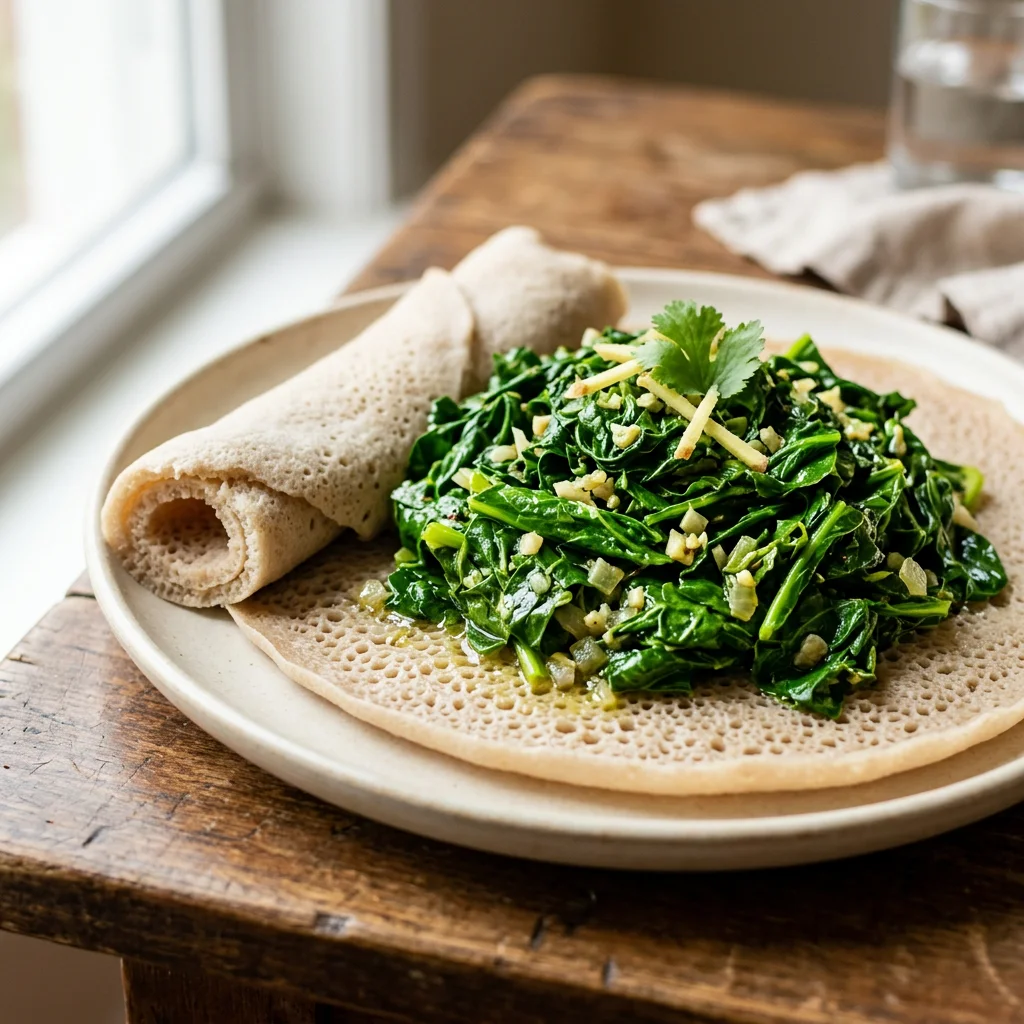
Gomen is the Ethiopian preparation of collard greens — stripped from their tough stems, chopped finely, and sauteed with garlic, ginger, and a whisper of spice until tender but still vibrant green. It is one of the simplest and most cleansing dishes in the Ethiopian repertoire, appearing as a cooling, bitter counterpoint on platters otherwise dominated by the rich, spicy heat of berbere-based wots. On fasting days, it provides essential minerals and fiber alongside the protein-rich lentil and chickpea stews. The technique is straightforward but intentional: the greens are cooked just long enough to become tender while retaining their color and slight bite. Unlike Southern American collard greens, which are braised for hours, Ethiopian gomen is a quick preparation — the garlic and ginger go in early to infuse the oil, the greens are added in batches as they wilt, and the whole dish comes together in fifteen minutes. Some versions include a touch of cardamom or nigella seed for complexity. Ayurvedically, cooked greens are among the most important foods for maintaining health — bitter and astringent in taste, they cleanse the blood, support the liver, and balance the heavy, sweet, and oily qualities of the richer dishes on the Ethiopian platter. Gomen with garlic and ginger transforms what could be a cold, Vata-aggravating raw green into a warm, digestible, tridoshically accessible preparation. The minimal use of oil keeps it light enough for Kapha, while the warmth and garlic content ground it for Vata.
Balances Pitta and Kapha. May increase Vata if eaten in large quantities due to the dry, light, bitter qualities of greens.
Ingredients
- 1 large bunch Collard greens (about 500g, stems removed, leaves finely chopped)
- 5 cloves Garlic (minced)
- 1 tbsp Fresh ginger (grated)
- 1 medium Red onion (finely diced)
- 2 tbsp Vegetable oil or niter kibbeh
- 1 small Green chili (seeded and minced, optional)
- 1/4 tsp Cardamom (ground, preferably korarima)
- 3/4 tsp Salt (or to taste)
- 1/4 tsp Black pepper (freshly ground)
- 1/4 cup Water
Instructions
- Remove the tough center stems from the collard greens. Stack the leaves, roll them tightly, and slice into thin ribbons, then cross-chop into small pieces. Wash thoroughly and drain.
- Heat the oil or niter kibbeh in a large, wide pan over medium heat. Add the onion and cook for 3-4 minutes until softened.
- Add the garlic and ginger, stirring for 30 seconds until fragrant. Add the optional green chili.
- Add the collard greens in batches, allowing each addition to wilt slightly before adding more. Toss with tongs to coat in the garlic-ginger oil.
- Sprinkle with cardamom, salt, and black pepper. Add the water, cover, and reduce heat to medium-low.
- Steam for 8-10 minutes, removing the lid to stir occasionally, until the greens are tender but still bright green. They should have a slight bite — not mushy, not raw.
- Remove from heat, adjust seasoning, and serve as a side on the communal injera platter alongside spicier stews.
How This Recipe Affects Each Dosha
Vata
Greens are naturally Vata-aggravating due to their bitter, dry, light qualities. However, cooking with garlic, ginger, and oil tempers this significantly. The warmth and oil make gomen accessible for Vata types in moderate portions, especially when eaten alongside heavier dishes like shiro or misir wot.
Pitta
The bitter and astringent tastes of collard greens are exactly what Pitta needs — they cool the blood, cleanse the liver, and counterbalance the heating effects of spicier dishes on the platter. The minimal spicing in gomen makes it one of the most Pitta-appropriate Ethiopian dishes.
Kapha
Excellent for Kapha. The bitter, light, dry qualities of greens reduce excess Kapha in every tissue. The pungent garlic and ginger stimulate metabolism, and the minimal oil keeps the dish from becoming too heavy. Kapha types can eat gomen generously.
Mildly supportive of agni through the garlic and ginger, but the greens themselves are light and easy to process. Does not burden digestion. Best paired with heavier dishes to create a balanced meal.
Nourishes: Rasa (plasma), Rakta (blood), Asthi (bone)
Adjustments by Constitution
For Vata Types
Use niter kibbeh instead of plain oil for its warming spice infusion, and increase to 3 tablespoons. Add a pinch of fenugreek powder and extra black pepper. Cook the greens a few minutes longer so they are very soft. Serve alongside a heavier stew, never as a standalone dish for Vata.
For Pitta Types
Omit the green chili and reduce garlic to 2 cloves. The dish is already well-suited for Pitta. Add a squeeze of lemon at the end for additional cooling and a side of ayib (fresh cheese) to round out the meal.
For Kapha Types
Add a pinch of mitmita (Ethiopian chili blend) and extra ginger. Use only 1 tablespoon of oil. Add nigella seed for its sharp, stimulating properties. Serve as a generous portion alongside light lentil dishes rather than heavy shiro.
Seasonal Guidance
Gomen is particularly valuable in spring and summer when the body benefits from bitter, cleansing foods. In spring, the bitter and astringent qualities help clear accumulated winter Kapha. In summer, the cooling virya balances Pitta heat. During autumn and winter, cook the greens with extra oil and warming spices to compensate for their naturally cooling, drying nature.
Best time of day: Lunch or dinner, as a side dish alongside heartier stews
Cultural Context
Collard greens are one of the most widely grown vegetables in the Ethiopian highlands, and gomen is a staple of home cooking across all regions and economic levels. On the traditional "beyaynetu" fasting platter — a spectacular array of vegetable and legume dishes served on a single large injera — gomen provides the essential green, bitter element that balances the rich, spicy wots. The Ethiopian coffee ceremony, the country's most sacred social ritual, often follows a meal that includes gomen, connecting the bitterness of the greens with the bitterness of freshly roasted coffee in a cultural thread that values bitter flavors as cleansing and clarifying.
Chef's Notes
The finer you chop the greens, the more authentic the result — Ethiopian gomen is not served in large leaves. If collard greens are unavailable, kale or Ethiopian kale (gomen) work well. A small pinch of nigella seed added with the garlic gives a distinctive, slightly oniony complexity. For a richer fasting version, increase the oil and add a diced potato during the steaming stage. Gomen improves the next day as the flavors meld, making it excellent for meal preparation.
Frequently Asked Questions
Is Gomen good for my dosha?
Balances Pitta and Kapha. May increase Vata if eaten in large quantities due to the dry, light, bitter qualities of greens. Greens are naturally Vata-aggravating due to their bitter, dry, light qualities. The bitter and astringent tastes of collard greens are exactly what Pitta needs — they cool the blood, cleanse the liver, and counterbalance the heating effects of spicier dishes on the platter. Excellent for Kapha.
When is the best time to eat Gomen?
Lunch or dinner, as a side dish alongside heartier stews Gomen is particularly valuable in spring and summer when the body benefits from bitter, cleansing foods. In spring, the bitter and astringent qualities help clear accumulated winter Kapha. In summer,
How can I adjust Gomen for my constitution?
For Vata types: Use niter kibbeh instead of plain oil for its warming spice infusion, and increase to 3 tablespoons. Add a pinch of fenugreek powder and extra black p For Pitta types: Omit the green chili and reduce garlic to 2 cloves. The dish is already well-suited for Pitta. Add a squeeze of lemon at the end for additional coolin
What are the Ayurvedic properties of Gomen?
Gomen has Bitter, Astringent, Pungent taste (rasa), Cooling energy (virya), and Pungent post-digestive effect (vipaka). Its qualities (gunas) are Light, Dry, Warm (from cooking and spices). It nourishes Rasa (plasma), Rakta (blood), Asthi (bone). Mildly supportive of agni through the garlic and ginger, but the greens themselves are light and easy to process. Does not burden digestion. Best paired with heavier dishes to create a balanced meal.
What should you eat today?
This recipe has specific effects on each dosha, and the right meal depends on more than general guidelines. Your constitution, the current season, your birth chart's active planetary period, what you ate yesterday, how you slept — it all matters.
With Personal Alignment, you get daily food and meal guidance tailored to:
- Your prakriti and current vikriti
- Your Vedic birth chart and active planetary cycles
- The season, weather, and time of day
- Your food preferences, allergies, and restrictions
- Your feedback — it learns what works for your body and adapts
Not a generic diet plan. A living system that gets smarter about you every day.