Grilled Cheese Sandwich
American Recipe
Overview
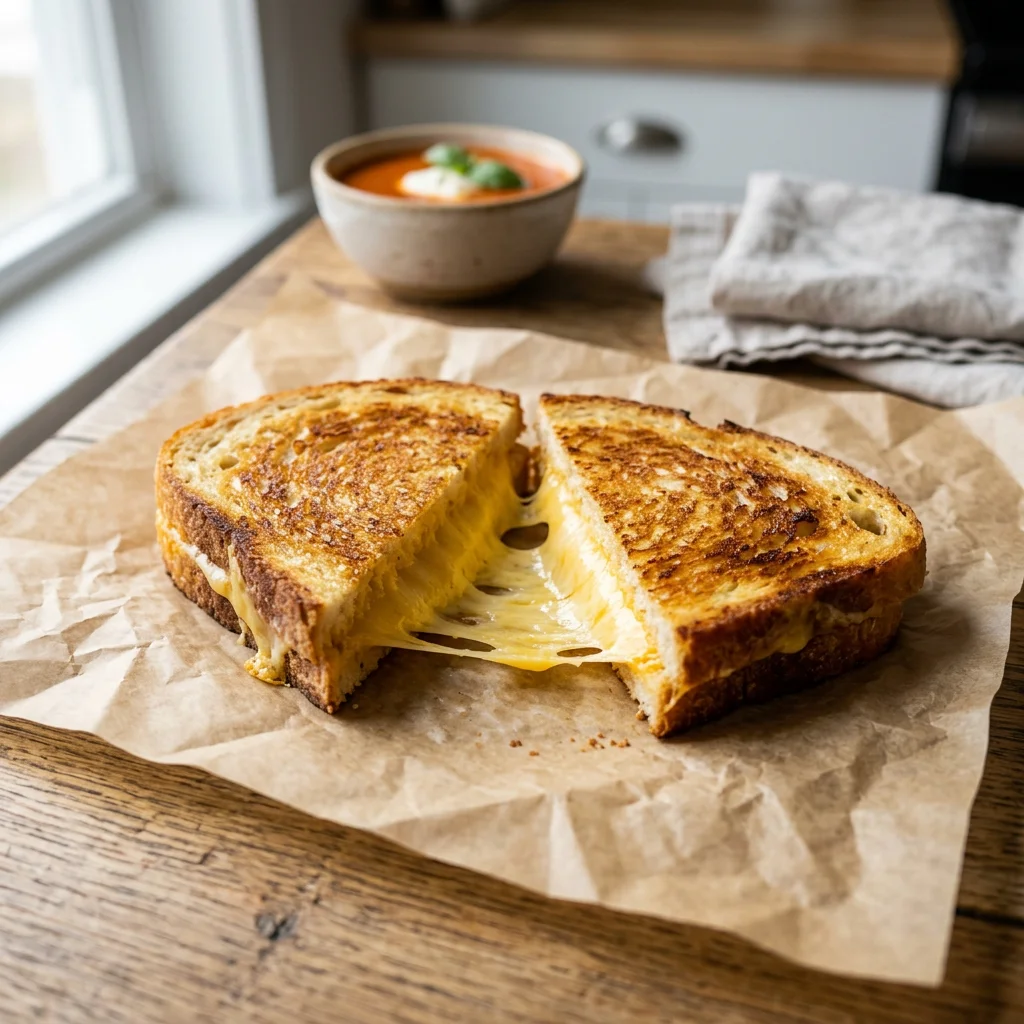
A grilled cheese sandwich is what happens when you apply fire to the three heaviest ingredients in the American pantry — bread, butter, and cheese — and the result is one of the most warming, grounding, and Kapha-building foods you can make in under ten minutes. But the application of heat is what makes grilled cheese different from a cold cheese sandwich, and in Ayurvedic terms, that difference matters enormously. Toasting bread transforms its gunas: the dry heat reduces the heavy, damp quality of raw bread and adds a light, crisp quality (rooksha and laghu gunas). The butter, when it hits the hot pan, becomes a vehicle for heat penetration, carrying warmth deep into the bread. The cheese melts, changing from a cold, dense solid into a warm, flowing, unctuous substance. This transformation by fire is what Ayurveda calls agni samskara — the refinement of food through heat. A cold cheese sandwich is harder to digest than a grilled one, not because the ingredients change chemically (though they do), but because the applied heat has already begun the breakdown process that your digestive fire would otherwise need to handle alone. This is an ancient insight that modern food science confirms: heating cheese denatures its proteins slightly, making them more accessible, and toasting bread begins converting starches into simpler sugars. The grilled cheese holds a specific place in the American emotional landscape that is worth understanding through the lens of the doshas. It is what you eat on a rainy day, a snow day, a sad day. It is paired with tomato soup — another warm, sweet, slightly sour comfort food — in a combination so archetypal that it functions as edible therapy for Vata imbalance. The warmth, the fat, the simple sweetness, the tactile crunch giving way to molten center — this is a food designed to make a dysregulated nervous system feel safe.
Pacifies Vata with warming, grounding, oily qualities. Increases Kapha due to heaviness and oiliness. Mildly increases Pitta from heated butter and aged cheese.
Ingredients
- 2 slices Sandwich bread (white or sourdough)
- 2 tbsp Butter (softened)
- 2 oz Sharp cheddar cheese (sliced or shredded)
- 1 slice American cheese (for meltability)
Instructions
- Spread softened butter generously on one side of each bread slice, all the way to the edges. The butter needs to make full contact with the pan — unbuttered spots will not brown and will stay pale and soft.
- Heat a skillet or griddle over medium-low heat. This is critical — too high and the bread burns before the cheese melts. Patience is the only secret to a great grilled cheese.
- Place one slice of bread butter-side down in the warm pan. Layer the cheese on top — put the American cheese in the middle (it melts first and acts as glue) with the cheddar on either side for flavor.
- Top with the second bread slice, butter-side up. Press down gently with a spatula to make good contact between bread, cheese, and pan.
- Cook for 3-4 minutes until the bottom is deep golden brown. Peek by lifting a corner with the spatula — you want the color of a well-worn penny, not pale gold.
- Flip carefully and cook the other side for another 3-4 minutes. Press gently again. The cheese should be fully melted, stretching in strings when you lift a corner.
- Remove to a cutting board, let rest for one minute (the cheese will scald your mouth otherwise), then cut diagonally and serve immediately. Pair with tomato soup if you want the full American comfort experience.
How This Recipe Affects Each Dosha
Vata
Grilled cheese addresses Vata's core needs — warmth, fat, groundedness — in the most efficient possible format. The combination of warm bread, melted butter, and liquid cheese creates a meal that Vata types feel immediately: the anxiety notch comes down, the cold hands warm up, the scattered mind settles. The toasted bread adds a crispy quality that actually helps Vata digestion more than soft bread would, because the light, dry quality of the crust mildly stimulates agni.
Pitta
Aged cheddar is heating, and butter cooked at high temperature develops a slightly sharp quality that Pitta may notice. A single grilled cheese is unlikely to cause a Pitta flare, but paired with tomato soup (sour, heating) the combination starts to push toward excess heat. Pitta types who are prone to heartburn should note whether grilled cheese triggers it — the combination of heated fat and sharp cheese can do this in sensitive individuals.
Kapha
Heavily Kapha-increasing. The bread, butter, and cheese are all sweet, heavy, and oily — three qualities that Kapha already has in excess. A grilled cheese consumed during Kapha season (spring) or by a Kapha-dominant person will almost certainly produce heaviness, congestion, and mental dullness. Kapha types will do better with an open-faced version on toasted rye, using less cheese and adding tomato and greens on top.
The toasting process makes this slightly easier to digest than a cold cheese sandwich, but it still requires solid agni. The heavy combination of bread, butter, and cheese demands digestive effort. The browning of the butter and bread (Maillard reaction) creates compounds that are slightly stimulating to digestion, which is why a grilled cheese feels more digestible than the same ingredients eaten cold.
Nourishes: Rasa (plasma), Meda (fat), Asthi (bone — from cheese calcium)
Adjustments by Constitution
For Vata Types
Already well-suited to Vata. Toast the bread a bit more for extra crunch, which provides lightness to balance the heaviness. Add a thin spread of Dijon mustard for pungent digestive support. A bowl of warm tomato soup alongside completes the grounding meal. Keep it to one sandwich — the second one pushes from grounding into heavy.
For Pitta Types
Use mild cheese like mozzarella or young gouda instead of sharp cheddar. Replace butter with a light coat of olive oil for less heating fat. Add fresh basil leaves and thin tomato slices inside the sandwich for cooling qualities. Avoid pairing with tomato soup — try it with a cool cucumber side salad instead.
For Kapha Types
Make it open-faced on one slice of toasted rye or pumpernickel, which is lighter and drier than white bread. Use a thin layer of cheese and add sliced tomato, arugula, and a dash of hot sauce or mustard. The pungent and bitter qualities from the greens and condiments partially offset the heavy, sweet quality of the cheese. Better yet, try a version with goat cheese, which is lighter and easier to digest than cow's milk cheese.
Seasonal Guidance
A cold-weather food through and through. In autumn, it provides the warming, grounding qualities that counter Vata season. In winter, it offers warmth and caloric density when the body needs both. In spring, this is exactly the kind of heavy, sticky, sweet food that Kapha season calls for eliminating. In summer, the combination of heated butter and melted cheese feels instinctively wrong to most people, which is the body's wisdom speaking.
Best time of day: Lunch, when digestive fire is strongest. A grilled cheese for a late dinner will sit heavy through the night. As a lunch paired with soup, it provides sustained afternoon energy.
Cultural Context
The grilled cheese sandwich became an American staple during the 1920s when both sliced bread and processed cheese became widely available. During the Great Depression, it was a cheap, filling meal that families could afford. The U.S. Navy and military served it in mess halls during World War II as an open-faced "American cheese on toast." By the 1960s, the closed grilled cheese with its tomato soup companion had become a diner standard and an after-school staple across the country. The dish carries a specific emotional frequency in American culture: it is childhood, simplicity, and the reassurance that some things do not need to be complicated. The modern gourmet grilled cheese movement — with brie, fig jam, and artisan sourdough — is a different thing entirely, though it serves the same emotional function dressed in better clothes.
Chef's Notes
Medium-low heat is non-negotiable. Every bad grilled cheese in history was cooked over too-high heat. You need time for the heat to travel through the bread and into the cheese. If the bread is browning before the cheese melts, your pan is too hot. The American cheese slice is not optional if you want that stretchy, gooey melt — it is engineered to melt smoothly and it acts as a binding agent for the sharper cheese. For an upgrade without going fancy, spread a thin layer of Dijon mustard on the inside of the bread before adding cheese — the pungency cuts through the richness beautifully.
Frequently Asked Questions
Is Grilled Cheese Sandwich good for my dosha?
Pacifies Vata with warming, grounding, oily qualities. Increases Kapha due to heaviness and oiliness. Mildly increases Pitta from heated butter and aged cheese. Grilled cheese addresses Vata's core needs — warmth, fat, groundedness — in the most efficient possible format. Aged cheddar is heating, and butter cooked at high temperature develops a slightly sharp quality that Pitta may notice. Heavily Kapha-increasing.
When is the best time to eat Grilled Cheese Sandwich?
Lunch, when digestive fire is strongest. A grilled cheese for a late dinner will sit heavy through the night. As a lunch paired with soup, it provides sustained afternoon energy. A cold-weather food through and through. In autumn, it provides the warming, grounding qualities that counter Vata season. In winter, it offers warmth and caloric density when the body needs both. In
How can I adjust Grilled Cheese Sandwich for my constitution?
For Vata types: Already well-suited to Vata. Toast the bread a bit more for extra crunch, which provides lightness to balance the heaviness. Add a thin spread of Dijo For Pitta types: Use mild cheese like mozzarella or young gouda instead of sharp cheddar. Replace butter with a light coat of olive oil for less heating fat. Add fresh
What are the Ayurvedic properties of Grilled Cheese Sandwich?
Grilled Cheese Sandwich has Sweet, Salty taste (rasa), Heating energy (virya), and Sweet post-digestive effect (vipaka). Its qualities (gunas) are Heavy, Oily, Warm, Dense. It nourishes Rasa (plasma), Meda (fat), Asthi (bone — from cheese calcium). The toasting process makes this slightly easier to digest than a cold cheese sandwich, but it still requires solid agni. The heavy combination of bread, butter, and cheese demands digestive effort. The browning of the butter and bread (Maillard reaction) creates compounds that are slightly stimulating to digestion, which is why a grilled cheese feels more digestible than the same ingredients eaten cold.
What should you eat today?
This recipe has specific effects on each dosha, and the right meal depends on more than general guidelines. Your constitution, the current season, your birth chart's active planetary period, what you ate yesterday, how you slept — it all matters.
With Personal Alignment, you get daily food and meal guidance tailored to:
- Your prakriti and current vikriti
- Your Vedic birth chart and active planetary cycles
- The season, weather, and time of day
- Your food preferences, allergies, and restrictions
- Your feedback — it learns what works for your body and adapts
Not a generic diet plan. A living system that gets smarter about you every day.