Horiatiki (Greek Village Salad)
Greek Recipe
Overview
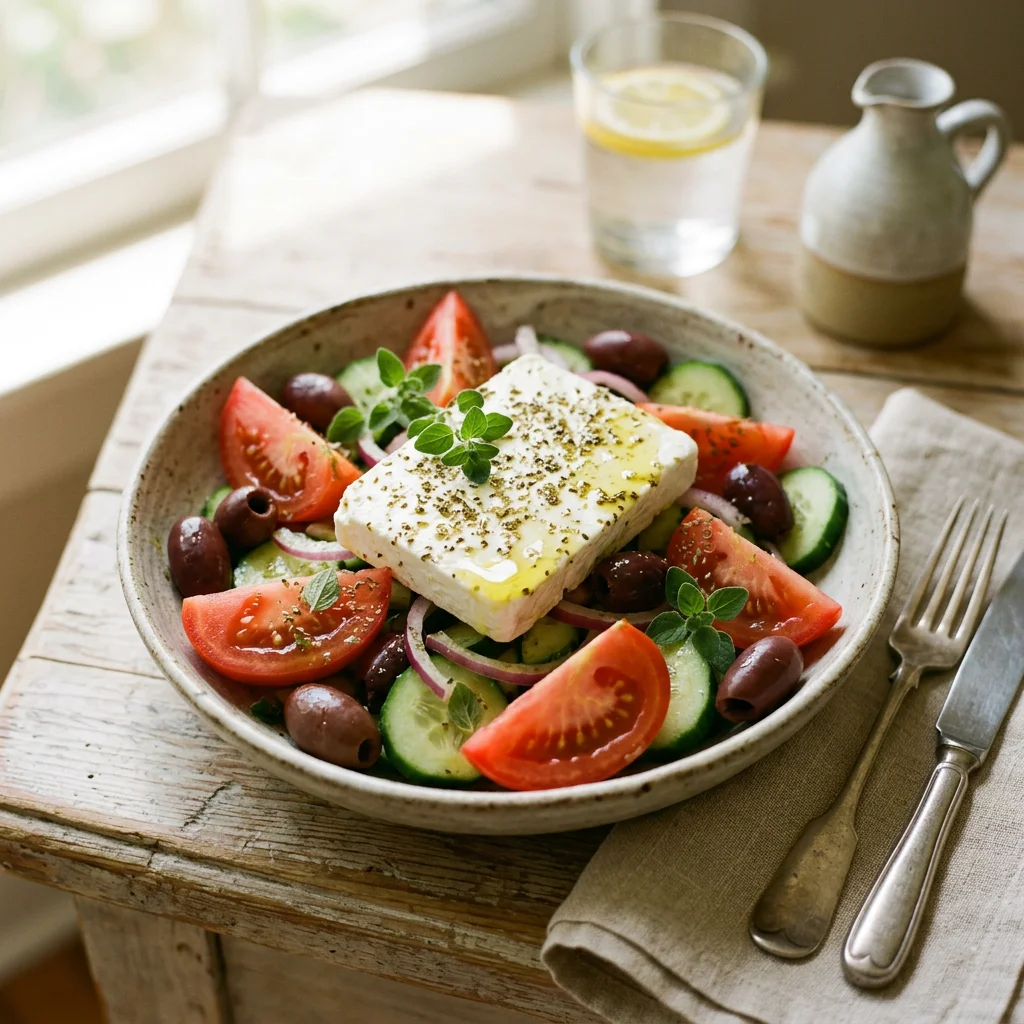
Horiatiki — the true Greek salad — bears little resemblance to the lettuce-based versions found in restaurants outside Greece. There is no lettuce. There is no dressing beyond olive oil and a splash of vinegar. What exists instead is a bold, uncompromising arrangement of peak-season vegetables, a thick slab of feta cheese, a scattering of olives, and enough olive oil to pool in the bottom of the bowl. This is the salad Greeks eat at midday in summer, and it is perfect. The dish is inseparable from the Greek summer table. Every taverna serves it, every home makes it, and the quality depends entirely on the ripeness of the tomatoes, the freshness of the cucumber, and the character of the olive oil. Horiatiki is not assembled — it is curated. The vegetables are cut large, the feta sits in a proud block on top, and the oregano dusted over everything ties the disparate elements into a cohesive Mediterranean experience. Ayurvedically, horiatiki is a masterpiece of cooling rasa. The raw vegetables, cucumber, and feta create a preparation that is ideal for hot weather and overheated constitutions. The olive oil provides unctuousness that prevents the raw vegetables from aggravating Vata, while the salt from the feta and olives grounds the otherwise light dish.
Excellent for pacifying Pitta. Can increase Vata if eaten cold in large amounts. Generally neutral for Kapha with moderation on the cheese and oil.
Ingredients
- 4 large Ripe tomatoes (cut into irregular wedges)
- 1 large Cucumber (peeled in strips and thickly sliced)
- 1 medium Green bell pepper (seeded and sliced into rings)
- 1 small Red onion (thinly sliced into rings)
- 100 g Kalamata olives (whole, with pits)
- 200 g Feta cheese (one thick slab, not crumbled)
- 80 ml Extra virgin olive oil
- 2 tsp Dried oregano
- 1 tbsp Red wine vinegar
- 1 pinch Sea salt
- 1 tbsp Capers (optional, rinsed)
Instructions
- Cut the tomatoes into large, irregular wedges and place in a wide shallow bowl or platter.
- Peel the cucumber in alternating strips (leaving some skin for texture) and slice into thick half-moons. Add to the bowl.
- Slice the bell pepper into rings, removing seeds. Slice the red onion into thin rings. Scatter both over the tomatoes and cucumber.
- Add the Kalamata olives and capers if using.
- Place the feta cheese in one piece on top of the vegetables. Do not crumble it.
- Drizzle generously with olive oil and red wine vinegar. Sprinkle the dried oregano over the feta and vegetables. Add a pinch of sea salt.
- Serve immediately with crusty bread to soak up the juices at the bottom of the bowl.
How This Recipe Affects Each Dosha
Vata
The raw vegetables and cooling nature can increase Vata, particularly in cold weather or for those with sensitive digestion. However, the olive oil, feta cheese, and olives provide grounding, oily qualities that mitigate some of this effect. Best for Vata types in warm weather only.
Pitta
Superb for Pitta. The cooling cucumber, sweet tomatoes, and astringent bell pepper all reduce excess heat. The olive oil is cooling among fats, and feta provides a satisfying salty-sour taste without being overly heating. This is a quintessential Pitta-pacifying summer meal.
Kapha
The light, raw quality suits Kapha well, though the generous oil and cheese can be heavy. Kapha types benefit from the astringent bell pepper and bitter olive quality. Moderate the oil and cheese portions for best results.
Mild effect on agni. The raw vegetables can slightly dampen digestive fire, which is why this dish is traditionally eaten in summer when external heat supports digestion. The oregano and vinegar provide mild digestive stimulation.
Nourishes: Rasa (plasma), Rakta (blood), Asthi (bone — from feta calcium)
Adjustments by Constitution
For Vata Types
Add roasted bell pepper instead of raw. Include a handful of toasted pine nuts for extra grounding. Drizzle with extra olive oil and serve at room temperature rather than cold from the refrigerator.
For Pitta Types
This salad is already ideal for Pitta. For extra cooling, add sliced fresh mint leaves and reduce the onion. Use white wine vinegar instead of red for a milder sour taste.
For Kapha Types
Reduce the olive oil by half and use a thinner slice of feta. Add extra bell pepper and a generous amount of dried oregano. Include some peppery arugula leaves for their bitter, stimulating quality.
Seasonal Guidance
Horiatiki is a summer-only dish in the truest sense. Greek cooks make it from June through September when tomatoes are at peak ripeness and the heat makes cooling food essential. Attempting this salad with winter tomatoes misses the point entirely. In early autumn, as nights cool, Greeks naturally transition away from raw salads toward cooked vegetable dishes. If you crave the flavors in cooler months, consider a roasted version with baked feta, which provides similar tastes with more warming qualities.
Best time of day: Midday lunch, especially in hot weather when the cooling quality balances peak solar heat
Cultural Context
Horiatiki means "village salad," and it represents the rustic agricultural heart of Greek cooking. Every Greek island and mountain village claims its version as the authentic one. The dish emerged from practical necessity — in summer, gardens overflow with tomatoes, cucumbers, and peppers, and the simplest thing to do with them is cut them up with local feta and olive oil. It became codified as a national dish in the mid-20th century but had been eaten in villages for generations before that. The presentation rules — no lettuce, whole feta on top — distinguish genuine horiatiki from its international imitations.
Chef's Notes
The cardinal rule of horiatiki: no lettuce, and never crumble the feta. The cheese goes on as a single slab that each diner breaks with their fork. Use the ripest summer tomatoes you can find — the entire salad depends on them. Cut vegetables large, not in delicate dice. The juice that pools at the bottom from the tomatoes mixing with olive oil and vinegar is considered the best part, and bread is essential for soaking it up. If you cannot find excellent tomatoes, this salad is not worth making — wait until summer.
Frequently Asked Questions
Is Horiatiki (Greek Village Salad) good for my dosha?
Excellent for pacifying Pitta. Can increase Vata if eaten cold in large amounts. Generally neutral for Kapha with moderation on the cheese and oil. The raw vegetables and cooling nature can increase Vata, particularly in cold weather or for those with sensitive digestion. Superb for Pitta. The light, raw quality suits Kapha well, though the generous oil and cheese can be heavy.
When is the best time to eat Horiatiki (Greek Village Salad)?
Midday lunch, especially in hot weather when the cooling quality balances peak solar heat Horiatiki is a summer-only dish in the truest sense. Greek cooks make it from June through September when tomatoes are at peak ripeness and the heat makes cooling food essential. Attempting this salad
How can I adjust Horiatiki (Greek Village Salad) for my constitution?
For Vata types: Add roasted bell pepper instead of raw. Include a handful of toasted pine nuts for extra grounding. Drizzle with extra olive oil and serve at room tem For Pitta types: This salad is already ideal for Pitta. For extra cooling, add sliced fresh mint leaves and reduce the onion. Use white wine vinegar instead of red for
What are the Ayurvedic properties of Horiatiki (Greek Village Salad)?
Horiatiki (Greek Village Salad) has Sweet, Sour, Salty, Astringent taste (rasa), Cooling energy (virya), and Sweet post-digestive effect (vipaka). Its qualities (gunas) are Light, Cool, Oily, Moist. It nourishes Rasa (plasma), Rakta (blood), Asthi (bone — from feta calcium). Mild effect on agni. The raw vegetables can slightly dampen digestive fire, which is why this dish is traditionally eaten in summer when external heat supports digestion. The oregano and vinegar provide mild digestive stimulation.
What should you eat today?
This recipe has specific effects on each dosha, and the right meal depends on more than general guidelines. Your constitution, the current season, your birth chart's active planetary period, what you ate yesterday, how you slept — it all matters.
With Personal Alignment, you get daily food and meal guidance tailored to:
- Your prakriti and current vikriti
- Your Vedic birth chart and active planetary cycles
- The season, weather, and time of day
- Your food preferences, allergies, and restrictions
- Your feedback — it learns what works for your body and adapts
Not a generic diet plan. A living system that gets smarter about you every day.