Hot and Sour Soup
Chinese Recipe
Overview
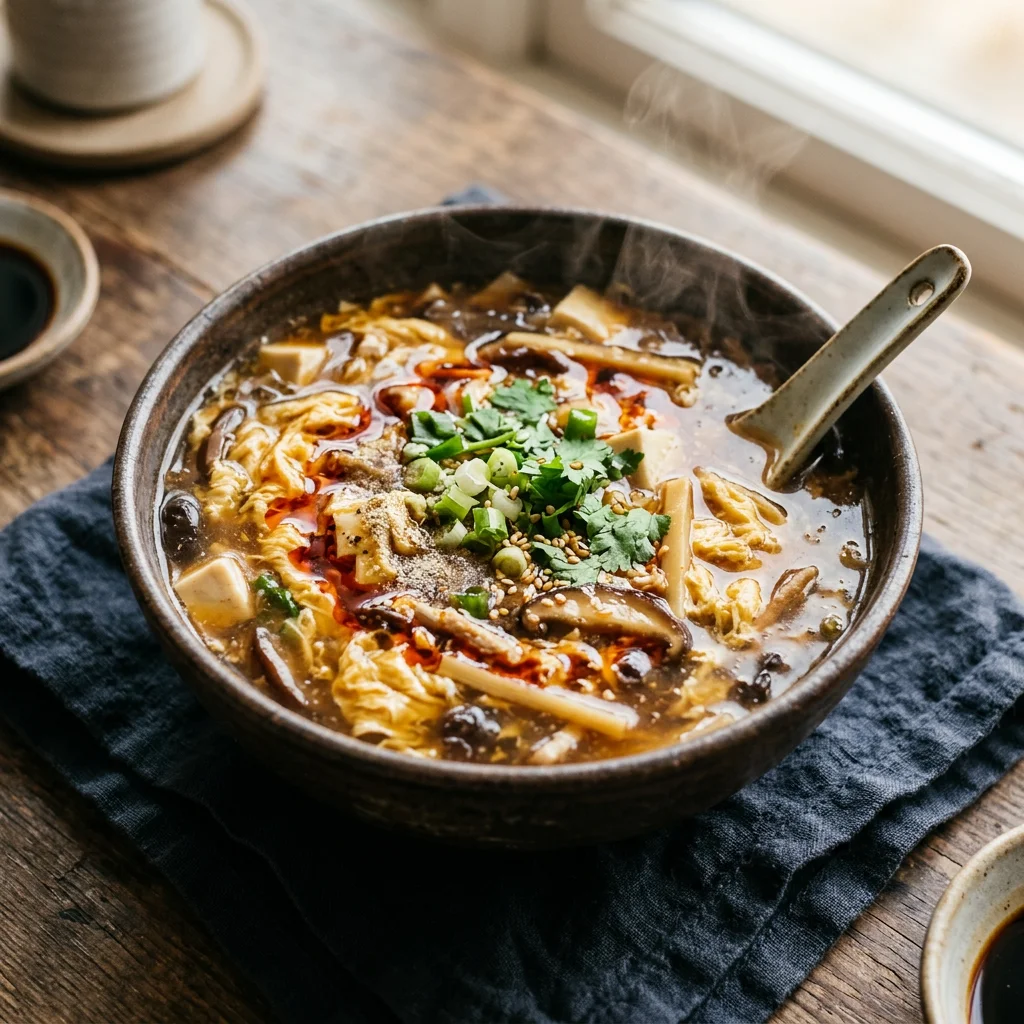
Hot and sour soup (suan la tang) is one of the great therapeutic soups of Chinese cuisine — a thick, dark, intensely flavored broth that hits the palate with a one-two punch of rice vinegar sharpness and white pepper heat. It originates from Sichuan province, where bold flavors are a way of life, though it has been adopted and adapted across China and the Chinese diaspora. The soup is a study in contrasts: sour vinegar against spicy pepper, silky egg ribbons against crunchy bamboo shoots, soft tofu against springy wood ear mushrooms. The medicinal logic of hot and sour soup is embedded in its name. In TCM food therapy, sour taste astringes — it draws inward, consolidates fluids, and supports the Liver. Pungent/hot taste disperses — it opens the pores, moves stagnant qi, and expels pathogens. Together, these two actions create a soup that both stimulates and consolidates, making it a classic cold-and-flu remedy. The white pepper and chili oil open the sinuses and induce mild sweating, while the vinegar supports the body's defense mechanisms. It is Chinese chicken soup — the food that generations of Chinese grandmothers prescribe at the first sniffle. From an Ayurvedic perspective, hot and sour soup is a powerful agni-kindler and ama-burner. The pungent taste (white pepper, chili) is the most directly heating rasa, and the sour taste (vinegar) is the second most agni-stimulating. Together they create a preparation that cuts through stagnation, clears accumulated toxins, and revives sluggish digestion. The mushrooms and tofu add earthy substance without heaviness, and the egg provides easily digestible protein.
Strongly balances Kapha and Vata due to heating, stimulating, and liquid qualities. Aggravates Pitta due to intense sour and pungent tastes.
Ingredients
- 1/4 cup Dried wood ear mushrooms (soaked in warm water 20 min, sliced)
- 4 whole Dried shiitake mushrooms (soaked, stemmed, and sliced)
- 200 g Firm tofu (cut into thin strips)
- 1/2 cup Bamboo shoots (julienned)
- 6 cups Chicken or vegetable stock
- 4 tbsp Rice vinegar (or to taste)
- 2 tbsp Soy sauce
- 1 tsp Ground white pepper (or to taste — this is the primary heat source)
- 1 tbsp Chili oil (for drizzle)
- 3 tbsp Cornstarch (mixed with 3 tbsp cold water)
- 2 whole Eggs (beaten)
- 1 tsp Sesame oil (for finishing)
- 2 whole Scallions (thinly sliced)
- 2 tbsp Fresh cilantro (for garnish)
Instructions
- Soak the dried wood ear and shiitake mushrooms in warm water for 20 minutes. Drain, reserving the soaking liquid. Slice the mushrooms into thin strips. Strain the soaking liquid through a fine sieve and add it to your stock for extra depth.
- Bring the stock to a boil in a large pot. Add the sliced mushrooms, bamboo shoots, and tofu strips. Simmer for 5 minutes.
- Add the soy sauce, rice vinegar, and white pepper. Stir well and taste — the soup should be distinctly sour and noticeably peppery. Adjust both components until the balance is bold, not timid.
- Stir the cornstarch slurry to recombine it, then pour it into the simmering soup in a thin stream while stirring. The soup will thicken to a silky, slightly viscous consistency within 30 seconds.
- Bring the soup back to a gentle simmer. Hold a fork over the pot and slowly pour the beaten eggs through the tines in a thin stream while stirring the soup in one direction with a chopstick. The eggs will form delicate ribbons.
- Remove from heat immediately. Stir in the sesame oil.
- Ladle into bowls and garnish with sliced scallions, fresh cilantro, and a drizzle of chili oil.
- Serve immediately while the contrasts of hot and sour are at their sharpest. The flavors mellow as the soup cools.
How This Recipe Affects Each Dosha
Vata
The warm, liquid, sour qualities of hot and sour soup pacify Vata effectively. The sour taste is grounding and appetite-stimulating for Vata's often erratic digestion. The mushrooms and tofu provide gentle substance. The white pepper warms without being harsh. The egg ribbons add easily digestible protein. This is a good Vata-season soup.
Pitta
This soup concentrates two of the three Pitta-aggravating tastes — sour and pungent — making it one of the least appropriate preparations for inflamed Pitta. The vinegar, white pepper, chili oil, and soy sauce all generate heat. Pitta types with acid reflux, skin eruptions, or irritability should avoid this entirely during flare-ups.
Kapha
Hot and sour soup is excellent medicine for Kapha. The pungent white pepper cuts through mucus and stagnation. The sour vinegar stimulates sluggish digestion. The light, liquid quality helps move stuck Kapha energy. The warming quality counteracts Kapha's cold, damp nature. This is a therapeutic food during cold, damp Kapha-aggravating weather.
One of the most powerful agni-stimulating soups in any cuisine. The combination of white pepper (pungent) and rice vinegar (sour) creates a double assault on sluggish digestion. In TCM terms, it warms the Spleen and Stomach, moves stagnant qi, and disperses cold pathogens. This is the soup to eat when you feel a cold coming on or when digestion feels dull and heavy.
Nourishes: Rasa (plasma), Rakta (blood)
Adjustments by Constitution
For Vata Types
Increase the sesame oil drizzle to 2 teaspoons. Add shredded cooked chicken or pork for extra grounding protein. Reduce vinegar slightly for a milder sourness. Include a few slices of fresh ginger in the broth for deeper warmth. Top with crispy fried shallots for extra substance.
For Pitta Types
Reduce white pepper to 1/4 teaspoon and omit chili oil entirely. Reduce vinegar by half and add a teaspoon of sugar to soften the sharpness. Increase the tofu for its cooling, sweet quality. Add extra cilantro garnish. Use vegetable stock rather than chicken for a lighter base. Frankly, Pitta types are better served by a miso-based or vegetable soup during aggravation.
For Kapha Types
Double the white pepper and add a tablespoon of freshly grated ginger to the broth. Use extra chili oil as a finishing drizzle. Skip the cornstarch thickening — Kapha doesn't need the extra density. Add extra wood ear mushrooms and bamboo shoots for fiber without heaviness. Skip the egg for a lighter version.
Seasonal Guidance
Ideal during cold, damp months when the body needs warming, stimulating foods to counteract seasonal stagnation. In autumn (Vata season), the warmth and sourness ground scattered energy. In winter, the pungent heat opens the sinuses and supports immune defense. In spring (Kapha season), the sharp, dispersing quality helps clear the heavy, wet congestion that accumulates during late winter. In summer, this soup is too heating for most constitutions — the concentrated sour and pungent tastes aggravate Pitta during the hottest months.
Best time of day: Lunch or early dinner. Especially therapeutic when eaten at the very first sign of a cold — the earlier the intervention, the more effective the dispersing action.
Cultural Context
Hot and sour soup originated in Sichuan province, where the interplay of chili heat and vinegar tang defines the local palate. It reflects the TCM principle that food is the first line of medicine — the specific combination of sour and pungent is prescribed in the Shang Han Lun (Treatise on Cold Damage, ~200 CE) for patterns of external cold invasion. In Chinese-American restaurants, the soup became one of the most popular appetizers, though American versions often emphasize chili heat over the nuanced white pepper warmth and black vinegar depth of the original. In China, every household has its own ratio of sour to hot, and the best versions achieve a balance where neither dominates — you feel both simultaneously, like a conversation between two equally strong voices.
Chef's Notes
White pepper, not chili, is the traditional heat source — it provides a sharp, nasal heat that is distinctly different from chili burn. Use freshly ground white pepper if possible; pre-ground loses potency quickly. The vinegar should be added late and tasted assertively — the sour note dissipates with extended cooking, so add a splash more just before serving if the sourness has dulled. The cornstarch slurry must be stirred constantly as it goes in, or it will form lumps. For the egg ribbons, the key is a thin stream into gently simmering (not boiling) soup, stirred in one direction only. Chinese black vinegar (Chinkiang vinegar) can replace rice vinegar for a deeper, more complex sourness.
Frequently Asked Questions
Is Hot and Sour Soup good for my dosha?
Strongly balances Kapha and Vata due to heating, stimulating, and liquid qualities. Aggravates Pitta due to intense sour and pungent tastes. The warm, liquid, sour qualities of hot and sour soup pacify Vata effectively. This soup concentrates two of the three Pitta-aggravating tastes — sour and pungent — making it one of the least appropriate preparations for inflamed Pitta. Hot and sour soup is excellent medicine for Kapha.
When is the best time to eat Hot and Sour Soup?
Lunch or early dinner. Especially therapeutic when eaten at the very first sign of a cold — the earlier the intervention, the more effective the dispersing action. Ideal during cold, damp months when the body needs warming, stimulating foods to counteract seasonal stagnation. In autumn (Vata season), the warmth and sourness ground scattered energy. In winter, th
How can I adjust Hot and Sour Soup for my constitution?
For Vata types: Increase the sesame oil drizzle to 2 teaspoons. Add shredded cooked chicken or pork for extra grounding protein. Reduce vinegar slightly for a milder For Pitta types: Reduce white pepper to 1/4 teaspoon and omit chili oil entirely. Reduce vinegar by half and add a teaspoon of sugar to soften the sharpness. Increase
What are the Ayurvedic properties of Hot and Sour Soup?
Hot and Sour Soup has Sour, Pungent, Salty taste (rasa), Heating energy (virya), and Pungent post-digestive effect (vipaka). Its qualities (gunas) are Light, Warm, Sharp, Liquid. It nourishes Rasa (plasma), Rakta (blood). One of the most powerful agni-stimulating soups in any cuisine. The combination of white pepper (pungent) and rice vinegar (sour) creates a double assault on sluggish digestion. In TCM terms, it warms the Spleen and Stomach, moves stagnant qi, and disperses cold pathogens. This is the soup to eat when you feel a cold coming on or when digestion feels dull and heavy.
What should you eat today?
This recipe has specific effects on each dosha, and the right meal depends on more than general guidelines. Your constitution, the current season, your birth chart's active planetary period, what you ate yesterday, how you slept — it all matters.
With Personal Alignment, you get daily food and meal guidance tailored to:
- Your prakriti and current vikriti
- Your Vedic birth chart and active planetary cycles
- The season, weather, and time of day
- Your food preferences, allergies, and restrictions
- Your feedback — it learns what works for your body and adapts
Not a generic diet plan. A living system that gets smarter about you every day.