Khao Tom
Thai Recipe
Overview
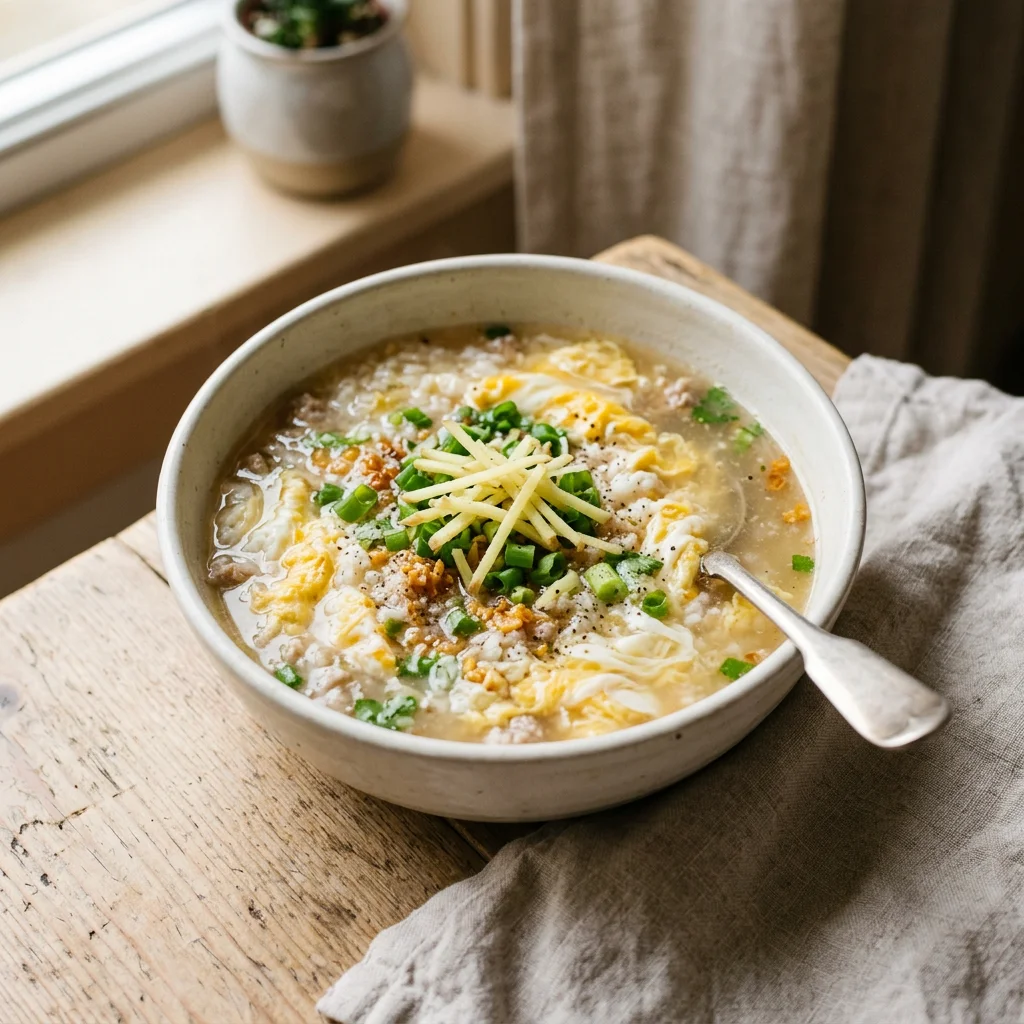
Khao Tom is Thailand's rice porridge — jasmine rice simmered in water or light broth until the grains soften and the liquid thickens into a gentle, nourishing congee. Unlike the heavily seasoned congees of China or the thick juk of Korea, Thai Khao Tom tends to be lighter and more brothy, served as a blank canvas dressed at the table with a constellation of condiments: fish sauce, white pepper, crispy fried garlic, sliced ginger, fresh cilantro, and a soft-cooked egg. Khao Tom occupies a very specific place in Thai daily life: it is breakfast food, late-night food, sick food, and hangover food. Walk through any Thai market district at 5 AM and you will find Khao Tom vendors already ladling bowls for early risers — dockworkers, monks on their alms rounds, night-shift workers heading home. Walk through the same district at 2 AM and you will find Khao Tom vendors still ladling bowls for a different crowd entirely. It is the food that bookends the Thai day. From an Ayurvedic perspective, Khao Tom is the closest thing in Thai cuisine to a kanji or peya — the therapeutic rice waters prescribed in Ayurvedic texts for convalescence, digestive reset, and gentle nourishment when agni is low. The prolonged cooking breaks down the rice starch into a form that requires almost no digestive effort to process, making it ideal for the elderly, the ill, young children, and anyone whose digestive fire needs rest rather than stimulation.
Tridoshic when prepared simply. Pacifies Vata gently through warmth and moisture. Neutral for Pitta. Can be adjusted lighter for Kapha.
Primary convalescence food in Thai tradition. Used during illness recovery, post-surgery, digestive distress, and for the elderly. The pre-broken starch provides glucose without taxing agni, while ginger and garlic offer gentle immune and digestive support.
Ingredients
- 1 cup Jasmine rice (rinsed)
- 6 cups Water or light chicken broth
- 1 inch Fresh ginger (sliced into thin coins)
- 4 cloves Garlic (2 minced for broth, 2 thinly sliced and fried for garnish)
- 2 tbsp Fish sauce (plus more for the table)
- 2 large Eggs (soft-boiled or poached)
- 1/2 tsp White pepper (freshly ground)
- 3 tbsp Fresh cilantro (stems and leaves, chopped)
- 1 tbsp Vegetable oil (for frying garlic)
- 2 tbsp Celery leaves (thinly sliced, for garnish)
Instructions
- Rinse the jasmine rice in several changes of water until the water runs mostly clear. This removes excess surface starch and prevents the porridge from becoming gluey.
- Bring the water or broth to a boil in a large pot. Add the rice, ginger slices, and minced garlic. Stir once to prevent sticking.
- Reduce heat to a low simmer and cook uncovered, stirring occasionally, for 25-30 minutes until the rice has softened and the liquid has thickened into a loose porridge. The consistency should be soupy, not thick — add more hot water if needed.
- While the porridge simmers, fry the sliced garlic in oil over medium-low heat, stirring constantly, until golden and crispy. Remove to a paper towel immediately — garlic goes from golden to burnt in seconds. Prepare your soft-boiled eggs.
- Season the porridge with fish sauce and white pepper. Taste and adjust — it should be gently savory with a clean ginger warmth.
- Ladle into bowls. Top each with a soft-boiled egg (halved), crispy fried garlic, fresh cilantro, celery leaves, and an extra pinch of white pepper. Serve with fish sauce, sliced chilies in vinegar, and extra ginger on the side.
How This Recipe Affects Each Dosha
Vata
Khao Tom is deeply soothing for Vata. The warm, moist, soft, and easily digestible qualities directly counter Vata's cold, dry, rough nature. The ginger provides gentle warmth without aggression, and the broken-down rice starch requires minimal digestive effort. This is an ideal food when Vata has disrupted digestion or when the body is depleted.
Pitta
The simplicity and mildness of Khao Tom makes it very compatible with Pitta. There is nothing sharply heating or sour to provoke Pitta aggravation. The white pepper and ginger are mild enough to support without overstimulating. Pitta types can enjoy this freely, especially with cooling cilantro garnish.
Kapha
The sweet, moist, soft qualities of rice porridge can increase Kapha if consumed heavily or with too little spice. The watery consistency is less aggravating than thick, sticky rice, but Kapha types should add extra ginger and white pepper to counterbalance the heaviness. Best consumed in moderate portions.
The pre-digested nature of the broken-down rice starch allows agni to process nutrients with minimal effort. The ginger and white pepper provide just enough stimulation to maintain digestive fire without demanding anything of it. This makes Khao Tom ideal when agni is weak, depleted, or recovering from illness.
Nourishes: Rasa (plasma), Mamsa (muscle)
Adjustments by Constitution
For Vata Types
Cook the porridge until it is slightly thicker and creamier. Add a splash of coconut milk in the last few minutes. Use bone broth instead of water for deeper nourishment. Add a poached egg for grounding protein. Extra ginger and a drizzle of toasted sesame oil at serving.
For Pitta Types
Use water rather than chicken broth to keep it lighter. Replace white pepper with a pinch of coriander powder. Increase the cilantro garnish generously. Add cooling cucumber slices on the side. Omit the fried garlic if Pitta is elevated.
For Kapha Types
Use a higher water-to-rice ratio for a thinner, more brothy consistency. Double the ginger and add a few slices of galangal to the simmering broth. Increase white pepper significantly. Add leafy greens like morning glory or watercress. Skip the egg and use a small amount of shrimp or white fish instead.
Seasonal Guidance
Appropriate year-round, with adjustments. In autumn and winter, increase ginger and add warming protein like chicken or pork. In spring, make it thinner and add peppery greens. In summer, keep it simple with just rice, water, and cooling herbs. It is especially valuable during seasonal transitions when digestion is naturally sensitive.
Best time of day: Early morning on an empty stomach, or as a light evening meal at least 2 hours before sleep
Cultural Context
Khao Tom is one of the oldest and most fundamental foods in Thai culture, predating the elaborate curries and stir-fries that define modern Thai cuisine. Rice porridge in various forms has been eaten across Asia for millennia, and the Thai version reflects the country's preference for brightness and customization — the porridge itself is mild, and the eater constructs their preferred flavor profile from the condiment tray. In Thai hospitals, Khao Tom is the default patient meal. In Thai homes, it is what you make when someone is unwell, grieving, exhausted, or simply needs comfort without complexity. It is the Thai equivalent of chicken soup — unpretentious, deeply restorative, and available at any hour.
Chef's Notes
Leftover cooked rice makes a faster version — add it to boiling broth and simmer for 10-15 minutes instead of 30. Thai Khao Tom is deliberately simpler and more brothy than Chinese congee; resist the urge to over-thicken it. The condiment tray is what makes the dish — prepare small bowls of fish sauce, chili vinegar (bird chilies soaked in white vinegar), crispy garlic, white pepper, and fresh herbs so each person can customize their bowl. For a more substantial meal, add minced pork, shrimp, or flaked fish to the broth during the last 5 minutes of cooking.
Frequently Asked Questions
Is Khao Tom good for my dosha?
Tridoshic when prepared simply. Pacifies Vata gently through warmth and moisture. Neutral for Pitta. Can be adjusted lighter for Kapha. Khao Tom is deeply soothing for Vata. The simplicity and mildness of Khao Tom makes it very compatible with Pitta. The sweet, moist, soft qualities of rice porridge can increase Kapha if consumed heavily or with too little spice.
When is the best time to eat Khao Tom?
Early morning on an empty stomach, or as a light evening meal at least 2 hours before sleep Appropriate year-round, with adjustments. In autumn and winter, increase ginger and add warming protein like chicken or pork. In spring, make it thinner and add peppery greens. In summer, keep it simp
How can I adjust Khao Tom for my constitution?
For Vata types: Cook the porridge until it is slightly thicker and creamier. Add a splash of coconut milk in the last few minutes. Use bone broth instead of water for For Pitta types: Use water rather than chicken broth to keep it lighter. Replace white pepper with a pinch of coriander powder. Increase the cilantro garnish generousl
What are the Ayurvedic properties of Khao Tom?
Khao Tom has Sweet, Salty taste (rasa), Warming energy (virya), and Sweet post-digestive effect (vipaka). Its qualities (gunas) are Light, Warm, Soft, Moist. It nourishes Rasa (plasma), Mamsa (muscle). The pre-digested nature of the broken-down rice starch allows agni to process nutrients with minimal effort. The ginger and white pepper provide just enough stimulation to maintain digestive fire without demanding anything of it. This makes Khao Tom ideal when agni is weak, depleted, or recovering from illness.
What should you eat today?
This recipe has specific effects on each dosha, and the right meal depends on more than general guidelines. Your constitution, the current season, your birth chart's active planetary period, what you ate yesterday, how you slept — it all matters.
With Personal Alignment, you get daily food and meal guidance tailored to:
- Your prakriti and current vikriti
- Your Vedic birth chart and active planetary cycles
- The season, weather, and time of day
- Your food preferences, allergies, and restrictions
- Your feedback — it learns what works for your body and adapts
Not a generic diet plan. A living system that gets smarter about you every day.