Kheer (Rice Pudding)
Indian Recipe
Overview
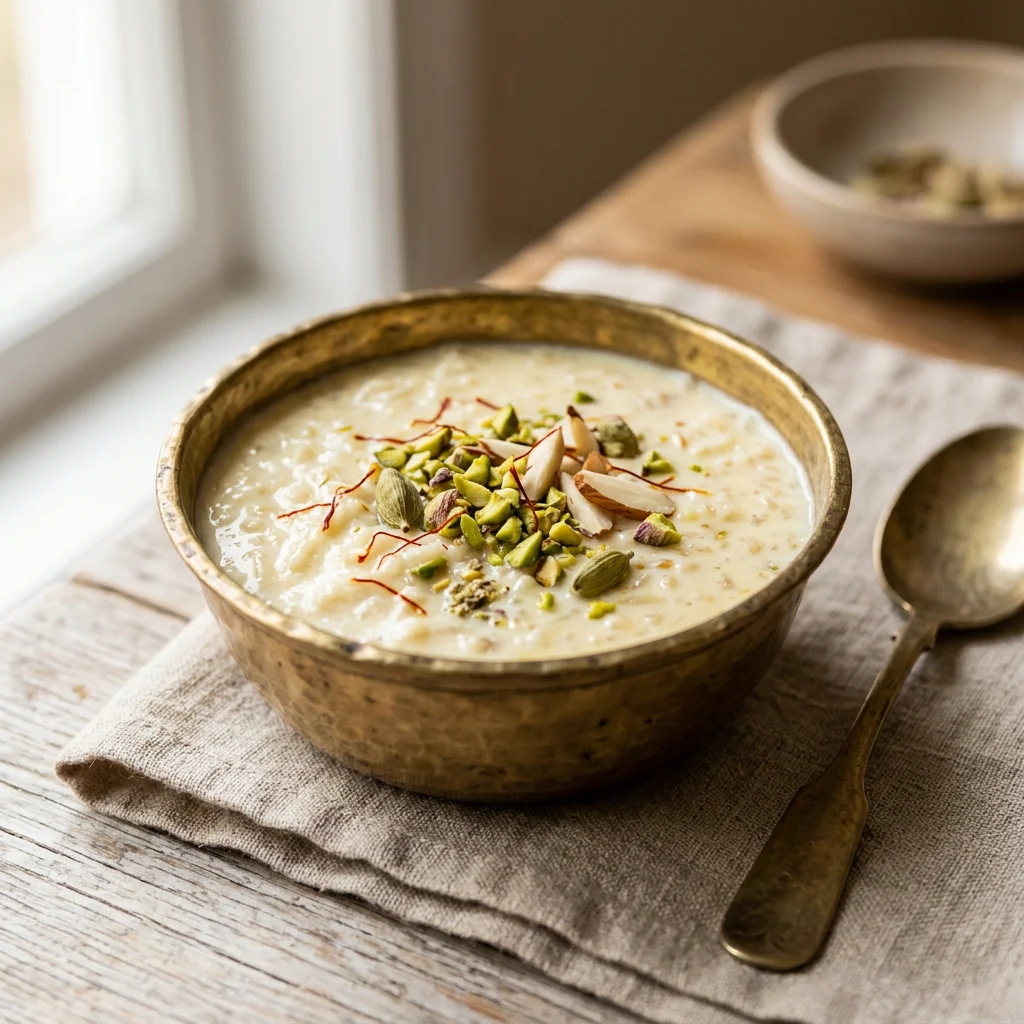
Kheer is India's most ancient and revered dessert — rice slowly simmered in milk until the grains dissolve and the liquid reduces into a thick, fragrant pudding perfumed with cardamom, saffron, and rose water. It is the original rice pudding, predating European versions by millennia, and carries deep cultural and spiritual significance across the subcontinent. The preparation requires patience above all. Whole milk is brought to a gentle boil, rice is added, and the mixture simmers for 45 minutes to an hour with frequent stirring, until the milk reduces by roughly half and develops a natural caramelized sweetness. Sugar is added toward the end, along with aromatics — cardamom, saffron threads bloomed in warm milk, and sometimes rose water or kewra essence. Nuts and raisins provide textural contrast. Ayurvedically, kheer is one of the most nourishing preparations in the Indian repertoire. Milk cooked with rice and sweetened with natural sugar creates an ojas-building food — ojas being the subtle essence of vitality, immunity, and contentment. It is prescribed during convalescence, for underweight individuals, and as a rejuvenative (rasayana) food.
Strongly pacifies Vata and Pitta due to sweet, cooling, nourishing qualities. Significantly increases Kapha due to heaviness, sweetness, and mucus-forming dairy.
Ingredients
- 6 cups Whole milk
- 1/3 cup Basmati rice (rinsed and soaked 30 minutes)
- 1/2 cup Sugar (or to taste)
- 4 whole Cardamom pods (lightly crushed)
- 1/4 tsp Saffron threads (soaked in 2 tbsp warm milk)
- 2 tbsp Almonds (blanched and slivered)
- 2 tbsp Cashews (halved)
- 2 tbsp Raisins
- 1 tsp Rose water (optional)
- 1 tbsp Pistachios (slivered, for garnish)
Instructions
- Bring the milk to a boil in a heavy-bottomed pot over medium heat, stirring frequently to prevent a skin from forming and the bottom from scorching.
- Drain the soaked rice and add it to the boiling milk along with the crushed cardamom pods. Stir well.
- Reduce heat to medium-low and simmer, stirring every 3-4 minutes, for 35-40 minutes. The milk will gradually reduce and thicken, and the rice grains will soften and begin to break apart.
- When the milk has reduced by about one-third and the mixture coats the back of a spoon, add the sugar. Stir until completely dissolved.
- Add the saffron-soaked milk, slivered almonds, cashew halves, and raisins. Stir gently and simmer for another 5-8 minutes.
- Remove from heat and stir in the rose water if using. The kheer will thicken further as it cools.
- Serve warm, at room temperature, or chilled, garnished with slivered pistachios and a few extra saffron threads.
How This Recipe Affects Each Dosha
Vata
Kheer is one of the best foods for Vata — its sweet taste, heavy quality, oily texture, and smooth consistency directly counteract Vata's dry, light, rough, and mobile nature. The combination of milk, rice, ghee, and sugar builds ojas and calms the nervous system. Vata types can enjoy kheer freely.
Pitta
The cooling virya, sweet taste, and sweet vipaka make kheer naturally Pitta-pacifying. Milk, rice, and sugar are all among the most cooling foods in Ayurveda. The cardamom and saffron add aromatic depth without contributing significant heat. Rose water further enhances the cooling effect.
Kapha
Kheer is one of the most Kapha-aggravating foods due to its heaviness, sweetness, coolness, and dairy base — all qualities that increase Kapha. The nuts and sugar compound this effect. Kapha types should treat kheer as an occasional indulgence, not a regular food.
Heavy and sweet — requires strong agni to digest properly. Best eaten when digestive fire is robust, ideally at the end of a meal or as a midday treat. Eating kheer on a weak stomach leads to ama (toxin) formation.
Nourishes: Rasa (plasma), Rakta (blood), Mamsa (muscle), Meda (fat), Asthi (bone), Shukra (reproductive)
Adjustments by Constitution
For Vata Types
This preparation is ideal for Vata as-is. For extra nourishment, add a tablespoon of ghee and a pinch of nutmeg. Use soaked and peeled dates instead of sugar for deeper sweetness and additional iron.
For Pitta Types
Already well-suited to Pitta. For enhanced cooling, increase the rose water and add a tablespoon of soaked fennel seeds or fresh coconut shavings. Reduce or omit cashews, which are mildly heating.
For Kapha Types
Replace whole milk with a mix of 2 cups coconut milk and 2 cups water. Use jaggery sparingly instead of sugar. Omit cashews and raisins. Add 1/2 teaspoon dry ginger powder and a pinch of black pepper. Reduce portion to a small cup. Better yet, prepare a vermicelli (seviyan) version with less dairy.
Seasonal Guidance
Best during the cooler months of autumn and winter when the body needs heavy, nourishing, ojas-building foods and agni is naturally stronger. During summer, serve it chilled as an occasional treat — its cooling quality provides relief from heat. Avoid during spring (Kapha season) when heavy, sweet dairy foods contribute to congestion and sluggishness. At festivals (many fall in autumn/winter), kheer is traditionally served warm.
Best time of day: After lunch or as an afternoon treat when agni is strong. Avoid late at night — heavy dairy before sleep impairs digestion.
Cultural Context
Kheer is the most sacred of Indian desserts. It appears in temple offerings (prasad), wedding feasts, festival celebrations, and rites of passage throughout the Hindu calendar. The Ramayana describes kheer as an offering to the gods that blessed King Dasharatha with his sons. In many communities, kheer is the first sweet a newborn tastes, the dessert served at birth celebrations, and the food cooked for the departed during funeral rites — it accompanies life from beginning to end. Regional names reflect its pan-Indian presence: payasam in the south, payesh in Bengal, phirni in the north (when made with ground rice).
Chef's Notes
A heavy-bottomed pot is essential to prevent scorching — milk burns easily and burnt milk ruins the entire batch. Stir regularly, scraping the bottom and sides of the pot. The milk solids that collect on the sides and bottom are concentrated flavor — scrape them back in rather than discarding. Kheer thickens considerably as it cools, so cook it to a thinner consistency than you want the final product to be. For the richest flavor, use full-fat organic milk. Jaggery can replace white sugar for a deeper, more complex sweetness. Some cooks add a bay leaf during simmering for subtle floral depth.
Frequently Asked Questions
Is Kheer (Rice Pudding) good for my dosha?
Strongly pacifies Vata and Pitta due to sweet, cooling, nourishing qualities. Significantly increases Kapha due to heaviness, sweetness, and mucus-forming dairy. Kheer is one of the best foods for Vata — its sweet taste, heavy quality, oily texture, and smooth consistency directly counteract Vata's dry, light, rough, and mobile nature. The cooling virya, sweet taste, and sweet vipaka make kheer naturally Pitta-pacifying. Kheer is one of the most Kapha-aggravating foods due to its heaviness, sweetness, coolness, and dairy base — all qualities that increase Kapha.
When is the best time to eat Kheer (Rice Pudding)?
After lunch or as an afternoon treat when agni is strong. Avoid late at night — heavy dairy before sleep impairs digestion. Best during the cooler months of autumn and winter when the body needs heavy, nourishing, ojas-building foods and agni is naturally stronger. During summer, serve it chilled as an occasional treat — i
How can I adjust Kheer (Rice Pudding) for my constitution?
For Vata types: This preparation is ideal for Vata as-is. For extra nourishment, add a tablespoon of ghee and a pinch of nutmeg. Use soaked and peeled dates instead o For Pitta types: Already well-suited to Pitta. For enhanced cooling, increase the rose water and add a tablespoon of soaked fennel seeds or fresh coconut shavings. Red
What are the Ayurvedic properties of Kheer (Rice Pudding)?
Kheer (Rice Pudding) has Sweet taste (rasa), Cooling energy (virya), and Sweet post-digestive effect (vipaka). Its qualities (gunas) are Heavy, Oily, Smooth, Cool. It nourishes Rasa (plasma), Rakta (blood), Mamsa (muscle), Meda (fat), Asthi (bone), Shukra (reproductive). Heavy and sweet — requires strong agni to digest properly. Best eaten when digestive fire is robust, ideally at the end of a meal or as a midday treat. Eating kheer on a weak stomach leads to ama (toxin) formation.
What should you eat today?
This recipe has specific effects on each dosha, and the right meal depends on more than general guidelines. Your constitution, the current season, your birth chart's active planetary period, what you ate yesterday, how you slept — it all matters.
With Personal Alignment, you get daily food and meal guidance tailored to:
- Your prakriti and current vikriti
- Your Vedic birth chart and active planetary cycles
- The season, weather, and time of day
- Your food preferences, allergies, and restrictions
- Your feedback — it learns what works for your body and adapts
Not a generic diet plan. A living system that gets smarter about you every day.