Kitchari
Indian Recipe
Overview
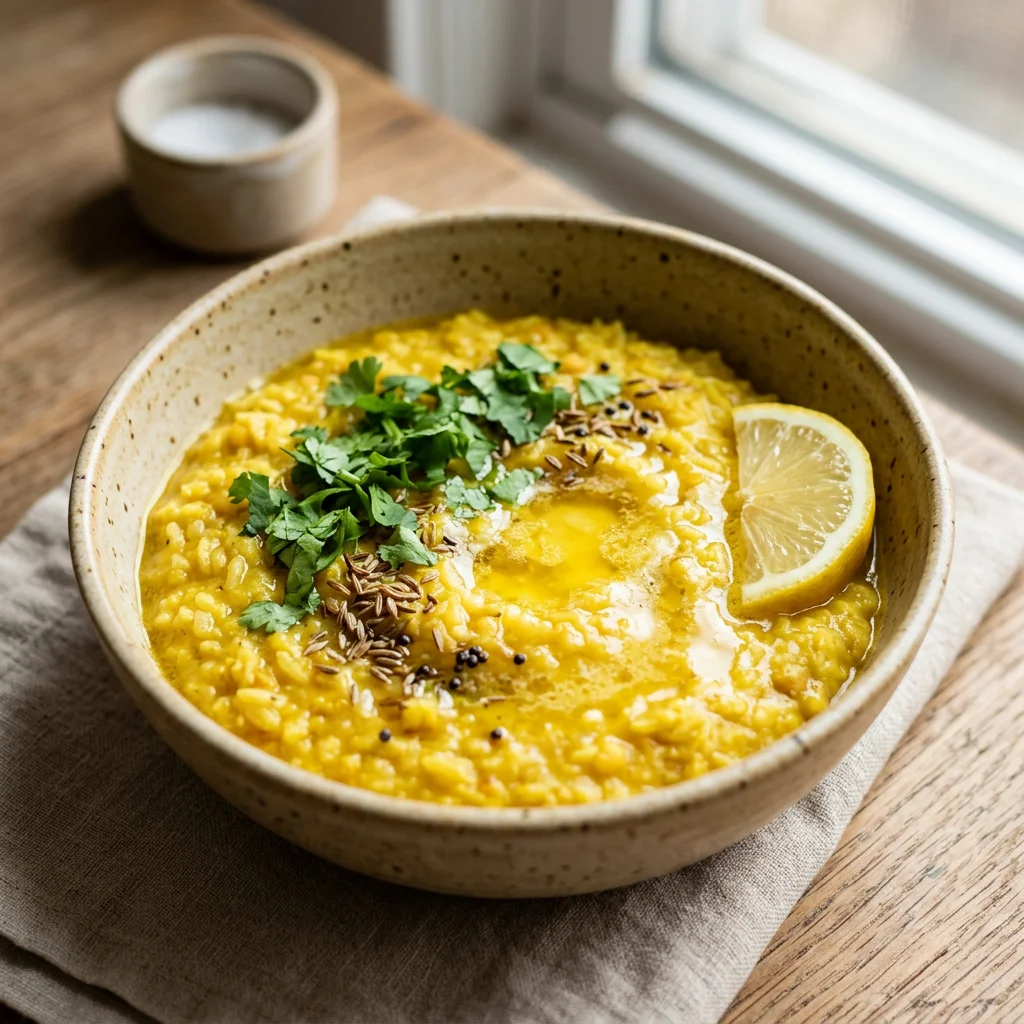
Kitchari is the quintessential Ayurvedic healing food — a one-pot dish of split mung beans and basmati rice cooked with gentle spices until soft and porridge-like. It is the primary food recommended during panchakarma (Ayurvedic detoxification) because it provides complete protein while being extraordinarily easy to digest, allowing the body to redirect its energy toward cleansing and repair. In Indian households, kitchari is comfort food in its purest form — what a grandmother makes when someone is unwell, what a new mother eats to rebuild strength, and what families turn to when they want something simple and deeply nourishing. The word itself comes from the Sanskrit "khichdi," meaning a mixture, and variations exist across every region of the subcontinent. From an Ayurvedic perspective, kitchari is one of the rare tridoshic foods — suitable for all constitutional types without modification. The combination of mung bean and rice creates a complete protein that is light enough not to burden agni (digestive fire) yet substantive enough to sustain the body through periods of rest, healing, or seasonal transition.
Tridoshic — balances Vata, Pitta, and Kapha equally. One of the few foods suitable for all constitutions without modification.
Primary food during panchakarma detoxification and digestive reset protocols. Used therapeutically for ama reduction, post-illness recovery, and as a mono-diet during seasonal cleansing.
Ingredients
- 1 cup Split mung beans (moong dal) (rinsed until water runs clear)
- 1 cup Basmati rice (rinsed)
- 2 tbsp Ghee
- 1 tsp Cumin seeds
- 1 tbsp Fresh ginger (grated)
- 1/2 tsp Turmeric powder
- 1 tsp Coriander powder
- 1/4 tsp Asafoetida (hing)
- 6 cups Water
- 1 tsp Salt (or to taste)
- 2 tbsp Fresh cilantro (chopped, for garnish)
- 1 tbsp Lemon juice (optional)
Instructions
- Rinse the mung dal and basmati rice together in several changes of water until the water runs mostly clear. Soak for 10 minutes if time allows, then drain.
- Warm the ghee in a heavy-bottomed pot over medium heat. Add the cumin seeds and let them sizzle until fragrant and slightly darkened, about 30 seconds.
- Add the grated ginger and stir for 15 seconds, then add the turmeric, coriander, and asafoetida. Stir the spices into the ghee for another 15 seconds — just long enough to bloom the flavors without burning.
- Add the drained dal and rice to the pot. Stir to coat the grains in the spiced ghee.
- Pour in the water and bring to a boil. Skim any foam that rises to the surface.
- Reduce heat to low, cover with a lid slightly ajar, and simmer for 25-30 minutes, stirring occasionally. The kitchari is done when both the dal and rice have broken down into a soft, porridge-like consistency.
- Add salt and stir well. If the kitchari is too thick, add a splash of hot water to reach your desired consistency.
- Serve warm, garnished with fresh cilantro and a squeeze of lemon juice.
How This Recipe Affects Each Dosha
Vata
The warm, oily, and soft qualities of kitchari are deeply grounding for Vata. The ghee lubricates dry tissues, the warm spices kindle digestion without overstimulating, and the complete protein from the dal-rice combination provides sustained nourishment without heaviness.
Pitta
Kitchari is cooling enough for Pitta due to the sweet vipaka and the mildness of the spice blend. The absence of heating spices like chili or mustard makes it safe even during Pitta aggravation, while turmeric provides anti-inflammatory support without excess heat.
Kapha
Despite being a grain-legume dish, kitchari is light enough for Kapha types because mung dal is the lightest of all legumes. The warming spices — particularly cumin, ginger, and asafoetida — prevent the heaviness and sluggishness that Kapha constitutions experience with most grain-based meals.
Gently kindles agni without overstimulating. The spice blend supports digestion while the easily broken-down proteins and carbohydrates allow agni to process nutrients efficiently.
Nourishes: Rasa (plasma), Rakta (blood), Mamsa (muscle)
Adjustments by Constitution
For Vata Types
Increase ghee to 3 tablespoons and add a pinch of black pepper. Include warming vegetables like carrots, beets, or sweet potato. A squeeze of lime at the end helps with nutrient absorption.
For Pitta Types
Replace ginger with fennel seeds and add cooling vegetables like zucchini, cilantro, and leafy greens. Use coconut oil instead of ghee during summer months. Garnish generously with fresh cilantro.
For Kapha Types
Reduce ghee to 1 tablespoon and increase ginger to 2 tablespoons. Add mustard seeds to the tempering and include light vegetables like leafy greens, celery, and asparagus. Use less rice and more dal for a higher protein-to-carb ratio.
Seasonal Guidance
Kitchari is appropriate year-round, which is part of its therapeutic versatility. In autumn and winter, increase warming spices and ghee for Vata season. In spring, make it lighter with more vegetables and less ghee. In summer, emphasize cooling herbs like cilantro and fennel, and reduce ginger. It is especially valuable during seasonal transitions when the body benefits from simplified, easy-to-digest meals.
Best time of day: Lunch when digestive fire is strongest, or as a light dinner at least 2-3 hours before sleep
Cultural Context
Kitchari holds a unique place in Indian food culture as both everyday sustenance and sacred medicine. It appears in Ayurvedic texts dating back thousands of years as the recommended food during panchakarma cleansing. In many Indian households, it is the first solid food given to babies and the primary food during illness recovery. The British dish kedgeree is a colonial adaptation of kitchari, transformed with smoked fish and hard-boiled eggs during the Raj era — a testament to how deeply this simple dish impressed itself upon anyone who encountered it.
Chef's Notes
The ratio of water to grain determines thickness — use 6 cups for a soupy consistency ideal for cleansing, or 4-5 cups for a thicker, more substantial meal. Soaking the dal for 30 minutes beforehand reduces cook time and makes it even easier to digest. For deeper flavor, try toasting the cumin seeds in dry ghee before adding other spices. Kitchari keeps well in the refrigerator for 3 days and reheats beautifully with a splash of water. During a kitchari cleanse, eat it exclusively for 3-7 days with variations in vegetables and spices to prevent palate fatigue.
Frequently Asked Questions
Is Kitchari good for my dosha?
Tridoshic — balances Vata, Pitta, and Kapha equally. One of the few foods suitable for all constitutions without modification. The warm, oily, and soft qualities of kitchari are deeply grounding for Vata. Kitchari is cooling enough for Pitta due to the sweet vipaka and the mildness of the spice blend. Despite being a grain-legume dish, kitchari is light enough for Kapha types because mung dal is the lightest of all legumes.
When is the best time to eat Kitchari?
Lunch when digestive fire is strongest, or as a light dinner at least 2-3 hours before sleep Kitchari is appropriate year-round, which is part of its therapeutic versatility. In autumn and winter, increase warming spices and ghee for Vata season. In spring, make it lighter with more vegetable
How can I adjust Kitchari for my constitution?
For Vata types: Increase ghee to 3 tablespoons and add a pinch of black pepper. Include warming vegetables like carrots, beets, or sweet potato. A squeeze of lime at For Pitta types: Replace ginger with fennel seeds and add cooling vegetables like zucchini, cilantro, and leafy greens. Use coconut oil instead of ghee during summer m
What are the Ayurvedic properties of Kitchari?
Kitchari has Sweet, Astringent taste (rasa), Neutral energy (virya), and Sweet post-digestive effect (vipaka). Its qualities (gunas) are Light, Warm, Soft, Oily. It nourishes Rasa (plasma), Rakta (blood), Mamsa (muscle). Gently kindles agni without overstimulating. The spice blend supports digestion while the easily broken-down proteins and carbohydrates allow agni to process nutrients efficiently.
What should you eat today?
This recipe has specific effects on each dosha, and the right meal depends on more than general guidelines. Your constitution, the current season, your birth chart's active planetary period, what you ate yesterday, how you slept — it all matters.
With Personal Alignment, you get daily food and meal guidance tailored to:
- Your prakriti and current vikriti
- Your Vedic birth chart and active planetary cycles
- The season, weather, and time of day
- Your food preferences, allergies, and restrictions
- Your feedback — it learns what works for your body and adapts
Not a generic diet plan. A living system that gets smarter about you every day.