Kongnamul Guk (Soybean Sprout Soup)
Korean Recipe
Overview
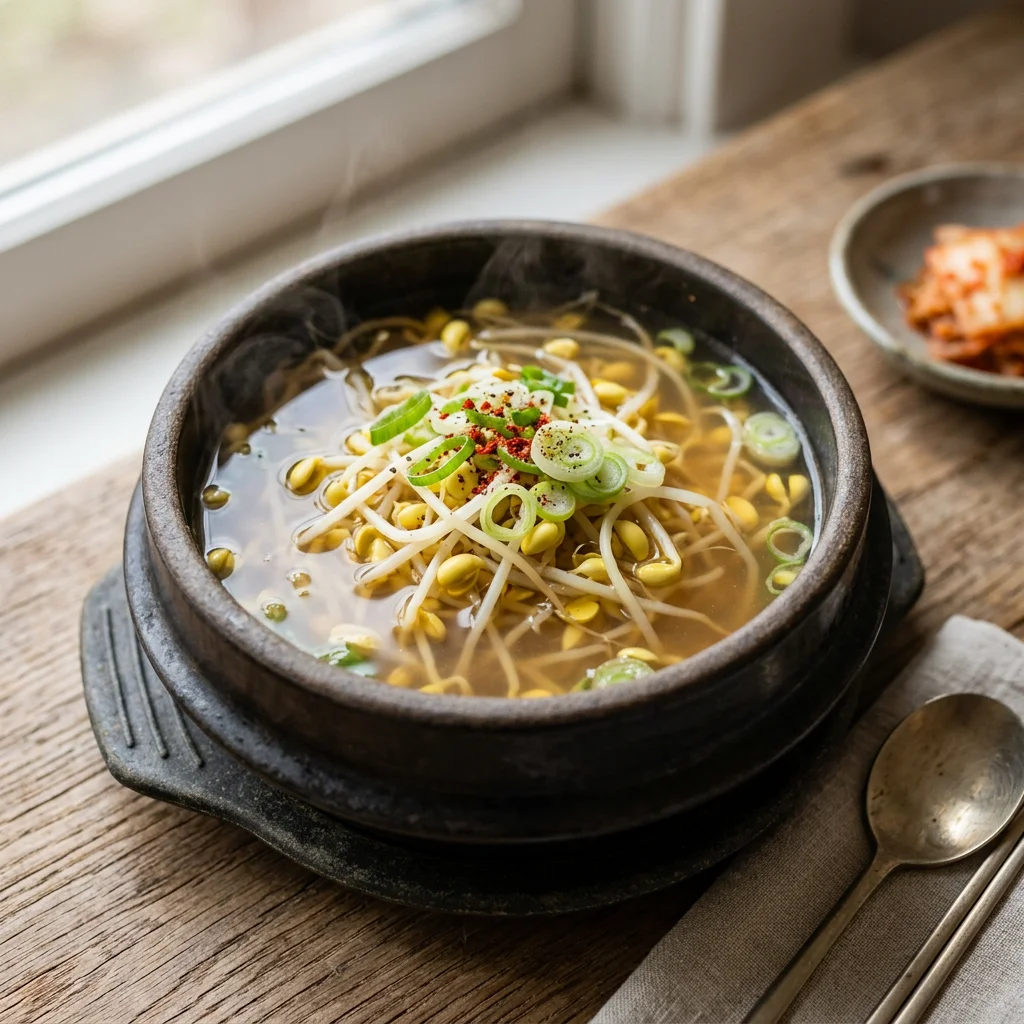
Kongnamul guk is one of Korea's most beloved everyday soups — a simple, clear broth brimming with the fresh crunch of soybean sprouts. It appears on Korean tables year-round, from humble weekday meals to elaborate holiday spreads, valued for its ability to settle the stomach and restore lightness after heavy eating. The soup's reputation as a hangover cure speaks to its genuine detoxifying properties: soybean sprouts are rich in asparagine, which supports liver function and the processing of metabolic waste. From an Ayurvedic perspective, this soup is a masterclass in lightness. The sprouts carry the astringent and sweet rasas, while garlic and sesame oil provide just enough warmth to kindle agni without overwhelming it. The broth itself — clear, thin, and easy to digest — makes this an ideal food for recovering digestive capacity after illness, overeating, or seasonal transitions. Its simplicity is its strength: few ingredients, minimal processing, maximum prana. The Korean tradition of serving this soup with a generous handful of sliced scallions and a drizzle of toasted sesame oil at the table mirrors the Ayurvedic principle of balancing tastes within a single dish. The bitterness of the scallion greens, the pungency of the garlic, and the subtle sweetness of the sprouts create a three-rasa harmony that satisfies without heaviness.
Excellent for Pitta and Kapha. Mildly increases Vata due to lightness and astringent quality of sprouts.
Ingredients
- 400 g Soybean sprouts (rinsed, tails trimmed)
- 6 cups Water
- 4 cloves Garlic (minced)
- 1 tsp Sea salt
- 3 stalks Scallions (sliced thin)
- 1 tbsp Toasted sesame oil
- 1 tbsp Soup soy sauce (guk-ganjang) (Korean fermented soy sauce)
- 1/4 tsp White pepper (optional)
Instructions
- Place soybean sprouts in a large pot and cover with 6 cups of cold water. Do not open the lid once cooking begins — this prevents the raw bean smell from developing.
- Bring to a boil over high heat with the lid firmly on. Once boiling, reduce heat to medium and cook for 12 minutes without lifting the lid.
- Remove the lid. Add minced garlic, soup soy sauce, and sea salt. Stir gently.
- Simmer uncovered for 3 more minutes to let the garlic fragrance infuse the broth.
- Taste and adjust seasoning. The broth should be clean and savory with a light garlic warmth.
- Ladle into bowls. Top each serving with sliced scallions, a drizzle of toasted sesame oil, and a pinch of white pepper if desired.
How This Recipe Affects Each Dosha
Vata
The lightness and astringent quality of soybean sprouts can increase Vata if eaten in excess. The garlic and sesame oil provide some grounding warmth, but this remains a light soup that may leave Vata types feeling unsatisfied. Best as a side dish rather than a main course for Vata constitutions.
Pitta
An ideal Pitta soup. The cooling virya of sprouts combines with the clear, light broth to soothe heat without creating heaviness. Garlic in this small quantity supports digestion without aggravating Pitta. The soup gently detoxifies without forcing aggressive cleansing.
Kapha
The light, clear, and slightly dry qualities make this soup excellent for Kapha types. It supports gentle detoxification and reduces stagnation without adding density. The minimal oil content keeps it appropriate for Kapha, and the astringent sprouts help draw out excess moisture from tissues.
Gently supportive of agni without being overly stimulating. The clear broth and simple preparation preserve the sprouts' natural enzymatic activity, supporting the early stages of digestion. Best suited for periods when agni needs gentle rekindling rather than aggressive stoking.
Nourishes: Rasa (plasma), Rakta (blood)
Adjustments by Constitution
For Vata Types
Add an extra tablespoon of sesame oil and increase the garlic to 6 cloves. Stir in a beaten egg at the end for added substance. A pinch of gochugaru (Korean red pepper flakes) brings warming pungency that helps counter the sprouts' lightness.
For Pitta Types
Omit the white pepper and reduce garlic to 2 cloves. Add a handful of fresh perilla leaves (kkaennip) just before serving for their cooling, aromatic quality. Use a lighter hand with the sesame oil.
For Kapha Types
Double the garlic and add a thumb of sliced fresh ginger to the broth. Replace sesame oil with a smaller drizzle of perilla oil, which is lighter. Add a generous pinch of gochugaru and a squeeze of lemon to bring more pungent and sour tastes that stimulate Kapha digestion.
Seasonal Guidance
Kongnamul guk shines in spring and summer when its light, detoxifying qualities align with the body's natural desire to shed winter heaviness. In spring, it supports the Kapha-season transition by clearing accumulated ama without depleting tissues. In summer, the cooling virya helps manage Pitta accumulation. It can be enjoyed in autumn and winter as a side dish alongside heartier, warming foods, but should not serve as the main course during cold months when the body needs more substantial nourishment.
Best time of day: Lunch or early dinner, when agni is naturally active enough to process the light qualities without leaving you hungry
Cultural Context
Kongnamul guk holds a special place in Korean food culture as both everyday sustenance and ceremonial food. It appears in the traditional birthday breakfast spread (miyeokguk being the star, kongnamul guk the steady companion) and is the go-to remedy after a night of drinking — sold at 24-hour restaurants specifically for this purpose. In Buddhist temple cuisine, which avoids garlic and alliums, the soup is made without garlic and relies solely on the sprouts and salt, creating an even more austere and meditative preparation. The tradition of keeping the lid closed during cooking has been passed down through generations as kitchen wisdom, encoding practical food science in ritual.
Chef's Notes
The cardinal rule of kongnamul guk is never lifting the lid during the initial boil. Opening the pot allows volatile compounds in the raw sprouts to develop an unpleasant beany odor rather than cooking off. Korean grandmothers are emphatic about this. Use guk-ganjang (soup soy sauce) rather than regular soy sauce — it is lighter in color and saltier by volume, keeping the broth clear. If unavailable, use half the amount of regular soy sauce plus a pinch of extra salt. For a heartier version, crack a raw egg into each bowl of hot soup and stir to create silky egg ribbons.
Frequently Asked Questions
Is Kongnamul Guk (Soybean Sprout Soup) good for my dosha?
Excellent for Pitta and Kapha. Mildly increases Vata due to lightness and astringent quality of sprouts. The lightness and astringent quality of soybean sprouts can increase Vata if eaten in excess. An ideal Pitta soup. The light, clear, and slightly dry qualities make this soup excellent for Kapha types.
When is the best time to eat Kongnamul Guk (Soybean Sprout Soup)?
Lunch or early dinner, when agni is naturally active enough to process the light qualities without leaving you hungry Kongnamul guk shines in spring and summer when its light, detoxifying qualities align with the body's natural desire to shed winter heaviness. In spring, it supports the Kapha-season transition by cle
How can I adjust Kongnamul Guk (Soybean Sprout Soup) for my constitution?
For Vata types: Add an extra tablespoon of sesame oil and increase the garlic to 6 cloves. Stir in a beaten egg at the end for added substance. A pinch of gochugaru ( For Pitta types: Omit the white pepper and reduce garlic to 2 cloves. Add a handful of fresh perilla leaves (kkaennip) just before serving for their cooling, aromatic
What are the Ayurvedic properties of Kongnamul Guk (Soybean Sprout Soup)?
Kongnamul Guk (Soybean Sprout Soup) has Sweet, Astringent, Pungent taste (rasa), Cooling energy (virya), and Sweet post-digestive effect (vipaka). Its qualities (gunas) are Light, Clear, Slightly Dry. It nourishes Rasa (plasma), Rakta (blood). Gently supportive of agni without being overly stimulating. The clear broth and simple preparation preserve the sprouts' natural enzymatic activity, supporting the early stages of digestion. Best suited for periods when agni needs gentle rekindling rather than aggressive stoking.
What should you eat today?
This recipe has specific effects on each dosha, and the right meal depends on more than general guidelines. Your constitution, the current season, your birth chart's active planetary period, what you ate yesterday, how you slept — it all matters.
With Personal Alignment, you get daily food and meal guidance tailored to:
- Your prakriti and current vikriti
- Your Vedic birth chart and active planetary cycles
- The season, weather, and time of day
- Your food preferences, allergies, and restrictions
- Your feedback — it learns what works for your body and adapts
Not a generic diet plan. A living system that gets smarter about you every day.