Mac and Cheese
American Recipe
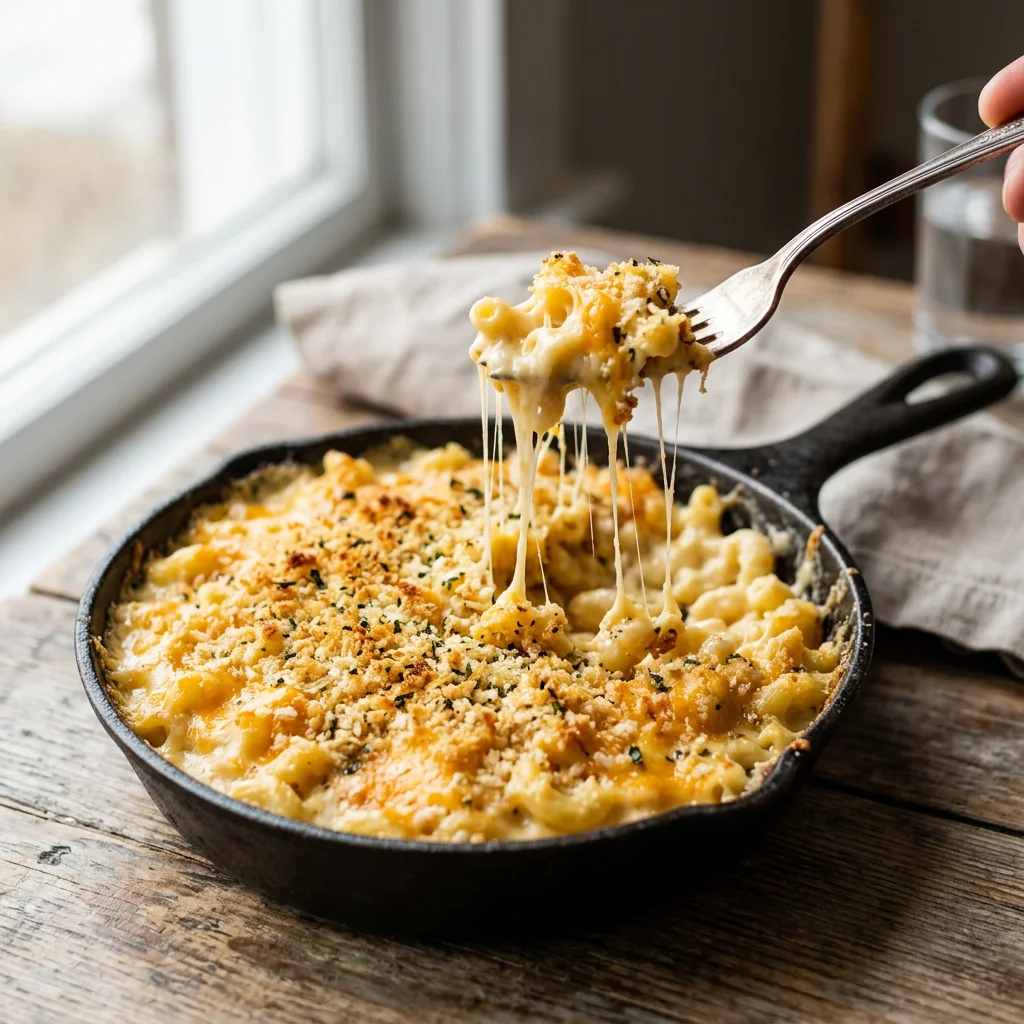
Overview
You have eaten mac and cheese a thousand times. Here is what it is doing to your body according to a 5,000-year-old system of medicine: it is one of the most Kapha-increasing foods in the American diet. Every single component — the pasta, the butter, the milk, the cheese — carries sweet taste, heavy quality, and oily nature. This is not a criticism. It is an explanation for why you reach for it when you are anxious, overwhelmed, or cold, and why you feel sluggish, foggy, and heavy an hour after eating it. In Ayurvedic terms, mac and cheese is almost purely sweet rasa with heavy, oily, sticky (picchila) gunas. It builds tissue — specifically rasa (plasma), mamsa (muscle), and meda (fat) dhatus — with remarkable efficiency. This is why growing children crave it: their bodies are in a building phase and need exactly these qualities. It is also why adults who eat it regularly tend to accumulate weight, congestion, and lethargy. The dish is doing precisely what Ayurveda would predict. The deeper insight is about why Americans made this their definitive comfort food. Vata — the dosha of anxiety, restlessness, and overthinking — is pacified by sweet, heavy, warm, and oily qualities. Mac and cheese is, in effect, an edible anti-anxiety formula. A culture running on caffeine, overwork, and constant stimulation instinctively developed a food that temporarily grounds the nervous system. The comfort is real. The question Ayurveda asks is: at what cost, and is there a way to get the grounding without the heaviness?
Strongly pacifies Vata due to heavy, warm, oily qualities. Significantly increases Kapha. Mildly increases Pitta from heating virya, salt, and sharp cheese.
Ingredients
- 1 lb Elbow macaroni
- 4 tbsp Butter
- 1/4 cup All-purpose flour
- 3 cups Whole milk
- 3 cups Sharp cheddar cheese (shredded)
- 1 cup Mild cheddar cheese (shredded)
- 4 oz Cream cheese (softened)
- 1 tsp Dry mustard powder
- 1/2 tsp Garlic powder
- 1 tsp Salt (or to taste)
- 1/2 tsp Black pepper (freshly ground)
- 1/4 tsp Paprika (for color)
Instructions
- Bring a large pot of salted water to a boil. Cook the macaroni one minute short of the package directions so it stays slightly firm — it will finish cooking in the sauce. Drain and set aside.
- In the same pot, melt the butter over medium heat. Once it foams, whisk in the flour and cook for about 2 minutes, stirring constantly, until the raw flour smell disappears and the roux turns a pale gold.
- Gradually pour in the milk, whisking continuously to prevent lumps. Bring the sauce to a gentle simmer and cook for 4-5 minutes until it thickens enough to coat the back of a spoon.
- Remove from heat. Stir in the mustard powder, garlic powder, paprika, salt, and black pepper. Then add the cream cheese and stir until completely melted and smooth.
- Add the shredded cheddar cheeses in two batches, stirring after each addition until melted and the sauce is glossy. The residual heat will melt the cheese without making it grainy — do not return to high heat at this stage.
- Fold the drained macaroni into the cheese sauce until every piece is coated. Taste and adjust salt and pepper.
- Serve immediately for stovetop mac and cheese. For baked, transfer to a buttered baking dish, top with extra shredded cheese and a sprinkle of paprika, and bake at 375 F for 20 minutes until bubbly and golden on top.
How This Recipe Affects Each Dosha
Vata
This is one of the most effective Vata-pacifying foods in American cuisine. Every quality Vata lacks — heaviness, warmth, oiliness, density — mac and cheese provides in abundance. It coats and soothes dry tissues, calms the nervous system, and provides the grounding that scattered Vata energy craves. This is why anxious people reach for it instinctively. The danger for Vata types is becoming dependent on it as an emotional regulation tool.
Pitta
The heating virya from butter and aged cheese, combined with salt, can mildly aggravate Pitta. Sharp cheddar in particular carries a pungent undertone that Pitta-dominant individuals may notice as heartburn or acid reflux after a large serving. However, in moderate portions, the predominantly sweet rasa keeps Pitta in check. Pitta types will tolerate mac and cheese better than spicy foods but should not make it a staple.
Kapha
This is one of the most Kapha-aggravating foods imaginable. Heavy, oily, sweet, sticky, dense — it increases every quality Kapha already has in excess. Kapha types who eat mac and cheese regularly will experience increased congestion, weight gain, lethargy, and mental fog. The body will produce more mucus and feel sluggish for hours after eating. Kapha types should treat this as an occasional indulgence, not a regular meal.
Suppresses agni significantly. The heavy, dense, oily combination requires substantial digestive fire to process. Weak or sluggish digestion (mandagni) will struggle with this dish, often producing ama (toxins) in the form of bloating, gas, and heaviness. The mustard powder and black pepper in the recipe are unconscious attempts to kindle enough agni to handle the load.
Nourishes: Rasa (plasma), Mamsa (muscle), Meda (fat), Asthi (bone — from calcium)
Adjustments by Constitution
For Vata Types
This is already ideal for Vata as-is. Add a generous amount of freshly cracked black pepper and a pinch of nutmeg to support digestion. Keep portions moderate — Vata types need the grounding but not the excess heaviness. A side of sauteed greens helps offset the density.
For Pitta Types
Use mild or medium cheddar instead of sharp. Replace half the cheddar with mild gouda or mozzarella to reduce the heating quality. Cut the salt back and skip the paprika. Adding steamed broccoli or peas brings cooling, bitter qualities into the dish. Avoid eating it on hot summer days.
For Kapha Types
Use whole wheat or chickpea pasta for lighter, drier qualities. Replace whole milk with oat milk or reduce the milk quantity. Cut cheese by a third and add 2 teaspoons of dry mustard powder plus a generous pinch of cayenne — the pungency cuts through the heaviness. Mix in steamed cauliflower or broccoli to add lightness and astringency. Always serve a smaller portion alongside a sharp, vinegary side salad.
Seasonal Guidance
Best suited for cold weather when the body naturally craves dense, warming, building foods and agni is at its seasonal strongest. In autumn (Vata season), it provides the grounding warmth the body needs as temperatures drop. In winter, it sustains energy through short, cold days. Avoid in spring (Kapha season) when the body is trying to shed winter heaviness, and in summer when heavy foods suppress already-challenged digestion. If eating in warmer months, keep portions small and add pungent spices.
Best time of day: Lunch, when digestive fire is strongest and can handle the heaviness. Eating this for a late dinner virtually guarantees sluggishness the next morning.
Cultural Context
Mac and cheese occupies a singular place in American food culture — it is simultaneously a child's lunch, a holiday side dish, a college survival food, a potluck staple, and fine-dining material when made with truffle oil and gruyere. Thomas Jefferson is credited with popularizing it after encountering pasta in Italy and France, serving it at a state dinner in 1802. Kraft introduced the boxed version in 1937, pricing it at 19 cents during the Great Depression and marketing it as a meal for a family of four. That timing — affordable, filling, comforting food during economic hardship and existential anxiety — cemented its role as America's edible security blanket. Regional variations tell their own stories: Southern baked mac and cheese with egg custard, New England stovetop with sharp Vermont cheddar, Hawaiian mac salad, and the soul food tradition where mac and cheese holds the same reverence as a Thanksgiving turkey.
Chef's Notes
The key to smooth mac and cheese is low heat once the cheese goes in — high heat makes cheese proteins seize up and turn grainy. A mix of sharp and mild cheddar gives you depth without bitterness. The cream cheese is the secret to that velvety, almost restaurant-quality texture. If you want a crispy top, mix panko breadcrumbs with melted butter and scatter over before baking. Leftovers reheat best with a splash of milk stirred in over low heat.
Frequently Asked Questions
Is Mac and Cheese good for my dosha?
Strongly pacifies Vata due to heavy, warm, oily qualities. Significantly increases Kapha. Mildly increases Pitta from heating virya, salt, and sharp cheese. This is one of the most effective Vata-pacifying foods in American cuisine. The heating virya from butter and aged cheese, combined with salt, can mildly aggravate Pitta. This is one of the most Kapha-aggravating foods imaginable.
When is the best time to eat Mac and Cheese?
Lunch, when digestive fire is strongest and can handle the heaviness. Eating this for a late dinner virtually guarantees sluggishness the next morning. Best suited for cold weather when the body naturally craves dense, warming, building foods and agni is at its seasonal strongest. In autumn (Vata season), it provides the grounding warmth the body nee
How can I adjust Mac and Cheese for my constitution?
For Vata types: This is already ideal for Vata as-is. Add a generous amount of freshly cracked black pepper and a pinch of nutmeg to support digestion. Keep portions For Pitta types: Use mild or medium cheddar instead of sharp. Replace half the cheddar with mild gouda or mozzarella to reduce the heating quality. Cut the salt back a
What are the Ayurvedic properties of Mac and Cheese?
Mac and Cheese has Sweet, Salty taste (rasa), Heating energy (virya), and Sweet post-digestive effect (vipaka). Its qualities (gunas) are Heavy, Oily, Sticky, Warm, Dense. It nourishes Rasa (plasma), Mamsa (muscle), Meda (fat), Asthi (bone — from calcium). Suppresses agni significantly. The heavy, dense, oily combination requires substantial digestive fire to process. Weak or sluggish digestion (mandagni) will struggle with this dish, often producing ama (toxins) in the form of bloating, gas, and heaviness. The mustard powder and black pepper in the recipe are unconscious attempts to kindle enough agni to handle the load.
What should you eat today?
This recipe has specific effects on each dosha, and the right meal depends on more than general guidelines. Your constitution, the current season, your birth chart's active planetary period, what you ate yesterday, how you slept — it all matters.
With Personal Alignment, you get daily food and meal guidance tailored to:
- Your prakriti and current vikriti
- Your Vedic birth chart and active planetary cycles
- The season, weather, and time of day
- Your food preferences, allergies, and restrictions
- Your feedback — it learns what works for your body and adapts
Not a generic diet plan. A living system that gets smarter about you every day.