Mango Sticky Rice
Thai Recipe
Overview
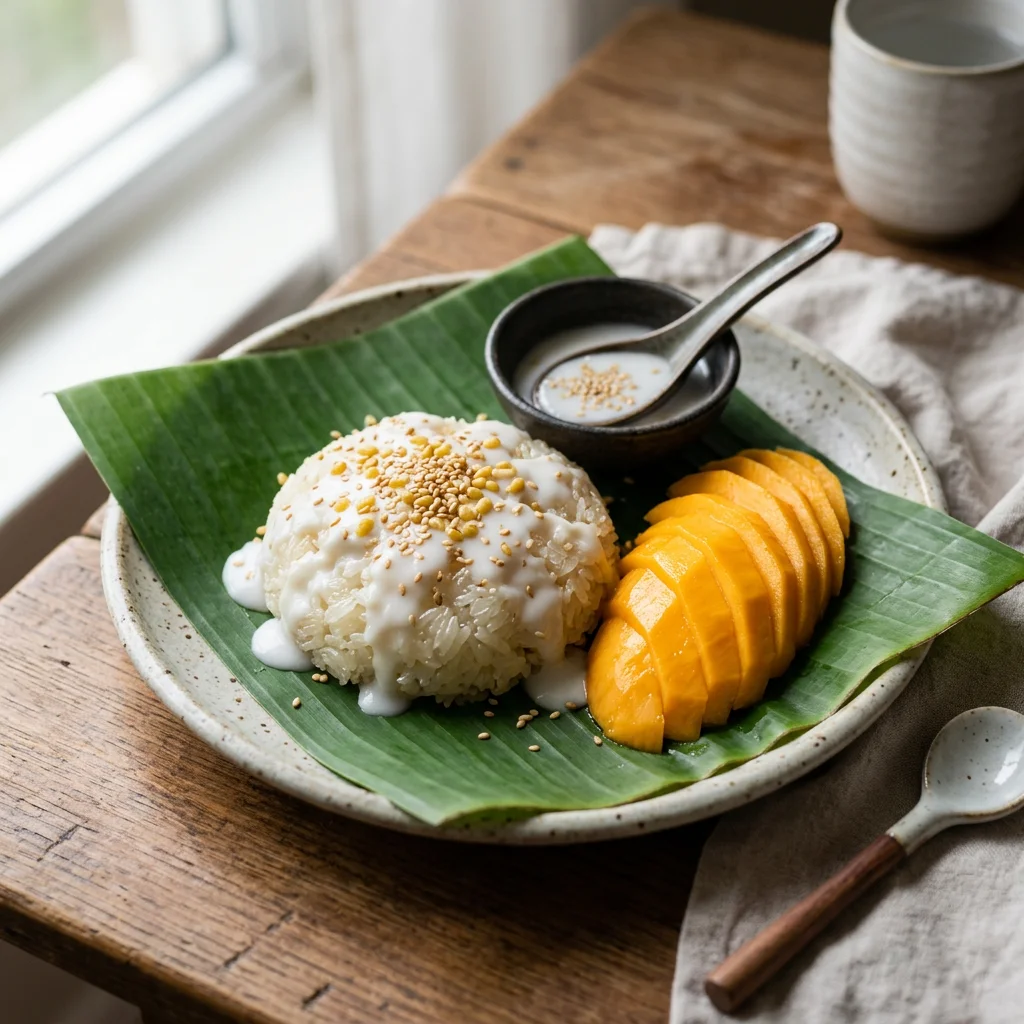
Khao Niao Mamuang — mango sticky rice — is Thailand's most famous dessert: a mound of warm, coconut-cream-soaked sticky rice served alongside slices of perfectly ripe yellow mango, drizzled with salted coconut cream and scattered with toasted mung beans or sesame seeds. It is deceptively simple in construction but profound in its balance of flavors and textures — the warm, chewy, sweet-salty rice against the cold, silky, fragrant mango, unified by the rich coconut cream. The dish is seasonal in the truest sense. In Thailand, it appears in abundance during mango season (April through June), when the prized Nam Dok Mai variety — intensely sweet, fiberless, and perfumed — floods the markets. Vendors on every street corner in Bangkok stack golden mangoes beside steaming pots of coconut sticky rice, and the combination is consumed with the urgency of something that will not last. When mango season ends, the dish largely disappears until the following year. From an Ayurvedic perspective, mango sticky rice is a study in sweet rasa taken to its most concentrated expression. Ripe mango is sweet, cooling, and heavy — one of the most Pitta-pacifying fruits in tropical medicine. Sticky rice is sweet and heavy. Coconut cream is sweet, cooling, and oily. The salt in the coconut sauce adds a grounding quality. This is a deeply nourishing dessert that builds tissue and calms heat, but its heaviness demands respect — it is a seasonal indulgence, not a daily food, and it requires robust agni to digest without creating ama.
Pacifies Pitta and Vata when eaten in moderation. Increases Kapha significantly due to the heavy, sweet, oily, and cool qualities.
Ingredients
- 1.5 cups Sticky (glutinous) rice (soaked in water for at least 4 hours or overnight)
- 1 can (400ml) Coconut milk (full-fat)
- 1/3 cup Palm sugar (or white sugar)
- 1/2 tsp Salt
- 2 large Ripe mangoes (chilled, peeled and sliced)
- 1/2 cup Coconut cream (thick cream from the top of an unshaken can)
- 1/4 tsp Salt for topping sauce
- 1 tbsp Toasted sesame seeds (or toasted yellow mung beans)
Instructions
- Drain the soaked sticky rice and rinse once. Line a steamer basket with cheesecloth or a clean kitchen towel. Spread the rice in an even layer, cover, and steam over boiling water for 20-25 minutes until the rice is translucent and tender with a slight chew.
- While the rice steams, prepare the sweet coconut sauce. In a small saucepan, combine the coconut milk, palm sugar, and 1/2 teaspoon salt. Warm over low heat, stirring until the sugar dissolves completely. Do not boil — gentle warming preserves the creamy consistency.
- Transfer the hot steamed rice to a large bowl. Pour about two thirds of the warm sweet coconut sauce over the rice. Fold gently with a spatula, turning the rice to absorb the sauce evenly. Cover and let stand for 15 minutes — the rice will soak up the coconut milk and become glossy and rich.
- Prepare the topping sauce. Warm the coconut cream with 1/4 teaspoon salt in a small pan over low heat until just liquid and slightly thickened. This salted cream is what makes the dish.
- To serve, mound the coconut sticky rice on a plate. Arrange the chilled mango slices alongside. Drizzle the salted coconut cream over the rice.
- Scatter toasted sesame seeds or crushed toasted mung beans over the top. Serve while the rice is still warm and the mango is cold — the temperature contrast is essential.
How This Recipe Affects Each Dosha
Vata
The sweet, heavy, oily, and smooth qualities of mango sticky rice are soothing for Vata. The coconut provides nourishing fat, the sticky rice provides grounding starch, and the mango provides cooling sweetness. The salted coconut cream adds a grounding mineral quality. However, the cooling nature means it is best suited to warm weather for Vata types, not cold months.
Pitta
This is deeply Pitta-pacifying. Every component is sweet and cooling — mango, coconut, and sticky rice all directly reduce Pitta's heat. The absence of sour, pungent, or heating elements makes this one of the safest desserts for Pitta constitutions. It is especially welcome during hot weather when Pitta accumulates.
Kapha
Mango sticky rice is one of the most Kapha-aggravating foods imaginable. Sweet taste, heavy quality, cool temperature, oily coconut, sticky starch — every attribute promotes Kapha accumulation. Consumed regularly, it contributes to congestion, lethargy, and weight gain. Kapha types should treat this as a rare seasonal pleasure, not a regular indulgence.
The heavy, cool, sweet nature of this dessert can dampen agni if consumed in large quantities or by those with weak digestive fire. The absence of any warming spice means the stomach must rely entirely on its own heat to process the dense starch and fat. Best consumed after a light meal when agni still has capacity, rather than at the end of a heavy dinner.
Nourishes: Rasa (plasma), Mamsa (muscle), Meda (fat), Shukra (reproductive)
Adjustments by Constitution
For Vata Types
Serve the rice warm and add a light dusting of ground cardamom over the top. A tiny pinch of ground ginger mixed into the coconut sauce adds gentle warmth without disrupting the sweetness. Use extra coconut cream for its nourishing oiliness. Best eaten during warm afternoons when Vata needs grounding.
For Pitta Types
This dessert is already ideal for Pitta. Add a few saffron threads steeped in the warm coconut sauce for color and additional cooling benefit. Use the ripest, sweetest mango available to minimize any sour notes. A garnish of crushed toasted coconut adds texture without heat.
For Kapha Types
Reduce the portion significantly — a few tablespoons of rice with more mango and less coconut. Replace some of the coconut milk with almond milk or reduce it by half. Add a pinch of ground cardamom and dried ginger powder to the sauce to increase the warming quality. Opt for the thinner coconut milk rather than thick cream as the topping. Eat only during warm weather and only at midday.
Seasonal Guidance
In Thailand, this is a summer dessert aligned with mango season (April-June). The cooling qualities are perfectly suited to hot weather, when the body welcomes cold, sweet, heavy nourishment. In spring, it can help transition out of Kapha season if eaten sparingly at midday. Not recommended during autumn or winter, when the cold and heavy qualities will aggravate Vata and the already-dampened agni of cold weather.
Best time of day: Early to mid-afternoon as a seasonal treat, not late evening — the heaviness requires time and active agni to digest
Cultural Context
Mango sticky rice is so deeply tied to Thai identity that the Thai government has used it as a symbol of cultural soft power. At the 2023 APEC summit in Bangkok, mango sticky rice was served to world leaders as a showcase of Thai dessert culture. The dish went viral globally when a Thai ice cream shop created a mango sticky rice ice cream that drew hours-long queues. In Thailand itself, the dessert is inseparable from the rhythm of the seasons — when mangoes appear in the markets, sticky rice vendors appear on the sidewalks, and the annual ritual of sweet abundance begins. The best mangoes — Nam Dok Mai, Ok Rong, and Chok Anan varieties — are treated with the reverence that the French reserve for wine vintages. A perfect mango season is something Thais celebrate and remember.
Chef's Notes
The rice MUST be soaked for at least 4 hours (overnight is better). Unsoaked sticky rice will be hard in the center no matter how long you steam it. Steaming is the only correct method — do not boil sticky rice in water like regular rice or it will turn to mush. The sauce should be warm, not hot, when poured over the rice — scorching temperatures can make the rice gummy. Let the dressed rice rest covered for at least 15 minutes; this resting period is when the absorption happens and the texture transforms from loose grains to the cohesive, glossy mass that defines the dish. The mango must be ripe enough that the flesh yields to gentle pressure; an underripe mango will ruin the entire experience.
Frequently Asked Questions
Is Mango Sticky Rice good for my dosha?
Pacifies Pitta and Vata when eaten in moderation. Increases Kapha significantly due to the heavy, sweet, oily, and cool qualities. The sweet, heavy, oily, and smooth qualities of mango sticky rice are soothing for Vata. This is deeply Pitta-pacifying. Mango sticky rice is one of the most Kapha-aggravating foods imaginable.
When is the best time to eat Mango Sticky Rice?
Early to mid-afternoon as a seasonal treat, not late evening — the heaviness requires time and active agni to digest In Thailand, this is a summer dessert aligned with mango season (April-June). The cooling qualities are perfectly suited to hot weather, when the body welcomes cold, sweet, heavy nourishment. In sprin
How can I adjust Mango Sticky Rice for my constitution?
For Vata types: Serve the rice warm and add a light dusting of ground cardamom over the top. A tiny pinch of ground ginger mixed into the coconut sauce adds gentle wa For Pitta types: This dessert is already ideal for Pitta. Add a few saffron threads steeped in the warm coconut sauce for color and additional cooling benefit. Use the
What are the Ayurvedic properties of Mango Sticky Rice?
Mango Sticky Rice has Sweet, Salty taste (rasa), Cooling energy (virya), and Sweet post-digestive effect (vipaka). Its qualities (gunas) are Heavy, Oily, Smooth, Cool, Dense. It nourishes Rasa (plasma), Mamsa (muscle), Meda (fat), Shukra (reproductive). The heavy, cool, sweet nature of this dessert can dampen agni if consumed in large quantities or by those with weak digestive fire. The absence of any warming spice means the stomach must rely entirely on its own heat to process the dense starch and fat. Best consumed after a light meal when agni still has capacity, rather than at the end of a heavy dinner.
What should you eat today?
This recipe has specific effects on each dosha, and the right meal depends on more than general guidelines. Your constitution, the current season, your birth chart's active planetary period, what you ate yesterday, how you slept — it all matters.
With Personal Alignment, you get daily food and meal guidance tailored to:
- Your prakriti and current vikriti
- Your Vedic birth chart and active planetary cycles
- The season, weather, and time of day
- Your food preferences, allergies, and restrictions
- Your feedback — it learns what works for your body and adapts
Not a generic diet plan. A living system that gets smarter about you every day.