Mapo Tofu
Chinese Recipe
Overview
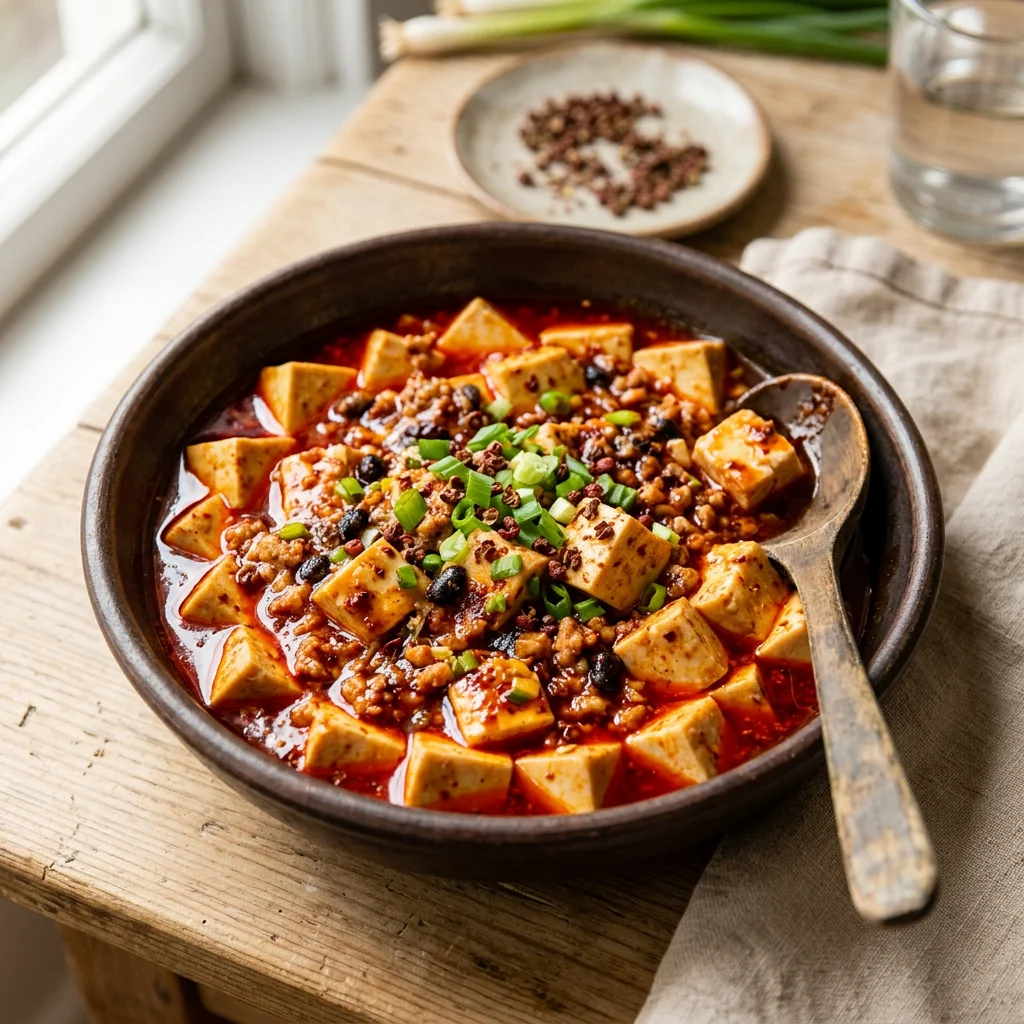
Mapo tofu (mapo doufu) is the crown jewel of Sichuan cuisine — cubes of silken tofu swimming in a fiery, rust-red sauce of doubanjiang (fermented chili bean paste), ground pork, and the signature numbing heat of Sichuan peppercorn. It is bold, complex, and electrifying, a dish that demonstrates the Sichuan flavor philosophy of "mala" — the marriage of numbing (ma) from the peppercorn and spicy (la) from the chili. Created in the 1860s by a pockmarked woman (mapo) at a small restaurant near the Wanfu Bridge in Chengdu, it has become one of the most recognized Chinese dishes worldwide. The genius of mapo tofu lies in the interplay between the soft, mild, protein-rich tofu and the aggressive, complex sauce. Doubanjiang — aged, fermented broad bean paste with chili — provides a deep, umami backbone that no other ingredient can replicate. Ground Sichuan peppercorn creates the famous "tingling" or "buzzing" sensation that opens up the palate and makes every subsequent flavor more vivid. Fermented black beans add earthy depth, garlic and ginger provide pungent lift, and a final showering of ground Sichuan peppercorn and chili oil at the table ensures the heat is layered and relentless. From an Ayurvedic perspective, mapo tofu is one of the most intensely heating preparations in any cuisine. The pungent rasa dominates through chili, Sichuan peppercorn, garlic, and fermented bean paste. This makes it a powerful Kapha-clearing food — the heat liquefies stagnation, opens channels, and stimulates metabolism. The tofu itself, being sweet, cooling, and heavy, provides a crucial counterbalance to the sauce's aggression, making the dish more balanced than its appearance suggests. In TCM food therapy, the combination of heating spices with cooling tofu is an intentional pairing — the tofu protects the Stomach from the fire of the sauce while allowing the medicinal heat to do its dispersing work.
Powerfully reduces Kapha through intense heating and dispersing quality. Strongly aggravates Pitta due to concentrated pungent taste. Mixed effect on Vata — warming but potentially over-stimulating.
Ingredients
- 500 g Soft or silken tofu (cut into 3/4-inch cubes)
- 150 g Ground pork (or beef for a richer version)
- 2 tbsp Doubanjiang (Pixian chili bean paste) (the soul of the dish)
- 1 tbsp Fermented black beans (douchi) (roughly chopped)
- 1 tbsp Sichuan peppercorn (toasted and freshly ground)
- 4 cloves Garlic (minced)
- 1 tbsp Fresh ginger (minced)
- 4 whole Scallions (white and green parts separated, sliced)
- 1 tsp Chili flakes or chili powder (optional, for extra heat)
- 1 tbsp Light soy sauce
- 1 cup Chicken or vegetable stock
- 1 tbsp Cornstarch (mixed with 2 tbsp cold water)
- 1 tsp Sesame oil (for finishing)
- 2 tbsp Neutral oil (for cooking)
Instructions
- Gently place the tofu cubes in a pot of lightly salted simmering water. Let them warm for 5 minutes — this firms the exterior, removes any raw soy flavor, and preheats the cubes so they absorb the sauce more effectively. Drain carefully and set aside.
- Toast the Sichuan peppercorns in a dry pan over low heat for 2-3 minutes until they darken slightly and release an intensely floral, citrusy aroma. Grind in a mortar and pestle or spice grinder. Set aside.
- Heat the neutral oil in a wok or large pan over high heat. Add the ground pork, breaking it into small crumbles. Cook without stirring for 2 minutes to develop browning, then stir and continue cooking until the pork is crispy and rendered, about 4-5 minutes total.
- Push the pork to the side and reduce heat to medium. Add the doubanjiang and stir-fry it in the oil for 1-2 minutes until the oil turns a deep red and the paste is fragrant — this blooming step is essential. Add the fermented black beans, garlic, ginger, and scallion whites. Stir everything together.
- Add the stock and soy sauce. Bring to a simmer. Gently slide the warmed tofu cubes into the sauce. Spoon the sauce over the tofu — do not stir vigorously or the tofu will break apart. Simmer for 5 minutes, gently rocking the wok occasionally.
- Stir the cornstarch slurry and drizzle it into the wok in stages, gently tilting the wok to distribute. The sauce should glaze the tofu in a thick, shiny coating. Add the slurry gradually — you may not need all of it.
- Remove from heat. Drizzle with sesame oil. Transfer to a serving dish.
- Finish with a generous shower of freshly ground Sichuan peppercorn, sliced scallion greens, and additional chili oil if desired. Serve immediately over steamed rice.
How This Recipe Affects Each Dosha
Vata
The warming, oily quality and protein content are grounding for Vata, and the pungent spices kindle Vata's often weak digestion. However, the intense stimulation of Sichuan peppercorn and chili can over-excite Vata's already mobile, restless nature. The tofu itself is heavy and grounding. Vata types can enjoy mapo tofu in moderation when not already overstimulated, but it is not a daily food for this constitution.
Pitta
Mapo tofu is one of the most Pitta-aggravating preparations in Chinese cuisine. The concentrated pungent heat from doubanjiang, Sichuan peppercorn, chili, and garlic generates enormous internal fire. This is the opposite of what inflamed Pitta needs. Even the tofu's cooling quality cannot offset the sauce's intensity. Pitta types should avoid this during any period of Pitta aggravation.
Kapha
This is Kapha's medicine. The intense pungent heat from multiple sources — Sichuan peppercorn, doubanjiang, chili, garlic, ginger — creates a furnace that burns through Kapha stagnation, congestion, and sluggishness. The sharp, penetrating quality of Sichuan peppercorn is especially valuable for Kapha, as it opens channels and moves stuck energy. The protein from tofu and pork sustains without adding heaviness. This is therapeutic food for cold, damp, stagnant Kapha conditions.
One of the most powerful agni-kindling preparations in all of Chinese cuisine. The pungent taste from Sichuan peppercorn, doubanjiang, and chili is the single most agni-stimulating rasa in Ayurveda. The fermented bean paste adds enzymatic activity that further supports digestion. This dish generates enormous digestive heat — it is not food for weak agni but rather for stagnant agni that needs to be blasted awake.
Nourishes: Rasa (plasma), Rakta (blood), Mamsa (muscle)
Adjustments by Constitution
For Vata Types
Reduce Sichuan peppercorn and chili significantly — use just enough for gentle warmth. Increase the sesame oil for more oily, grounding quality. Use firm tofu for more substance. Add a handful of roasted peanuts for extra Vata-stabilizing fat and protein. Serve over generous portions of warm rice, which buffers the intensity.
For Pitta Types
Replace doubanjiang with a non-spicy fermented bean paste (sweet bean paste or yellow bean paste). Omit Sichuan peppercorn and all chili. Increase ginger (which is less Pitta-aggravating than chili) and add a tablespoon of coconut aminos in place of some soy sauce. Double the tofu and reduce the meat. Garnish with fresh cilantro for cooling. This creates a mild, umami-rich tofu dish that preserves the spirit without the fire.
For Kapha Types
Increase all heating elements: double the Sichuan peppercorn, add extra chili oil, use more garlic and ginger. Skip the cornstarch thickening. Use extra-firm tofu to reduce the water content and heaviness. Replace pork with ground chicken or omit the meat entirely for a lighter version. Serve with less rice or over steamed greens instead.
Seasonal Guidance
Best during the coldest, dampest months when the body needs maximum internal heat and Kapha is most prone to accumulation. In autumn, the warming quality counteracts the increasing cold and dryness (though Vata types should moderate the spice level). In winter, it is deeply therapeutic — a furnace in a bowl. In spring, it helps clear accumulated winter Kapha. In summer, avoid entirely — the concentrated heating quality on top of seasonal Pitta creates too much internal fire. In Sichuan province, the saying goes that the spicy food helps the body manage the region's notorious humidity, and there is TCM logic to this: pungent food opens the pores and releases trapped dampness.
Best time of day: Lunch or early dinner, always served with plenty of steamed rice to buffer the heat and absorb the sauce
Cultural Context
Mapo tofu was created around 1862 by Chen Mapo (literally "Pockmarked Grandmother Chen") at her husband's small restaurant near the Wanfu Bridge in Chengdu, Sichuan. She improvised the dish for porters carrying oil across the bridge who needed cheap, filling, warming food. The original restaurant, Chen Mapo Tofu, still operates in Chengdu today. The dish embodies the Sichuan flavor principle of "mala" (numbing-spicy), which is not mere heat for its own sake but a deliberate medicinal application: Sichuan peppercorn's numbing compound (hydroxy-alpha sanshool) stimulates the same nerve receptors as light touch, creating a tingling vibration that opens the palate to perceive subsequent flavors more intensely. In TCM terms, this is the movement of stagnant qi — the peppercorn literally makes energy flow.
Chef's Notes
Doubanjiang quality is non-negotiable — Pixian brand from Sichuan is the gold standard. Cheap substitutes lack the fermented depth. The paste should be stir-fried in oil until the oil turns red; this step releases the fat-soluble flavor compounds that define the sauce. Fresh-ground Sichuan peppercorn is incomparably more aromatic than pre-ground; the numbing compound (hydroxy-alpha sanshool) degrades rapidly after grinding. The tofu should be soft but not silken-to-the-point-of-falling-apart — medium-firm silken works well. Never violently stir the tofu; use a gentle rocking and spooning motion. Purists insist on the traditional ratio: tofu is the star, pork is the accent, and sauce is the medium.
Frequently Asked Questions
Is Mapo Tofu good for my dosha?
Powerfully reduces Kapha through intense heating and dispersing quality. Strongly aggravates Pitta due to concentrated pungent taste. Mixed effect on Vata — warming but potentially over-stimulating. The warming, oily quality and protein content are grounding for Vata, and the pungent spices kindle Vata's often weak digestion. Mapo tofu is one of the most Pitta-aggravating preparations in Chinese cuisine. This is Kapha's medicine.
When is the best time to eat Mapo Tofu?
Lunch or early dinner, always served with plenty of steamed rice to buffer the heat and absorb the sauce Best during the coldest, dampest months when the body needs maximum internal heat and Kapha is most prone to accumulation. In autumn, the warming quality counteracts the increasing cold and dryness (t
How can I adjust Mapo Tofu for my constitution?
For Vata types: Reduce Sichuan peppercorn and chili significantly — use just enough for gentle warmth. Increase the sesame oil for more oily, grounding quality. Use f For Pitta types: Replace doubanjiang with a non-spicy fermented bean paste (sweet bean paste or yellow bean paste). Omit Sichuan peppercorn and all chili. Increase gin
What are the Ayurvedic properties of Mapo Tofu?
Mapo Tofu has Pungent, Salty, Sweet taste (rasa), Heating energy (virya), and Pungent post-digestive effect (vipaka). Its qualities (gunas) are Heavy, Warm, Oily, Sharp. It nourishes Rasa (plasma), Rakta (blood), Mamsa (muscle). One of the most powerful agni-kindling preparations in all of Chinese cuisine. The pungent taste from Sichuan peppercorn, doubanjiang, and chili is the single most agni-stimulating rasa in Ayurveda. The fermented bean paste adds enzymatic activity that further supports digestion. This dish generates enormous digestive heat — it is not food for weak agni but rather for stagnant agni that needs to be blasted awake.
What should you eat today?
This recipe has specific effects on each dosha, and the right meal depends on more than general guidelines. Your constitution, the current season, your birth chart's active planetary period, what you ate yesterday, how you slept — it all matters.
With Personal Alignment, you get daily food and meal guidance tailored to:
- Your prakriti and current vikriti
- Your Vedic birth chart and active planetary cycles
- The season, weather, and time of day
- Your food preferences, allergies, and restrictions
- Your feedback — it learns what works for your body and adapts
Not a generic diet plan. A living system that gets smarter about you every day.