Mashed Potatoes
American Recipe
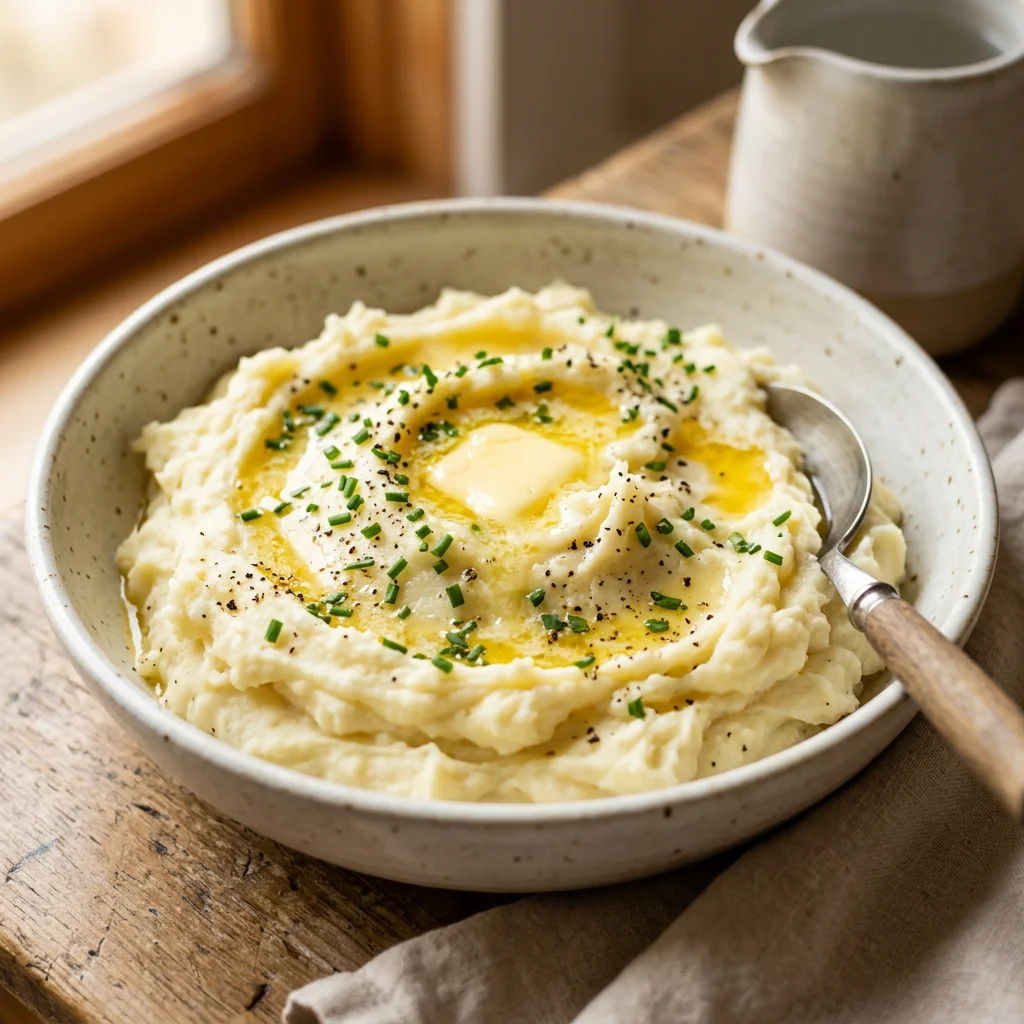
Overview
Mashed potatoes are perhaps the purest expression of earth element in the American kitchen. Potatoes are literally tubers — underground storage organs whose entire biological purpose is to hold concentrated starch energy in the soil. When you boil them soft and mash them with butter and cream, you are creating something profoundly grounding: a food that is almost entirely sweet rasa, heavy guna, and earth-water composition. This is not an accident. It is why mashed potatoes appear at every meal that matters — Thanksgiving, Christmas, Sunday dinner, the post-funeral gathering. Ayurveda classifies potatoes as sweet in taste, cooling in virya, and sweet in vipaka, with heavy and dry gunas in their plain form. The addition of butter and cream transforms the dry quality into oily and unctuous, making the final dish one of the most Kapha-building side dishes in existence. The starch converts to sugar rapidly during digestion, which is why mashed potatoes spike blood sugar faster than many desserts — a fact that modern nutritional science confirms and Ayurveda predicted through its understanding of sweet rasa and its effect on meda dhatu (fat tissue). But here is where it gets interesting: the grounding quality of mashed potatoes is genuinely therapeutic for certain constitutions. A thin, anxious, cold-natured Vata type who has been running on coffee and stress all day will feel their entire nervous system settle after a warm bowl of buttery mashed potatoes. The food is doing something real — anchoring prana that has been scattered upward and outward back down into the lower body. The same plate will make a Kapha type feel like they are sinking into the couch. Same food, completely different medicine.
Strongly pacifies Vata with heavy, oily, grounding qualities. Significantly increases Kapha. Neutral to slightly pacifying for Pitta.
Ingredients
- 3 lbs Russet potatoes (peeled and cut into 2-inch chunks)
- 6 tbsp Butter (cut into pieces, at room temperature)
- 1/2 cup Heavy cream (warmed)
- 1/4 cup Whole milk (warmed)
- 1.5 tsp Salt (plus more for boiling water)
- 1/4 tsp White pepper
- 2 tbsp Chives (finely chopped, optional)
Instructions
- Place the potato chunks in a large pot and cover with cold water by about an inch. Add a generous tablespoon of salt. Starting in cold water ensures even cooking — if you drop potatoes into boiling water, the outside turns mushy before the center is done.
- Bring to a boil over high heat, then reduce to a steady simmer. Cook for 15-20 minutes until a fork slides through a chunk with zero resistance. They should practically fall apart.
- Drain the potatoes thoroughly and return them to the hot pot. Set the pot back on the turned-off burner for 1-2 minutes, shaking occasionally, to let residual heat steam off excess moisture. This step is the difference between fluffy and gluey.
- For the smoothest texture, press the potatoes through a ricer or food mill back into the pot. If you do not have either, mash with a potato masher — but never use a food processor or blender, which will activate the starch and turn them into wallpaper paste.
- Add the butter pieces and fold gently until melted and incorporated. Then pour in the warmed cream and milk gradually, folding between additions, until you reach your preferred consistency. Using warm dairy prevents the potatoes from cooling down and becoming stiff.
- Season with salt and white pepper. Taste carefully — potatoes need more salt than you think. Serve immediately, topped with chives if you like, or keep warm in a covered pot with a final pat of butter on top to prevent a skin from forming.
How This Recipe Affects Each Dosha
Vata
Mashed potatoes are almost tailor-made for Vata pacification. The sweet taste, heavy quality, smooth texture, and warmth address every Vata imbalance simultaneously. The butter and cream provide the oleation (snehana) that dry Vata tissues crave. This is grounding food in the most literal sense — earth element delivered in its most digestible form. Vata types often report feeling calmer and sleepier after eating mashed potatoes, which is the nervous system downshifting from sympathetic to parasympathetic.
Pitta
The sweet taste and cooling virya make mashed potatoes generally supportive for Pitta. Potatoes lack the heating, sour, or pungent qualities that aggravate Pitta, and butter in moderate amounts is considered cooling in Ayurveda. The only concern is if heavy cream causes digestive heat — Pitta types with sensitive stomachs may do better with just butter and milk.
Kapha
Mashed potatoes strongly increase Kapha. The heavy, dense, smooth, oily qualities compound every tendency Kapha already struggles with — water retention, weight gain, sluggish metabolism, and mental fogginess. Kapha types who eat a full serving of rich mashed potatoes will feel the effects for hours: heaviness in the limbs, desire to nap, and a general sense of being weighed down. This is the dish Kapha types should save for special occasions, not Tuesday night dinner.
Slows agni considerably. The high starch content combined with heavy fats requires strong digestive fire. People with weak digestion may experience bloating, heaviness, or a feeling of the food sitting like a stone. The lack of spices in traditional mashed potatoes means there is nothing in the dish to support its own digestion — this is why gravy, which typically contains black pepper and herbs, was intuitively paired with it.
Nourishes: Rasa (plasma), Meda (fat), Asthi (bone — from dairy calcium)
Adjustments by Constitution
For Vata Types
Already excellent for Vata. Add roasted garlic to the mash for extra warmth and digestive support. A generous amount of black pepper stirred in at the end helps counter the heaviness while maintaining the grounding quality. Keep it warm — cold leftover mashed potatoes lose their Vata-pacifying properties.
For Pitta Types
Use unsalted butter and reduce the amount of cream. Substitute half the cream with plain yogurt whisked in at the end for a pleasant tang that Pitta types enjoy. Add fresh dill or parsley for mild cooling herbs. Avoid adding any garlic or sharp cheese to the mash.
For Kapha Types
Replace half the potatoes with steamed cauliflower for a dramatically lighter version that still satisfies. Use only a small pat of butter and substitute the cream with warm vegetable broth or the potato cooking water. Add roasted garlic, plenty of black pepper, and fresh rosemary for pungent, stimulating qualities. Keep portions to half a cup as a side, never the main event.
Seasonal Guidance
Ideal for cold-weather months when the body has stronger agni and needs dense, building foods to insulate against the cold. A staple of autumn Vata season, when grounding foods are most therapeutic. In winter, pair with warming gravy and roasted vegetables. In spring, avoid or drastically lighten the recipe as the body works to shed accumulated Kapha. In summer, mashed potatoes feel instinctively wrong — the body does not want heavy, dense food when digestive fire is naturally lower.
Best time of day: Lunch as a side dish, when digestive fire peaks. As a dinner side, eat early (before 7pm) and keep the portion moderate to avoid overnight heaviness.
Cultural Context
Mashed potatoes arrived in America with European immigrants, but they became something distinctly American through the Thanksgiving table. No other culture assigns this dish quite the same emotional weight. In American food culture, mashed potatoes signal family, safety, and abundance — the food of grandmothers and holiday gatherings. During both World Wars, the U.S. government promoted potatoes as a patriotic food: cheap, filling, and nourishing enough to sustain a nation under strain. The regional variations reveal character — Southerners add cream cheese, Midwesterners keep it simple with butter and milk, while restaurant culture introduced garlic mashed, truffle mashed, and loaded mashed potatoes with bacon and cheese. Through all of it, the core appeal has never changed: this is food that makes you feel held.
Chef's Notes
Russets make the fluffiest mashed potatoes because of their high starch content. Yukon Golds produce a creamier, more buttery result with a slightly denser texture — either works, but they behave differently. The cardinal rule is never overwork them: once the starch granules burst from excessive mixing, there is no going back from gluey. Warm your dairy before adding it — cold milk shocks the starch and tightens the texture. Mashed potatoes do not hold well, so plan to serve them within 30 minutes, or keep them in a slow cooker on warm with extra butter on top.
Frequently Asked Questions
Is Mashed Potatoes good for my dosha?
Strongly pacifies Vata with heavy, oily, grounding qualities. Significantly increases Kapha. Neutral to slightly pacifying for Pitta. Mashed potatoes are almost tailor-made for Vata pacification. The sweet taste and cooling virya make mashed potatoes generally supportive for Pitta. Mashed potatoes strongly increase Kapha.
When is the best time to eat Mashed Potatoes?
Lunch as a side dish, when digestive fire peaks. As a dinner side, eat early (before 7pm) and keep the portion moderate to avoid overnight heaviness. Ideal for cold-weather months when the body has stronger agni and needs dense, building foods to insulate against the cold. A staple of autumn Vata season, when grounding foods are most therapeutic. I
How can I adjust Mashed Potatoes for my constitution?
For Vata types: Already excellent for Vata. Add roasted garlic to the mash for extra warmth and digestive support. A generous amount of black pepper stirred in at the For Pitta types: Use unsalted butter and reduce the amount of cream. Substitute half the cream with plain yogurt whisked in at the end for a pleasant tang that Pitta t
What are the Ayurvedic properties of Mashed Potatoes?
Mashed Potatoes has Sweet taste (rasa), Cooling energy (virya), and Sweet post-digestive effect (vipaka). Its qualities (gunas) are Heavy, Oily, Dense, Smooth, Soft. It nourishes Rasa (plasma), Meda (fat), Asthi (bone — from dairy calcium). Slows agni considerably. The high starch content combined with heavy fats requires strong digestive fire. People with weak digestion may experience bloating, heaviness, or a feeling of the food sitting like a stone. The lack of spices in traditional mashed potatoes means there is nothing in the dish to support its own digestion — this is why gravy, which typically contains black pepper and herbs, was intuitively paired with it.
What should you eat today?
This recipe has specific effects on each dosha, and the right meal depends on more than general guidelines. Your constitution, the current season, your birth chart's active planetary period, what you ate yesterday, how you slept — it all matters.
With Personal Alignment, you get daily food and meal guidance tailored to:
- Your prakriti and current vikriti
- Your Vedic birth chart and active planetary cycles
- The season, weather, and time of day
- Your food preferences, allergies, and restrictions
- Your feedback — it learns what works for your body and adapts
Not a generic diet plan. A living system that gets smarter about you every day.