Masoor Dal Tadka
Indian Recipe
Overview
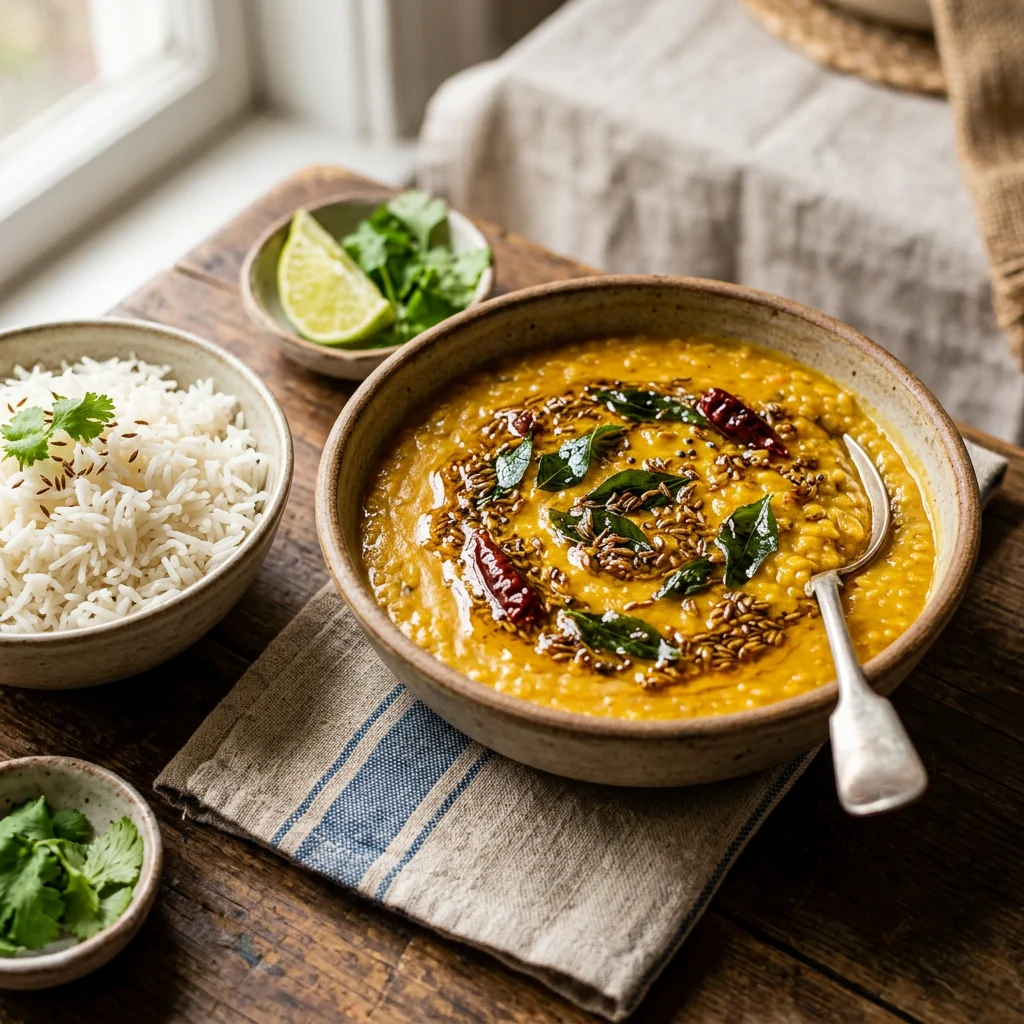
Masoor dal tadka is the everyday lentil soup of North India — red lentils simmered until they dissolve into a creamy, golden broth, then finished with a sizzling tempering of whole spices bloomed in hot ghee. The word "tadka" (also called "chaunk" or "baghar") refers to this final tempering technique, where whole spices are flash-fried in fat and poured over the finished dish, creating an aromatic explosion that transforms humble lentils into something vibrant. Red lentils (masoor dal) are among the fastest-cooking legumes, requiring no soaking and breaking down in under 20 minutes. This makes masoor dal tadka a weeknight staple across the Indian subcontinent — quick to prepare, deeply satisfying, and nutritionally dense. It is typically served with rice or chapati, a squeeze of lemon, and perhaps a side of pickle. Ayurvedically, red lentils are lighter than most legumes and easier on digestion, though they carry more heat than mung dal. The tadka technique itself is therapeutic — blooming spices in fat makes their volatile compounds bioavailable, turning each bite into a delivery system for cumin, mustard, and turmeric.
Balances Vata and Kapha. May mildly increase Pitta due to heating spices and tomato.
Ingredients
- 1.5 cups Red lentils (masoor dal) (rinsed)
- 4 cups Water
- 1/2 tsp Turmeric powder
- 1 tsp Salt
- 2 tbsp Ghee
- 1 tsp Cumin seeds
- 1/2 tsp Mustard seeds
- 2 whole Dried red chilies (broken in half)
- 1/4 tsp Asafoetida (hing)
- 4 cloves Garlic (thinly sliced)
- 1 medium Onion (finely chopped)
- 1 medium Tomato (chopped)
- 3 tbsp Fresh cilantro (chopped)
- 1 tbsp Lemon juice
Instructions
- Rinse the red lentils in a fine mesh strainer until the water runs clear. Place them in a pot with 4 cups of water, turmeric, and salt.
- Bring to a boil over high heat, skimming any foam that rises. Reduce heat to medium-low, cover, and simmer for 18-20 minutes until the lentils have completely dissolved into a smooth, soupy consistency.
- While the dal simmers, prepare the tadka. Heat ghee in a small pan over medium-high heat until it shimmers.
- Add cumin seeds and mustard seeds. When the mustard seeds begin to pop and the cumin darkens, add the dried red chilies and asafoetida. Stir for 5 seconds.
- Add the sliced garlic and fry until golden, about 30 seconds. Then add the chopped onion and cook until translucent and lightly browned, about 3-4 minutes.
- Add the chopped tomato and cook until softened, about 2-3 minutes.
- Pour the entire tadka — ghee, spices, and aromatics — over the simmered dal. It will sizzle dramatically. Stir to combine.
- Add lemon juice, adjust salt, and garnish with fresh cilantro. Serve hot with basmati rice or warm chapati.
How This Recipe Affects Each Dosha
Vata
The warm, soupy consistency and ghee content make this deeply comforting for Vata. Red lentils are lighter than most legumes, making them less gas-producing. The tempering spices — cumin and asafoetida in particular — actively reduce Vata in the digestive tract.
Pitta
Red lentils are slightly more heating than mung dal, and the garlic, onion, tomato, and chili in the tadka add heat. Pitta types can enjoy this in moderation but should be mindful during summer or periods of Pitta aggravation.
Kapha
This is an excellent Kapha-balancing meal. The light, dry quality of lentils combined with heating spices helps move stagnation and stimulate sluggish digestion. The pungent and astringent tastes are exactly what Kapha needs.
The tadka spices strongly kindle agni. Cumin, mustard, and asafoetida are all classic digestive stimulants in Ayurveda. This makes the dish more digestible than plain-cooked lentils.
Nourishes: Rasa (plasma), Rakta (blood), Mamsa (muscle)
Adjustments by Constitution
For Vata Types
Omit tomato and reduce chili. Increase ghee to 3 tablespoons and add a generous pinch of black pepper. Serve with a side of warm basmati rice and a dollop of ghee on top.
For Pitta Types
Replace red lentils with yellow mung dal. Omit garlic, onion, mustard seeds, and red chili. Use fennel seeds and coriander in the tadka instead. Add fresh mint along with cilantro as garnish.
For Kapha Types
Reduce ghee to 1 tablespoon and use mustard oil instead for extra heat. Add extra ginger, black pepper, and a pinch of cayenne. Serve with millet roti instead of rice to keep the meal lighter.
Seasonal Guidance
Best during cooler months when the body craves warming, hearty foods. In autumn and winter, use a generous hand with ghee and warming spices. In spring, lighten the dish by reducing ghee and adding greens like spinach or kale. Avoid making this a daily staple during the hottest summer months — switch to mung dal-based preparations for Pitta season.
Best time of day: Lunch or early dinner, served warm
Cultural Context
Dal tadka is arguably the most universal dish in India — it crosses every regional, economic, and religious boundary. From the dhabas (roadside eateries) of Punjab to the thali plates of Gujarat, some version of tempered lentils appears at nearly every meal. The tadka technique predates written recipes and represents one of the most ancient cooking methods on the subcontinent: the deliberate blooming of spices in hot fat to release fat-soluble flavor compounds. Each household has its own tadka signature — some use curry leaves, others mustard oil, still others a pinch of sugar.
Chef's Notes
The secret to a great tadka is having all your ingredients prepped and ready — the spices go in rapid succession and burn quickly. Listen for the mustard seeds to pop; that is your cue that the oil is hot enough. If the dal thickens too much as it sits, thin it with hot water — it should be soupy, not stiff. For a richer dal, stir a tablespoon of butter into the pot just before serving. This dish improves overnight as flavors meld, making it excellent for meal prep.
Frequently Asked Questions
Is Masoor Dal Tadka good for my dosha?
Balances Vata and Kapha. May mildly increase Pitta due to heating spices and tomato. The warm, soupy consistency and ghee content make this deeply comforting for Vata. Red lentils are slightly more heating than mung dal, and the garlic, onion, tomato, and chili in the tadka add heat. This is an excellent Kapha-balancing meal.
When is the best time to eat Masoor Dal Tadka?
Lunch or early dinner, served warm Best during cooler months when the body craves warming, hearty foods. In autumn and winter, use a generous hand with ghee and warming spices. In spring, lighten the dish by reducing ghee and adding gr
How can I adjust Masoor Dal Tadka for my constitution?
For Vata types: Omit tomato and reduce chili. Increase ghee to 3 tablespoons and add a generous pinch of black pepper. Serve with a side of warm basmati rice and a do For Pitta types: Replace red lentils with yellow mung dal. Omit garlic, onion, mustard seeds, and red chili. Use fennel seeds and coriander in the tadka instead. Add f
What are the Ayurvedic properties of Masoor Dal Tadka?
Masoor Dal Tadka has Sweet, Astringent, Pungent taste (rasa), Heating energy (virya), and Sweet post-digestive effect (vipaka). Its qualities (gunas) are Light, Warm, Slightly Oily. It nourishes Rasa (plasma), Rakta (blood), Mamsa (muscle). The tadka spices strongly kindle agni. Cumin, mustard, and asafoetida are all classic digestive stimulants in Ayurveda. This makes the dish more digestible than plain-cooked lentils.
What should you eat today?
This recipe has specific effects on each dosha, and the right meal depends on more than general guidelines. Your constitution, the current season, your birth chart's active planetary period, what you ate yesterday, how you slept — it all matters.
With Personal Alignment, you get daily food and meal guidance tailored to:
- Your prakriti and current vikriti
- Your Vedic birth chart and active planetary cycles
- The season, weather, and time of day
- Your food preferences, allergies, and restrictions
- Your feedback — it learns what works for your body and adapts
Not a generic diet plan. A living system that gets smarter about you every day.