Moroccan Mint Tea
Moroccan Recipe
Overview
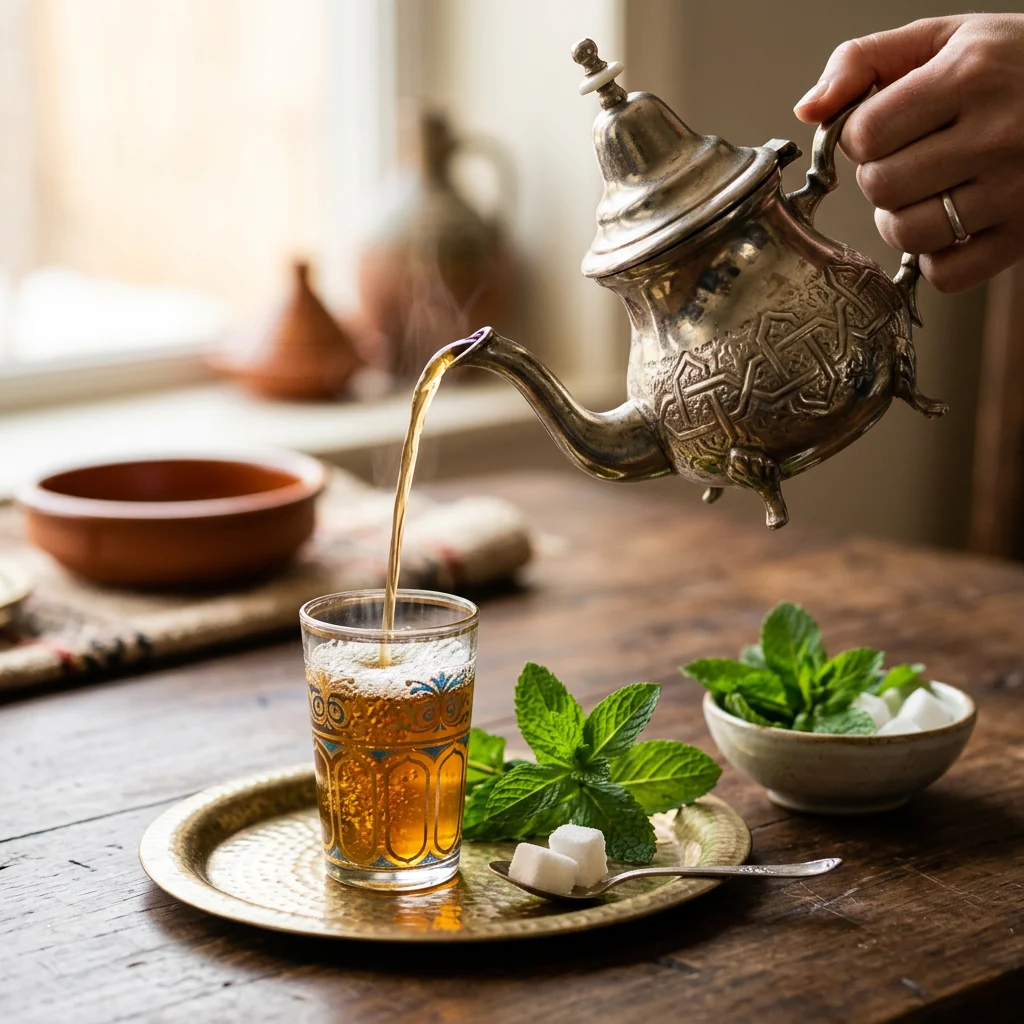
Moroccan mint tea — atay b'naanaa — is far more than a drink. It is a ritual, a greeting, a meditation, and the connective tissue of Moroccan social life. Made with Chinese gunpowder green tea, enormous bunches of fresh spearmint, and a generous hand with sugar, the tea is brewed in a silver or stainless steel teapot and poured from a dramatic height into small, ornate glasses. The high pour aerates the tea, cools it slightly, and creates a thin layer of foam on top that is considered a mark of skillful preparation. The tea ceremony occurs at least three times daily in a traditional Moroccan household — after meals, when guests arrive, and during the afternoon pause that punctuates the day. Refusing tea is a social impossibility; it is offered with such warmth and insistence that accepting it becomes a gesture of trust and friendship. The proverb says: "The first glass is gentle as life, the second strong as love, the third bitter as death" — referring to the three rounds typically poured from a single pot, each with a slightly different character as the tea leaves continue to steep. Ayurvedically, this preparation is remarkably well-designed. Green tea contains caffeine and tannins that can be drying and Vata-aggravating, but the fresh spearmint counterbalances with its cooling, digestive, and carminative properties. Mint is one of the premier digestive herbs in both Moroccan folk medicine and Ayurveda — it relaxes the smooth muscles of the intestinal tract, relieves gas and bloating, and stimulates bile flow. The sugar, while not ideal in excess, serves an Ayurvedic purpose: it buffers the astringent tannins of green tea, reducing their drying effect on rasa dhatu. The high-pour aeration introduces prana into the liquid.
Mildly pacifies Pitta and Kapha. The mint is cooling and digestive, while the green tea is astringent and clarifying. The sugar buffers the drying effects for Vata, though Vata types should drink warm and not excessively.
Ingredients
- 2 tbsp Chinese gunpowder green tea
- 1 large bunch Fresh spearmint (about 30-40 leaves on stems)
- 3 tbsp Sugar (or to taste — traditional Moroccan tea is quite sweet)
- 4 cups Boiling water
Instructions
- Place the gunpowder green tea in a Moroccan teapot or a regular teapot. Pour in half a cup of boiling water. Swirl gently for 20 seconds, then pour off this first wash — it removes dust and excess bitterness from the tightly rolled tea pellets. Do not discard the tea leaves, only the wash water.
- Add the fresh mint, packing the bunch into the pot — stems and all. Add the sugar directly into the pot.
- Pour the remaining boiling water over the tea, mint, and sugar. Place the lid on the pot and let steep for 3-4 minutes. The steeping time determines strength — 3 minutes for the first glass, which should be gentle and sweet.
- Pour a glass of tea, then pour it back into the pot. Repeat this two or three times — this process, called "marrying" the tea, mixes the sugar and aerates the brew, integrating all the flavors.
- Hold the teapot high above the glass — at least 12 inches — and pour in a thin, steady stream. The high pour creates a light foam and cools the tea to a drinkable temperature. Fill each glass about two-thirds full.
- Serve immediately. The first round is the sweetest and most delicate. Allow the pot to continue steeping and pour second and third rounds, adding a little more hot water and sugar to the pot if needed. Each successive round will be stronger and slightly more bitter.
How This Recipe Affects Each Dosha
Vata
Green tea's astringent and drying qualities can aggravate Vata if consumed in excess. However, the sugar and the warming temperature of the tea mitigate this. The mint's carminative action helps Vata's digestive variability. Best consumed in moderation — one to two glasses after a meal, when it aids digestion without drying the tissues.
Pitta
This is a Pitta-friendly beverage. Spearmint is one of the best cooling digestive herbs for Pitta types, and green tea's antioxidant properties support Pitta's tendency toward inflammation. The sweet taste from the sugar further pacifies Pitta. The astringent quality helps with Pitta-related loose stools and excess bile.
Kapha
The astringent, bitter, and light qualities of green tea are excellent for Kapha, helping to cut through sluggishness and clear excess mucus. The mint stimulates digestion without adding heat. However, the traditional Moroccan sugar level is too high for Kapha types — they should reduce or omit it to get the full benefits.
Mint is a premier digestive herb — it relaxes intestinal smooth muscle, promotes bile secretion, and relieves post-meal bloating. Green tea's gentle caffeine provides a mild metabolic boost. Together, they make this an ideal after-meal beverage that supports the digestive process without interfering with it. The traditional timing — served after every meal — demonstrates Morocco's intuitive understanding of digestive sequencing.
Nourishes: Rasa (plasma), Manas (mind)
Adjustments by Constitution
For Vata Types
Add a small cinnamon stick to the pot for extra warmth and grounding. Use the full traditional amount of sugar, which helps counteract the drying astringency. Add a few saffron threads — saffron is warming and nervine, calming Vata's restless mental energy. Drink the tea warm, never iced or at room temperature.
For Pitta Types
The traditional preparation is already well-suited for Pitta. Add a few drops of orange blossom water to each glass for extra cooling and a floral note. Reduce the sugar slightly — Pitta benefits from sweet taste but does not need as much as the traditional recipe calls for. Rose petals make a beautiful and therapeutically cooling addition.
For Kapha Types
Reduce sugar to 1 tablespoon or omit entirely — Kapha needs the astringent and bitter qualities unmasked. Add a thin slice of fresh ginger to the pot for extra digestive stimulation. A pinch of black pepper stirred into the glass is a Moroccan folk remedy for sluggish digestion that aligns perfectly with Ayurvedic Kapha management.
Seasonal Guidance
Served year-round in Morocco, with seasonal variations. In summer, extra mint and a lighter hand with sugar keep it refreshing, and lemon verbena is sometimes added. In winter, cinnamon sticks, saffron threads, or dried wormwood (shiba) are steeped in the pot for additional warming qualities. Despite being technically a cooling beverage, the warmth of the liquid and the sugar content make it comfortable in any season.
Best time of day: After meals to aid digestion, during the afternoon as a social ritual, and when hosting guests. Not recommended late at night due to the caffeine content of green tea.
Cultural Context
Moroccan mint tea is the country's most recognizable cultural symbol — more defining even than the tagine. The tea ceremony is governed by unwritten rules: it is always prepared by the head of household or the eldest son, never by a servant when guests are present. The high pour is a point of pride and takes years to master without spilling. Tea glasses are decorated with gold or colored patterns and are never filled to the brim — leaving space is a mark of elegance. The ritual is the same in a palace in Fez and a nomadic tent in the Sahara: three rounds, poured from height, offered with warmth. To refuse is unthinkable, and the ceremony creates a space of pause and connection in the rhythm of the day that modern cultures have largely lost.
Chef's Notes
The quality of the mint is paramount — fresh, vibrant spearmint with no wilted or blackened leaves. Gunpowder green tea is specified because its tight pellets unfurl slowly, allowing for multiple pourings from one pot. If unavailable, any Chinese green tea works, but avoid Japanese green teas which have a different flavor profile. The sugar amount is traditional — Moroccans drink their tea sweet. You can reduce it, but understand that the sugar is a functional part of the recipe, not merely a sweetener: it rounds the astringency and extends the brewing life of the pot. In summer, add sprigs of fresh wormwood (shiba) or lemon verbena (louiza) for variation. In winter, a cinnamon stick or a few saffron threads are traditional cold-weather additions.
Frequently Asked Questions
Is Moroccan Mint Tea good for my dosha?
Mildly pacifies Pitta and Kapha. The mint is cooling and digestive, while the green tea is astringent and clarifying. The sugar buffers the drying effects for Vata, though Vata types should drink warm and not excessively. Green tea's astringent and drying qualities can aggravate Vata if consumed in excess. This is a Pitta-friendly beverage. The astringent, bitter, and light qualities of green tea are excellent for Kapha, helping to cut through sluggishness and clear excess mucus.
When is the best time to eat Moroccan Mint Tea?
After meals to aid digestion, during the afternoon as a social ritual, and when hosting guests. Not recommended late at night due to the caffeine content of green tea. Served year-round in Morocco, with seasonal variations. In summer, extra mint and a lighter hand with sugar keep it refreshing, and lemon verbena is sometimes added. In winter, cinnamon sticks, saffro
How can I adjust Moroccan Mint Tea for my constitution?
For Vata types: Add a small cinnamon stick to the pot for extra warmth and grounding. Use the full traditional amount of sugar, which helps counteract the drying astr For Pitta types: The traditional preparation is already well-suited for Pitta. Add a few drops of orange blossom water to each glass for extra cooling and a floral not
What are the Ayurvedic properties of Moroccan Mint Tea?
Moroccan Mint Tea has Sweet, Astringent, Bitter taste (rasa), Cooling energy (virya), and Pungent post-digestive effect (vipaka). Its qualities (gunas) are Light, Slightly Dry, Clear. It nourishes Rasa (plasma), Manas (mind). Mint is a premier digestive herb — it relaxes intestinal smooth muscle, promotes bile secretion, and relieves post-meal bloating. Green tea's gentle caffeine provides a mild metabolic boost. Together, they make this an ideal after-meal beverage that supports the digestive process without interfering with it. The traditional timing — served after every meal — demonstrates Morocco's intuitive understanding of digestive sequencing.
What should you eat today?
This recipe has specific effects on each dosha, and the right meal depends on more than general guidelines. Your constitution, the current season, your birth chart's active planetary period, what you ate yesterday, how you slept — it all matters.
With Personal Alignment, you get daily food and meal guidance tailored to:
- Your prakriti and current vikriti
- Your Vedic birth chart and active planetary cycles
- The season, weather, and time of day
- Your food preferences, allergies, and restrictions
- Your feedback — it learns what works for your body and adapts
Not a generic diet plan. A living system that gets smarter about you every day.