Nasu Dengaku (Miso-Glazed Eggplant)
Japanese Recipe
Overview
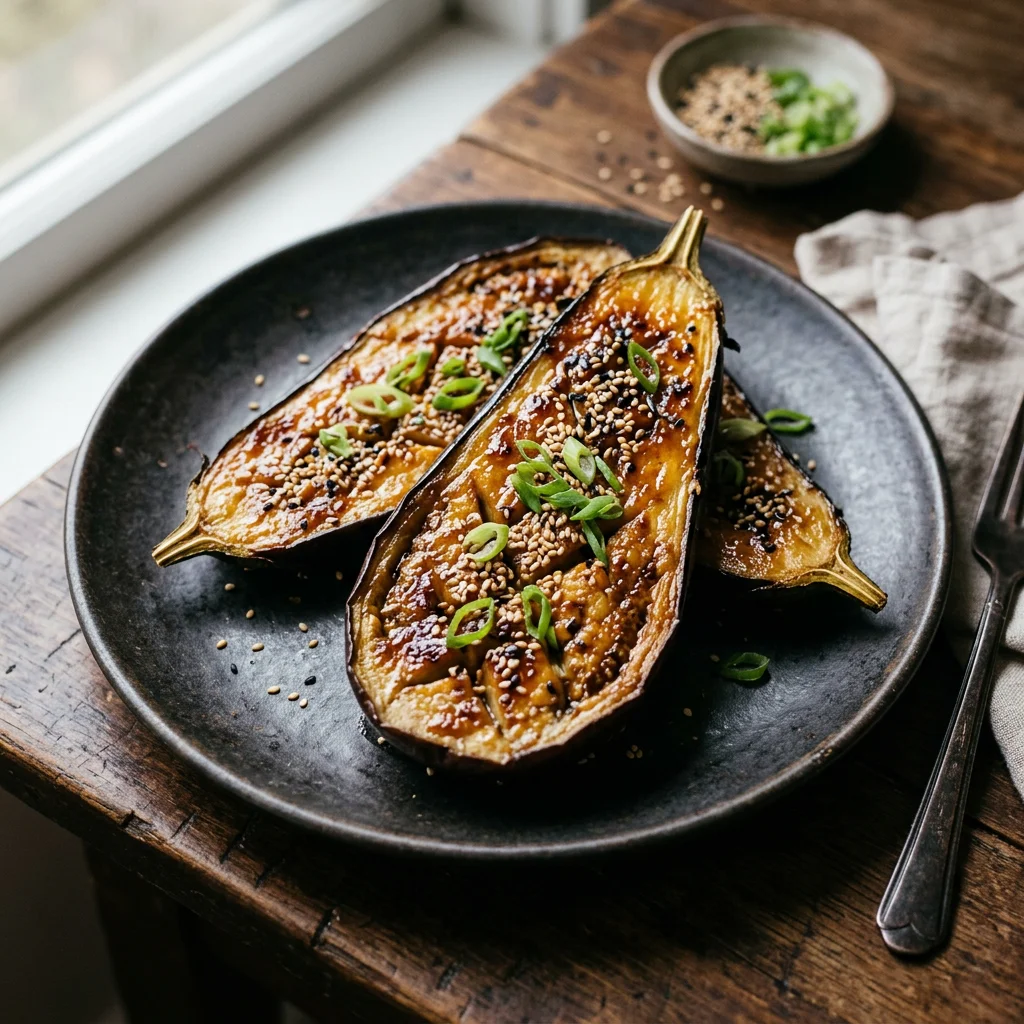
Nasu dengaku is one of Japan's most iconic vegetable preparations — tender Japanese eggplant halved lengthwise, scored in a crosshatch pattern, and broiled or grilled until the flesh collapses into a creamy, almost custard-like texture. A thick, sweet miso glaze is spread over the cut surface and briefly torched or broiled until it bubbles and caramelizes, creating a lacquered, deeply savory-sweet crust. The name "dengaku" originally referred to a type of stilts-walking ritual dance performed on wooden poles during rice planting festivals. The skewered, upright presentation of tofu (the original dengaku) apparently reminded onlookers of the dancers balanced on their poles, and the name transferred to the dish. Eggplant eventually became the more popular vehicle for the miso glaze, and nasu dengaku became a standard of Japanese home cooking and kaiseki cuisine alike. From an Ayurvedic perspective, eggplant is a complex vegetable — heavy, heating, and pungent, with a strong influence on Kapha and Pitta. The miso glaze adds fermented depth and salt, while the cooking method (high heat, direct flame) intensifies the heating quality. The result is a rich, warming dish with strong grounding energy that is deeply satisfying but needs to be matched to the right constitution and season.
Balances Vata well due to heavy, warm, oily qualities. May aggravate Pitta due to heating energy and nightshade nature. Good for Kapha in moderation due to pungent qualities, though heaviness can accumulate.
Ingredients
- 4 medium Japanese eggplant (nasu) (halved lengthwise)
- 3 tbsp White miso paste
- 2 tbsp Mirin
- 1 tbsp Sugar
- 1 tbsp Sake
- 1 tbsp Sesame oil
- 1 tbsp Sesame seeds (toasted, for garnish)
- 1 stalk Scallion (thinly sliced, for garnish)
- 1 tsp Fresh ginger (finely grated, optional)
Instructions
- Score the cut surface of each eggplant half in a crosshatch pattern, cutting about 1/2 inch deep. This allows the heat and glaze to penetrate deeply.
- Brush the cut surfaces generously with sesame oil. Place cut-side up on a baking sheet.
- Broil on the middle rack at high heat (or grill over medium-high) for 10-12 minutes, until the flesh is soft and slightly collapsed. The scored surface should look golden and the eggplant should yield easily when pressed.
- While the eggplant broils, prepare the dengaku miso: combine the miso paste, mirin, sugar, and sake in a small saucepan. Cook over low heat, stirring continuously, for 3-4 minutes until the sugar dissolves and the mixture becomes a thick, glossy paste. Remove from heat.
- Spread a generous layer of the dengaku miso over the broiled eggplant surfaces, filling the scored grooves.
- Return to the broiler for 2-3 minutes, watching carefully — the miso should bubble and develop golden-brown spots without burning.
- Remove and garnish with toasted sesame seeds, sliced scallion, and a small mound of grated ginger if desired.
- Serve hot, directly from the baking sheet or arranged on a platter.
How This Recipe Affects Each Dosha
Vata
Eggplant's heavy, oily, warming qualities are grounding for Vata when cooked thoroughly. The miso adds fermented depth that nourishes Vata, and the sesame oil provides essential lubrication. Thoroughly cooked eggplant is one of the few nightshades that Vata can enjoy — the key is that it must be soft, never undercooked.
Pitta
Eggplant is a nightshade — a family of vegetables that Ayurveda considers heating and potentially Pitta-aggravating. The miso's fermented quality and the broiling method add further heat. Pitta types with sensitive digestion or inflammatory conditions should eat this sparingly, especially in summer.
Kapha
The heavy, oily quality of eggplant and the sweet miso glaze can increase Kapha. However, the pungent vipaka and heating energy help stimulate Kapha digestion. This is a dish for Kapha types to enjoy occasionally, not regularly, and in moderate portions.
The heating quality of broiled eggplant and the fermented miso both stimulate agni. However, the heaviness of the dish demands adequate digestive fire to begin with. Best eaten when agni is strong — at midday — rather than in the evening when digestion is winding down.
Nourishes: Rasa (plasma), Mamsa (muscle), Meda (fat)
Adjustments by Constitution
For Vata Types
Increase sesame oil generously and add a few drops to each serving. Use a sweeter white miso glaze. Serve alongside warm rice and a soothing dashi-based soup. The standard preparation is already well-suited to Vata — just ensure the eggplant is cooked until very soft.
For Pitta Types
Use mild white miso only and reduce the amount. Replace sesame oil with a lighter oil. Omit ginger. Add a squeeze of yuzu or lemon juice after cooking for a cooling sour note. Reduce broiling time to minimize charring. Serve with cooling steamed greens.
For Kapha Types
Reduce the miso glaze amount and add a teaspoon of grated ginger directly into the glaze. Use red miso for its stronger, more stimulating quality. Reduce sesame oil to a light brushing. Add shichimi togarashi over the finished dish. Serve as a small side, not a main component.
Seasonal Guidance
Japanese eggplant is at its peak in late summer through early autumn, but the heating preparation and heavy quality make nasu dengaku better suited to cooler months when the body craves warmth and grounding. In autumn, it aligns with the season's shift toward richer, heartier food. In winter, its warming energy provides comfort. Avoid as a regular dish in summer when its heating quality compounds environmental heat — save it for the first cool evenings of early autumn when eggplant is still fresh but the air begins to chill.
Best time of day: Lunch or early dinner when agni is active. Avoid as a late-night dish — the heavy, oily quality is difficult to process before sleep.
Cultural Context
Nasu dengaku has roots in Japan's Buddhist vegetarian cooking tradition (shojin ryori), where protein-rich preparations like miso-glazed vegetables provided sustenance in the absence of meat. The dengaku tradition dates to the Muromachi period (14th-16th century), when it was first prepared with tofu. Eggplant entered Japanese agriculture from China and Southeast Asia and quickly became one of the most important summer vegetables. The Japanese proverb "don't let your daughter-in-law eat autumn eggplant" (aki nasu wa yome ni kuwasuna) has been debated for centuries — some say it means "they're too good for her" and others "they're too cooling for her body." This ambiguity captures the Japanese awareness of food as medicine.
Chef's Notes
Japanese eggplants (long, thin, with thinner skin) are preferred because they cook more evenly and their flesh is creamier than globe eggplants. If using globe eggplant, cut into thick rounds instead. The crosshatch scoring is critical — without it, the eggplant steams unevenly and the glaze slides off. Watch the final broiling step closely; the miso goes from perfectly caramelized to burnt in seconds. For a more complex dengaku, make two colors of miso glaze — white (shiro) and red (aka) — and stripe them alternately for visual impact, a technique used in kaiseki restaurants.
Frequently Asked Questions
Is Nasu Dengaku (Miso-Glazed Eggplant) good for my dosha?
Balances Vata well due to heavy, warm, oily qualities. May aggravate Pitta due to heating energy and nightshade nature. Good for Kapha in moderation due to pungent qualities, though heaviness can accumulate. Eggplant's heavy, oily, warming qualities are grounding for Vata when cooked thoroughly. Eggplant is a nightshade — a family of vegetables that Ayurveda considers heating and potentially Pitta-aggravating. The heavy, oily quality of eggplant and the sweet miso glaze can increase Kapha.
When is the best time to eat Nasu Dengaku (Miso-Glazed Eggplant)?
Lunch or early dinner when agni is active. Avoid as a late-night dish — the heavy, oily quality is difficult to process before sleep. Japanese eggplant is at its peak in late summer through early autumn, but the heating preparation and heavy quality make nasu dengaku better suited to cooler months when the body craves warmth and gro
How can I adjust Nasu Dengaku (Miso-Glazed Eggplant) for my constitution?
For Vata types: Increase sesame oil generously and add a few drops to each serving. Use a sweeter white miso glaze. Serve alongside warm rice and a soothing dashi-bas For Pitta types: Use mild white miso only and reduce the amount. Replace sesame oil with a lighter oil. Omit ginger. Add a squeeze of yuzu or lemon juice after cooking
What are the Ayurvedic properties of Nasu Dengaku (Miso-Glazed Eggplant)?
Nasu Dengaku (Miso-Glazed Eggplant) has Sweet, Salty, Pungent, Bitter taste (rasa), Heating energy (virya), and Pungent post-digestive effect (vipaka). Its qualities (gunas) are Heavy, Oily, Warm. It nourishes Rasa (plasma), Mamsa (muscle), Meda (fat). The heating quality of broiled eggplant and the fermented miso both stimulate agni. However, the heaviness of the dish demands adequate digestive fire to begin with. Best eaten when agni is strong — at midday — rather than in the evening when digestion is winding down.
What should you eat today?
This recipe has specific effects on each dosha, and the right meal depends on more than general guidelines. Your constitution, the current season, your birth chart's active planetary period, what you ate yesterday, how you slept — it all matters.
With Personal Alignment, you get daily food and meal guidance tailored to:
- Your prakriti and current vikriti
- Your Vedic birth chart and active planetary cycles
- The season, weather, and time of day
- Your food preferences, allergies, and restrictions
- Your feedback — it learns what works for your body and adapts
Not a generic diet plan. A living system that gets smarter about you every day.