Ensalada de Nopales (Cactus Paddle Salad)
Mexican Recipe
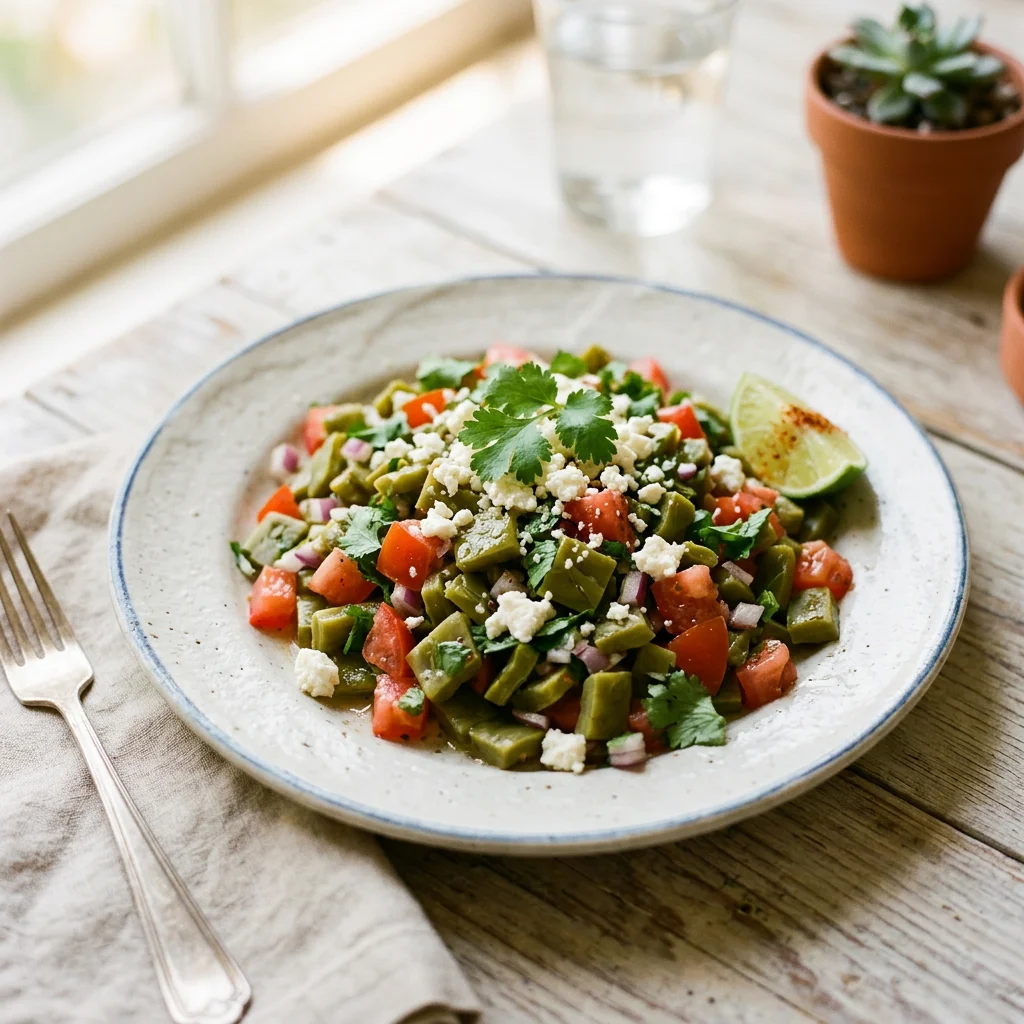
Overview
Nopales — the flat, oval pads of the prickly pear cactus — are one of Mexico's most distinctive and ancient foods. This salad combines cooked nopales with tomato, onion, cilantro, and fresh cheese, dressed simply with lime and olive oil. The cactus paddles have a flavor that is difficult to compare to anything else: slightly tart, faintly green, with a texture that sits somewhere between green beans and okra. They are mucilaginous when first cooked (like okra), but the traditional Mexican technique of rinsing and draining eliminates most of this quality, leaving a firm, pleasantly snappy vegetable. Nopales have been cultivated in Mesoamerica for at least 9,000 years, making them one of the oldest food crops in the Americas. They grow abundantly across Mexico, requiring no irrigation in arid climates, and were a dietary staple of indigenous peoples long before the introduction of European vegetables. Today they remain a cornerstone of Mexican cuisine, sold in every market and appearing in tacos, stews, soups, eggs, and especially salads like this one. From an Ayurvedic perspective, nopales are remarkable. Their bitter, astringent taste and cooling energy make them one of the most detoxifying vegetables available. The mucilaginous quality soothes the digestive tract while the bitter compounds support liver function. Research confirms what traditional Mexican herbalism has long known: nopales have significant blood-sugar-regulating properties, making this salad genuinely therapeutic as well as delicious.
Excellent for pacifying Pitta and Kapha. Can increase Vata due to lightness, dryness, and bitter taste.
Ingredients
- 6 medium Fresh nopales (cactus paddles) (cleaned of thorns and diced)
- 3 medium Roma tomatoes (diced)
- 1/2 medium White onion (finely diced)
- 1/2 cup Fresh cilantro (chopped)
- 1 small Jalapeño chile (minced, optional)
- 2 whole Lime (juiced)
- 2 tbsp Olive oil
- 80 g Queso fresco (crumbled)
- 1 tsp Dried oregano
- 1 tsp Sea salt
- 1 medium Avocado (optional, sliced)
Instructions
- Clean the nopales by scraping off the thorns with a sharp knife or vegetable peeler. Trim the edges and the thick base. Dice into 1-cm pieces.
- Bring a pot of salted water to a boil. Add the diced nopales and cook for 8-10 minutes until tender and the mucilaginous liquid has been released. You will see the water become thick and viscous — this is normal.
- Drain the nopales in a colander and rinse thoroughly under cold running water until they no longer feel slimy. Drain well and pat dry with a clean towel.
- In a large bowl, combine the cooked nopales, diced tomato, onion, cilantro, and jalapeño if using.
- Dress with lime juice, olive oil, oregano, and salt. Toss gently to combine.
- Transfer to a serving platter. Top with crumbled queso fresco and avocado slices if using. Serve at room temperature or slightly chilled.
How This Recipe Affects Each Dosha
Vata
The bitter, astringent, light, dry, and cooling qualities of nopales are precisely the qualities that aggravate Vata. This is not an ideal dish for Vata-dominant individuals, especially in cool weather. The lime, onion, and cheese provide some balancing, but the overall effect leans Vata-increasing.
Pitta
Superb for Pitta. The bitter and astringent tastes directly cool and cleanse excess Pitta. The cooling virya reduces internal heat, and the cilantro is one of the most Pitta-pacifying herbs. The lime provides pleasant sour taste without inflammation. This is a therapeutic salad for overheated constitutions.
Kapha
Ideal for Kapha. The bitter, astringent, light, dry qualities are exactly what Kapha needs to counteract heaviness and congestion. The detoxifying properties of nopales support Kapha's tendency toward sluggish metabolism. The pungent post-digestive effect stimulates circulation and digestion.
Mildly stimulates agni through the bitter and astringent tastes, which promote enzymatic activity and bile flow. The lime adds sour digestive stimulation. However, the cooling and light quality means this salad does not provide strong agni support — it is better for cleansing than for kindling weak digestion.
Nourishes: Rasa (plasma), Rakta (blood)
Adjustments by Constitution
For Vata Types
Add generous avocado slices (heavy, oily) and extra queso fresco. Increase the olive oil to 3 tablespoons. Add a pinch of cumin for warming quality. Serve alongside warm beans and tortillas rather than as a standalone dish.
For Pitta Types
This salad is already ideal for Pitta. Omit the jalapeño. Increase cilantro and add fresh mint. The lime and cooling nopales create a naturally Pitta-pacifying preparation. Add cucumber slices for extra cooling.
For Kapha Types
Omit the cheese and avocado. Include the jalapeño and add extra lime juice and a pinch of dried oregano. Add sliced radishes for extra pungent, light quality. Serve as a standalone light meal rather than a side dish.
Seasonal Guidance
Ensalada de nopales is a warm-weather dish, ideal from spring through early autumn. The cooling, bitter, light quality perfectly matches the body's summer need for heat-reducing food. In spring, it supports the natural cleansing process as winter's accumulated heaviness is shed. In Mexico, nopales are available year-round but are at their tenderest in spring when new growth appears on the cactus. In autumn and winter, the cooling quality can aggravate Vata — if serving in cool weather, add warming elements (extra jalapeño, cumin, generous olive oil) and serve alongside warm dishes rather than cold.
Best time of day: Midday lunch, when the digestive fire can handle the cooling, light quality
Cultural Context
Nopales are among the most culturally significant foods in Mexico — the prickly pear cactus appears on the Mexican flag and coat of arms, representing the Aztec founding legend of Tenochtitlan. For indigenous peoples across Mexico, nopales were not just food but medicine: traditional healers used them for diabetes, inflammation, digestive disorders, and wound healing. This medicinal tradition has been validated by modern research showing significant hypoglycemic and anti-inflammatory effects. Today, nopales remain a marker of authentic Mexican cuisine — they are inexpensive, abundant, nutritious, and deeply rooted in the country's identity.
Chef's Notes
The mucilaginous quality (baba) of nopales is the main challenge for first-time cooks. The thorough boiling and rinsing technique described here eliminates most of it. Some Mexican cooks add a few coins of raw onion or a piece of tomatillo husk to the boiling water, claiming it reduces the slime — this does seem to help. Others grill the nopales instead of boiling, which avoids the issue entirely: brush whole cleaned pads with oil, grill until charred and tender (about 4 minutes per side), then dice. Grilled nopales have a smokier, more intense flavor and no sliminess at all. Nopales are available in most Mexican grocery stores and increasingly in mainstream supermarkets. Choose firm, bright green pads that are not too thick (younger pads are more tender).
Frequently Asked Questions
Is Ensalada de Nopales (Cactus Paddle Salad) good for my dosha?
Excellent for pacifying Pitta and Kapha. Can increase Vata due to lightness, dryness, and bitter taste. The bitter, astringent, light, dry, and cooling qualities of nopales are precisely the qualities that aggravate Vata. Superb for Pitta. Ideal for Kapha.
When is the best time to eat Ensalada de Nopales (Cactus Paddle Salad)?
Midday lunch, when the digestive fire can handle the cooling, light quality Ensalada de nopales is a warm-weather dish, ideal from spring through early autumn. The cooling, bitter, light quality perfectly matches the body's summer need for heat-reducing food. In spring, it su
How can I adjust Ensalada de Nopales (Cactus Paddle Salad) for my constitution?
For Vata types: Add generous avocado slices (heavy, oily) and extra queso fresco. Increase the olive oil to 3 tablespoons. Add a pinch of cumin for warming quality. S For Pitta types: This salad is already ideal for Pitta. Omit the jalapeño. Increase cilantro and add fresh mint. The lime and cooling nopales create a naturally Pitta-
What are the Ayurvedic properties of Ensalada de Nopales (Cactus Paddle Salad)?
Ensalada de Nopales (Cactus Paddle Salad) has Bitter, Astringent, Sour, Salty taste (rasa), Cooling energy (virya), and Pungent post-digestive effect (vipaka). Its qualities (gunas) are Light, Cool, Dry. It nourishes Rasa (plasma), Rakta (blood). Mildly stimulates agni through the bitter and astringent tastes, which promote enzymatic activity and bile flow. The lime adds sour digestive stimulation. However, the cooling and light quality means this salad does not provide strong agni support — it is better for cleansing than for kindling weak digestion.
What should you eat today?
This recipe has specific effects on each dosha, and the right meal depends on more than general guidelines. Your constitution, the current season, your birth chart's active planetary period, what you ate yesterday, how you slept — it all matters.
With Personal Alignment, you get daily food and meal guidance tailored to:
- Your prakriti and current vikriti
- Your Vedic birth chart and active planetary cycles
- The season, weather, and time of day
- Your food preferences, allergies, and restrictions
- Your feedback — it learns what works for your body and adapts
Not a generic diet plan. A living system that gets smarter about you every day.