Nourishing Grain Bowl
Fusion Recipe
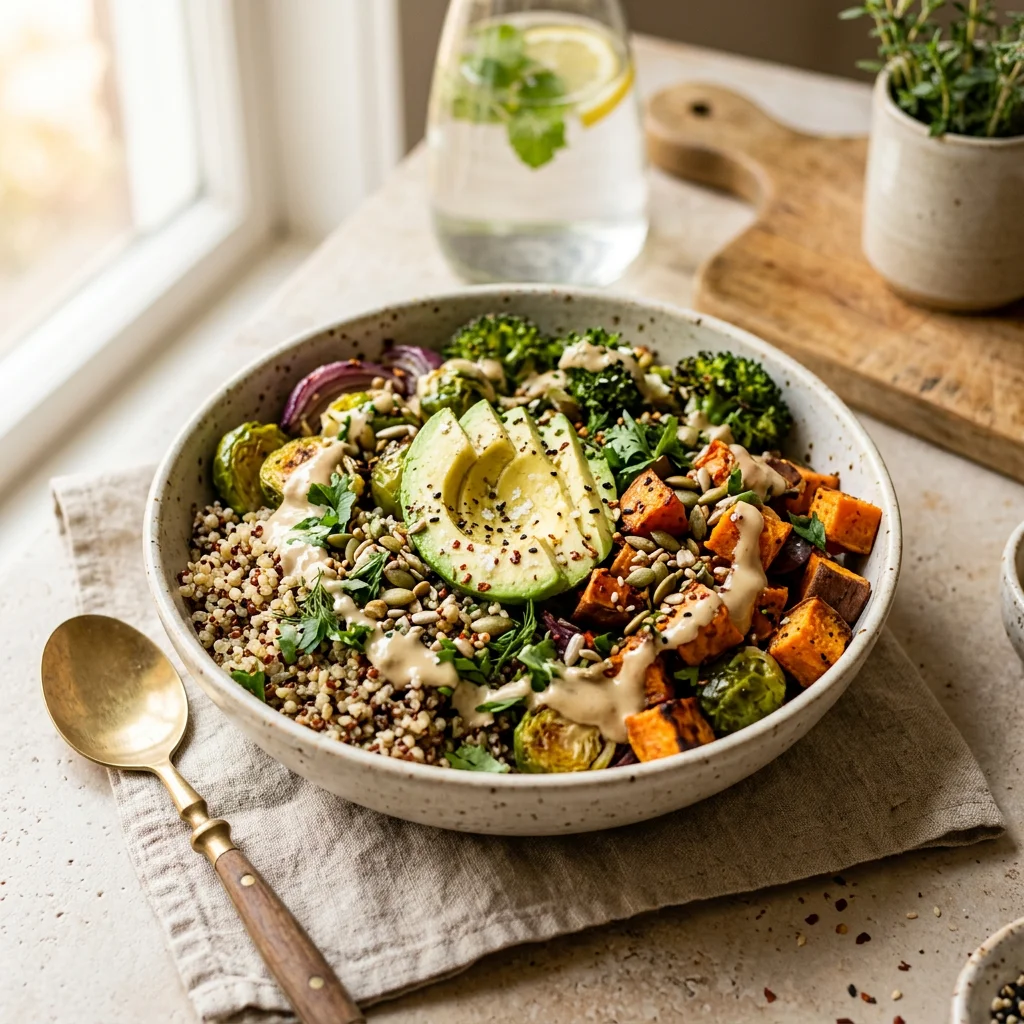
Overview
The grain bowl is the modern lunch template, and it maps remarkably well onto Ayurvedic principles when assembled with intention. A base of cooked grain (quinoa, rice, or millet depending on constitution), a generous portion of roasted or steamed vegetables, a handful of leafy greens for their bitter rasa, and a tahini or seed-based dressing that provides fat and flavor — this is the structure. What makes it Ayurvedic rather than merely healthy is the attention to energetics: which grain for which dosha, whether the vegetables are raw or cooked, how the dressing is spiced, and what temperature the bowl is served at. The brilliance of this format is its adaptability. The same architectural template serves a cold Vata type (warm rice, roasted root vegetables, generous tahini dressing with ginger) and a hot Pitta type (room-temperature quinoa, steamed cooling vegetables, lemon-herb dressing) and a sluggish Kapha type (light millet, raw greens with a minimal pungent dressing). The bowl is a vehicle, not a fixed recipe — and understanding the principles behind it means you never need to follow a recipe again for weekday lunch. This version offers a balanced middle path suitable for most constitutions most of the time: quinoa or rice as the base, a mix of roasted and fresh vegetables, dark leafy greens, and a tahini dressing seasoned with lemon, cumin, and a touch of garlic. It is designed to be substantial without being heavy, flavorful without being overspiced, and nourishing at every tissue level.
Tridoshic as written — can be adjusted for any constitution by changing the grain, vegetable selection, and dressing. Mildly pacifies all three doshas in its base form.
Ingredients
- 1 cup Quinoa or basmati rice (rinsed)
- 2 cups Water (1.5 cups for quinoa, 2 for rice)
- 3 cups Seasonal vegetables (e.g., zucchini, bell pepper, broccoli, carrots — cut into bite-sized pieces)
- 2 tbsp Olive oil (for roasting)
- 1 tsp Cumin (ground)
- 1 tsp Salt
- 2 cups Fresh spinach or mixed greens (raw or lightly wilted)
- 2 tbsp Tahini
- 2 tbsp Lemon juice
- 1 small clove Garlic (minced)
- 2 tbsp Water (to thin the dressing)
- 1/2 whole Avocado (sliced, optional)
- 1 tbsp Seeds (pumpkin, sunflower, or hemp seeds for garnish)
- 2 tbsp Fresh herbs (cilantro, parsley, or mint)
Instructions
- Cook the grain: rinse quinoa or rice under cold water. Combine with water and a pinch of salt in a pot. Bring to a boil, reduce heat to low, cover, and simmer until tender and liquid is absorbed (15 minutes for quinoa, 18-20 for rice). Fluff with a fork and set aside.
- While the grain cooks, preheat oven to 200C (400F). Toss the chopped vegetables with olive oil, cumin, and half the salt. Spread on a parchment-lined baking sheet and roast for 20-25 minutes until tender and lightly caramelized.
- Make the tahini dressing: whisk tahini, lemon juice, garlic, a pinch of salt, and water until smooth and pourable. Adjust consistency with more water if needed.
- Prepare the greens: if using spinach, leave raw or wilt briefly in a pan with a drop of oil. If using sturdier greens like kale, massage with a pinch of salt and a squeeze of lemon to soften.
- Assemble the bowls: divide the cooked grain between two bowls. Arrange the roasted vegetables, greens, and avocado slices (if using) on top. Drizzle generously with tahini dressing.
- Garnish with seeds and fresh herbs. Serve warm or at room temperature.
How This Recipe Affects Each Dosha
Vata
The warm grain base and roasted vegetables provide the warmth and grounding Vata needs, while the tahini dressing adds essential oiliness. The key for Vata is ensuring everything is served warm, the vegetables are thoroughly cooked (not al dente), and the dressing is generous. Raw greens should be minimized or fully wilted.
Pitta
The bitter greens, sweet grain, and cooling tahini work well for Pitta. The moderate spicing keeps things flavorful without generating excess heat. Pitta types benefit from the room-temperature or slightly warm serving, and the lemon in the dressing stimulates their naturally strong agni without overheating.
Kapha
The lighter grains (quinoa, millet) suit Kapha better than rice. The bitter greens are Kapha's best food medicine. The bowl format naturally controls portions. Kapha types should emphasize the vegetable and greens portion and use a lighter dressing.
The cumin in the roasted vegetables and the lemon in the dressing both support agni. The overall dish is moderate on digestive fire — nourishing and sustaining rather than strongly stimulating. The pre-cooked grain and well-roasted vegetables are easy to digest, making this appropriate for most levels of agni strength.
Nourishes: Rasa (plasma), Rakta (blood), Mamsa (muscle)
Adjustments by Constitution
For Vata Types
Use basmati rice instead of quinoa (warmer and more grounding). Replace olive oil with ghee for roasting. Cook all vegetables thoroughly — no raw greens. Add avocado for extra oiliness. Increase tahini in the dressing and add a pinch of ginger. Include sweet root vegetables (sweet potato, carrots, beets) among the roasted selections.
For Pitta Types
Use quinoa or white basmati rice. Include cooling vegetables: zucchini, asparagus, green beans, cucumber (raw as a topping). Replace garlic in the dressing with fresh mint. Add shredded coconut and cilantro. Increase the raw greens portion. Use lime instead of lemon for a slightly less heating acid.
For Kapha Types
Use millet or buckwheat instead of rice or quinoa. Reduce tahini to 1 tablespoon and thin with extra lemon juice. Skip the avocado. Use pungent vegetables: radishes, turnips, broccoli, cabbage. Add sprouts for lightness. Include a generous pinch of black pepper and cayenne in the dressing. Emphasize raw or lightly steamed vegetables over roasted.
Seasonal Guidance
The grain bowl format works year-round by adjusting components to the season. In autumn and winter, use warm rice, roasted root vegetables, and generous dressing. In spring, switch to lighter grains, more bitter greens, and a spicier dressing. In summer, serve at room temperature with cooling vegetables, fresh herbs, and a lighter dressing. The architecture stays the same; the ingredients rotate with the seasons — which is exactly how traditional Ayurvedic cooking works.
Best time of day: Lunch, when agni peaks and can handle a substantial, multi-component meal. Also suitable as an early dinner if kept lighter on the grain and heavier on vegetables and greens.
Cultural Context
The grain bowl is a modern invention with ancient roots. Every traditional cuisine has its own version: the Japanese donburi (rice bowl), the Korean bibimbap, the Mexican burrito bowl, the Indian thali (served as individual components rather than stacked). The Western grain bowl trend, which emerged in the 2010s, is essentially a deconstructed thali served in a single vessel. What these diverse traditions share is the principle that a complete meal includes grain, vegetable, protein (or fat), and a sauce or condiment to tie them together. The Ayurvedic lens adds one more dimension: that the specific choices within each category should match the eater, not just the recipe.
Chef's Notes
This bowl improves dramatically when you cook the grain with intention — toast the quinoa in a dry pan for 2 minutes before adding water for a nuttier flavor, or cook rice with a bay leaf and cardamom pod. The dressing is the soul of the bowl; make extra and keep it in the fridge for 5 days. For meal prep, cook the grain and roast the vegetables in advance but assemble fresh — pre-assembled bowls get soggy. The ratio that works: 1/3 grain, 1/3 roasted vegetables, 1/3 greens and garnish. Protein additions (chickpeas, lentils, paneer, soft-boiled egg) make this a more complete meal for those who need it.
Frequently Asked Questions
Is Nourishing Grain Bowl good for my dosha?
Tridoshic as written — can be adjusted for any constitution by changing the grain, vegetable selection, and dressing. Mildly pacifies all three doshas in its base form. The warm grain base and roasted vegetables provide the warmth and grounding Vata needs, while the tahini dressing adds essential oiliness. The bitter greens, sweet grain, and cooling tahini work well for Pitta. The lighter grains (quinoa, millet) suit Kapha better than rice.
When is the best time to eat Nourishing Grain Bowl?
Lunch, when agni peaks and can handle a substantial, multi-component meal. Also suitable as an early dinner if kept lighter on the grain and heavier on vegetables and greens. The grain bowl format works year-round by adjusting components to the season. In autumn and winter, use warm rice, roasted root vegetables, and generous dressing. In spring, switch to lighter grains,
How can I adjust Nourishing Grain Bowl for my constitution?
For Vata types: Use basmati rice instead of quinoa (warmer and more grounding). Replace olive oil with ghee for roasting. Cook all vegetables thoroughly — no raw gree For Pitta types: Use quinoa or white basmati rice. Include cooling vegetables: zucchini, asparagus, green beans, cucumber (raw as a topping). Replace garlic in the dre
What are the Ayurvedic properties of Nourishing Grain Bowl?
Nourishing Grain Bowl has Sweet, Bitter, Astringent taste (rasa), Neutral energy (virya), and Sweet post-digestive effect (vipaka). Its qualities (gunas) are Light to Moderate, Warm, Slightly Oily. It nourishes Rasa (plasma), Rakta (blood), Mamsa (muscle). The cumin in the roasted vegetables and the lemon in the dressing both support agni. The overall dish is moderate on digestive fire — nourishing and sustaining rather than strongly stimulating. The pre-cooked grain and well-roasted vegetables are easy to digest, making this appropriate for most levels of agni strength.
What should you eat today?
This recipe has specific effects on each dosha, and the right meal depends on more than general guidelines. Your constitution, the current season, your birth chart's active planetary period, what you ate yesterday, how you slept — it all matters.
With Personal Alignment, you get daily food and meal guidance tailored to:
- Your prakriti and current vikriti
- Your Vedic birth chart and active planetary cycles
- The season, weather, and time of day
- Your food preferences, allergies, and restrictions
- Your feedback — it learns what works for your body and adapts
Not a generic diet plan. A living system that gets smarter about you every day.