Ochazuke (Green Tea Rice)
Japanese Recipe
Overview
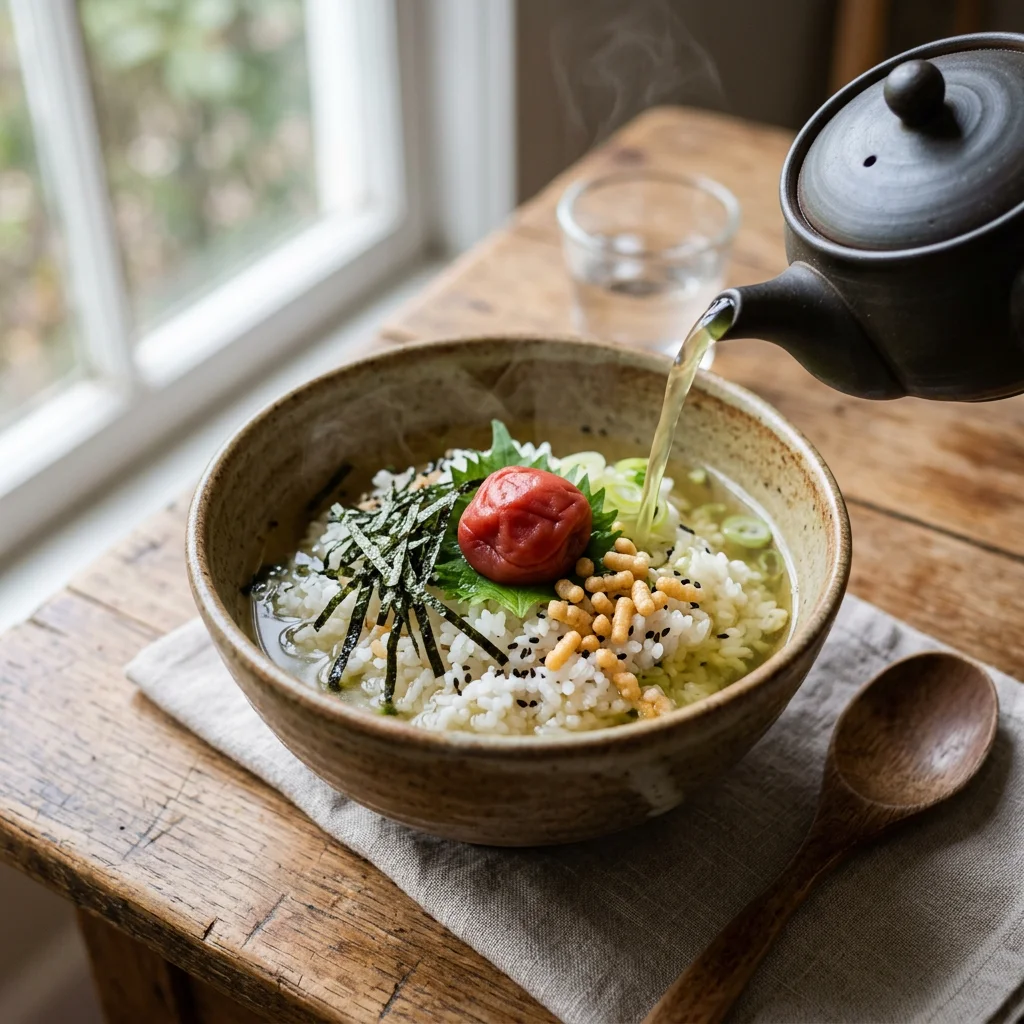
Ochazuke is one of Japan's most humble and restorative dishes — leftover steamed rice with hot green tea poured over it, topped with simple garnishes like nori seaweed, rice crackers, pickled plum (umeboshi), and wasabi. The hot tea softens the rice into a comforting, porridge-like consistency that slides down easily, warming the body from the inside. This dish was born of Japanese frugality and the reverence for rice. Rather than waste leftover rice, households discovered that pouring hot tea over cold rice transformed it into something soothing and satisfying. Over centuries, ochazuke evolved from peasant thrift into a beloved comfort food enjoyed across all social strata. Late-night izakayas serve it as a restorative after drinking, mothers make it for children with colds, and it appears as a quick, nourishing meal when no one has the energy to cook. Ayurvedically, ochazuke is noteworthy for its simplicity and gentleness. The warm liquid, easily digestible rice, and minimal additions make it ideal for times when agni is low — illness, exhaustion, emotional upset, or the delicate transition between waking and full activity. Green tea adds antioxidants and a mild stimulating quality without the aggression of coffee.
Mildly pacifies all three doshas due to lightness and simplicity. The green tea adds a Pitta-cooling and Kapha-clearing quality. The umeboshi adds sour warmth that supports Vata.
Ingredients
- 1 bowl Cooked rice (leftover or freshly steamed, about 200g)
- 1.5 cups Green tea (sencha) (hot, freshly brewed)
- 1/2 sheet Nori seaweed (torn into small pieces)
- 1 whole Umeboshi (pickled plum) (pitted and lightly torn apart)
- 1 tsp Sesame seeds (toasted)
- 1/4 tsp Wasabi (freshly grated or from tube, to taste)
- 1 tbsp Rice crackers (arare) (optional, for crunch)
- 1 stalk Scallion (thinly sliced)
Instructions
- Place the cooked rice in a deep bowl. If using cold leftover rice, break up any clumps with a fork.
- Brew the green tea slightly stronger than usual — it needs to hold its flavor against the rice. Use water at about 80 degrees Celsius (175 degrees Fahrenheit) for sencha, not boiling, to avoid bitterness.
- Arrange the umeboshi, nori pieces, sesame seeds, and wasabi on top of the rice.
- Pour the hot green tea over everything, enough to nearly submerge the rice.
- Scatter the sliced scallion and rice crackers on top. Serve immediately while the tea is hot and the crackers still have crunch.
- Eat with chopsticks and a spoon, mixing the wasabi into the broth to taste.
How This Recipe Affects Each Dosha
Vata
The warm liquid and soft rice texture are soothing for Vata, and the sour umeboshi provides a taste that directly pacifies Vata. However, green tea's astringent and bitter qualities can be somewhat drying for Vata over time. The dish's lightness means it sustains less than a heavier meal — Vata types should treat this as a gentle meal, not a primary source of nourishment.
Pitta
Green tea is cooling and bitter — two qualities that directly pacify Pitta. The light, simple preparation does not burden Pitta's strong digestive fire. The umeboshi's sour quality provides a small amount of stimulation without excess heat. This is a good gentle meal for Pitta during recovery or low-appetite days.
Kapha
The lightness and warmth of ochazuke are appropriate for Kapha, and the bitter, astringent qualities of green tea help clear Kapha accumulation. The watery nature helps hydrate without heaviness. Kapha types benefit from this as a light dinner or post-exercise recovery meal.
Very gentle on agni — this is a food for when digestive fire is low. The warm liquid and soft, pre-cooked rice require minimal digestive effort. The green tea provides a mild stimulation to agni without demanding much.
Nourishes: Rasa (plasma)
Adjustments by Constitution
For Vata Types
Use houjicha (roasted tea) instead of green tea for a warmer, less astringent base. Add a few drops of sesame oil and increase the umeboshi. Top with flaked cooked salmon for grounding protein and healthy fat. Include a side of warm miso soup for a more substantial meal.
For Pitta Types
Use a mild, high-quality sencha brewed at a lower temperature. Omit the wasabi or use very sparingly. Add extra nori for mineral content. Top with shiso (perilla) leaves for extra cooling. This is already well-suited to Pitta.
For Kapha Types
Use genmaicha (roasted rice green tea) for its drying, warming quality. Increase the wasabi for extra pungent stimulation. Reduce the rice portion and increase the tea-to-rice ratio. Add a generous amount of grated daikon on top for its pungent, Kapha-clearing effect.
Seasonal Guidance
Appropriate year-round with adjustments. In winter, use houjicha or genmaicha for a warmer base and add richer toppings like salmon or eel. In spring, keep it light with fresh greens and mild sencha. In summer, this can be served at room temperature or even cold (hiyachazuke) with cold brewed tea and cooling toppings like cucumber and myoga ginger. In autumn, use deeper teas and warming pickles. The dish's simplicity makes it the perfect canvas for seasonal expression.
Best time of day: Late evening as a light supper, early morning as a gentle breakfast, or as a restorative at any hour when the body needs simplicity
Cultural Context
Ochazuke dates to the Heian period (794-1185), when hot water was poured over rice as a simple meal. The substitution of tea for water came later, as tea culture spread through Japan. During the Edo period, ochazuke became associated with the pragmatic merchant class and with late-night eating. Today it occupies a unique place in Japanese food culture — it is simultaneously the simplest possible meal and a canvas for luxury (high-end versions feature sea bream, ikura, or matsutake mushroom). It is also the traditional "last dish" of a kaiseki meal, signaling the end of an elaborate dining experience with a return to simplicity.
Chef's Notes
The quality of your green tea matters enormously here — it is half the dish. Use a decent sencha or genmaicha (roasted rice tea, which adds a nutty depth). Houjicha (roasted green tea) works beautifully in autumn and winter for a warmer, toastier flavor. The traditional accompaniment is tsukemono (Japanese pickles) — try it with shibazuke, takuan, or pickled ginger. For a more substantial version, top with flaked salted salmon (sake), grilled eel, or seasoned mentaiko (pollock roe). Ochazuke is endlessly adaptable but should always remain simple.
Frequently Asked Questions
Is Ochazuke (Green Tea Rice) good for my dosha?
Mildly pacifies all three doshas due to lightness and simplicity. The green tea adds a Pitta-cooling and Kapha-clearing quality. The umeboshi adds sour warmth that supports Vata. The warm liquid and soft rice texture are soothing for Vata, and the sour umeboshi provides a taste that directly pacifies Vata. Green tea is cooling and bitter — two qualities that directly pacify Pitta. The lightness and warmth of ochazuke are appropriate for Kapha, and the bitter, astringent qualities of green tea help clear Kapha accumulation.
When is the best time to eat Ochazuke (Green Tea Rice)?
Late evening as a light supper, early morning as a gentle breakfast, or as a restorative at any hour when the body needs simplicity Appropriate year-round with adjustments. In winter, use houjicha or genmaicha for a warmer base and add richer toppings like salmon or eel. In spring, keep it light with fresh greens and mild sencha.
How can I adjust Ochazuke (Green Tea Rice) for my constitution?
For Vata types: Use houjicha (roasted tea) instead of green tea for a warmer, less astringent base. Add a few drops of sesame oil and increase the umeboshi. Top with For Pitta types: Use a mild, high-quality sencha brewed at a lower temperature. Omit the wasabi or use very sparingly. Add extra nori for mineral content. Top with shi
What are the Ayurvedic properties of Ochazuke (Green Tea Rice)?
Ochazuke (Green Tea Rice) has Sweet, Bitter, Astringent, Sour taste (rasa), Cooling energy (virya), and Pungent post-digestive effect (vipaka). Its qualities (gunas) are Light, Warm (from temperature), Liquid. It nourishes Rasa (plasma). Very gentle on agni — this is a food for when digestive fire is low. The warm liquid and soft, pre-cooked rice require minimal digestive effort. The green tea provides a mild stimulation to agni without demanding much.
What should you eat today?
This recipe has specific effects on each dosha, and the right meal depends on more than general guidelines. Your constitution, the current season, your birth chart's active planetary period, what you ate yesterday, how you slept — it all matters.
With Personal Alignment, you get daily food and meal guidance tailored to:
- Your prakriti and current vikriti
- Your Vedic birth chart and active planetary cycles
- The season, weather, and time of day
- Your food preferences, allergies, and restrictions
- Your feedback — it learns what works for your body and adapts
Not a generic diet plan. A living system that gets smarter about you every day.