Oi Naengguk (Chilled Cucumber Soup)
Korean Recipe
Overview
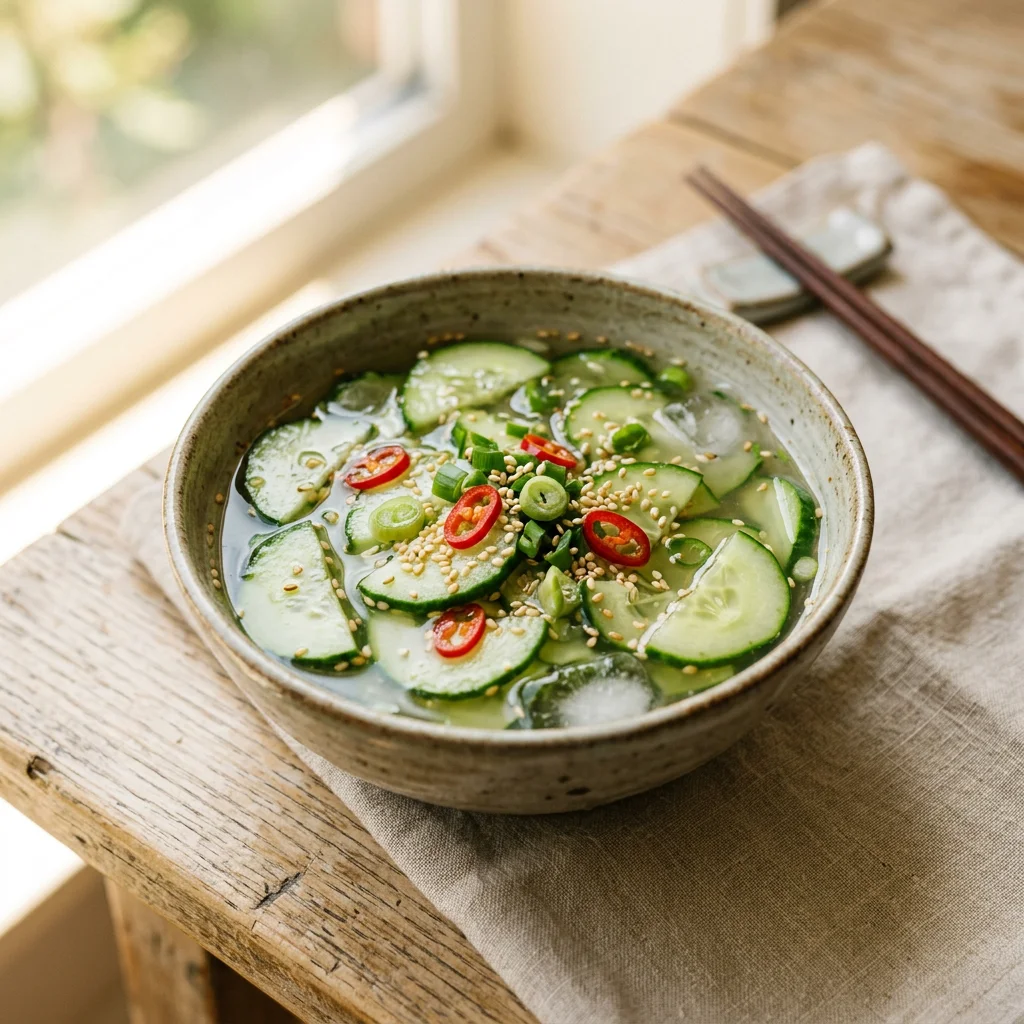
Oi naengguk is Korea's quintessential summer soup — a bracingly cold, tangy, and refreshing cucumber soup that appears on nearly every Korean table during the sweltering monsoon months. Made with thinly sliced cucumber in an ice-cold broth of rice vinegar, sesame oil, and sometimes a splash of dongchimi (radish water kimchi) brine, it is the culinary equivalent of jumping into a cool stream. The soup takes minutes to prepare and requires no cooking, making it ideal for days when standing over a hot stove feels unbearable. From an Ayurvedic standpoint, oi naengguk is one of the most effective Pitta-pacifying dishes in the Korean repertoire. Cucumber carries the sweet and astringent rasas with a strongly cooling virya — it is classified among the most Pitta-soothing vegetables in Ayurvedic dietetics. The addition of rice vinegar introduces the sour taste, which in small amounts supports digestion of the raw cucumber without overwhelming its cooling nature. The sesame oil provides a thin layer of unctuous quality that protects the stomach lining from the cold and sour elements. Korean tradition recognizes this soup as a food that "cools the blood and clears the head" — language that maps precisely onto the Ayurvedic concept of Pitta pacification. It is served alongside grilled meats, spicy stews, and other heating foods as a deliberate counterbalance, demonstrating the same intuitive understanding of thermal equilibrium that drives Ayurvedic meal planning.
Strongly pacifies Pitta. Increases Vata and Kapha due to cold, light, and raw qualities.
Ingredients
- 2 large Korean cucumber or English cucumber (halved lengthwise, thinly sliced)
- 4 cups Cold water
- 3 tbsp Rice vinegar
- 1 tbsp Soup soy sauce (guk-ganjang)
- 1 tbsp Toasted sesame oil
- 2 cloves Garlic (finely minced)
- 1 tbsp Toasted sesame seeds
- 1/2 tsp Sea salt
- 2 stalks Scallions (thinly sliced)
- 1 cup Ice cubes (for serving)
- 1/2 tsp Gochugaru (Korean red pepper flakes, optional garnish)
Instructions
- Slice cucumbers in half lengthwise, then cut into thin half-moons about 2mm thick. Place in a large bowl and sprinkle with 1/4 teaspoon of salt. Let sit for 5 minutes, then gently squeeze out excess water.
- In a separate large bowl, combine cold water, rice vinegar, soup soy sauce, sesame oil, minced garlic, and remaining salt. Stir until the salt dissolves completely.
- Add the drained cucumber slices to the broth. Stir gently to distribute.
- Refrigerate for at least 10 minutes, or until very cold. The soup improves with 30 minutes of chilling as the flavors meld.
- Just before serving, add ice cubes directly to the soup to keep it bracingly cold.
- Ladle into chilled bowls. Garnish each serving with sliced scallions, toasted sesame seeds, and a pinch of gochugaru if desired. Serve immediately.
How This Recipe Affects Each Dosha
Vata
This is a challenging soup for Vata constitutions. The cold temperature, raw cucumber, and light liquid base aggravate every Vata quality — cold, light, dry (astringent taste), and rough. The vinegar adds sour taste, which mildly supports Vata, but cannot overcome the overall Vata-increasing nature of the preparation. Vata types should treat this as an occasional condiment, not a meal.
Pitta
A superb Pitta remedy. The cold, sweet, and astringent qualities of cucumber directly counter Pitta heat. The light broth prevents heaviness while the small amount of vinegar supports digestion without generating excess heat. This is one of the best foods to reach for during a Pitta flare — hot weather, irritability, skin inflammation, or acid reflux.
Kapha
The cold temperature and watery nature increase Kapha's tendency toward sluggishness and fluid retention. Raw cucumber is one of the more Kapha-aggravating vegetables due to its high water content and cold quality. Kapha types should avoid this soup except on the hottest summer days, and even then in small quantities.
Reduces agni due to cold temperature and raw ingredients. The rice vinegar and garlic partially mitigate this effect by providing some digestive stimulation, but the overall impact is cooling and suppressive to digestive fire. Best consumed as a side dish alongside warm, cooked foods that maintain agni, rather than as a standalone meal. Never serve as the first course on an empty stomach — the cold shock can dampen agni for the entire meal.
Nourishes: Rasa (plasma), Rakta (blood)
Adjustments by Constitution
For Vata Types
If Vata types wish to enjoy this in summer heat, add extra garlic (4 cloves) and a full teaspoon of gochugaru for warming pungency. Use extra sesame oil (2 tbsp) for grounding. Reduce ice cubes and serve cool rather than ice-cold. Add a pinch of dried ginger powder to the broth.
For Pitta Types
Omit the gochugaru and reduce garlic to 1 clove. Add fresh mint leaves or thinly sliced fresh perilla leaves for additional cooling. A teaspoon of raw sugar in the broth enhances the sweet taste that Pitta craves. This version is a medicinal-grade Pitta coolant.
For Kapha Types
Add 1 tablespoon of gochugaru and extra garlic to introduce warming pungency. Replace half the water with warm vegetable broth, bringing the temperature to cool rather than ice-cold. Add thin strips of Korean radish for its lighter, more pungent quality. Reduce the serving size to a small cup alongside a warm main dish.
Seasonal Guidance
This soup belongs exclusively to summer. Its strongly cooling nature makes it inappropriate for autumn (Vata season), winter (Kapha-Vata season), and most of spring (Kapha season). During the peak of summer heat — particularly during the Korean sambok period (three hottest days) — this soup becomes almost medicinal in its ability to prevent heat exhaustion and Pitta accumulation. Even in summer, serve it alongside warm dishes rather than as a standalone meal to protect agni from excessive cold.
Best time of day: Lunch on hot summer days, served alongside warm cooked dishes to balance the cold quality
Cultural Context
Oi naengguk is part of Korea's broader tradition of cold soups (naengguk) that emerge every summer as essential survival foods. In a culture where meals center around rice and hot soup year-round, the summer cold soups represent a deliberate seasonal adaptation — Korean cuisine's way of acknowledging that what nourishes in winter can harm in summer. The soup shares conceptual DNA with cold cucumber soups found across Central Asia, the Middle East, and the Mediterranean, all of which independently arrived at the same solution to summer heat. In Korean Buddhist temple cuisine, this soup takes on a contemplative quality — the monk's version uses no garlic or alliums, relying solely on cucumber, salt, vinegar, and perilla oil for a cleaner, more austere preparation.
Chef's Notes
Korean cucumbers (oi) have thinner skin and fewer seeds than Western varieties, making them ideal for this soup. English cucumbers are the closest substitute. Avoid standard American cucumbers, which are too waxy and seedy. Salting and squeezing the cucumber slices is essential — it removes bitter juices and allows the slices to absorb the cold broth. For a more complex version, add thin strips of dried seaweed (miyeok) that have been soaked and cut, or a tablespoon of dongchimi (white radish kimchi) brine if available. This soup should be served ice-cold and consumed promptly — it does not hold well, as the cucumber releases water over time and dilutes the broth.
Frequently Asked Questions
Is Oi Naengguk (Chilled Cucumber Soup) good for my dosha?
Strongly pacifies Pitta. Increases Vata and Kapha due to cold, light, and raw qualities. This is a challenging soup for Vata constitutions. A superb Pitta remedy. The cold temperature and watery nature increase Kapha's tendency toward sluggishness and fluid retention.
When is the best time to eat Oi Naengguk (Chilled Cucumber Soup)?
Lunch on hot summer days, served alongside warm cooked dishes to balance the cold quality This soup belongs exclusively to summer. Its strongly cooling nature makes it inappropriate for autumn (Vata season), winter (Kapha-Vata season), and most of spring (Kapha season). During the peak of
How can I adjust Oi Naengguk (Chilled Cucumber Soup) for my constitution?
For Vata types: If Vata types wish to enjoy this in summer heat, add extra garlic (4 cloves) and a full teaspoon of gochugaru for warming pungency. Use extra sesame o For Pitta types: Omit the gochugaru and reduce garlic to 1 clove. Add fresh mint leaves or thinly sliced fresh perilla leaves for additional cooling. A teaspoon of raw
What are the Ayurvedic properties of Oi Naengguk (Chilled Cucumber Soup)?
Oi Naengguk (Chilled Cucumber Soup) has Sweet, Sour, Astringent, Pungent taste (rasa), Cooling energy (virya), and Sweet post-digestive effect (vipaka). Its qualities (gunas) are Light, Cold, Liquid, Moist. It nourishes Rasa (plasma), Rakta (blood). Reduces agni due to cold temperature and raw ingredients. The rice vinegar and garlic partially mitigate this effect by providing some digestive stimulation, but the overall impact is cooling and suppressive to digestive fire. Best consumed as a side dish alongside warm, cooked foods that maintain agni, rather than as a standalone meal. Never serve as the first course on an empty stomach — the cold shock can dampen agni for the entire meal.
What should you eat today?
This recipe has specific effects on each dosha, and the right meal depends on more than general guidelines. Your constitution, the current season, your birth chart's active planetary period, what you ate yesterday, how you slept — it all matters.
With Personal Alignment, you get daily food and meal guidance tailored to:
- Your prakriti and current vikriti
- Your Vedic birth chart and active planetary cycles
- The season, weather, and time of day
- Your food preferences, allergies, and restrictions
- Your feedback — it learns what works for your body and adapts
Not a generic diet plan. A living system that gets smarter about you every day.