Panzanella
Italian Recipe
Overview
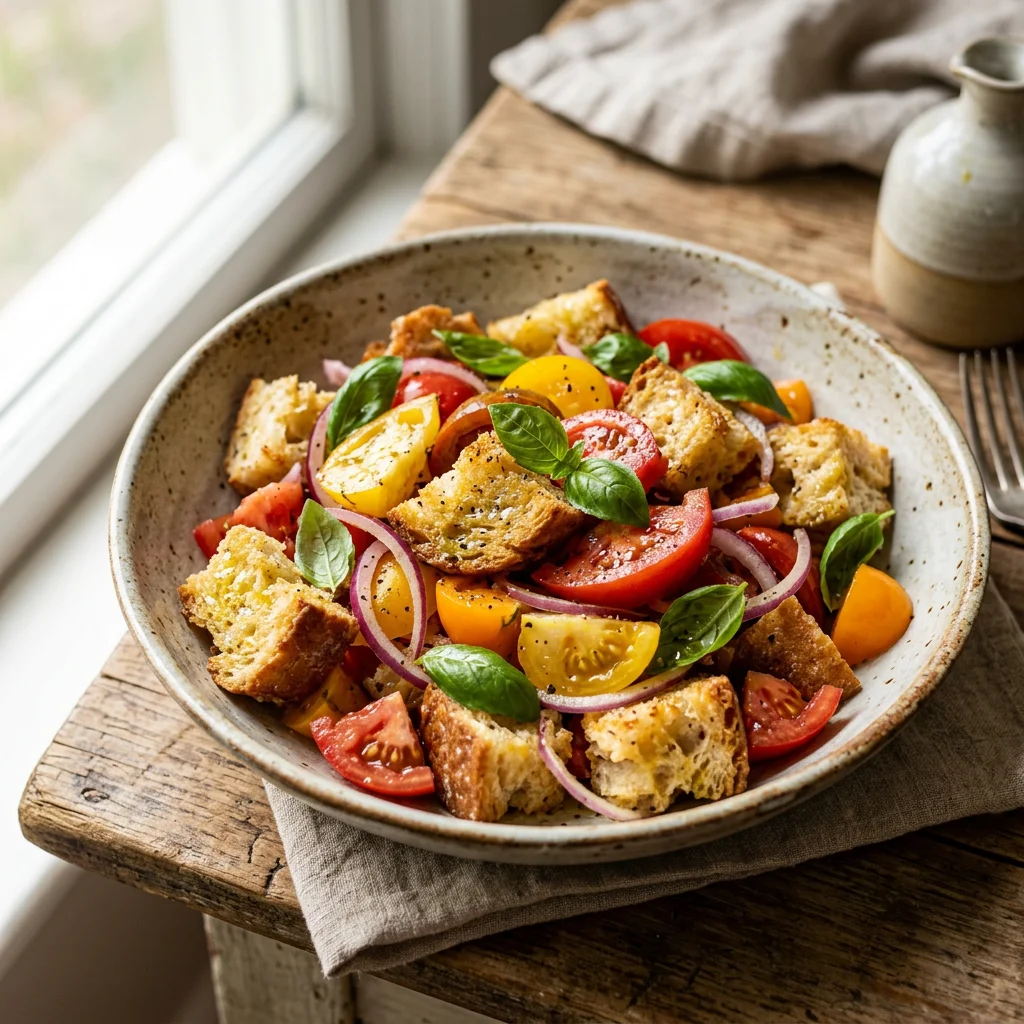
Panzanella is Tuscany's great summer salad — stale bread soaked briefly in water and squeezed dry, then tossed with ripe tomatoes, red onion, cucumber, basil, and a sharp red wine vinegar dressing. It is the warm-weather counterpart to ribollita: where ribollita uses bread to create winter warmth, panzanella uses it to create summer refreshment. Both are expressions of the same Tuscan thrift — the refusal to waste bread — applied to opposite seasons. The secret to proper panzanella is the quality and treatment of the bread. Pane toscano, the dense, unsalted Tuscan bread, is ideal because it absorbs liquid without dissolving into mush. It must be truly stale — at least two days old — so it has enough structure to soak up the tomato juices and vinaigrette without falling apart. After soaking and squeezing, the bread should be moist but still hold its shape, creating a texture somewhere between crouton and sponge that is unique to this dish. From an Ayurvedic perspective, panzanella is one of the lighter, more cooling Italian dishes. The raw vegetables, vinegar, and moderate olive oil create a preparation that is more Pitta-season appropriate than the heavy cooked dishes that dominate Italian cuisine. The sour rasa from vinegar and tomato stimulates appetite and supports liver function, though the raw nature requires adequate agni.
Best for Pitta in summer when cooling foods are welcome. Can aggravate Vata due to cold, raw nature. Acceptable for Kapha due to lightness, though the bread adds some heaviness.
Ingredients
- 300 g Stale crusty bread (two days old, torn into rough pieces)
- 4 large Ripe tomatoes (cut into irregular chunks)
- 1 medium Cucumber (peeled, seeded, and sliced)
- 1 small Red onion (thinly sliced and soaked in cold water for 10 min)
- 1 large bunch Fresh basil (leaves torn)
- 1/4 cup Extra-virgin olive oil
- 2 tbsp Red wine vinegar
- 1 clove Garlic (minced or rubbed on bread)
- 1 tbsp Capers (rinsed, optional)
- 1 tsp Salt (or to taste)
- 1/4 tsp Black pepper
Instructions
- Tear the stale bread into rough bite-sized pieces. Place in a bowl and sprinkle with enough cold water to moisten — about 1/2 cup. Let sit for 2 minutes, then squeeze out the excess water firmly with your hands. The bread should be moist but not soggy.
- Cut the tomatoes into rough chunks over a bowl to catch their juices. Salt the tomatoes lightly and let them sit for 5 minutes to draw out more liquid.
- Drain the soaked red onion slices and pat dry. This step removes the harsh raw bite while keeping the crisp texture.
- In a large bowl, combine the squeezed bread, tomatoes and their juices, cucumber, red onion, capers if using, and most of the torn basil leaves.
- Whisk together the olive oil, red wine vinegar, minced garlic, salt, and pepper. Pour over the salad and toss thoroughly, making sure the bread absorbs the dressing and tomato juices.
- Let the panzanella sit at room temperature for 15-30 minutes before serving. This resting time is essential — it allows the bread to absorb the flavors. Taste and adjust salt and vinegar. Top with remaining basil leaves and an extra drizzle of olive oil.
How This Recipe Affects Each Dosha
Vata
Panzanella is challenging for Vata. The entirely raw, cold nature goes against everything Vata needs — warmth, cooked food, and grounding heaviness. The vinegar adds more lightness and mobility. Vata types should eat this only in small amounts during the hottest days of summer, when even Vata benefits from some cooling, and always alongside something warm.
Pitta
This is one of the more Pitta-appropriate Italian dishes. The cooling cucumber, the raw preparation, and the light quality all suit Pitta's needs in summer. The vinegar and tomato add some sour heat, but in the context of a cool, mostly raw dish, they serve to stimulate appetite without excess aggravation. Pitta types can enjoy panzanella freely during tomato season.
Kapha
The lightness and rawness of panzanella are better for Kapha than most Italian dishes, though the soaked bread adds some damp heaviness. The vinegar and pungent onion help cut through Kapha's tendency toward sluggishness. Acceptable for Kapha in warmer months with modifications.
The vinegar and garlic mildly stimulate agni, which helps offset the raw nature of the dish. However, entirely raw meals require existing digestive strength. The resting period allows some enzymatic breakdown that aids digestion.
Nourishes: Rasa (plasma), Rakta (blood)
Adjustments by Constitution
For Vata Types
Toast the bread lightly rather than soaking it raw. Add roasted bell peppers or sun-dried tomatoes for warmth. Increase the olive oil. Add pine nuts for nourishing fat. Eat at room temperature, never cold from the refrigerator.
For Pitta Types
Increase the cucumber and add fresh mint alongside basil. Reduce the vinegar slightly and use a sweeter variety. Choose the sweetest, least acidic tomatoes available. Add cubed fresh mozzarella for cooling, sweet protein.
For Kapha Types
Reduce the bread by half or replace with toasted chickpeas for crunch without the damp heaviness. Add arugula and radicchio for their bitter, drying qualities. Use extra vinegar and black pepper. Go light on the olive oil.
Seasonal Guidance
Panzanella is exclusively a summer dish — it depends on peak-season tomatoes for both flavor and energetic appropriateness. In Tuscany, it appears on tables from July through September and then vanishes until the following year. Making it in winter with mealy, out-of-season tomatoes defeats both the purpose and the pleasure. The cooling, light qualities are perfectly suited to Pitta season when the body naturally craves raw, refreshing food and the strong summer sun provides enough agni to handle uncooked meals.
Best time of day: Lunch, when summer sun is warm and agni is at its daily peak
Cultural Context
Panzanella belongs to the Tuscan tradition of bread salads that stretches back to at least the fourteenth century, when the poet Boccaccio described a similar preparation. In the era before refrigeration, stale bread was a constant presence in every kitchen, and Tuscan cooks developed dozens of ways to use it — ribollita, pappa al pomodoro, and panzanella chief among them. The unsalted Tuscan bread (a quirk dating to a medieval salt tax) is particularly suited to these preparations because it absorbs flavors like a sponge without contributing its own saltiness. In modern Tuscany, panzanella is the lunch that vineyard workers eat in the shade during the August harvest, passed around in a single large bowl with a bottle of the property's own wine.
Chef's Notes
Panzanella must rest before serving — 15 minutes minimum, 30 is better. This is when the bread absorbs the tomato juices and vinaigrette, transforming from a tossed salad into something cohesive. Do not use fresh bread; it will turn to paste. Do not use pre-made croutons; they are too dry and hard. The bread needs to be just stale enough to hold its shape after soaking. Some versions include anchovy or canned tuna — both are traditional in parts of Tuscany. Soaking the red onion in cold water is essential; raw onion that has not been soaked will overpower everything else.
Frequently Asked Questions
Is Panzanella good for my dosha?
Best for Pitta in summer when cooling foods are welcome. Can aggravate Vata due to cold, raw nature. Acceptable for Kapha due to lightness, though the bread adds some heaviness. Panzanella is challenging for Vata. This is one of the more Pitta-appropriate Italian dishes. The lightness and rawness of panzanella are better for Kapha than most Italian dishes, though the soaked bread adds some damp heaviness.
When is the best time to eat Panzanella?
Lunch, when summer sun is warm and agni is at its daily peak Panzanella is exclusively a summer dish — it depends on peak-season tomatoes for both flavor and energetic appropriateness. In Tuscany, it appears on tables from July through September and then vanish
How can I adjust Panzanella for my constitution?
For Vata types: Toast the bread lightly rather than soaking it raw. Add roasted bell peppers or sun-dried tomatoes for warmth. Increase the olive oil. Add pine nuts f For Pitta types: Increase the cucumber and add fresh mint alongside basil. Reduce the vinegar slightly and use a sweeter variety. Choose the sweetest, least acidic tom
What are the Ayurvedic properties of Panzanella?
Panzanella has Sour, Sweet, Pungent, Astringent taste (rasa), Cooling energy (virya), and Sour post-digestive effect (vipaka). Its qualities (gunas) are Light, Cool, Moist, Slightly Oily. It nourishes Rasa (plasma), Rakta (blood). The vinegar and garlic mildly stimulate agni, which helps offset the raw nature of the dish. However, entirely raw meals require existing digestive strength. The resting period allows some enzymatic breakdown that aids digestion.
What should you eat today?
This recipe has specific effects on each dosha, and the right meal depends on more than general guidelines. Your constitution, the current season, your birth chart's active planetary period, what you ate yesterday, how you slept — it all matters.
With Personal Alignment, you get daily food and meal guidance tailored to:
- Your prakriti and current vikriti
- Your Vedic birth chart and active planetary cycles
- The season, weather, and time of day
- Your food preferences, allergies, and restrictions
- Your feedback — it learns what works for your body and adapts
Not a generic diet plan. A living system that gets smarter about you every day.