Pasta e Fagioli
Italian Recipe
Overview
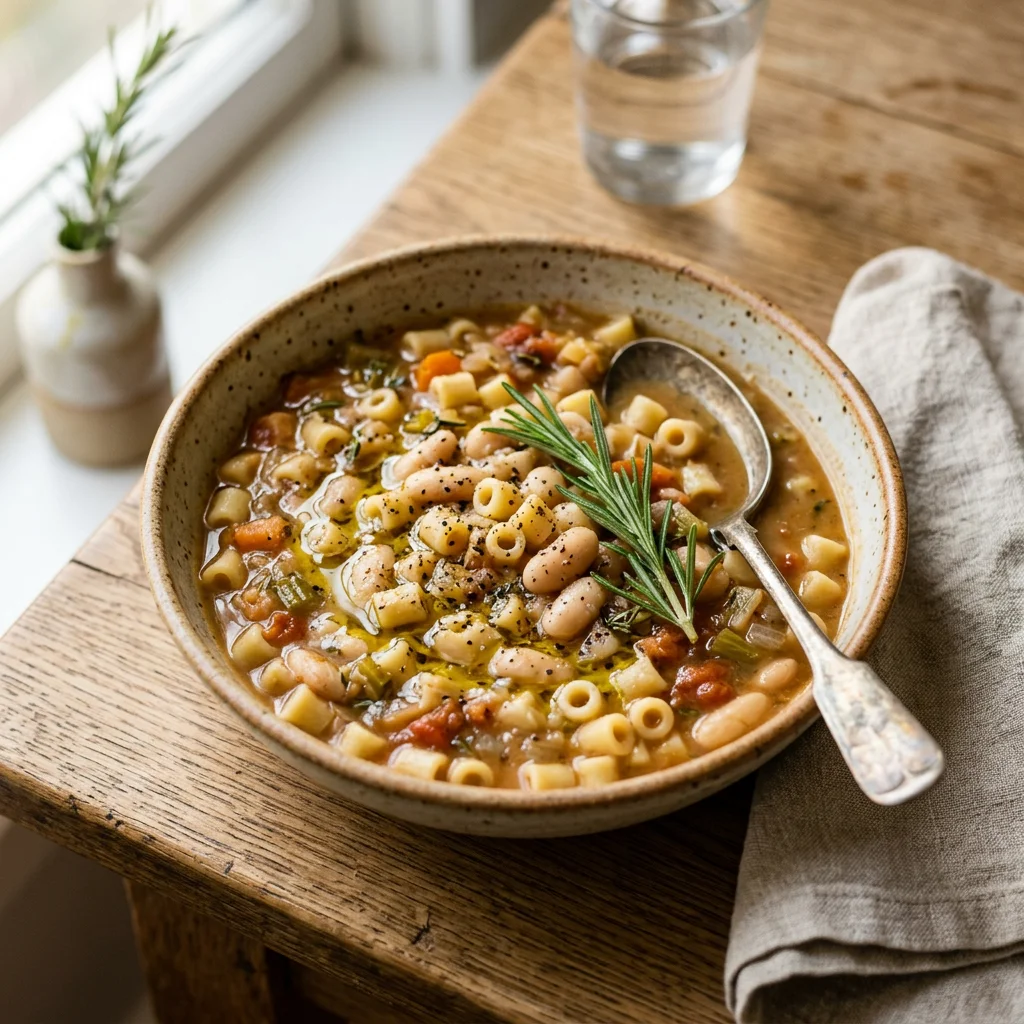
Pasta e fagioli — literally "pasta and beans" — is the dish that fed Italy through centuries of poverty and still anchors the table in homes from Campania to the Veneto. It occupies the space between soup and stew, thick with starchy bean broth and small pasta shapes that absorb the savory liquid until the whole thing becomes almost spoonable. It is the original complete protein meal of the Mediterranean: the amino acids in the beans complementing those in the wheat pasta to form a nutritional whole that sustained generations of laborers, farmers, and fishermen. The key to genuine pasta e fagioli is patience with the beans. Dried borlotti (cranberry beans) or cannellini are simmered slowly, often with aromatics and a prosciutto bone or pancetta rind, until their starch leaches into the cooking liquid to create a naturally creamy broth. Half the beans are then pureed back into this liquid, creating the thick, velvety base that distinguishes pasta e fagioli from ordinary bean soup. The pasta is cooked directly in this broth, absorbing flavor and contributing its own starch to the body of the dish. From an Ayurvedic standpoint, this is a warming, building, heavy dish. The combination of grain and legume mirrors the dal-rice principle of Ayurvedic cooking — complete protein from two incomplete sources. The long cooking of beans reduces their vata-aggravating tendency, and the olive oil provides the lipid vehicle for nutrient absorption.
Strongly pacifies Vata with its warm, heavy, oily qualities. May increase Kapha due to density of starch and beans. Mildly heating for Pitta from tomato and garlic.
Ingredients
- 2 cups Cannellini or borlotti beans (cooked, or two 15-oz cans drained)
- 1 cup Small pasta (ditalini, tubettini, or broken spaghetti)
- 3 tbsp Extra-virgin olive oil (plus more for finishing)
- 1 medium Onion (finely diced)
- 1 medium Carrot (finely diced)
- 1 stalk Celery (finely diced)
- 3 cloves Garlic (minced)
- 1 sprig Fresh rosemary
- 1/2 14-oz can Canned whole tomatoes (crushed by hand)
- 4 cups Vegetable or chicken broth
- 1/4 tsp Red pepper flakes (optional)
- 1/2 cup Parmigiano-Reggiano (grated, for serving)
- 1 tsp Salt (or to taste)
- 1/2 tsp Black pepper (freshly ground)
Instructions
- Heat the olive oil in a large heavy pot over medium heat. Add the onion, carrot, and celery and cook gently for 8-10 minutes until soft and fragrant. Add the garlic, rosemary sprig, and red pepper flakes and cook for 1 minute.
- Take one cup of the beans and mash them with a fork or blend briefly to form a rough paste. This will thicken the soup naturally.
- Add the crushed tomatoes to the pot and cook for 3-4 minutes, stirring occasionally, until the tomato concentrates slightly.
- Add the mashed bean paste, the whole beans, and the broth. Bring to a simmer and cook uncovered for 20 minutes to develop flavor and allow the broth to thicken from the bean starch.
- Add the pasta directly to the pot and cook according to package time, usually 8-10 minutes. The pasta will absorb liquid and thicken the dish considerably — add a splash of hot water if it becomes too dense.
- Remove the rosemary sprig. Season with salt and generous black pepper. The consistency should be thick — a spoon should almost stand up in it, but it should still be moist.
- Ladle into bowls, drizzle with raw olive oil, and pass grated Parmigiano at the table. Like ribollita, this dish improves overnight.
How This Recipe Affects Each Dosha
Vata
The warm, heavy, starchy nature of pasta e fagioli is deeply grounding for Vata. The beans, thoroughly cooked and partially pureed, provide complete protein without the gas that undercooked legumes cause. The olive oil lubricates dry Vata tissues, and the carbohydrate density provides sustained, stable energy rather than the spikes that unsettle Vata.
Pitta
The garlic, tomato, and red pepper flakes introduce heat that Pitta types should moderate. However, the sweet beans and pasta form a substantial base that buffers the heating elements. Pitta types can enjoy this comfortably in cooler weather with the adjustments noted below.
Kapha
This is a heavy, dense, starchy meal that can readily increase Kapha. The double starch of pasta and beans, the olive oil, and the cheese all contribute to heaviness and congestion. Kapha constitutions should approach this as an occasional indulgence rather than a staple.
The garlic and rosemary support agni, but the overall heaviness of the dish requires strong digestive fire to process fully. Best eaten at midday and in moderate portions. The thorough cooking of beans reduces their tendency to produce ama.
Nourishes: Rasa (plasma), Rakta (blood), Mamsa (muscle), Meda (fat)
Adjustments by Constitution
For Vata Types
Use the full olive oil amount and add more for finishing. Include a sage leaf in the soffritto for additional warmth and digestive support. Ensure the beans are very well cooked. Serve piping hot with a generous grating of Parmigiano.
For Pitta Types
Omit the red pepper flakes and reduce garlic to one clove. Reduce tomato to a couple tablespoons or omit, adding a squeeze of lemon at the end instead. Stir in fresh basil leaves just before serving. Use a milder cheese like fresh pecorino.
For Kapha Types
Reduce pasta by half and increase the bean-to-pasta ratio. Use only 1 tablespoon of olive oil and skip the finishing drizzle. Add generous black pepper and a bay leaf. Skip the cheese or use only a small amount. Include bitter greens like escarole stirred in at the end.
Seasonal Guidance
Pasta e fagioli is cold-weather food — heavy, warming, and sustaining. In autumn, the new season's dried beans are at their best and cook faster than older stock. In winter, the density provides the caloric and energetic substance needed for cold months. Inappropriate for summer when lighter foods are called for. In spring, transition to lighter bean soups with more greens.
Best time of day: Lunch, when agni is strongest and can handle the dense starch-and-protein combination
Cultural Context
Pasta e fagioli is the dish that Italian immigrants carried to every corner of the world — it became "pasta fazool" in Italian-American dialect, the centerpiece of Monday meals in New Jersey and Brooklyn. In Italy itself, the dish predates the arrival of New World beans; early versions used chickpeas or fava beans with Roman grains. When New World beans arrived in the sixteenth century, they transformed the dish into the version known today. In Campania, pasta e fagioli is considered a complete meal — you need nothing alongside it. The Neapolitan version, made with mixed pasta shapes (pasta mista), is particularly iconic: every broken piece of leftover pasta from the kitchen goes into the pot.
Chef's Notes
The thickness of pasta e fagioli is a matter of regional preference — Naples makes it thick enough to eat with a fork, while the Veneto keeps it soupier. Adjust by controlling how much pasta you add and how long you simmer. If using dried beans, soak overnight and cook with aromatics (bay leaf, garlic, rosemary) for about 90 minutes before proceeding with the recipe. The cooking liquid from dried beans is liquid gold — never discard it. For a more complex dish, saute a small piece of pancetta with the soffritto. Cook the pasta separately if making ahead, as it will absorb all the liquid overnight.
Frequently Asked Questions
Is Pasta e Fagioli good for my dosha?
Strongly pacifies Vata with its warm, heavy, oily qualities. May increase Kapha due to density of starch and beans. Mildly heating for Pitta from tomato and garlic. The warm, heavy, starchy nature of pasta e fagioli is deeply grounding for Vata. The garlic, tomato, and red pepper flakes introduce heat that Pitta types should moderate. This is a heavy, dense, starchy meal that can readily increase Kapha.
When is the best time to eat Pasta e Fagioli?
Lunch, when agni is strongest and can handle the dense starch-and-protein combination Pasta e fagioli is cold-weather food — heavy, warming, and sustaining. In autumn, the new season's dried beans are at their best and cook faster than older stock. In winter, the density provides the c
How can I adjust Pasta e Fagioli for my constitution?
For Vata types: Use the full olive oil amount and add more for finishing. Include a sage leaf in the soffritto for additional warmth and digestive support. Ensure the For Pitta types: Omit the red pepper flakes and reduce garlic to one clove. Reduce tomato to a couple tablespoons or omit, adding a squeeze of lemon at the end instead
What are the Ayurvedic properties of Pasta e Fagioli?
Pasta e Fagioli has Sweet, Astringent, Pungent taste (rasa), Heating energy (virya), and Sweet post-digestive effect (vipaka). Its qualities (gunas) are Heavy, Warm, Oily, Dense. It nourishes Rasa (plasma), Rakta (blood), Mamsa (muscle), Meda (fat). The garlic and rosemary support agni, but the overall heaviness of the dish requires strong digestive fire to process fully. Best eaten at midday and in moderate portions. The thorough cooking of beans reduces their tendency to produce ama.
What should you eat today?
This recipe has specific effects on each dosha, and the right meal depends on more than general guidelines. Your constitution, the current season, your birth chart's active planetary period, what you ate yesterday, how you slept — it all matters.
With Personal Alignment, you get daily food and meal guidance tailored to:
- Your prakriti and current vikriti
- Your Vedic birth chart and active planetary cycles
- The season, weather, and time of day
- Your food preferences, allergies, and restrictions
- Your feedback — it learns what works for your body and adapts
Not a generic diet plan. A living system that gets smarter about you every day.