Peanut Butter and Jelly Sandwich
American Recipe
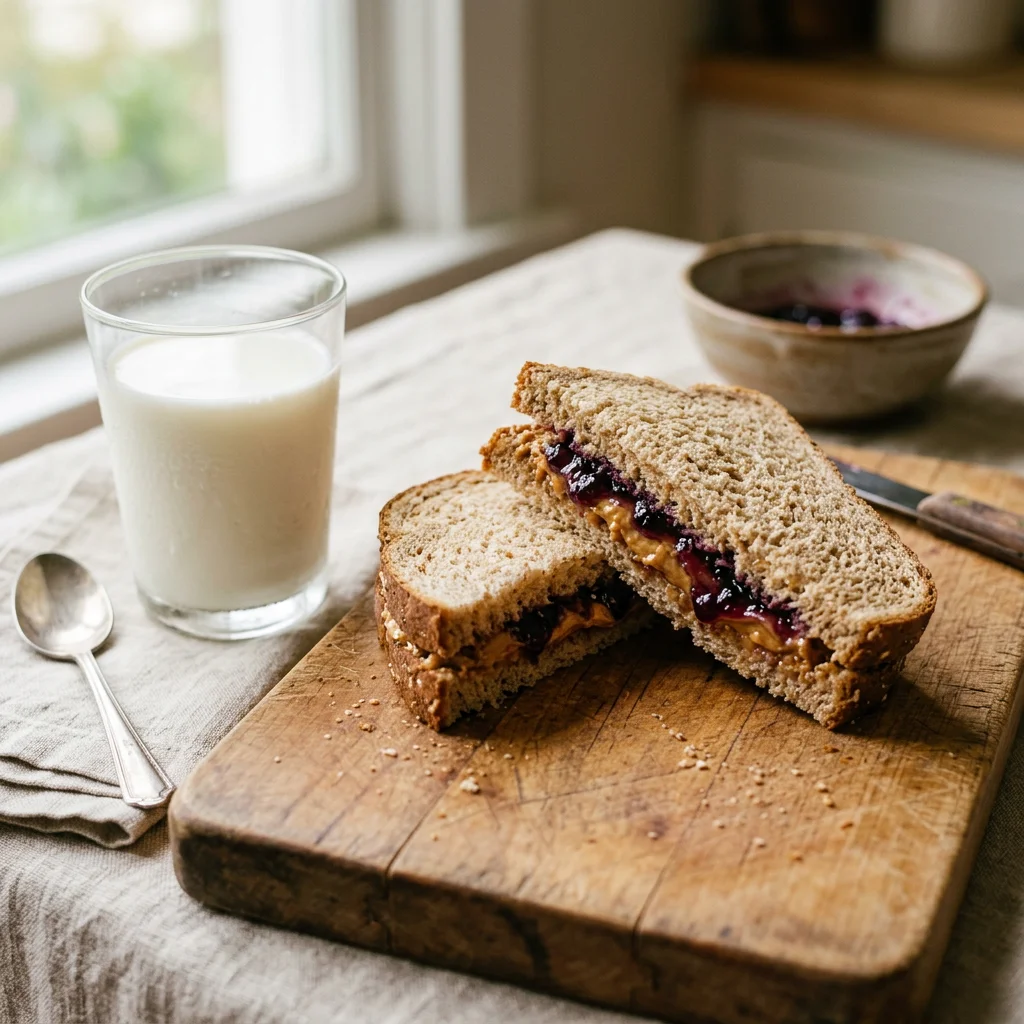
Overview
The peanut butter and jelly sandwich is the most consumed sandwich in America — the average American will eat roughly 2,500 of them before graduating high school. And from an Ayurvedic perspective, it is a fascinating collision of qualities that explains both its universal appeal and its common side effects. Peanut butter is heavy, oily, sweet, and warming. Jelly is sweet, wet, and cooling. Bread is heavy, dry, and sweet. Together, you have an overwhelmingly sweet-dominant food that is simultaneously heavy and moderately oily — in other words, a Kapha bomb wrapped in familiarity. But here is what makes the PB&J genuinely interesting through an Ayurvedic lens: peanuts are one of the few foods that are simultaneously heavy AND heating. Most heavy foods (dairy, grains, root vegetables) are cooling. Peanuts break this pattern — they are heavy, oily, and warming, which means they build tissue while also generating internal heat. This is why peanut butter can cause breakouts, acid reflux, or a slightly flushed feeling in Pitta-prone individuals, even though it seems like a mild, innocuous food. The jelly compounds the issue by adding concentrated sugar (more sweet rasa, more Kapha), while the bread adds density without offering any balancing tastes. The reason children love PB&J and the reason adults crave it during stress are the same: it is calorically dense, requires zero cooking, and floods the system with sweet taste — the most grounding, comforting, and Vata-pacifying of the six rasas. It is a survival food dressed up as a snack, and its Ayurvedic profile reflects exactly that: maximum building energy, minimum digestive demand on taste and effort (though not on agni itself).
Strongly pacifies Vata with heavy, oily, sweet qualities. Increases Kapha substantially. May aggravate Pitta due to the heating nature of peanuts.
Ingredients
- 2 slices Bread (white or whole wheat)
- 2 tbsp Peanut butter (creamy or crunchy)
- 1.5 tbsp Grape jelly or strawberry jam
Instructions
- Lay both slices of bread on a clean surface. Spread the peanut butter evenly on one slice, going all the way to the edges so every bite has coverage.
- Spread the jelly on the other slice. If using a runny jam, go slightly lighter to avoid sogginess — you want flavor in every bite, not a dripping mess.
- Press the two slices together gently. If packing for later, put the peanut butter side against the jelly side — the oil in the peanut butter creates a moisture barrier that prevents the bread from getting soggy.
- Cut diagonally for triangles or straight down the middle for rectangles. This is a matter of deep personal conviction and not to be taken lightly.
- Serve immediately, or wrap tightly in wax paper or plastic wrap for a packed lunch. PB&J is one of the few sandwiches that actually improves slightly as it sits — the bread absorbs a bit of the peanut oil and softens into the filling.
How This Recipe Affects Each Dosha
Vata
The heavy, oily, sweet combination is exactly what scattered Vata needs to come back to earth. Peanut butter provides sustained energy through its fat and protein content, while the sweet taste of all three components calms Vata's anxiety and restlessness. The sticky quality of peanut butter is grounding in the most physical sense — it slows everything down, including the racing Vata mind. This is why PB&J is such effective comfort food for anxious eaters.
Pitta
Peanuts are heating, and this is where most people are surprised. Pitta types who eat peanut butter regularly may notice increased skin inflammation, mild acid reflux, or a warm, slightly irritable feeling after eating. The concentrated sugar in jelly adds fuel to Pitta's fire. In moderate amounts, the sweet taste keeps Pitta somewhat in check, but daily PB&J consumption will slowly push Pitta upward. The salt in peanut butter adds another heating element.
Kapha
This is heavily Kapha-increasing across every dimension. The combination of sticky, heavy, sweet, and oily qualities will aggravate Kapha within an hour — expect increased congestion, a heavy feeling in the chest, sluggish thinking, and the desire to lie down. Kapha types who eat PB&J as a regular lunch will struggle with weight, water retention, and afternoon brain fog. The bread compounds everything by adding even more heaviness without any balancing lightness or pungency.
Challenges agni significantly despite the simple appearance. Peanut butter is one of the hardest foods for the body to digest — its thick, oily, sticky nature requires robust digestive fire. When combined with sugar from jelly and starch from bread, the result taxes digestion heavily. People with weak agni will notice the sandwich sitting in their stomach for hours. This is why PB&J often causes afternoon sleepiness in children and adults alike — the body diverts energy to digestion.
Nourishes: Rasa (plasma), Mamsa (muscle), Meda (fat)
Adjustments by Constitution
For Vata Types
Already good for Vata. Use toasted bread for a slightly lighter texture and added warmth. Choose a jelly with less sugar and add a drizzle of honey instead — honey is the one sweetener that does not aggravate Kapha significantly. A sprinkle of cinnamon on the peanut butter adds warmth and digestive support.
For Pitta Types
Replace peanut butter with almond butter or sunflower seed butter, both of which are cooling. Use a fruit spread made with blueberries or cherries (cooling fruits) instead of grape or strawberry. Choose whole wheat bread over white for a slower sugar release. Keep portions small and avoid eating daily.
For Kapha Types
Use a thin smear of peanut butter rather than a thick layer — just enough for flavor. Replace jelly with thin slices of fresh apple for astringent, light sweetness. Use toasted whole grain or sprouted bread, which is lighter and drier than soft white bread. Better yet, try almond butter on rice cakes with a drizzle of raw honey for a version that satisfies the craving without the Kapha overload.
Seasonal Guidance
Most appropriate during cold months when agni is naturally stronger and the body welcomes building, heavy foods. In autumn, the grounding quality helps counter Vata season's tendency toward instability. In winter, the caloric density provides warmth and sustained energy. In spring and summer, this sandwich becomes progressively more Kapha-aggravating as temperatures rise and agni weakens. Summer PB&J is especially problematic — the body does not want dense, sticky food when it is already warm.
Best time of day: Lunch, when agni is at its daily peak. A PB&J eaten for dinner or as a late-night snack will tax digestion significantly and contribute to morning sluggishness, congestion, and weight gain.
Cultural Context
The peanut butter and jelly sandwich entered American culture in the early 1900s, but it became a national institution during World War II when GIs were issued peanut butter and jelly in their rations. The combination of shelf-stable protein, caloric density, and no-cook preparation made it a military staple, and soldiers brought the habit home. By the 1950s, PB&J was the default school lunch — cheap, filling, and beloved by children who instinctively gravitated toward its overwhelming sweetness. Today, Americans consume over $800 million worth of peanut butter annually, and the PB&J remains the quintessential classless American food — eaten by billionaires and minimum-wage workers alike, provoking fierce loyalty about creamy vs. crunchy, grape vs. strawberry, crusts on vs. crusts off.
Chef's Notes
The bread matters more than people think. A soft white sandwich bread is traditional and gives the most nostalgic result. Whole wheat adds a slight nuttiness that complements the peanut butter. Avoid sourdough or crusty breads — they fight the fillings instead of cradling them. For the best peanut butter experience, use a natural brand with just peanuts and salt — the hydrogenated oils in conventional brands add unnecessary heaviness. If the jelly is very sweet, balance it with a peanut butter that has no added sugar. And the best-kept PB&J secret: a thin layer of honey between the peanut butter and jelly transforms the sandwich.
Frequently Asked Questions
Is Peanut Butter and Jelly Sandwich good for my dosha?
Strongly pacifies Vata with heavy, oily, sweet qualities. Increases Kapha substantially. May aggravate Pitta due to the heating nature of peanuts. The heavy, oily, sweet combination is exactly what scattered Vata needs to come back to earth. Peanuts are heating, and this is where most people are surprised. This is heavily Kapha-increasing across every dimension.
When is the best time to eat Peanut Butter and Jelly Sandwich?
Lunch, when agni is at its daily peak. A PB&J eaten for dinner or as a late-night snack will tax digestion significantly and contribute to morning sluggishness, congestion, and weight gain. Most appropriate during cold months when agni is naturally stronger and the body welcomes building, heavy foods. In autumn, the grounding quality helps counter Vata season's tendency toward instabilit
How can I adjust Peanut Butter and Jelly Sandwich for my constitution?
For Vata types: Already good for Vata. Use toasted bread for a slightly lighter texture and added warmth. Choose a jelly with less sugar and add a drizzle of honey in For Pitta types: Replace peanut butter with almond butter or sunflower seed butter, both of which are cooling. Use a fruit spread made with blueberries or cherries (co
What are the Ayurvedic properties of Peanut Butter and Jelly Sandwich?
Peanut Butter and Jelly Sandwich has Sweet, Salty taste (rasa), Heating energy (virya), and Sweet post-digestive effect (vipaka). Its qualities (gunas) are Heavy, Oily, Dense, Sticky. It nourishes Rasa (plasma), Mamsa (muscle), Meda (fat). Challenges agni significantly despite the simple appearance. Peanut butter is one of the hardest foods for the body to digest — its thick, oily, sticky nature requires robust digestive fire. When combined with sugar from jelly and starch from bread, the result taxes digestion heavily. People with weak agni will notice the sandwich sitting in their stomach for hours. This is why PB&J often causes afternoon sleepiness in children and adults alike — the body diverts energy to digestion.
What should you eat today?
This recipe has specific effects on each dosha, and the right meal depends on more than general guidelines. Your constitution, the current season, your birth chart's active planetary period, what you ate yesterday, how you slept — it all matters.
With Personal Alignment, you get daily food and meal guidance tailored to:
- Your prakriti and current vikriti
- Your Vedic birth chart and active planetary cycles
- The season, weather, and time of day
- Your food preferences, allergies, and restrictions
- Your feedback — it learns what works for your body and adapts
Not a generic diet plan. A living system that gets smarter about you every day.