Polenta with Roasted Vegetables
Italian Recipe
Overview
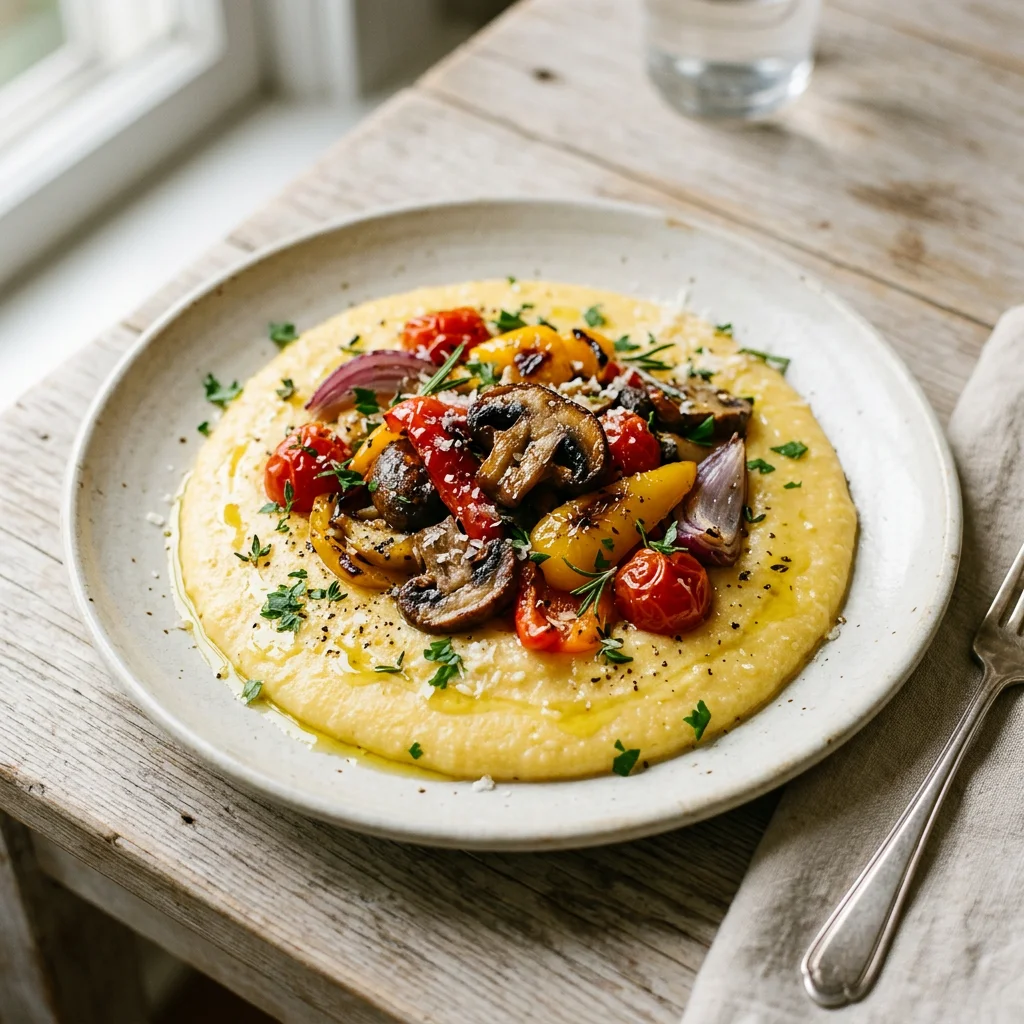
Polenta — coarsely ground cornmeal stirred slowly with water or broth until it swells into a thick, creamy porridge — is the ancestral staple of Northern Italy, predating even pasta in the diets of the Veneto, Friuli, and Lombardy. Before corn arrived from the Americas in the sixteenth century, polenta was made from spelt, buckwheat, or chestnut flour; corn simply became the dominant grain because it grew so well in the Po Valley. Served soft and creamy beneath a mound of roasted seasonal vegetables, it becomes a complete, warming, deeply grounding meal. The roasted vegetables — bell peppers, zucchini, eggplant, onions, mushrooms, whatever the season offers — provide contrast in texture and flavor to the smooth, subtle polenta. High-heat roasting caramelizes the natural sugars and concentrates the flavors, producing vegetables with charred edges and tender interiors that stand up to the mild sweetness of the corn. A finishing drizzle of olive oil and a scattering of fresh herbs ties everything together. From an Ayurvedic perspective, polenta is one of the most grounding grain preparations in Western cooking. Cornmeal is sweet, heavy, and warming — it builds tissue, calms Vata, and provides sustained energy. The roasted vegetables add variety of rasa and lighter qualities that prevent the dish from becoming overly dense. This is food that connects you to the earth, which is precisely what Italian mountain culture needed through long winters.
Strongly pacifies Vata with its warm, heavy, oily, grounding qualities. May increase Kapha due to heaviness and density. Generally neutral for Pitta with vegetable modifications.
Ingredients
- 1 cup Coarse polenta (cornmeal) (not instant)
- 4 cups Water or vegetable broth
- 4 tbsp Extra-virgin olive oil (divided)
- 1 large Zucchini (cut into thick half-moons)
- 1 large Bell pepper (cut into wide strips)
- 200 g Mushrooms (quartered)
- 1 medium Red onion (cut into wedges)
- 1 cup Cherry tomatoes (halved)
- 4 cloves Garlic (unpeeled, for roasting)
- 2 sprigs Fresh rosemary
- 1/3 cup Parmigiano-Reggiano (grated)
- 1 tbsp Unsalted butter
- 1.5 tsp Salt (divided)
- 1/2 tsp Black pepper
Instructions
- Preheat the oven to 220C (425F). Toss the zucchini, bell pepper, mushrooms, red onion, cherry tomatoes, and whole garlic cloves on a large sheet pan with 2 tablespoons of olive oil, the rosemary sprigs, salt, and pepper. Spread in a single layer.
- Roast for 35-40 minutes, turning once halfway through, until the vegetables are deeply caramelized at the edges and tender throughout. Squeeze the roasted garlic from its skin and mash it into the vegetables.
- While the vegetables roast, bring 4 cups of water or broth to a boil in a heavy-bottomed pot. Add 1 teaspoon of salt.
- Pour the polenta in a slow, steady stream into the boiling liquid while whisking constantly to prevent lumps. Reduce heat to low.
- Cook the polenta, stirring frequently with a wooden spoon, for 30-40 minutes. It will bubble and spit — a splatter guard helps. The polenta is done when it pulls away from the sides of the pot and has a smooth, creamy, thick consistency.
- Remove from heat and stir in the butter, Parmigiano, and remaining 2 tablespoons of olive oil. Taste and adjust salt.
- Spoon the creamy polenta into wide shallow bowls. Mound the roasted vegetables on top. Finish with a thread of olive oil and additional Parmigiano.
How This Recipe Affects Each Dosha
Vata
Polenta is one of the most Vata-pacifying grain preparations available. The heavy, warm, oily, smooth texture is the antidote to Vata's cold, dry, rough, and mobile qualities. The butter and cheese add nourishing fats, and the roasted vegetables provide sweet, grounding energy. This is deeply comforting food for anxious, depleted, or scattered Vata states.
Pitta
Cornmeal is mildly heating, and the roasted vegetables (especially bell peppers and tomatoes) add some fire. However, the sweet base of the polenta and the Parmigiano buffer the heat somewhat. Pitta types can enjoy this with vegetable adjustments, particularly in cooler weather.
Kapha
The heavy, dense, starchy nature of polenta combined with butter and cheese creates significant Kapha-increasing potential. The dish lacks the lightness and dryness that Kapha needs. It can promote sluggishness and weight gain if eaten regularly by Kapha-dominant individuals.
The garlic, rosemary, and black pepper support agni, but the overall heaviness of the polenta requires strong digestive fire. The roasted vegetables are easier to digest than raw, and the thorough cooking of the cornmeal makes its starches more accessible.
Nourishes: Rasa (plasma), Mamsa (muscle), Meda (fat), Asthi (bone)
Adjustments by Constitution
For Vata Types
Use the full amount of butter and cheese. Add a few sage leaves fried in butter as a topping — sage is one of the most Vata-pacifying herbs in Italian cuisine. Include sweet root vegetables like roasted butternut squash in the vegetable mix.
For Pitta Types
Replace bell peppers and tomatoes with zucchini, fennel, and asparagus for a cooling vegetable mix. Reduce the Parmigiano and substitute fresh goat cheese, which is lighter and less heating. Add fresh basil as a finishing herb.
For Kapha Types
Skip the butter and reduce cheese to a light dusting. Use only 1 tablespoon of olive oil total. Make the polenta with water rather than broth. Load up on roasted bitter and pungent vegetables — radicchio, broccoli rabe, arugula added raw on top. Season with generous black pepper and red pepper flakes.
Seasonal Guidance
Polenta is quintessential cold-weather food. In the foothills and mountains of Northern Italy, it fueled people through Alpine winters when heavier foods were needed for warmth and energy. Make it from October through March, adjusting the roasted vegetables with the season — mushrooms and squash in autumn, root vegetables and hardy greens in winter. Not appropriate for summer eating when the body needs lighter, cooler foods.
Best time of day: Lunch or early dinner — the heaviness needs time and strong agni to process
Cultural Context
Before the twentieth century, polenta was the daily bread of Northern Italy's poor — eaten three times a day by mountain farmers and quarry workers in the Veneto, Trentino, and Lombardy. Pellagra (niacin deficiency from an almost-exclusive corn diet) was a real danger, and polenta carried the stigma of poverty for generations. It was the food that southern Italians mocked their northern neighbors for eating. In the late twentieth century, polenta was reclaimed by Italian gastronomy as a rustic delicacy, appearing on the menus of fine restaurants alongside braised meats and wild mushrooms. Today it occupies a beloved place in Italian food culture — comfort food with deep roots, no longer shameful, now celebrated.
Chef's Notes
Instant polenta will never match the texture and flavor of traditional coarse-ground cornmeal — the 30-40 minute cook time is what develops the creamy, nuanced result. Stirring does not need to be constant after the first few minutes; every 3-4 minutes is sufficient once it comes to a simmer. If the polenta gets too thick before the time is up, add splashes of hot water. For a richer dish, use a combination of water and milk. Leftover polenta can be poured into an oiled pan, refrigerated until firm, then sliced and grilled or pan-fried in olive oil — this is how polenta is often served in Friuli.
Frequently Asked Questions
Is Polenta with Roasted Vegetables good for my dosha?
Strongly pacifies Vata with its warm, heavy, oily, grounding qualities. May increase Kapha due to heaviness and density. Generally neutral for Pitta with vegetable modifications. Polenta is one of the most Vata-pacifying grain preparations available. Cornmeal is mildly heating, and the roasted vegetables (especially bell peppers and tomatoes) add some fire. The heavy, dense, starchy nature of polenta combined with butter and cheese creates significant Kapha-increasing potential.
When is the best time to eat Polenta with Roasted Vegetables?
Lunch or early dinner — the heaviness needs time and strong agni to process Polenta is quintessential cold-weather food. In the foothills and mountains of Northern Italy, it fueled people through Alpine winters when heavier foods were needed for warmth and energy. Make it fro
How can I adjust Polenta with Roasted Vegetables for my constitution?
For Vata types: Use the full amount of butter and cheese. Add a few sage leaves fried in butter as a topping — sage is one of the most Vata-pacifying herbs in Italian For Pitta types: Replace bell peppers and tomatoes with zucchini, fennel, and asparagus for a cooling vegetable mix. Reduce the Parmigiano and substitute fresh goat ch
What are the Ayurvedic properties of Polenta with Roasted Vegetables?
Polenta with Roasted Vegetables has Sweet, Pungent, Bitter taste (rasa), Heating energy (virya), and Sweet post-digestive effect (vipaka). Its qualities (gunas) are Heavy, Warm, Oily, Dense. It nourishes Rasa (plasma), Mamsa (muscle), Meda (fat), Asthi (bone). The garlic, rosemary, and black pepper support agni, but the overall heaviness of the polenta requires strong digestive fire. The roasted vegetables are easier to digest than raw, and the thorough cooking of the cornmeal makes its starches more accessible.
What should you eat today?
This recipe has specific effects on each dosha, and the right meal depends on more than general guidelines. Your constitution, the current season, your birth chart's active planetary period, what you ate yesterday, how you slept — it all matters.
With Personal Alignment, you get daily food and meal guidance tailored to:
- Your prakriti and current vikriti
- Your Vedic birth chart and active planetary cycles
- The season, weather, and time of day
- Your food preferences, allergies, and restrictions
- Your feedback — it learns what works for your body and adapts
Not a generic diet plan. A living system that gets smarter about you every day.