Pozole Verde (Green Hominy Stew)
Mexican Recipe
Overview
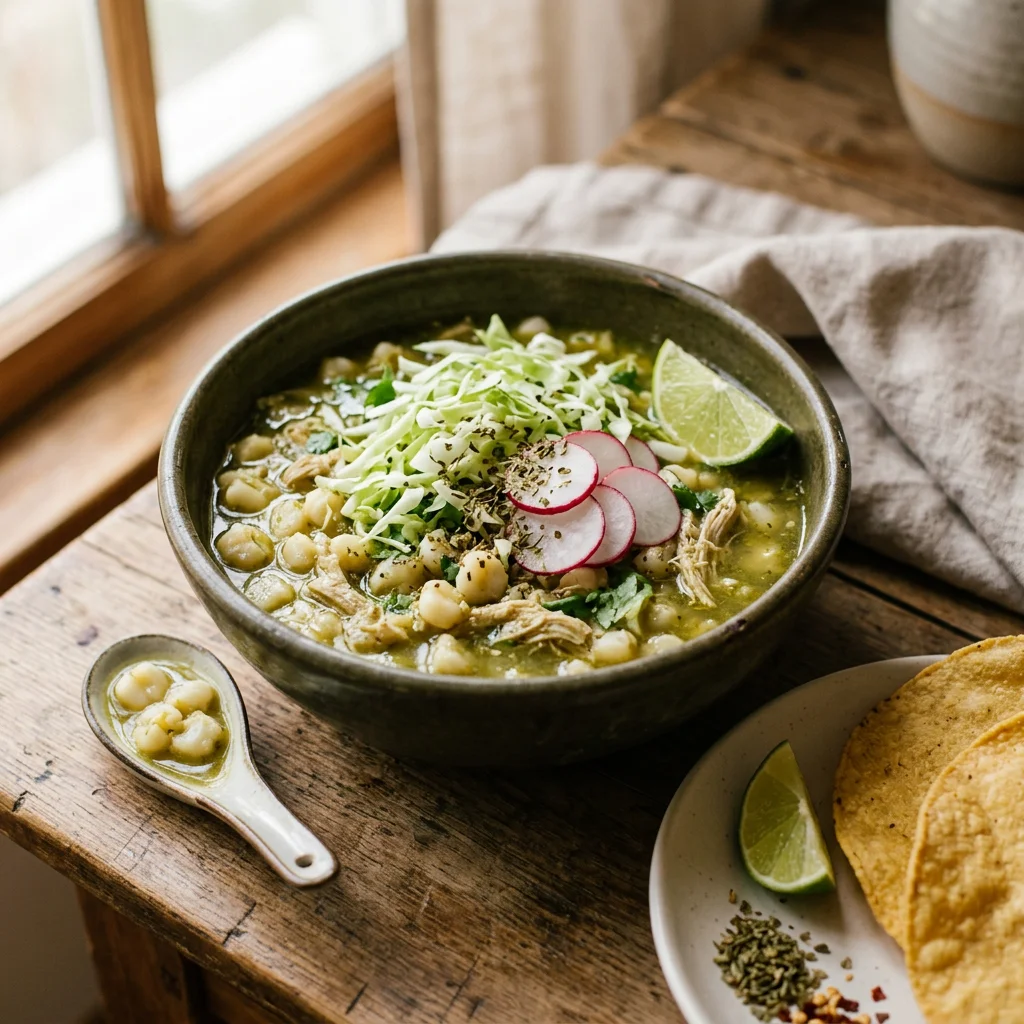
Pozole is one of Mexico's most significant dishes — a hearty stew of hominy corn and meat in a richly flavored broth, served with an array of fresh garnishes that each diner customizes at the table. Pozole verde, the green version, gets its color and flavor from a sauce of tomatillos, green chiles, pepitas (pumpkin seeds), cilantro, and lettuce, blended into a complex, herbaceous base that is simultaneously tart, nutty, and green. It is the most vibrant of the three pozole colors (red, green, white) and particularly prized in Guerrero and central Mexico. The hominy — dried corn kernels treated with cal (lime water) in the ancient process of nixtamalization — is the soul of the dish. These fat, chewy kernels burst open during cooking into flower-like shapes, releasing their starchy interior into the broth and creating a texture unlike anything else in world cuisine. The nixtamalization process, developed in Mesoamerica thousands of years ago, transforms corn nutritionally by making its niacin bioavailable, a discovery that prevented pellagra in corn-dependent civilizations. From an Ayurvedic perspective, pozole verde is a powerfully building, warming preparation. The long-cooked hominy is heavy, sweet, and deeply grounding. The green sauce adds a complex array of tastes — sour from tomatillos, pungent from chiles, sweet from pepitas — creating a dish that stimulates all digestive processes. The fresh garnishes (radish, lettuce, lime, onion) served at the table are not mere decoration but functional Ayurvedic balancers, providing raw pungent, sour, and bitter tastes that cut through the stew's heaviness.
Strongly pacifies Vata. Can increase Pitta due to sour and pungent qualities. May increase Kapha in large portions due to heaviness.
Ingredients
- 500 g Dried hominy corn (pozole corn) (soaked overnight, or 2 cans (800g) of prepared hominy)
- 700 g Pork shoulder (cut into 4-cm chunks (or substitute chicken thighs))
- 500 g Tomatillos (husked and rinsed)
- 2 large Poblano chiles (seeded)
- 2 whole Jalapeño chiles
- 100 g Pepitas (pumpkin seeds) (raw, hulled)
- 1 large bunch Fresh cilantro (stems and leaves)
- 4 leaves Lettuce (romaine, for the sauce)
- 1 large Onion (quartered for broth + diced for garnish)
- 6 cloves Garlic
- 1 tsp Cumin
- 1 tbsp Dried oregano (Mexican oregano preferred)
- 1 tbsp Sea salt
- 4 whole Limes (halved, for garnish)
- 8 whole Radishes (thinly sliced, for garnish)
- 2 cups Cabbage (thinly shredded, for garnish)
Instructions
- If using dried hominy, soak overnight, then simmer in fresh water for 2-3 hours until the kernels have opened and are tender but still chewy. Drain. If using canned, rinse and drain.
- Place the pork in a large pot with the quartered onion, 4 garlic cloves, and enough water to cover by 5 cm. Bring to a boil, skim the foam, and simmer for 1 hour until the pork is very tender and falls apart easily.
- While the pork cooks, make the green sauce. Simmer the tomatillos, poblanos, and jalapeños in water for 10 minutes until soft. Drain.
- Toast the pepitas in a dry skillet over medium heat until they puff and turn golden, about 3-4 minutes. Watch carefully — they burn quickly.
- Blend the cooked tomatillos, chiles, toasted pepitas, remaining 2 garlic cloves, cilantro (stems and all), lettuce leaves, cumin, and 1 cup of the pork broth until very smooth.
- Remove the pork from the broth and shred into large pieces. Strain the broth. Add the green sauce to the broth and bring to a simmer, cooking for 15 minutes to let the flavors meld.
- Add the cooked hominy and shredded pork to the green broth. Simmer together for 20 minutes. Season with salt and oregano.
- Ladle into large, deep bowls. Serve with the garnish platter: shredded cabbage, sliced radishes, diced onion, lime halves, dried oregano, and tostadas.
How This Recipe Affects Each Dosha
Vata
Excellent for Vata. The heavy, warm hominy with rich meat broth and complex green sauce provides profound grounding nourishment. The sour tomatillos and pungent chiles stimulate digestion, and the fresh garnishes add balancing crunch. This is deeply Vata-soothing food.
Pitta
The sour tomatillos and pungent chiles can aggravate Pitta, particularly in warm weather. The meat and heavy hominy add further heat. However, the cilantro and lettuce in the sauce provide some cooling, and the lime garnish is sour but not inflammatory. Moderate portions with extra lime and radish.
Kapha
The heavy hominy and rich meat broth can increase Kapha. However, the pungent, sour, stimulating qualities of the green sauce are genuinely beneficial for Kapha digestion. The key is portion control and generous use of the raw garnishes, particularly radish and cabbage, which are light and stimulating.
Strongly stimulates agni. The sour tomatillos, pungent chiles, and warming cumin all kindle digestive fire. The heavy hominy requires robust agni, and the preparation provides it. The fresh garnishes at the table — lime, radish, onion — further support digestion of this substantial meal.
Nourishes: Rasa (plasma), Rakta (blood), Mamsa (muscle), Meda (fat), Asthi (bone)
Adjustments by Constitution
For Vata Types
This preparation suits Vata well as-is. Use pork rather than chicken for richer nourishment. Add extra lime at the table and serve with tostadas for grounding crunch. Avocado slices make an excellent additional garnish.
For Pitta Types
Substitute chicken for pork (lighter and less heating). Reduce the jalapeños to one and remove seeds from the poblanos. Increase cilantro in the sauce. At the table, add extra lime and generous shredded lettuce. Skip the raw onion garnish.
For Kapha Types
Use chicken breast (leanest option) and reduce the hominy portion. Increase the green sauce relative to the broth for more pungent stimulation. At the table, pile on the shredded cabbage and radish, squeeze extra lime, and add raw onion. Skip the tostadas.
Seasonal Guidance
Pozole is a cold-weather celebration dish, most appropriate from October through March. In Mexico, it is traditionally served on September 15th (Mexican Independence Eve), at Christmas, on New Year's, and at family gatherings throughout winter. The heavy, warming quality makes it ideal for the body's winter need for substantial nourishment. In spring, lighter versions with chicken and extra garnishes work well. Summer pozole exists in some regions but is less common — the heat of the season conflicts with the dish's warming nature. If serving in warm weather, increase the lime and raw vegetables and reduce portion size.
Best time of day: Evening or late lunch, traditionally served at celebrations and weekend family gatherings
Cultural Context
Pozole has deep ceremonial roots in Mesoamerican culture, predating the Spanish conquest by centuries. In Aztec society, it was served at sacred feasts and celebrations. The transformation of corn through nixtamalization was considered a sacred process, and the resulting hominy held spiritual significance. After the conquest, pozole became a festive dish associated with national and family celebrations. Today it remains one of Mexico's most important communal foods — families gather specifically to eat pozole, and it is served from large pots with the garnish platter at the center of the table, encouraging shared customization and conversation.
Chef's Notes
Pozole is a communal, customizable dish — the garnish platter is as important as the stew itself. Each person builds their bowl differently, adding lime, radish, cabbage, and onion to taste. The pepitas are essential to the green sauce; they provide body, richness, and a subtle nuttiness that distinguishes pozole verde from other green sauces. Toast them until they puff and pop but do not let them turn dark brown. The hominy should be tender but retain a pleasantly chewy, starchy texture — it should not be soft like canned corn. If you cannot find dried hominy, canned (labeled "maíz pozolero" or simply "hominy") is an acceptable shortcut. The dish improves significantly overnight as the hominy absorbs the green broth.
Frequently Asked Questions
Is Pozole Verde (Green Hominy Stew) good for my dosha?
Strongly pacifies Vata. Can increase Pitta due to sour and pungent qualities. May increase Kapha in large portions due to heaviness. Excellent for Vata. The sour tomatillos and pungent chiles can aggravate Pitta, particularly in warm weather. The heavy hominy and rich meat broth can increase Kapha.
When is the best time to eat Pozole Verde (Green Hominy Stew)?
Evening or late lunch, traditionally served at celebrations and weekend family gatherings Pozole is a cold-weather celebration dish, most appropriate from October through March. In Mexico, it is traditionally served on September 15th (Mexican Independence Eve), at Christmas, on New Year's,
How can I adjust Pozole Verde (Green Hominy Stew) for my constitution?
For Vata types: This preparation suits Vata well as-is. Use pork rather than chicken for richer nourishment. Add extra lime at the table and serve with tostadas for g For Pitta types: Substitute chicken for pork (lighter and less heating). Reduce the jalapeños to one and remove seeds from the poblanos. Increase cilantro in the sauce
What are the Ayurvedic properties of Pozole Verde (Green Hominy Stew)?
Pozole Verde (Green Hominy Stew) has Sour, Pungent, Sweet, Salty, Astringent taste (rasa), Heating energy (virya), and Pungent post-digestive effect (vipaka). Its qualities (gunas) are Heavy, Warm, Oily. It nourishes Rasa (plasma), Rakta (blood), Mamsa (muscle), Meda (fat), Asthi (bone). Strongly stimulates agni. The sour tomatillos, pungent chiles, and warming cumin all kindle digestive fire. The heavy hominy requires robust agni, and the preparation provides it. The fresh garnishes at the table — lime, radish, onion — further support digestion of this substantial meal.
What should you eat today?
This recipe has specific effects on each dosha, and the right meal depends on more than general guidelines. Your constitution, the current season, your birth chart's active planetary period, what you ate yesterday, how you slept — it all matters.
With Personal Alignment, you get daily food and meal guidance tailored to:
- Your prakriti and current vikriti
- Your Vedic birth chart and active planetary cycles
- The season, weather, and time of day
- Your food preferences, allergies, and restrictions
- Your feedback — it learns what works for your body and adapts
Not a generic diet plan. A living system that gets smarter about you every day.