Revithia (Greek Chickpea Soup)
Greek Recipe
Overview
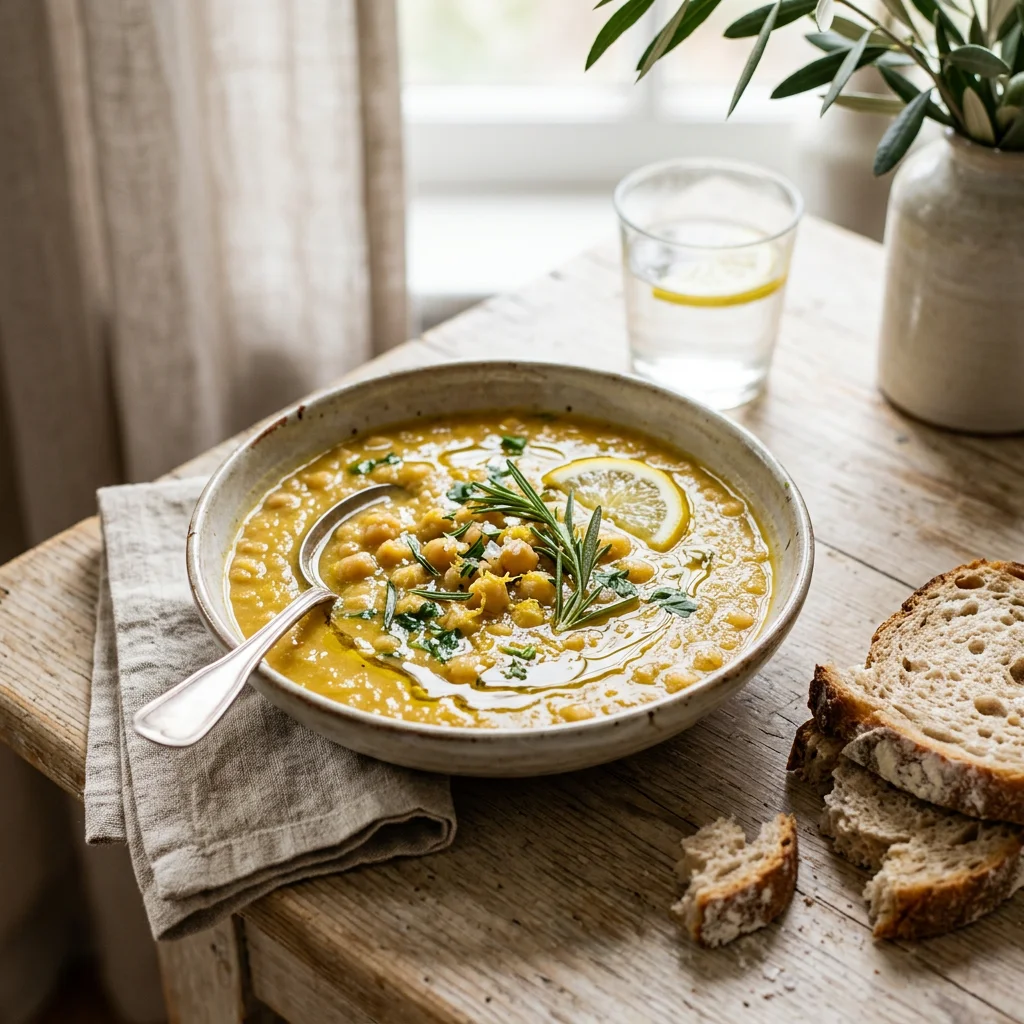
Revithia is the simplest and perhaps most ancient of Greek soups — chickpeas simmered with onion, olive oil, and lemon until the broth turns creamy and golden. There are no tomatoes, no elaborate spice blends, nothing to distract from the earthy sweetness of the chickpeas themselves. This radical simplicity is its genius. Where fasolada builds layers, revithia strips back to essentials, trusting the natural flavor of well-cooked legumes. The soup has deep roots in Greek island cooking, particularly in the Cyclades, where it has been the traditional Sunday meal for generations. Sifnos, a small island in the western Cyclades, claims revithia as its signature dish, traditionally slow-cooked overnight in a wood-fired oven in ceramic pots sealed with flour-water dough. The long, gentle heat transforms the chickpeas into something remarkably silky, and the olive oil emulsifies into the broth to create a golden, unctuous liquid. Ayurvedically, revithia is a study in gentle nourishment. Chickpeas are astringent and sweet, with a dry quality that the generous olive oil counteracts beautifully. The lemon, added at the end, stimulates agni and enhances mineral absorption. The slow cooking breaks down the chickpeas' complex fibers, making them far more digestible than quick-cooked preparations. This is quiet, steady, tissue-building food.
Good for Vata when prepared with ample oil. Can increase Kapha in excess. Mildly beneficial for Pitta.
Ingredients
- 500 g Dried chickpeas (soaked overnight and drained)
- 120 ml Olive oil
- 2 large Onion (finely diced)
- 3 cloves Garlic (whole, peeled)
- 2 leaves Bay leaf
- 1 tsp Dried rosemary
- 2 large Lemon (juiced at serving)
- 2 tsp Sea salt
- 1 tsp Black pepper (freshly ground)
- 2 L Water
- 1 tsp Dried oregano (for serving)
Instructions
- Soak the chickpeas overnight in plenty of cold water with a pinch of baking soda (optional, helps soften them). Drain and rinse thoroughly.
- Place the chickpeas in a large heavy pot with 2 liters of fresh water. Bring to a boil, skimming any foam that rises to the surface.
- Add the onion, whole garlic cloves, bay leaves, and rosemary. Pour in half the olive oil.
- Reduce heat to a very gentle simmer. Cover and cook for 1.5 to 2 hours, stirring occasionally, until the chickpeas are completely soft and the broth is creamy and golden.
- Season with salt and black pepper in the final 20 minutes of cooking. The broth should be thick but still liquid — add hot water if it reduces too much.
- Remove the bay leaves. Ladle into bowls and add a generous squeeze of lemon juice, a drizzle of the remaining raw olive oil, a sprinkle of oregano, and fresh black pepper to each serving.
How This Recipe Affects Each Dosha
Vata
Chickpeas are naturally drying and gas-producing, which concerns Vata. However, this slow-cooked, olive oil-enriched preparation transforms them into a Vata-friendly food. The long cooking breaks down the problematic fibers, and the generous oil counters dryness. The lemon further aids digestion.
Pitta
Generally supportive for Pitta. Chickpeas have a cooling post-digestive effect, and the simplicity of the preparation avoids inflammatory ingredients. The lemon adds sour taste that should be moderated for very sensitive Pitta individuals.
Kapha
The heaviness and sweet taste of well-cooked chickpeas can increase Kapha. The oil adds further unctuousness. However, chickpeas are among the more astringent legumes, and the drying quality partially offsets the heaviness.
Supportive of agni when properly prepared. The long cooking pre-digests the complex chickpea fibers, and the lemon added at serving kindles digestive fire. The olive oil carries the nutrients deep into the tissues. However, large portions can still challenge weaker digestion.
Nourishes: Rasa (plasma), Mamsa (muscle), Meda (fat), Asthi (bone)
Adjustments by Constitution
For Vata Types
Add extra olive oil and increase the rosemary. Serve with warm bread and extra lemon. A pinch of ground cumin stirred in at serving enhances digestibility for Vata types.
For Pitta Types
Reduce the garlic and black pepper. Add fresh dill at serving instead of oregano. The lemon is beneficial but keep it moderate. Serve at a warm rather than hot temperature.
For Kapha Types
Reduce olive oil by half and add extra black pepper and a pinch of dried oregano during cooking. Serve with a generous squeeze of lemon and a side of bitter greens instead of bread.
Seasonal Guidance
Revithia is a cold-weather soup, traditionally prepared from October through March. Its warming, heavy quality suits the body's need for substantial nourishment in winter. In Sifnos and other Cycladic islands, it is the traditional Sunday lunch throughout the cold months. In spring, lighten it by adding more lemon and fresh herbs. Summer is not the season for this soup — the heaviness and warmth conflict with the body's need for cooling, light food. If you must make it in warm weather, serve at room temperature with extra lemon and a light salad.
Best time of day: Lunch, especially on relaxed days when digestion has time to work through the heavy beans
Cultural Context
Revithia occupies a special place in Cycladic island culture, where it is synonymous with Sunday family meals and the rhythm of weekly life. On Sifnos, the traditional method involves bringing sealed clay pots of soaked chickpeas to the village baker on Saturday evening, where they slow-cook overnight in the residual heat of the bread oven and are collected on Sunday morning — a communal tradition that persisted well into the 20th century. The dish is also central to Lenten fasting, as its protein and richness sustain the body through the Orthodox fasting calendar. It represents Greek cooking at its most elemental: few ingredients, long time, deep flavor.
Chef's Notes
The key to great revithia is patience. The chickpeas must cook until they are almost falling apart — this is not a soup of distinct, firm beans but rather a creamy, porridge-like preparation where some chickpeas dissolve into the broth. Keep the simmer very low; aggressive boiling breaks the chickpeas apart too quickly without properly softening their interiors. The lemon must be added at serving, not during cooking, as the acid prevents the chickpeas from softening properly. Many Greek cooks make this in a clay pot in the oven at 160C for 3-4 hours for the most authentic result. The overnight rest is traditional — the flavors deepen remarkably.
Frequently Asked Questions
Is Revithia (Greek Chickpea Soup) good for my dosha?
Good for Vata when prepared with ample oil. Can increase Kapha in excess. Mildly beneficial for Pitta. Chickpeas are naturally drying and gas-producing, which concerns Vata. Generally supportive for Pitta. The heaviness and sweet taste of well-cooked chickpeas can increase Kapha.
When is the best time to eat Revithia (Greek Chickpea Soup)?
Lunch, especially on relaxed days when digestion has time to work through the heavy beans Revithia is a cold-weather soup, traditionally prepared from October through March. Its warming, heavy quality suits the body's need for substantial nourishment in winter. In Sifnos and other Cycladic
How can I adjust Revithia (Greek Chickpea Soup) for my constitution?
For Vata types: Add extra olive oil and increase the rosemary. Serve with warm bread and extra lemon. A pinch of ground cumin stirred in at serving enhances digestibi For Pitta types: Reduce the garlic and black pepper. Add fresh dill at serving instead of oregano. The lemon is beneficial but keep it moderate. Serve at a warm rather
What are the Ayurvedic properties of Revithia (Greek Chickpea Soup)?
Revithia (Greek Chickpea Soup) has Sweet, Astringent taste (rasa), Heating energy (virya), and Sweet post-digestive effect (vipaka). Its qualities (gunas) are Heavy, Warm, Oily. It nourishes Rasa (plasma), Mamsa (muscle), Meda (fat), Asthi (bone). Supportive of agni when properly prepared. The long cooking pre-digests the complex chickpea fibers, and the lemon added at serving kindles digestive fire. The olive oil carries the nutrients deep into the tissues. However, large portions can still challenge weaker digestion.
What should you eat today?
This recipe has specific effects on each dosha, and the right meal depends on more than general guidelines. Your constitution, the current season, your birth chart's active planetary period, what you ate yesterday, how you slept — it all matters.
With Personal Alignment, you get daily food and meal guidance tailored to:
- Your prakriti and current vikriti
- Your Vedic birth chart and active planetary cycles
- The season, weather, and time of day
- Your food preferences, allergies, and restrictions
- Your feedback — it learns what works for your body and adapts
Not a generic diet plan. A living system that gets smarter about you every day.