Rfissa
Moroccan Recipe
Overview
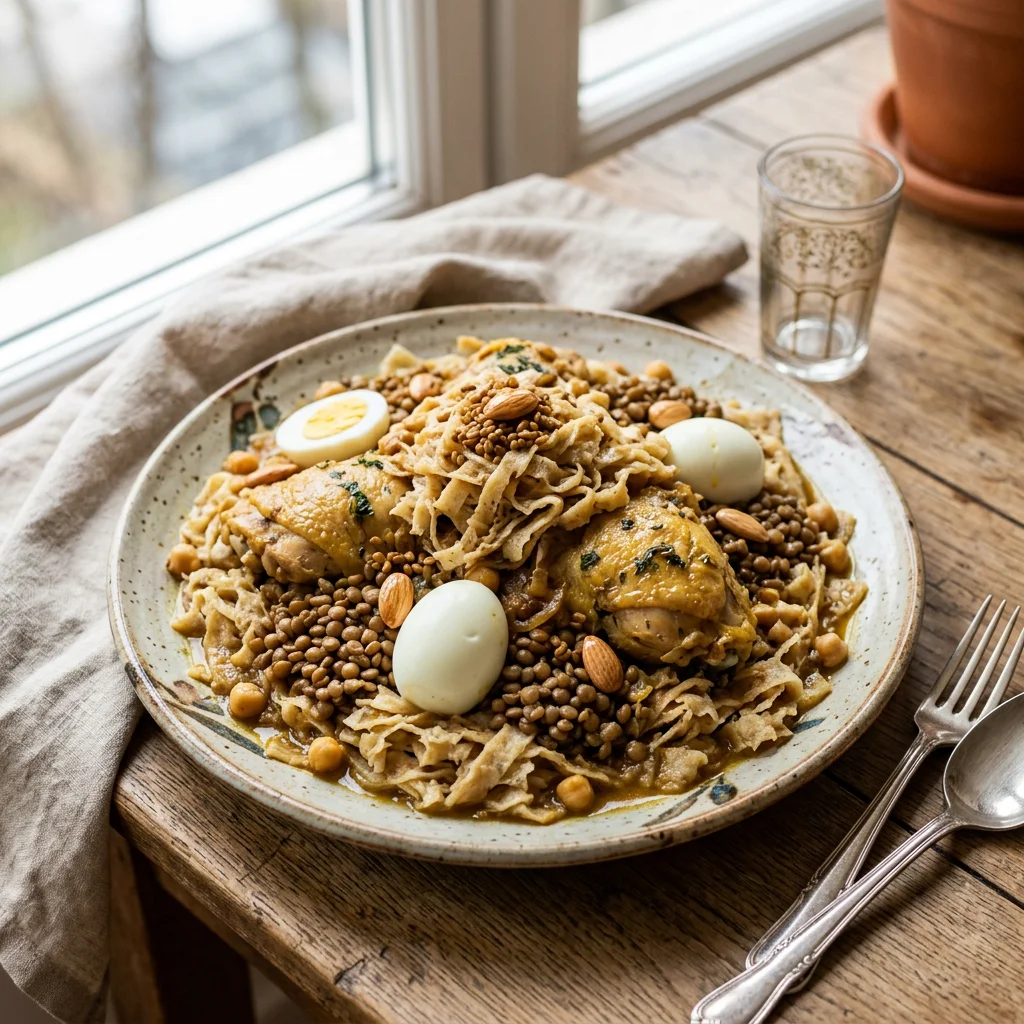
Rfissa is Morocco's most revered postpartum and healing dish — a layered construction of shredded msemen (flaky Moroccan flatbread) soaked in a rich, golden lentil-chicken broth infused with fenugreek and ras el hanout. It is the dish that appears at every new mother's bedside within hours of giving birth, and it is prepared with such ritual consistency that its absence would be unthinkable. The dish is designed — deliberately, over generations — to rebuild strength, stimulate lactation, warm the body from the inside, and provide the dense nutrition that postpartum recovery demands. The preparation is labor-intensive and deeply communal. The msemen must be made fresh and torn into pieces, the chicken simmered slowly with lentils and spices until the meat falls from the bone, and then the components are layered: bread on the bottom, shredded chicken and lentils on top, the fragrant broth poured over everything until the bread softens and absorbs the liquid like a savory bread pudding. The fenugreek — bitter, warming, lactation-promoting — is the medicinal heart of the dish, and its presence is what distinguishes rfissa from ordinary chicken stew. Ayurvedically, rfissa is a masterclass in postpartum nutrition that aligns remarkably with classical Sutika Paricharya (postpartum care protocols). Fenugreek is one of the few herbs recognized across both Moroccan folk medicine and Ayurveda for its galactagogue properties (stimulating milk production). It is also deeply warming, strengthening to the uterus, and nourishing to mamsa (muscle) and asthi (bone) dhatus — tissues depleted during pregnancy and childbirth. The chicken provides building amino acids, the lentils add iron and folate, and the bread-soaked-in-broth format is gentle on a digestive system that has been through the trauma of birth. Even the spice profile — turmeric, ginger, pepper — mirrors the Ayurvedic recommendation for warming, anti-inflammatory spices during the postpartum window.
Strongly pacifies Vata with warmth, moisture, heaviness, and building nutrition. Mildly increases Pitta due to heating spices and fenugreek. Increases Kapha if consumed in excess due to heaviness, though the warming spices provide counterbalance.
Traditional postpartum recovery food, used to rebuild strength, stimulate lactation, and warm the body after childbirth. The fenugreek acts as a galactagogue while the dense protein and broth support tissue repair. Also used for convalescence after any significant illness or depletion.
Ingredients
- 1 medium Whole chicken (about 1.5kg, cut into pieces)
- 1 cup Brown lentils (rinsed)
- 2 large Onions (grated)
- 4 cloves Garlic (minced)
- 1 tbsp Fresh ginger (grated)
- 2 tbsp Fenugreek seeds (lightly crushed)
- 1 tbsp Ras el hanout
- 1 tsp Ground turmeric
- 1/4 tsp Saffron threads (steeped in warm water)
- 1/2 tsp Ground cinnamon
- 3 tbsp Olive oil
- 4 sheets Msemen or warqa (torn into pieces (or substitute flour tortillas))
- 1/4 cup Fresh cilantro (chopped)
- 1.5 tsp Salt
- 1/2 tsp Black pepper
Instructions
- In a large heavy pot, combine the chicken pieces, grated onions, garlic, ginger, olive oil, ras el hanout, turmeric, cinnamon, saffron with soaking liquid, salt, and pepper. Toss to coat the chicken in the spice mixture. Let it marinate for 10 minutes if time allows.
- Add enough water to cover the chicken by 2 inches (about 1.5 liters). Bring to a boil, then reduce to a gentle simmer. Skim any foam that rises. Cover and cook for 40 minutes until the chicken is falling-off-the-bone tender.
- Remove the chicken pieces and set aside. Add the lentils and fenugreek seeds to the broth. Continue simmering for 20-25 minutes until the lentils are very soft and beginning to dissolve, thickening the broth.
- While the lentils cook, shred the chicken meat from the bones, discarding skin and bones. Keep the shredded meat warm.
- Prepare the msemen: warm the flatbreads briefly in a dry pan, then tear into rough, bite-sized pieces.
- To assemble: spread the torn msemen pieces in a deep serving platter or wide, shallow bowl. Arrange the shredded chicken over the bread. Ladle the lentil broth generously over everything — the bread should soak up the liquid and become soft and saturated, almost like a savory bread pudding.
- Scatter with fresh cilantro. Serve immediately while the broth is still steaming. Traditionally, this is eaten communally with the right hand, each person pulling from their section of the platter.
How This Recipe Affects Each Dosha
Vata
Rfissa is one of the most Vata-pacifying dishes in Moroccan cuisine. Every element addresses Vata: the heavy, warm broth; the unctuous olive oil; the building protein from chicken and lentils; the bread base that grounds and fills. Fenugreek is specifically indicated in Ayurveda for Vata-type depletion, and its bitter taste is balanced by the sweet taste of the chicken and lentils. This is a rebuilding food, ideal after any period of depletion — postpartum, post-illness, post-travel.
Pitta
The heating spice blend and the pungent fenugreek make rfissa moderately Pitta-aggravating. The chicken broth itself is relatively neutral, but the overall warming nature of the dish tilts it away from ideal Pitta food. Pitta types can enjoy this during cooler months or when depleted, but should moderate spice levels and avoid it during summer or periods of inflammation.
Kapha
The heavy, dense, oily qualities of rfissa — bread soaked in fatty broth, slow-cooked chicken, starchy lentils — can increase Kapha significantly. The warming spices and fenugreek partially offset this, but Kapha types should eat this dish only when they need rebuilding (illness recovery, physical depletion) rather than as regular fare. When eating rfissa, Kapha types benefit from extra fenugreek and ras el hanout to increase the pungent quality.
Fenugreek is a potent agni stimulant that also specifically nourishes the tissues it helps digest — a rare quality that makes it ideal for postpartum recovery, when the body needs both strong digestion and robust tissue building. The ras el hanout blend provides broad-spectrum digestive support through its twenty-plus constituent spices. The long-simmered broth is pre-digested protein, requiring minimal agni to assimilate. This combination — strong digestive stimulation with easily absorbed nutrients — is the therapeutic genius of rfissa.
Nourishes: Rasa (plasma), Rakta (blood), Mamsa (muscle), Asthi (bone), Meda (fat), Shukra (reproductive)
Adjustments by Constitution
For Vata Types
Add extra saffron and a handful of Medjool dates to the broth during the last 10 minutes of cooking. Drizzle argan oil over the finished dish — its rich warmth is profoundly Vata-pacifying. Increase the fenugreek to 3 tablespoons; its bitter taste, while strong, is specifically therapeutic for Vata-type depletion and exhaustion. Ensure the broth is very generously poured — the more moist, the better for Vata.
For Pitta Types
Reduce fenugreek to 1 tablespoon and omit black pepper. Increase saffron to 1/2 teaspoon for its cooling post-digestive effect. Replace ras el hanout with a gentler blend of cumin, coriander, and fennel. Add fresh mint to the cilantro garnish. Use orange blossom water sprinkled at serving for a cooling, calming aroma.
For Kapha Types
Use a leaner cut of chicken (breast only, skinless) and reduce the bread base by half. Increase fenugreek to 3 tablespoons and add a full teaspoon of black pepper. Stir a tablespoon of harissa into the broth for extra pungency. Skip the msemen entirely and serve the lentil-chicken broth as a thick soup instead — removing the bread dramatically reduces Kapha aggravation while preserving the therapeutic spice profile.
Seasonal Guidance
Best in the coldest months when the heavy, warming qualities are most welcome and therapeutically needed. In autumn, it provides grounding as Vata season sets in. In winter, the dense nutrition and heating spices protect against cold and depletion. Not appropriate for summer — the heavy, heating nature would overwhelm both agni and Pitta during hot months. Spring is transitional; a lighter version with extra ginger and less bread can work.
Best time of day: Lunch, when digestive fire is at its peak. This is a heavy, building meal that requires robust agni to process. Not ideal for dinner unless recovery demands it — in the postpartum context, it may be served at any time the mother needs nourishment.
Cultural Context
Rfissa is Morocco's great healing tradition made edible. It is prepared for new mothers beginning on the third day after birth and served daily for forty days — the traditional Moroccan postpartum confinement period during which the mother rests, recovers, and is cared for by female relatives. The dish is so strongly associated with childbirth that it is sometimes called "the dish of the fortieth day." But rfissa also appears at other thresholds: after illness, after long journeys, at celebrations, and at religious occasions. Its preparation is a communal act — the grandmother supervises the spicing, the aunts shred the chicken, the sisters tear the msemen. It represents the Moroccan belief that food is medicine, that feeding someone well is an act of love, and that certain dishes carry the power to rebuild a body that has given everything.
Chef's Notes
Fenugreek is the soul of rfissa — its slightly bitter, maple-like flavor permeates the broth and is what makes the dish medicinal. If fenugreek seeds are unavailable, fenugreek powder can be used (1 tablespoon), but seeds are preferred for a gentler release of flavor during the long simmer. Msemen can be found frozen at Middle Eastern markets; if unavailable, flour tortillas or even puff pastry torn into pieces are acceptable substitutes, though traditionalists will object. The broth should be generously poured — rfissa should be moist and soupy, not dry. It is meant to be eaten with the hands, not a fork, which is why the bread-base format works: you tear off a piece of soaked bread, gather some chicken and lentils, and eat in one bite. For vegetarian rfissa (less traditional but practiced), omit the chicken and double the lentils, adding extra olive oil for richness.
Frequently Asked Questions
Is Rfissa good for my dosha?
Strongly pacifies Vata with warmth, moisture, heaviness, and building nutrition. Mildly increases Pitta due to heating spices and fenugreek. Increases Kapha if consumed in excess due to heaviness, though the warming spices provide counterbalance. Rfissa is one of the most Vata-pacifying dishes in Moroccan cuisine. The heating spice blend and the pungent fenugreek make rfissa moderately Pitta-aggravating. The heavy, dense, oily qualities of rfissa — bread soaked in fatty broth, slow-cooked chicken, starchy lentils — can increase Kapha significantly.
When is the best time to eat Rfissa?
Lunch, when digestive fire is at its peak. This is a heavy, building meal that requires robust agni to process. Not ideal for dinner unless recovery demands it — in the postpartum context, it may be served at any time the mother needs nourishment. Best in the coldest months when the heavy, warming qualities are most welcome and therapeutically needed. In autumn, it provides grounding as Vata season sets in. In winter, the dense nutrition and he
How can I adjust Rfissa for my constitution?
For Vata types: Add extra saffron and a handful of Medjool dates to the broth during the last 10 minutes of cooking. Drizzle argan oil over the finished dish — its ri For Pitta types: Reduce fenugreek to 1 tablespoon and omit black pepper. Increase saffron to 1/2 teaspoon for its cooling post-digestive effect. Replace ras el hanout
What are the Ayurvedic properties of Rfissa?
Rfissa has Sweet, Pungent, Bitter, Astringent taste (rasa), Heating energy (virya), and Pungent post-digestive effect (vipaka). Its qualities (gunas) are Heavy, Warm, Oily, Dense. It nourishes Rasa (plasma), Rakta (blood), Mamsa (muscle), Asthi (bone), Meda (fat), Shukra (reproductive). Fenugreek is a potent agni stimulant that also specifically nourishes the tissues it helps digest — a rare quality that makes it ideal for postpartum recovery, when the body needs both strong digestion and robust tissue building. The ras el hanout blend provides broad-spectrum digestive support through its twenty-plus constituent spices. The long-simmered broth is pre-digested protein, requiring minimal agni to assimilate. This combination — strong digestive stimulation with easily absorbed nutrients — is the therapeutic genius of rfissa.
What should you eat today?
This recipe has specific effects on each dosha, and the right meal depends on more than general guidelines. Your constitution, the current season, your birth chart's active planetary period, what you ate yesterday, how you slept — it all matters.
With Personal Alignment, you get daily food and meal guidance tailored to:
- Your prakriti and current vikriti
- Your Vedic birth chart and active planetary cycles
- The season, weather, and time of day
- Your food preferences, allergies, and restrictions
- Your feedback — it learns what works for your body and adapts
Not a generic diet plan. A living system that gets smarter about you every day.