Roasted Root Vegetables with Cumin
Ayurvedic Recipe
Overview
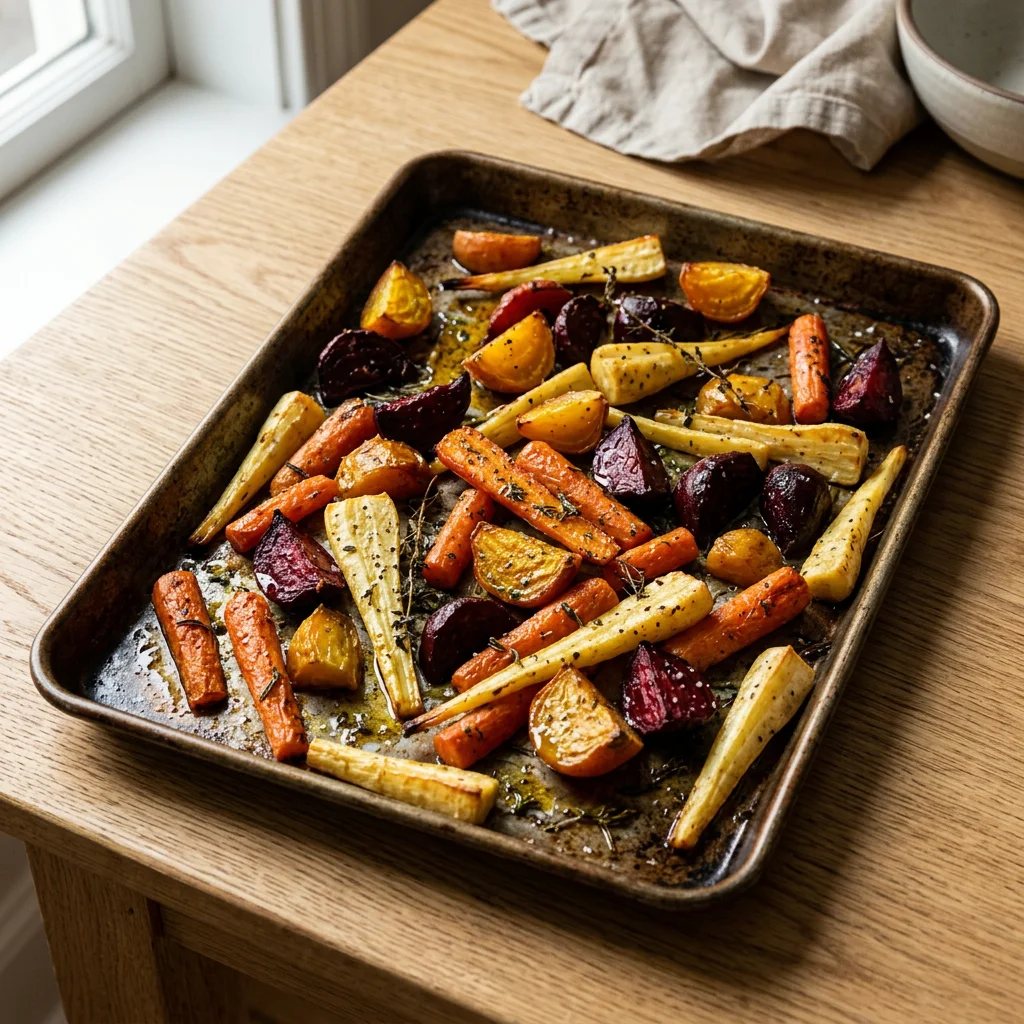
Root vegetables are the earth element made edible. Carrots, beets, parsnips, and sweet potatoes — pulled from the soil, heavy with minerals, dense with stored solar energy — are among the most grounding foods available to the human body. Roasting them with cumin and coriander is the simplest, most direct way to deliver their Vata-pacifying qualities: the dry heat of the oven concentrates their natural sugars into caramelized sweetness while the spices ensure the meal supports rather than burdens digestion. In Ayurvedic terms, this dish is a study in the sweet rasa from its most nourishing source. Sweet does not mean sugary — it means the taste that builds tissue, calms the nervous system, and satisfies at a cellular level. Root vegetables deliver sweet rasa alongside the earth and water elements that Vata types are chronically deficient in. The roasting process adds the fire element through dry heat, transforming the raw heaviness of roots into something light enough to digest comfortably while retaining their grounding essence. Cumin and coriander are not garnishes here — they are functional. Cumin is the primary carminative in Ayurvedic cooking, preventing the gas and bloating that dense root vegetables can cause, especially in Vata constitutions whose digestion is already irregular. Coriander adds a cooling counterbalance to the warming cumin, keeping the spice blend tridoshic. Together they create the conditions for the body to absorb the deep mineral nourishment these roots offer.
Strongly pacifies Vata with its grounding, warming, oily qualities. Balances Pitta in moderation due to the sweet vipaka. May increase Kapha if portions are large.
Ingredients
- 3 medium Carrots (peeled and cut into 1-inch pieces)
- 2 medium Beets (peeled and cut into 1-inch cubes)
- 2 medium Parsnips (peeled and cut into 1-inch pieces)
- 1 large Sweet potato (peeled and cut into 1-inch cubes)
- 3 tbsp Ghee (melted)
- 1.5 tsp Cumin seeds
- 1 tsp Ground coriander
- 1/2 tsp Turmeric powder
- 1 tsp Fresh ginger (finely grated)
- 1 tsp Salt
- 1/4 tsp Black pepper (freshly ground)
- 2 tbsp Fresh cilantro (chopped, for garnish)
- 1 tbsp Lemon juice (squeezed over after roasting)
Instructions
- Preheat oven to 200C (400F). Line a large baking sheet with parchment paper.
- In a large bowl, combine all the cut root vegetables. Keep the beets separate if you want to prevent them from staining the other vegetables — or embrace the color.
- Warm the ghee in a small pan over medium heat. Add the cumin seeds and let them sizzle for 20 seconds until fragrant. Remove from heat and stir in the ground coriander, turmeric, grated ginger, salt, and black pepper.
- Pour the spiced ghee over the vegetables and toss thoroughly until every piece is coated. The ghee-spice mixture should coat evenly — use your hands if needed.
- Spread the vegetables in a single layer on the baking sheet, ensuring they are not crowded. Use two sheets if necessary — crowded vegetables steam rather than roast.
- Roast for 30-35 minutes, turning once halfway through, until the vegetables are tender when pierced with a fork and golden-brown at the edges.
- Remove from oven and squeeze lemon juice over the hot vegetables. Garnish with fresh cilantro. Serve warm.
How This Recipe Affects Each Dosha
Vata
This dish is Vata medicine. The heavy, warm, oily, and dense qualities are the exact antidote to Vata's light, cold, dry, and mobile nature. Root vegetables provide the earth element that Vata lacks, the ghee lubricates dry tissues, and the warming spices kindle Vata's characteristically weak and irregular digestion. This should be a weekly staple for anyone with a Vata constitution or Vata imbalance.
Pitta
The sweet taste of the root vegetables is Pitta-pacifying, and the sweet vipaka means this dish leaves a cooling post-digestive effect. However, the dry roasting method and warming spices (cumin, ginger, black pepper) add some heat. Pitta types can enjoy this comfortably in cooler months but should moderate during summer.
Kapha
The heavy, sweet, and dense qualities of root vegetables can increase Kapha if consumed in excess. Beets and sweet potatoes in particular carry qualities that Kapha does not need more of. Kapha types should eat smaller portions, emphasize the lighter roots (carrots, parsnips), and add extra warming spices.
The cumin, ginger, and black pepper actively kindle agni, offsetting the natural heaviness of root vegetables. The ghee acts as a catalyst for spice absorption. This spice-fat-fiber combination is the Ayurvedic model for making dense foods digestible — the spices create the fire, the ghee carries it, and the fiber moves things through.
Nourishes: Rasa (plasma), Rakta (blood), Mamsa (muscle), Meda (fat tissue), Asthi (bone)
Adjustments by Constitution
For Vata Types
Increase ghee to 4 tablespoons. Add a generous pinch of nutmeg and a few cloves to the spice blend. Serve over a bed of warm basmati rice with an extra dollop of ghee. Include fennel bulb among the roasting vegetables for an extra layer of sweetness and digestive support.
For Pitta Types
Replace ghee with coconut oil. Omit black pepper and ginger. Add fennel seeds instead of cumin for a cooling digestive spice. Increase the coriander to 2 teaspoons. Squeeze lime instead of lemon and garnish with extra cilantro and a sprinkle of shredded coconut.
For Kapha Types
Reduce ghee to 1.5 tablespoons and use mustard oil for half. Double the ginger, add 1/2 teaspoon cayenne, and include a pinch of fenugreek seeds. Replace sweet potato with turnip or daikon radish. Reduce beets to 1. Serve as a side dish with a lighter main, not as the centerpiece.
Seasonal Guidance
This is peak autumn and winter food — the season when root vegetables are freshly harvested, the body craves grounding nourishment, and Vata dosha is at its annual high. Eat freely from October through February. In spring, lighten by reducing sweet potato and beets and adding lighter roots like turnips. In summer, this dish may be too heating and heavy for most constitutions — save it for cooler evenings or switch to steamed vegetables with cooling dressings.
Best time of day: Lunch or early dinner. The dense, grounding quality pairs well with midday agni but can also serve as a warming early evening meal during cold months.
Cultural Context
Root vegetable cookery is as old as the hearth itself. Every culture with cold winters developed its own tradition of roasting, stewing, or braising root vegetables — from Russian borscht to Japanese nimono to the French pot-au-feu. The Ayurvedic addition of carminative spices to root preparations reflects a sophistication born of observation: dense, sweet vegetables nourish the body beautifully but can cause gas and heaviness without digestive support. The cumin-coriander combination is the Ayurvedic answer to this problem — a spice pair that has traveled across the entire spice route from India to the Middle East to North Africa, appearing wherever cooks recognized that root vegetables need a digestive partner.
Chef's Notes
Cut all vegetables to roughly the same size so they cook at the same rate. Beets take slightly longer than carrots and parsnips, so cut them a touch smaller. If you want deeply caramelized edges, do not flip the vegetables until the 25-minute mark. The lemon juice at the end is not optional — the acid lifts the entire dish, cutting through the sweetness of the roasted roots and making the flavors pop. For a richer version, drizzle an extra tablespoon of ghee over the vegetables after they come out of the oven. These keep well for 3 days in the refrigerator and reheat beautifully in a pan with a small amount of ghee.
Frequently Asked Questions
Is Roasted Root Vegetables with Cumin good for my dosha?
Strongly pacifies Vata with its grounding, warming, oily qualities. Balances Pitta in moderation due to the sweet vipaka. May increase Kapha if portions are large. This dish is Vata medicine. The sweet taste of the root vegetables is Pitta-pacifying, and the sweet vipaka means this dish leaves a cooling post-digestive effect. The heavy, sweet, and dense qualities of root vegetables can increase Kapha if consumed in excess.
When is the best time to eat Roasted Root Vegetables with Cumin?
Lunch or early dinner. The dense, grounding quality pairs well with midday agni but can also serve as a warming early evening meal during cold months. This is peak autumn and winter food — the season when root vegetables are freshly harvested, the body craves grounding nourishment, and Vata dosha is at its annual high. Eat freely from October throug
How can I adjust Roasted Root Vegetables with Cumin for my constitution?
For Vata types: Increase ghee to 4 tablespoons. Add a generous pinch of nutmeg and a few cloves to the spice blend. Serve over a bed of warm basmati rice with an extr For Pitta types: Replace ghee with coconut oil. Omit black pepper and ginger. Add fennel seeds instead of cumin for a cooling digestive spice. Increase the coriander t
What are the Ayurvedic properties of Roasted Root Vegetables with Cumin?
Roasted Root Vegetables with Cumin has Sweet, Pungent taste (rasa), Heating energy (virya), and Sweet post-digestive effect (vipaka). Its qualities (gunas) are Heavy, Warm, Oily, Dense. It nourishes Rasa (plasma), Rakta (blood), Mamsa (muscle), Meda (fat tissue), Asthi (bone). The cumin, ginger, and black pepper actively kindle agni, offsetting the natural heaviness of root vegetables. The ghee acts as a catalyst for spice absorption. This spice-fat-fiber combination is the Ayurvedic model for making dense foods digestible — the spices create the fire, the ghee carries it, and the fiber moves things through.
What should you eat today?
This recipe has specific effects on each dosha, and the right meal depends on more than general guidelines. Your constitution, the current season, your birth chart's active planetary period, what you ate yesterday, how you slept — it all matters.
With Personal Alignment, you get daily food and meal guidance tailored to:
- Your prakriti and current vikriti
- Your Vedic birth chart and active planetary cycles
- The season, weather, and time of day
- Your food preferences, allergies, and restrictions
- Your feedback — it learns what works for your body and adapts
Not a generic diet plan. A living system that gets smarter about you every day.