Shakshuka
Moroccan Recipe
Overview
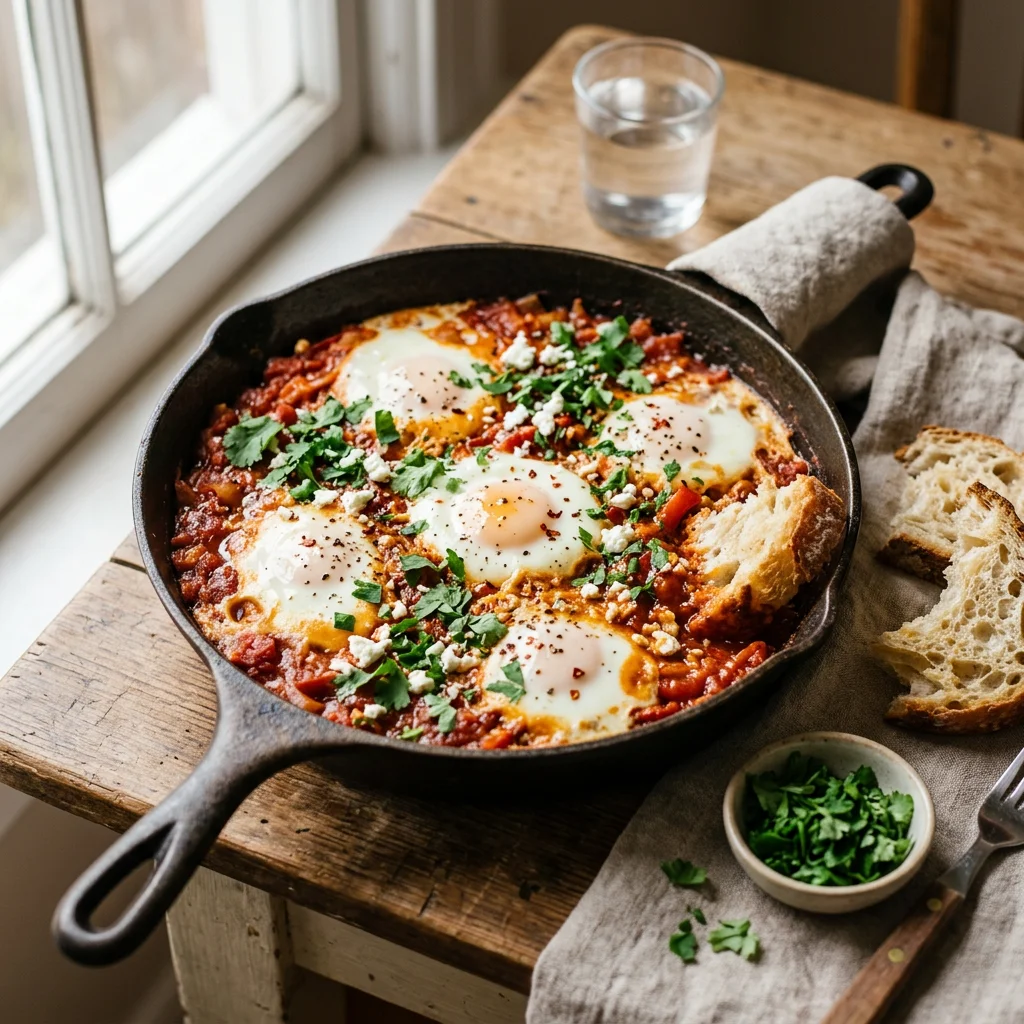
Shakshuka — eggs poached in a bubbling, spiced tomato sauce — is one of the great one-pan dishes of North Africa. While the dish has become associated with Israeli cuisine in Western consciousness, its origins run deep through the Maghreb, and in Morocco it is known as a staple of home cooking rather than a restaurant novelty. The Moroccan version is distinguished by its particular spice blend: cumin, paprika, and a whisper of cinnamon, along with the optional addition of preserved lemon and olives that mark it as distinctly Moroccan rather than Tunisian or Libyan. The preparation is straightforward but requires attention. A fragrant tomato sauce is built from onions, peppers, and garlic cooked down with spices until thick and jammy. Wells are created in the sauce, eggs are cracked into them, and the pan is covered until the whites set but the yolks remain liquid — the moment of doneness is everything. The dish comes to the table still sizzling in its pan, with bread for tearing and dipping into the molten yolk and spiced sauce. Ayurvedically, shakshuka offers an interesting combination: eggs are sweet, heavy, and building (nourishing rasa, rakta, and mamsa dhatus), while the tomato-cumin sauce provides warming, agni-kindling qualities that help the body process the dense protein. In many traditional food systems, eggs are served with warming spices specifically to improve their digestibility — the Moroccan shakshuka embodies this principle. The dish is rajasic in nature due to the eggs and garlic, making it energizing and best suited for active days rather than contemplative ones.
Pacifies Vata well with warmth, oil, and building protein. Moderately increases Pitta due to nightshades and heating spices. Neutral to mildly increasing for Kapha depending on portions.
Ingredients
- 3 tbsp Olive oil
- 1 large Onion (diced)
- 1 large Red bell pepper (diced)
- 3 cloves Garlic (minced)
- 1.5 tsp Ground cumin
- 1 tsp Sweet paprika
- 1/4 tsp Ground cinnamon
- 1 can (800g) Crushed tomatoes
- 1 tsp Honey
- 6 large Eggs
- 3 tbsp Fresh cilantro (chopped)
- 1 tsp Salt
Instructions
- Heat the olive oil in a large, deep skillet or cast-iron pan over medium heat. Add the diced onion and bell pepper. Cook, stirring occasionally, until softened and beginning to caramelize, about 8-10 minutes.
- Add the garlic and stir for 30 seconds until fragrant. Add the cumin, paprika, and cinnamon, stirring the spices into the vegetables for another 30 seconds to bloom them in the oil.
- Pour in the crushed tomatoes and add the honey. Stir well, scraping up any browned bits from the bottom of the pan. Season with salt. Bring to a gentle simmer and cook uncovered for 10 minutes, stirring occasionally, until the sauce thickens and the raw tomato taste cooks off.
- Taste the sauce and adjust seasoning — it should be savory, slightly sweet, and warmly spiced. The sauce should be thick enough to hold a well when you push it aside with a spoon.
- Using the back of a spoon, create 6 evenly spaced wells in the sauce. Crack one egg into each well. Season the eggs lightly with salt and a pinch of paprika.
- Cover the pan and cook for 5-7 minutes, until the egg whites are fully set but the yolks are still runny. Check at 5 minutes — the carryover heat will continue cooking the eggs after you remove the pan from the stove.
- Remove the lid, scatter generously with fresh cilantro, and drizzle with a thread of olive oil. Serve immediately, directly from the pan, with warm crusty bread or khobz for scooping.
How This Recipe Affects Each Dosha
Vata
Shakshuka provides the warmth, moisture, and building nutrition that Vata craves. Eggs are one of the most Vata-pacifying proteins — sweet, heavy, and strengthening — and the spiced tomato sauce ensures proper digestion. The olive oil adds unctuousness, and the cumin addresses any gas or bloating. This is an excellent Vata breakfast during cold months.
Pitta
The combination of tomatoes (sour, heating), garlic, and warming spices makes this moderately Pitta-aggravating. The eggs themselves are relatively neutral for Pitta, but the vehicle they are cooked in tilts warm. Pitta types can enjoy this during cooler months but should be mindful during summer or periods of acid reflux.
Kapha
The warming spices and the relative lightness of eggs (compared to meat) make this acceptable for Kapha in moderation. The key concern is the oil content and the heaviness of the egg-bread combination. Kapha types benefit from the agni-stimulating cumin and paprika but should limit bread alongside and keep portions moderate.
The cumin-paprika spice base is an effective agni stimulant, and cooking eggs within this sauce makes the dense protein significantly easier to digest than eggs cooked alone. The tomato sauce provides acid that mirrors the stomach's own hydrochloric environment, supporting protein breakdown. Best served after agni has been established — not as the first food of the day on an empty stomach, but after a warm drink.
Nourishes: Rasa (plasma), Rakta (blood), Mamsa (muscle), Shukra (reproductive)
Adjustments by Constitution
For Vata Types
Add preserved lemon to the sauce for extra sour rasa that stimulates Vata's appetite. Drizzle argan oil over the finished dish for additional warmth and nourishment. Scatter a few olives into the sauce — their salty, oily quality is deeply Vata-pacifying. Serve with warm, soft bread rather than toasted.
For Pitta Types
Omit the garlic and reduce cumin. Add a teaspoon of ground coriander to the sauce for its cooling digestive quality. Reduce the tomato quantity by a third and add roasted red peppers (sweeter, less acidic) to compensate. Garnish with fresh mint and a spoonful of yogurt to cool the dish.
For Kapha Types
Use only 1 tablespoon of olive oil and increase the paprika and cumin. Add a pinch of harissa to the sauce for extra pungent, Kapha-clearing heat. Reduce to 4 eggs for the same amount of sauce — the higher sauce-to-egg ratio keeps the dish lighter. Skip the bread and serve with steamed greens on the side.
Seasonal Guidance
Best in cooler months when the warming spice blend and hearty eggs are most welcome. In autumn and winter, increase the cumin and add a pinch of cayenne for extra warmth. In spring, lighten by stirring in fresh spinach or Swiss chard during the last few minutes before adding the eggs. Not ideal as a summer breakfast — the heating nature of both tomatoes and eggs can aggravate Pitta during hot months.
Best time of day: Late morning brunch or lunch. Too heavy for very early morning when agni is still building. Best when the digestive fire has been kindled by movement and a warm drink.
Cultural Context
Shakshuka traces its roots across North Africa, with versions appearing in Tunisia (where the name likely originated from the Arabic for "mixture"), Libya, Algeria, and Morocco. The Moroccan version tends to be more subtly spiced than the Tunisian, which leans heavily on harissa. In Moroccan homes, it is a practical dish — a way to stretch a few eggs into a meal for the family using pantry staples. It is weekend food, street food, and the dish a young cook learns first because the technique is forgiving and the result is always satisfying. The communal eating style — everyone dipping bread into the same pan — is Moroccan dining at its most intimate.
Chef's Notes
The single most common mistake is overcooking the eggs — they go from perfectly runny to rubber in about 90 seconds, so err on the side of underdone and let residual heat finish the job. For a distinctly Moroccan variation, add sliced preserved lemon and a handful of green olives to the sauce before adding the eggs. Some Moroccan cooks crumble soft white cheese (jben) over the top at serving. If you prefer firmer yolks, after covering the pan, transfer it to a 190C oven for 5-6 minutes. This dish cannot wait — serve it the moment the eggs are set.
Frequently Asked Questions
Is Shakshuka good for my dosha?
Pacifies Vata well with warmth, oil, and building protein. Moderately increases Pitta due to nightshades and heating spices. Neutral to mildly increasing for Kapha depending on portions. Shakshuka provides the warmth, moisture, and building nutrition that Vata craves. The combination of tomatoes (sour, heating), garlic, and warming spices makes this moderately Pitta-aggravating. The warming spices and the relative lightness of eggs (compared to meat) make this acceptable for Kapha in moderation.
When is the best time to eat Shakshuka?
Late morning brunch or lunch. Too heavy for very early morning when agni is still building. Best when the digestive fire has been kindled by movement and a warm drink. Best in cooler months when the warming spice blend and hearty eggs are most welcome. In autumn and winter, increase the cumin and add a pinch of cayenne for extra warmth. In spring, lighten by stirrin
How can I adjust Shakshuka for my constitution?
For Vata types: Add preserved lemon to the sauce for extra sour rasa that stimulates Vata's appetite. Drizzle argan oil over the finished dish for additional warmth a For Pitta types: Omit the garlic and reduce cumin. Add a teaspoon of ground coriander to the sauce for its cooling digestive quality. Reduce the tomato quantity by a t
What are the Ayurvedic properties of Shakshuka?
Shakshuka has Sweet, Sour, Pungent, Salty taste (rasa), Heating energy (virya), and Sweet post-digestive effect (vipaka). Its qualities (gunas) are Warm, Oily, Heavy. It nourishes Rasa (plasma), Rakta (blood), Mamsa (muscle), Shukra (reproductive). The cumin-paprika spice base is an effective agni stimulant, and cooking eggs within this sauce makes the dense protein significantly easier to digest than eggs cooked alone. The tomato sauce provides acid that mirrors the stomach's own hydrochloric environment, supporting protein breakdown. Best served after agni has been established — not as the first food of the day on an empty stomach, but after a warm drink.
What should you eat today?
This recipe has specific effects on each dosha, and the right meal depends on more than general guidelines. Your constitution, the current season, your birth chart's active planetary period, what you ate yesterday, how you slept — it all matters.
With Personal Alignment, you get daily food and meal guidance tailored to:
- Your prakriti and current vikriti
- Your Vedic birth chart and active planetary cycles
- The season, weather, and time of day
- Your food preferences, allergies, and restrictions
- Your feedback — it learns what works for your body and adapts
Not a generic diet plan. A living system that gets smarter about you every day.