Simple Dal
Indian Recipe
Overview
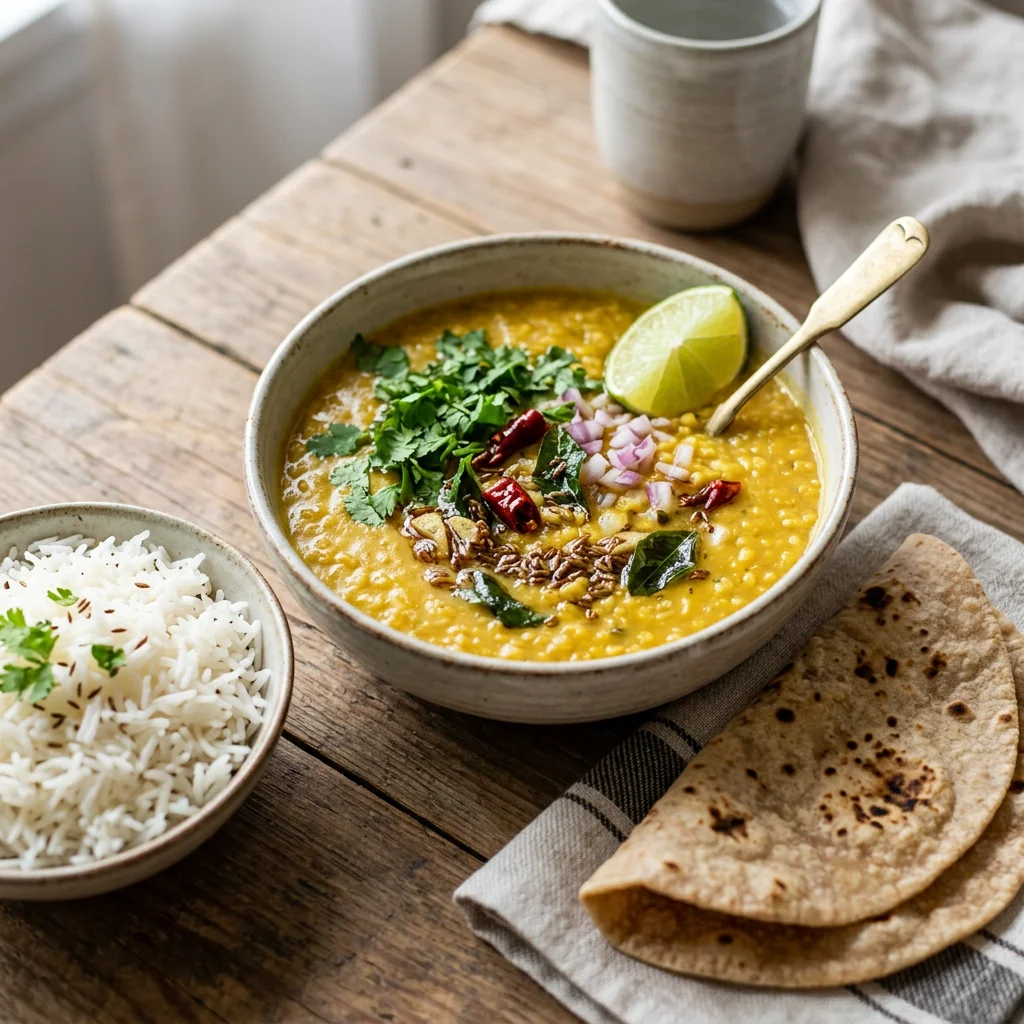
If you learn to cook one thing from Indian cuisine, let it be this. Simple dal — yellow lentils (toor dal or moong dal) simmered with turmeric, tempered with cumin and ghee, finished with a squeeze of lemon — is the most essential recipe in the Indian kitchen. It is the dish that feeds a family of four for pennies, that appears on the table every single night in hundreds of millions of households, and that provides complete nutrition in the simplest possible form. This is deliberately simpler than the masoor dal tadka: fewer spices, no onion or tomato base, no complex tempering. The simplicity is the point. This is the dal you make on Tuesday night when you are tired. The dal you make when the pantry is bare. The dal that a child can eat, an elder can digest, and a healing body can absorb without effort. It is the Indian equivalent of broth and bread — the baseline of sustenance. Ayurvedically, yellow lentils (particularly moong dal) are among the lightest and most digestible of all legumes. They provide complete protein when combined with rice, they are easy on even the weakest agni, and they deliver the sweet and astringent rasas that satisfy without burdening. The turmeric is functional — anti-inflammatory, blood-purifying, and protective of the gut lining. The cumin-in-ghee tempering is the smallest possible version of the tadka technique: just enough to kindle digestion and make the dal aromatic rather than bland.
Tridoshic when made with moong dal. Balances Vata with its warm, soupy quality. Gentle enough for Pitta. Light enough for Kapha with adjustments.
Ingredients
- 1 cup Yellow lentils (toor dal or moong dal) (rinsed until water runs clear)
- 3.5 cups Water
- 1/2 tsp Turmeric powder
- 1 tsp Salt
- 1.5 tbsp Ghee
- 1 tsp Cumin seeds
- 1/4 tsp Asafoetida (hing) (optional but traditional)
- 1 tsp Fresh ginger (grated)
- 1 tbsp Lemon juice
- 2 tbsp Fresh cilantro (chopped, for garnish)
Instructions
- Rinse the lentils in several changes of water until the water runs mostly clear. This removes surface starch and any grit.
- Combine lentils, water, turmeric, and salt in a heavy-bottomed pot. Bring to a boil over high heat, skimming any foam that rises to the surface.
- Reduce heat to low, cover with the lid slightly ajar, and simmer for 20-25 minutes until the lentils are completely soft and beginning to break apart. Stir occasionally to prevent sticking.
- While the dal simmers, prepare the tempering: heat ghee in a small pan over medium heat. Add cumin seeds and let them sizzle until fragrant and slightly darkened, about 30 seconds. Add the asafoetida and grated ginger, stir for 10 seconds.
- Pour the tempering directly into the simmered dal. It will sizzle. Stir to combine.
- Add lemon juice and adjust salt. The dal should be soupy but not watery — thin with hot water if needed or simmer longer if too liquid.
- Garnish with fresh cilantro and serve hot with steamed basmati rice or warm chapati.
How This Recipe Affects Each Dosha
Vata
The warm, soft, soupy consistency is deeply comforting for Vata. Lentils can sometimes create gas in Vata types, but the asafoetida and cumin in the tempering are specific carminatives — they prevent the bloating that legumes can cause. The ghee lubricates Vata's dryness. This is a safe, reliable Vata dinner when paired with rice and extra ghee.
Pitta
Yellow lentils are milder than red lentils and the spice profile here is gentle — no chili, no garlic, no mustard. The turmeric provides anti-inflammatory support that Pitta benefits from, and the lemon adds a touch of stimulation to Pitta's already-strong agni. A safe, everyday Pitta food.
Kapha
Lentils are one of the best legumes for Kapha — light, astringent, and protein-dense without heaviness. The warming spices kindle Kapha's sluggish digestion. The soupy consistency is slightly more Kapha-increasing than a thicker preparation, so Kapha types should cook the dal a bit thicker and be moderate with portions.
The cumin, asafoetida, and ginger in the tempering kindle agni and prevent the gas that legumes can cause. Turmeric protects and supports the gut lining. The overall effect is gently stimulating — this dal supports digestion rather than taxing it. It is one of the safest foods for weak or irregular agni.
Nourishes: Rasa (plasma), Rakta (blood), Mamsa (muscle)
Adjustments by Constitution
For Vata Types
Increase ghee to 2 tablespoons. Add a pinch of black pepper and a bay leaf during cooking. Use moong dal specifically (lightest legume for Vata). Serve over basmati rice with an extra dollop of ghee on top. Include a small side of cooked vegetables for a complete meal.
For Pitta Types
Use moong dal (mildest lentil). Replace ginger with fennel seeds in the tempering. Add extra cilantro and a squeeze of lime instead of lemon. Skip the asafoetida if Pitta is highly aggravated. Serve with cooling cucumber raita on the side.
For Kapha Types
Reduce ghee to 1 tablespoon. Add extra ginger (double it), a pinch of black pepper, and a pinch of cayenne to the tempering. Use toor dal for a slightly more stimulating effect. Cook the dal thicker rather than soupy. Serve with millet roti instead of rice to keep the meal lighter and more drying.
Seasonal Guidance
Simple dal is a year-round staple with minor seasonal adjustments. In autumn and winter, increase ghee and warming spices, and serve soupy over rice for maximum Vata pacification. In spring, lighten the ghee and add extra black pepper and dry ginger to counter Kapha season heaviness. In summer, keep the spice profile gentle (no excess ginger or pepper), increase cilantro, and serve with cooling sides. The lentil itself does not change — the accompaniments and spice intensity rotate with the seasons.
Best time of day: Lunch or dinner, served warm. Dal-rice is the classic Indian dinner — simple, complete, and easy to digest in the evening hours when agni begins to wind down.
Cultural Context
Dal-chawal (lentils and rice) is the bedrock meal of the Indian subcontinent — it crosses every regional, religious, and economic boundary. There is no Indian household, rich or poor, vegetarian or not, where dal does not appear on the table multiple times a week. The preparation varies — a Gujarati dal is sweet-sour, a Bengali dal might include mustard and coconut, a Tamil rasam is thin and peppery — but the principle is universal: lentils, spice, rice. This combination provides complete protein (lentils supply lysine, rice supplies methionine), making it one of the most nutritionally efficient vegetarian meals ever developed. The Ayurvedic tradition considers moong dal the king of legumes precisely because of this: maximum nutrition with minimum digestive burden.
Chef's Notes
The difference between good dal and great dal is the ghee tempering. Do not skip it and do not substitute oil — the cumin bloomed in ghee is what elevates this from boiled lentils to a proper dal. The foam that rises when the lentils first boil contains saponins and should be skimmed; this small step produces a cleaner-tasting dal. If using toor dal, it benefits from a 30-minute soak before cooking, though it is not strictly necessary. Moong dal (split and hulled mung beans) cooks faster and is even easier to digest — it is the best choice during illness or when agni is weak. This dal is meant to be eaten the day it is made; overnight dal loses its freshness and vitality. Make it fresh, eat it fresh.
Frequently Asked Questions
Is Simple Dal good for my dosha?
Tridoshic when made with moong dal. Balances Vata with its warm, soupy quality. Gentle enough for Pitta. Light enough for Kapha with adjustments. The warm, soft, soupy consistency is deeply comforting for Vata. Yellow lentils are milder than red lentils and the spice profile here is gentle — no chili, no garlic, no mustard. Lentils are one of the best legumes for Kapha — light, astringent, and protein-dense without heaviness.
When is the best time to eat Simple Dal?
Lunch or dinner, served warm. Dal-rice is the classic Indian dinner — simple, complete, and easy to digest in the evening hours when agni begins to wind down. Simple dal is a year-round staple with minor seasonal adjustments. In autumn and winter, increase ghee and warming spices, and serve soupy over rice for maximum Vata pacification. In spring, lighten t
How can I adjust Simple Dal for my constitution?
For Vata types: Increase ghee to 2 tablespoons. Add a pinch of black pepper and a bay leaf during cooking. Use moong dal specifically (lightest legume for Vata). Serv For Pitta types: Use moong dal (mildest lentil). Replace ginger with fennel seeds in the tempering. Add extra cilantro and a squeeze of lime instead of lemon. Skip the
What are the Ayurvedic properties of Simple Dal?
Simple Dal has Sweet, Astringent taste (rasa), Neutral to slightly Heating energy (virya), and Sweet post-digestive effect (vipaka). Its qualities (gunas) are Light, Warm, Soft. It nourishes Rasa (plasma), Rakta (blood), Mamsa (muscle). The cumin, asafoetida, and ginger in the tempering kindle agni and prevent the gas that legumes can cause. Turmeric protects and supports the gut lining. The overall effect is gently stimulating — this dal supports digestion rather than taxing it. It is one of the safest foods for weak or irregular agni.
What should you eat today?
This recipe has specific effects on each dosha, and the right meal depends on more than general guidelines. Your constitution, the current season, your birth chart's active planetary period, what you ate yesterday, how you slept — it all matters.
With Personal Alignment, you get daily food and meal guidance tailored to:
- Your prakriti and current vikriti
- Your Vedic birth chart and active planetary cycles
- The season, weather, and time of day
- Your food preferences, allergies, and restrictions
- Your feedback — it learns what works for your body and adapts
Not a generic diet plan. A living system that gets smarter about you every day.