Green Papaya Salad (Som Tum)
Thai Recipe
Overview
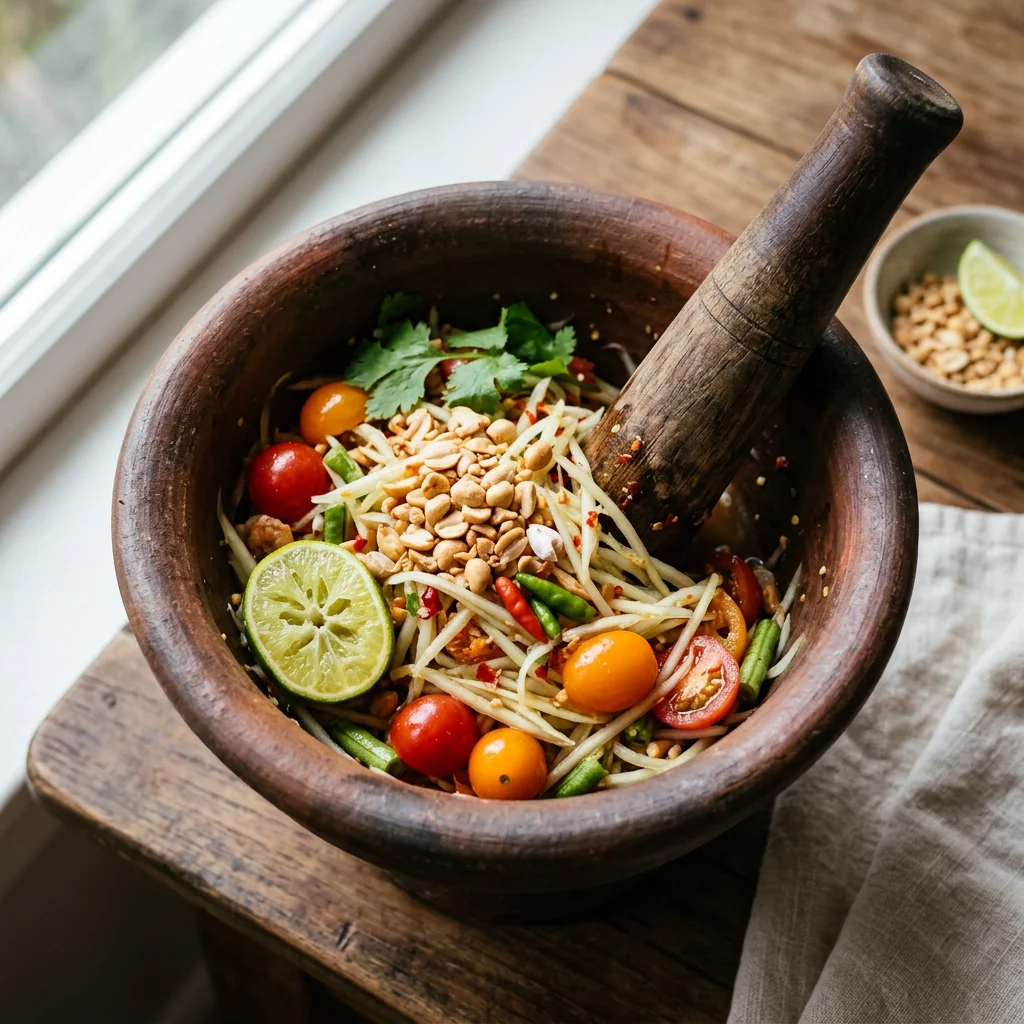
Som Tum is the iconic shredded green papaya salad of Thailand and Laos — a raw, pounding, explosive combination of unripe papaya, chili, garlic, lime, fish sauce, and palm sugar. The dish is prepared in a clay mortar (krok) with a wooden pestle (saak), and the act of making it is as central to the experience as eating it. Each ingredient is added and pounded in sequence, bruised rather than crushed, so the final salad is a textured tangle of crisp shreds, smashed tomatoes, and tender green beans dressed in a fiery, sour, salty-sweet liquid. Som Tum originated in the Isaan region of northeastern Thailand, where green papaya grows abundantly and the local palate favors dishes that are aggressively sour and spicy. From Isaan, it spread to every corner of Thailand and became the country's most popular salad. There are dozens of regional variations: Som Tum Thai (the version most familiar to outsiders, with peanuts and dried shrimp), Som Tum Poo (with fermented black crab), Som Tum Pla Ra (with fermented fish sauce), and many more. Ayurvedically, this is a powerful dish. Green papaya is bitter, astringent, and drying — it contains the enzyme papain, which actively breaks down proteins and supports digestion. The raw preparation preserves all of this enzymatic activity. The intense chili heat, pungent garlic, sour lime, and salty fish sauce create a stimulus that jolts agni awake. This is not a gentle dish; it is a metabolic accelerant.
Strongly reduces Kapha. Can aggravate both Vata and Pitta due to the raw, cold, sharp, and intensely pungent nature.
Ingredients
- 2 cups Green (unripe) papaya (peeled and shredded into thin strips)
- 3 whole Thai bird chilies (adjust to heat tolerance)
- 3 cloves Garlic (peeled)
- 6 pieces Long beans or green beans (cut into 1-inch segments)
- 6 whole Cherry tomatoes (halved)
- 2 tbsp Fish sauce
- 2 tbsp Fresh lime juice
- 1 tbsp Palm sugar (shaved)
- 1 tbsp Dried shrimp (optional)
- 2 tbsp Roasted peanuts (lightly crushed)
Instructions
- Using a large clay mortar and wooden pestle, pound the garlic and chilies together into a rough paste. This releases the volatile oils and sets the heat level for the dish.
- Add the long beans and bruise them with the pestle — a few firm strikes to crack them open without pulverizing. Add the dried shrimp if using and pound briefly.
- Add about one third of the shredded green papaya. Pound and toss with a spoon, using the pestle to bruise the papaya and the spoon to turn and mix from the bottom.
- Add the fish sauce, lime juice, and palm sugar. Pound and toss to combine, allowing the dressing to permeate the papaya. Taste — it should hit all four notes: sour, salty, sweet, and spicy.
- Add the remaining papaya and the halved cherry tomatoes. Pound gently — you want the tomatoes to crack and release their juice without turning to mush. Toss everything together.
- Transfer to a plate, scraping every drop of dressing from the mortar. Scatter crushed peanuts on top. Serve immediately with sticky rice and raw cabbage leaves on the side.
How This Recipe Affects Each Dosha
Vata
This is a challenging dish for Vata. The raw, cold, rough, and dry qualities of unripe papaya directly increase Vata, and the intense pungency and sourness can overstimulate an already sensitive nervous system. The lack of any warm, oily, or grounding element makes this salad especially aggravating during Vata season or for those with Vata digestive issues.
Pitta
The aggressive chili heat and sour lime push Pitta upward. Garlic adds more fire. While the raw papaya itself is not heating, the overall preparation is intensely stimulating and can trigger acid reflux, skin flare-ups, or irritability in Pitta-dominant individuals during warm weather.
Kapha
This is a powerfully Kapha-reducing dish. Every quality opposes Kapha stagnation: the food is raw, light, dry, sharp, and pungent. The papain enzyme actively cuts through mucus and congestion. The intense spice stimulates sluggish metabolism. Kapha types can enjoy Som Tum freely, especially during spring.
A potent agni stimulant. The raw papain enzyme directly supports protein digestion, while the chili, garlic, and lime juice collectively ignite digestive fire. This is one of the strongest agni-kindling dishes in Thai cuisine.
Nourishes: Rasa (plasma), Rakta (blood)
Adjustments by Constitution
For Vata Types
Replace raw papaya with lightly blanched green mango or steamed green beans as the base for a less raw salad. Add a drizzle of toasted sesame oil for unctuous grounding quality. Reduce the chilies to one and increase the palm sugar. Include a small handful of roasted cashews for heaviness.
For Pitta Types
Reduce chilies to one mild variety or omit entirely. Replace garlic with a thin slice of shallot. Increase the palm sugar to balance the sour-spicy intensity. Add fresh cucumber strips and shredded daikon for cooling crunch. Use more lime leaves for fragrance instead of extra lime juice.
For Kapha Types
Go full intensity — use the maximum number of chilies you can tolerate and add a pinch of white pepper. Double the garlic. Reduce the palm sugar by half. Add extra long beans and skip the peanuts. A splash of fermented fish sauce (pla ra) adds pungent, digestive-stimulating depth.
Seasonal Guidance
Best suited to spring (Kapha season) when its light, sharp, drying qualities counteract seasonal heaviness and congestion. Acceptable in summer with reduced chili for Pitta types. Not ideal for autumn or winter when the raw, cold, dry qualities will aggravate Vata — during those seasons, opt for a warm soup-based dish instead.
Best time of day: Midday as a side dish or appetizer to stimulate agni before the main meal
Cultural Context
Som Tum is the heart of Isaan food culture and has become the single most consumed dish in Thailand. Street vendors with their mortar and pestle stations are found on virtually every block in Bangkok, and each customer orders to their preference: more sour, more spicy, with crab, without peanuts. The rhythmic thwacking of the pestle against the mortar is one of the signature sounds of Thai street life. In Isaan itself, Som Tum is eaten with sticky rice and grilled chicken (gai yang) — a combination so ubiquitous that it functions as the regional meal. The dish has deep roots in Lao cuisine, reflecting the cultural continuity between northeastern Thailand and Laos across the Mekong River.
Chef's Notes
A proper mortar and pestle makes all the difference — the bruising action releases flavor compounds that a knife cannot. If you must use a bowl and the end of a rolling pin, press and twist rather than smash. The green papaya should be shredded into matchstick-thin strips; many Asian markets sell pre-shredded papaya, or you can use the large holes of a box grater. Start with fewer chilies than you think — you can always add more, but you cannot remove them. The salad does not keep well; the lime and papain enzyme continue breaking everything down, so eat it within 30 minutes of preparation.
Frequently Asked Questions
Is Green Papaya Salad (Som Tum) good for my dosha?
Strongly reduces Kapha. Can aggravate both Vata and Pitta due to the raw, cold, sharp, and intensely pungent nature. This is a challenging dish for Vata. The aggressive chili heat and sour lime push Pitta upward. This is a powerfully Kapha-reducing dish.
When is the best time to eat Green Papaya Salad (Som Tum)?
Midday as a side dish or appetizer to stimulate agni before the main meal Best suited to spring (Kapha season) when its light, sharp, drying qualities counteract seasonal heaviness and congestion. Acceptable in summer with reduced chili for Pitta types. Not ideal for autumn
How can I adjust Green Papaya Salad (Som Tum) for my constitution?
For Vata types: Replace raw papaya with lightly blanched green mango or steamed green beans as the base for a less raw salad. Add a drizzle of toasted sesame oil for For Pitta types: Reduce chilies to one mild variety or omit entirely. Replace garlic with a thin slice of shallot. Increase the palm sugar to balance the sour-spicy in
What are the Ayurvedic properties of Green Papaya Salad (Som Tum)?
Green Papaya Salad (Som Tum) has Sour, Pungent, Salty, Sweet, Astringent, Bitter taste (rasa), Heating energy (virya), and Pungent post-digestive effect (vipaka). Its qualities (gunas) are Light, Sharp, Dry, Rough. It nourishes Rasa (plasma), Rakta (blood). A potent agni stimulant. The raw papain enzyme directly supports protein digestion, while the chili, garlic, and lime juice collectively ignite digestive fire. This is one of the strongest agni-kindling dishes in Thai cuisine.
What should you eat today?
This recipe has specific effects on each dosha, and the right meal depends on more than general guidelines. Your constitution, the current season, your birth chart's active planetary period, what you ate yesterday, how you slept — it all matters.
With Personal Alignment, you get daily food and meal guidance tailored to:
- Your prakriti and current vikriti
- Your Vedic birth chart and active planetary cycles
- The season, weather, and time of day
- Your food preferences, allergies, and restrictions
- Your feedback — it learns what works for your body and adapts
Not a generic diet plan. A living system that gets smarter about you every day.