Sopa de Lima (Yucatecan Lime Soup)
Mexican Recipe
Overview
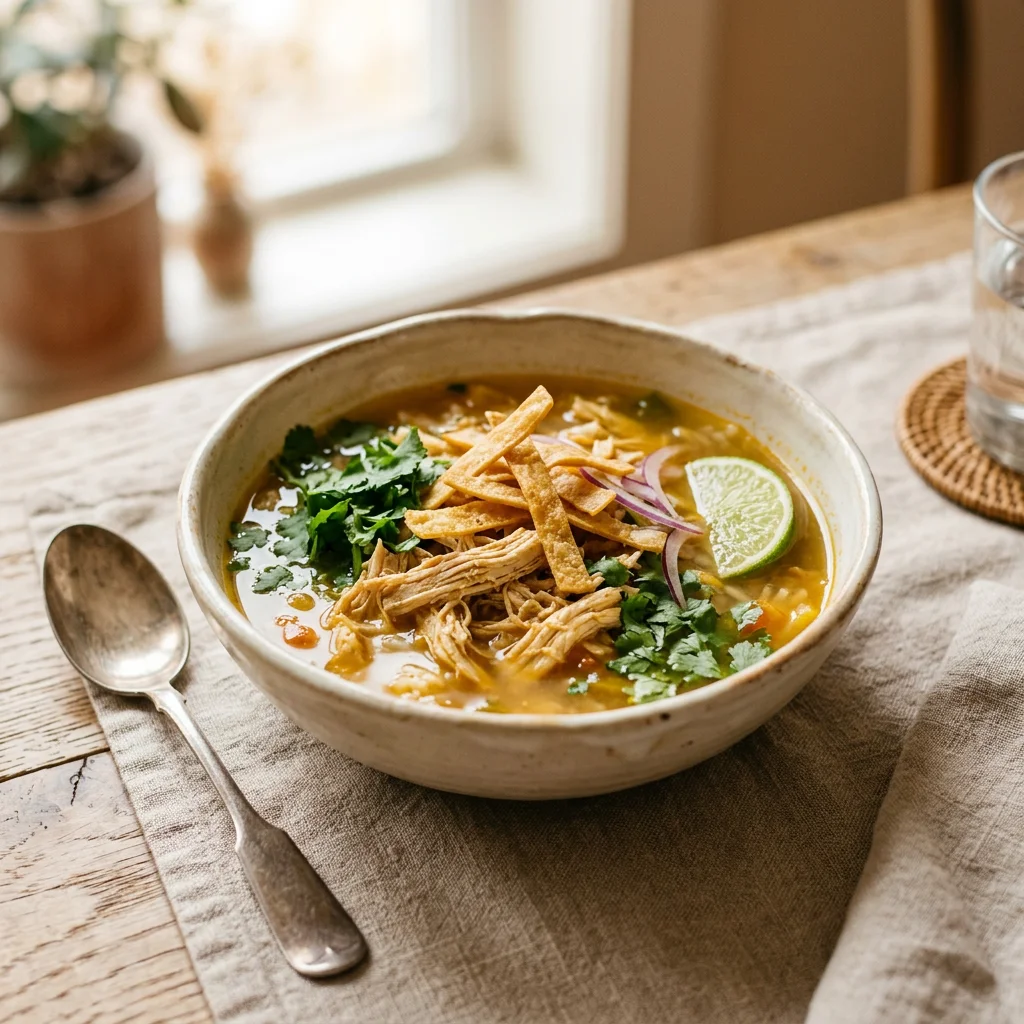
Sopa de lima is the signature soup of Mexico's Yucatan Peninsula — a bright, aromatic chicken soup with fried tortilla strips, fragrant with the region's distinctive lima agria (sour lime). Unlike the lemony brightness of Greek avgolemono or the ginger heat of Asian broths, sopa de lima has a character all its own: deeply savory from the chicken and charred vegetables, then lifted by the floral, almost bergamot-like aroma of Yucatecan limes. It is sunshine in a bowl, the kind of food that makes you understand why this particular corner of Mexico developed its own culinary identity. The Yucatan's cuisine is unique within Mexico, shaped by Mayan heritage, Caribbean influences, and the peninsula's distinctive citrus and chile varieties. Sopa de lima reflects all of these — the broth is enriched by charring onion and garlic directly over flame (a Mayan technique), seasoned with dried oregano (the Yucatecan variety, stronger and more floral than the Mexican oregano used elsewhere), and finished with lime that is squeezed in at the table so its volatile oils hit the hot broth and release their full aroma. Ayurvedically, sopa de lima is a remarkable healing food. The rich chicken broth nourishes deep tissues, the sour lime kindles agni powerfully, the charred alliums add a roasted pungency that penetrates, and the fried tortilla strips provide grounding crunch. The overall effect is strengthening and digestive-stimulating — a perfect recovery food that is simultaneously therapeutic and deeply pleasurable.
Strongly pacifies Vata. Can increase Pitta due to sour and heating qualities. Beneficial for Kapha due to warmth and lightness.
Ingredients
- 500 g Chicken thighs (bone-in, skin-on)
- 1.5 L Chicken broth
- 4 whole Limes (juiced (ideally sour limes or Key limes))
- 2 medium Tomato (charred whole)
- 1 large Onion (halved and charred)
- 4 cloves Garlic (unpeeled, charred)
- 1 green Bell pepper (charred and diced)
- 6 small Corn tortillas (cut into strips and fried crisp)
- 1 tbsp Dried oregano (Yucatecan or Mexican oregano preferred)
- 1 tsp Black pepper
- 1.5 tsp Sea salt
- 1 whole Habanero chile (optional, left whole for mild heat)
- 3 tbsp Vegetable oil (for frying tortilla strips)
- 1/4 cup Fresh cilantro (chopped, for garnish)
Instructions
- Char the tomato, onion halves, bell pepper, and unpeeled garlic directly over a gas flame or under a broiler until blackened in spots and softened, about 5-8 minutes per side. Peel the garlic and roughly chop all the charred vegetables.
- In a large pot, bring the chicken broth to a simmer. Add the chicken thighs, charred vegetables, oregano, and the whole habanero if using. Simmer for 25 minutes until the chicken is cooked through.
- While the soup simmers, cut the tortillas into thin strips. Heat the oil in a small skillet and fry the strips in batches until golden and crisp, about 2 minutes per batch. Drain on paper towels and salt lightly.
- Remove the chicken from the broth. Shred the meat, discarding skin and bones. Remove the habanero (if used) before it splits.
- Return the shredded chicken to the pot. Season with salt and black pepper.
- Squeeze the juice of 2 limes into the pot and stir. Taste and adjust seasoning.
- Ladle into bowls. Top with crispy tortilla strips, fresh cilantro, and serve the remaining limes in wedges at the table so each person can squeeze more to taste.
How This Recipe Affects Each Dosha
Vata
Excellent for Vata. The warm broth, nourishing chicken, sour lime, and crispy tortillas provide warmth, grounding, and digestive stimulation in perfect balance. The charred vegetables add a roasted depth that is particularly soothing for Vata's cold, anxious quality. This is comfort food that heals.
Pitta
The strong sour taste from lime and the heating charred vegetables can aggravate Pitta, especially in warm weather. The habanero should be omitted entirely for Pitta types. However, the nourishing broth base is supportive, and moderate portions can be tolerated.
Kapha
Well-suited for Kapha. The light broth, pungent lime, and stimulating charred vegetables all counter Kapha's heavy, cold tendencies. The sour taste cuts through mucus, and the overall preparation is lighter than cream-based soups. Keep the tortilla strips moderate.
Strongly kindles agni. The sour lime juice is a powerful digestive stimulant, the charred alliums add pungent warmth, and the light broth carries these qualities efficiently into the digestive tract. This is one of the most agni-supportive soups in Latin American cuisine.
Nourishes: Rasa (plasma), Rakta (blood), Mamsa (muscle), Majja (nerve)
Adjustments by Constitution
For Vata Types
This soup is already ideal for Vata. Add extra fried tortilla strips and a few avocado slices. Use all the lime juice at serving for maximum digestive stimulation.
For Pitta Types
Omit the habanero entirely. Use only 2 limes instead of 4. Replace bell pepper with zucchini. Add extra cilantro at serving — its cooling quality counteracts the soup's heat. Serve at warm rather than very hot temperature.
For Kapha Types
Include the habanero and add extra black pepper. Skip the fried tortilla strips — instead, serve with a few baked tortilla chips. Increase the lime juice and cilantro. Add a handful of shredded raw cabbage as a garnish for extra crunch and lightness.
Seasonal Guidance
Sopa de lima is a three-season soup, most beneficial from autumn through spring when its warming quality supports the body against cold. In the Yucatan, where temperatures rarely drop below 20C, it is consumed year-round — the lime provides enough cooling balance to work even in warm weather. Outside the tropics, reserve it for cooler months. In early spring, it makes an excellent transitional soup, helping clear winter's accumulated heaviness with its sour, penetrating quality. Summer is the only season to approach with caution, as the heating nature can aggravate Pitta.
Best time of day: Lunch or early dinner, when agni is strong enough to process the stimulating sour-pungent qualities
Cultural Context
Sopa de lima is the culinary signature of the Yucatan Peninsula, as closely identified with the region as mole is with Oaxaca or carnitas with Michoacan. Its origins are Mayan — the technique of charring vegetables on open flame descends directly from pre-Columbian cooking methods, while the use of sour citrus reflects the peninsula's unique botanical heritage. The soup is served in homes and restaurants across Merida, Valladolid, and Campeche, and Yucatecan families consider it essential comfort food. It is often the first thing returning expatriates request and the dish that homesick Yucatecans miss most. Every family's version differs slightly, but the lime-charred vegetable-tortilla trinity is sacred.
Chef's Notes
The charring step is not decorative — it is foundational to sopa de lima's flavor. The Maillard reaction on the vegetables creates smoky depth that you cannot replicate by simply sauteing. Use an open gas flame, a dry cast iron skillet, or a broiler. Yucatecan limes (lima agria) have a floral quality distinct from Persian limes; Key limes are the closest substitute. Add the lime juice in stages: some during cooking for depth, and more at the table for brightness. The habanero should swim whole in the broth — it adds a gentle perfume of heat without making the soup spicy. If it splits, the soup becomes volcanic. Tortilla strips must be fried fresh; stale ones become soggy immediately.
Frequently Asked Questions
Is Sopa de Lima (Yucatecan Lime Soup) good for my dosha?
Strongly pacifies Vata. Can increase Pitta due to sour and heating qualities. Beneficial for Kapha due to warmth and lightness. Excellent for Vata. The strong sour taste from lime and the heating charred vegetables can aggravate Pitta, especially in warm weather. Well-suited for Kapha.
When is the best time to eat Sopa de Lima (Yucatecan Lime Soup)?
Lunch or early dinner, when agni is strong enough to process the stimulating sour-pungent qualities Sopa de lima is a three-season soup, most beneficial from autumn through spring when its warming quality supports the body against cold. In the Yucatan, where temperatures rarely drop below 20C, it is
How can I adjust Sopa de Lima (Yucatecan Lime Soup) for my constitution?
For Vata types: This soup is already ideal for Vata. Add extra fried tortilla strips and a few avocado slices. Use all the lime juice at serving for maximum digestive For Pitta types: Omit the habanero entirely. Use only 2 limes instead of 4. Replace bell pepper with zucchini. Add extra cilantro at serving — its cooling quality coun
What are the Ayurvedic properties of Sopa de Lima (Yucatecan Lime Soup)?
Sopa de Lima (Yucatecan Lime Soup) has Sour, Pungent, Sweet, Salty taste (rasa), Heating energy (virya), and Sour post-digestive effect (vipaka). Its qualities (gunas) are Light, Warm, Oily. It nourishes Rasa (plasma), Rakta (blood), Mamsa (muscle), Majja (nerve). Strongly kindles agni. The sour lime juice is a powerful digestive stimulant, the charred alliums add pungent warmth, and the light broth carries these qualities efficiently into the digestive tract. This is one of the most agni-supportive soups in Latin American cuisine.
What should you eat today?
This recipe has specific effects on each dosha, and the right meal depends on more than general guidelines. Your constitution, the current season, your birth chart's active planetary period, what you ate yesterday, how you slept — it all matters.
With Personal Alignment, you get daily food and meal guidance tailored to:
- Your prakriti and current vikriti
- Your Vedic birth chart and active planetary cycles
- The season, weather, and time of day
- Your food preferences, allergies, and restrictions
- Your feedback — it learns what works for your body and adapts
Not a generic diet plan. A living system that gets smarter about you every day.