Tamagoyaki (Rolled Omelette)
Japanese Recipe
Overview
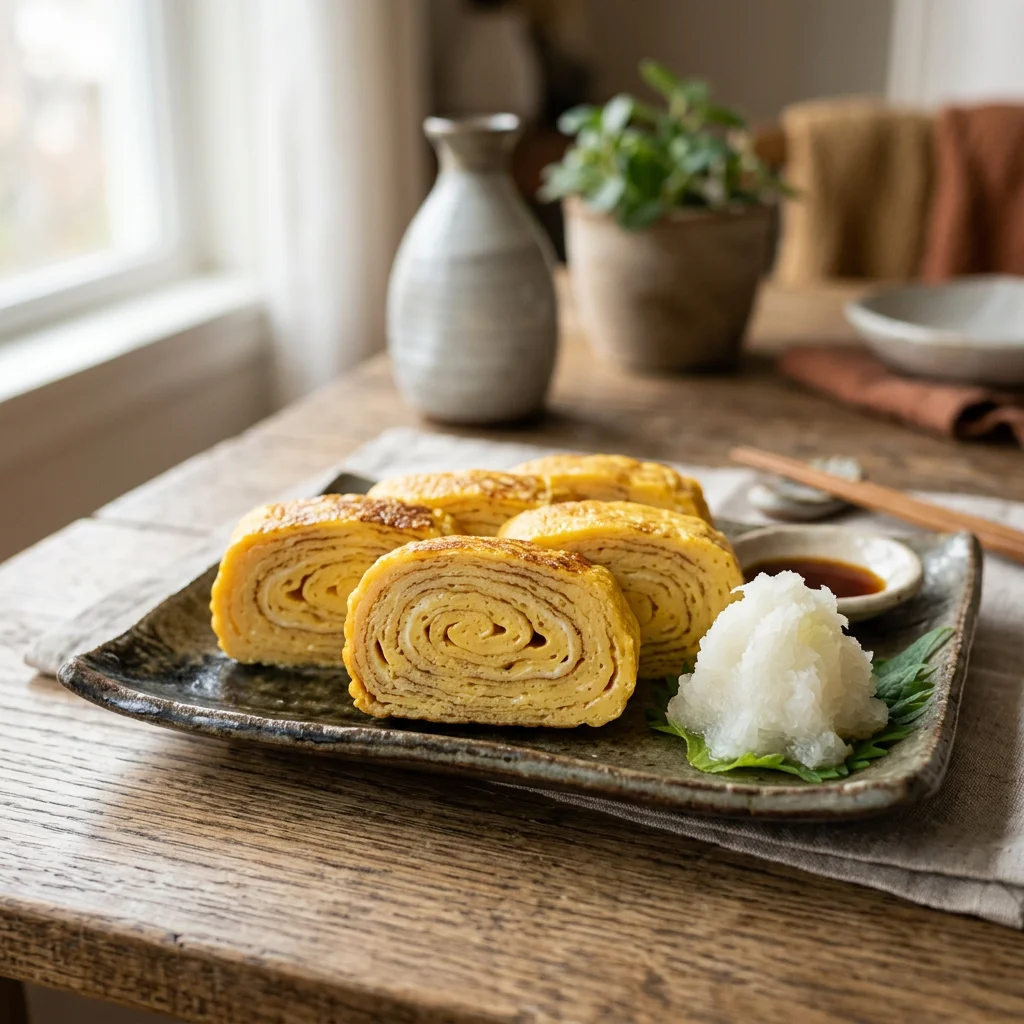
Tamagoyaki is a Japanese rolled omelette — eggs seasoned with dashi, mirin, and a touch of soy sauce, cooked in thin layers in a rectangular pan and rolled upon themselves to create a log of tender, layered egg. When sliced, each piece reveals delicate concentric rings. It is a fixture of the Japanese breakfast, a staple in bento boxes, and a cornerstone of sushi-ya (sushi restaurant) craft, where the quality of a chef's tamagoyaki is considered a test of fundamental skill. The technique is meditative: a thin layer of seasoned egg is poured into the hot pan, allowed to set just barely, then rolled to one end. Another thin layer is poured underneath the rolled egg, allowed to set, and rolled again. This is repeated four to six times, building up the characteristic layered structure. The result should be moist, slightly sweet, and yielding — never dry or rubbery. Ayurvedically, eggs are considered sattvic when fresh and prepared simply. They are one of the most easily digestible animal proteins, providing rapid nourishment to weakened or depleted tissues. The addition of dashi and mirin transforms plain eggs into something more complex — the umami and sweetness balance the egg's inherent heaviness and make it more palatable for daily consumption.
Balances Vata well due to heavy, warm, oily qualities. Neutral to mildly aggravating for Pitta. May increase Kapha if eaten in excess due to heaviness.
Ingredients
- 4 large Eggs
- 2 tbsp Dashi stock
- 1 tbsp Mirin
- 1 tsp Soy sauce
- 1 tsp Sugar (optional, for the sweeter Kanto style)
- 1 tbsp Vegetable oil (for the pan)
- 2 tbsp Grated daikon (for serving)
- 1 tsp Soy sauce (for the daikon dip)
Instructions
- Beat the eggs gently in a bowl — do not over-whisk. You want them combined but not frothy. Mix in the dashi, mirin, soy sauce, and sugar if using. Strain through a fine mesh strainer for the smoothest result.
- Heat a tamagoyaki pan (or a small non-stick pan) over medium-low heat. Brush lightly with oil using a folded paper towel — the pan should be just barely oiled, not pooling.
- Pour a thin layer of egg mixture into the pan, tilting to cover the entire surface evenly. When the surface is just barely set but still slightly moist on top (about 30 seconds), use chopsticks to roll the egg from one end to the other, forming a log.
- Push the rolled egg to the far end of the pan. Re-oil the empty surface with the paper towel. Pour another thin layer of egg mixture, lifting the rolled egg to let the new liquid flow underneath.
- When this layer is barely set, roll the log back over it, incorporating the new layer into the roll. Repeat this process 3-4 more times until all the egg mixture is used.
- Remove the tamagoyaki from the pan and place it on a bamboo sushi mat. Roll tightly and let it rest for 2-3 minutes to set its shape.
- Slice into 1-inch pieces and serve with a small mound of grated daikon seasoned with a few drops of soy sauce.
How This Recipe Affects Each Dosha
Vata
Eggs are one of the best Vata-balancing proteins — heavy, warm, oily, and smooth. Every quality that Vata lacks, eggs provide. The dashi adds mineral-rich umami, and the mirin contributes a gentle sweetness that further nourishes depleted Vata. This is an excellent breakfast for Vata constitutions.
Pitta
Eggs are mildly heating, which can aggravate Pitta when combined with other heating factors. However, the dashi adds a cooling, mineral-rich element, and the small serving size of tamagoyaki keeps it manageable. Pitta types can enjoy this regularly in moderate portions.
Kapha
The heavy, oily quality of eggs increases Kapha, particularly the yolk. Combined with the sweet taste from mirin and sugar, this can contribute to Kapha accumulation. Kapha types should eat tamagoyaki in smaller portions and balance it with pungent or bitter accompaniments.
Requires moderate agni to digest. The heavy, oily quality of eggs demands functional digestive fire. The dashi and mirin aid processing, but those with weak agni should keep portions small.
Nourishes: Rasa (plasma), Rakta (blood), Mamsa (muscle), Meda (fat), Shukra (reproductive)
Adjustments by Constitution
For Vata Types
Add a pinch of shichimi togarashi (seven-spice) when serving for extra warmth. Pair with warm miso soup and rice for a grounding breakfast. The standard recipe is already well-suited to Vata.
For Pitta Types
Omit the sugar and reduce soy sauce. Serve with extra grated daikon, which is cooling and aids digestion. Pair with cooling cucumber pickles (sunomono) on the side. Avoid pairing with other heating foods.
For Kapha Types
Use only egg whites for 2 of the 4 eggs to reduce heaviness. Omit sugar entirely. Add a pinch of ground black pepper or sancho pepper to the egg mixture. Serve with a generous pile of grated daikon and ginger to counteract the heaviness.
Seasonal Guidance
Best in cooler months when the body needs heavier, more nourishing foods and agni is naturally stronger. In autumn and winter, tamagoyaki is a perfect warming breakfast protein. In spring, serve with fresh greens and daikon to lighten the meal. In summer, the heavier quality of eggs can be burdensome — eat smaller portions and pair with cooling accompaniments like cucumber and pickled ginger.
Best time of day: Breakfast or as part of a bento lunch. Eggs are best digested earlier in the day when agni is building.
Cultural Context
Tamagoyaki is one of the foundational skills taught to sushi apprentices in Japan. A chef's tamagoyaki reveals their mastery of heat control, timing, and seasoning — there is nowhere to hide in such a simple preparation. At traditional Edo-mae sushi restaurants, the tamagoyaki served at the end of the meal is the chef's signature, and regular customers judge a new restaurant by this single item. In the home kitchen, tamagoyaki appears in nearly every bento box, where its golden slices provide both protein and visual appeal. The sweet Kanto style and savory Kansai style reflect the broader culinary divide between Tokyo and Osaka.
Chef's Notes
Medium-low heat is essential — too hot and the layers cook through before you can roll, resulting in a tough, overcooked omelette. The egg should be barely set, still slightly wet on top, when you begin rolling. A tamagoyaki pan (rectangular) makes this much easier, but a small round pan works if you trim the edges. For the sweetest, most traditional version (Edo-mae style, as served at sushi counters), increase the sugar to 1 tablespoon. For the savory Kansai style, omit sugar entirely. The bamboo mat step is optional but gives a beautiful even shape. Tamagoyaki keeps well refrigerated and is excellent cold in bento boxes.
Frequently Asked Questions
Is Tamagoyaki (Rolled Omelette) good for my dosha?
Balances Vata well due to heavy, warm, oily qualities. Neutral to mildly aggravating for Pitta. May increase Kapha if eaten in excess due to heaviness. Eggs are one of the best Vata-balancing proteins — heavy, warm, oily, and smooth. Eggs are mildly heating, which can aggravate Pitta when combined with other heating factors. The heavy, oily quality of eggs increases Kapha, particularly the yolk.
When is the best time to eat Tamagoyaki (Rolled Omelette)?
Breakfast or as part of a bento lunch. Eggs are best digested earlier in the day when agni is building. Best in cooler months when the body needs heavier, more nourishing foods and agni is naturally stronger. In autumn and winter, tamagoyaki is a perfect warming breakfast protein. In spring, serve with
How can I adjust Tamagoyaki (Rolled Omelette) for my constitution?
For Vata types: Add a pinch of shichimi togarashi (seven-spice) when serving for extra warmth. Pair with warm miso soup and rice for a grounding breakfast. The standa For Pitta types: Omit the sugar and reduce soy sauce. Serve with extra grated daikon, which is cooling and aids digestion. Pair with cooling cucumber pickles (sunomono
What are the Ayurvedic properties of Tamagoyaki (Rolled Omelette)?
Tamagoyaki (Rolled Omelette) has Sweet, Salty taste (rasa), Heating energy (virya), and Sweet post-digestive effect (vipaka). Its qualities (gunas) are Heavy, Warm, Oily, Smooth. It nourishes Rasa (plasma), Rakta (blood), Mamsa (muscle), Meda (fat), Shukra (reproductive). Requires moderate agni to digest. The heavy, oily quality of eggs demands functional digestive fire. The dashi and mirin aid processing, but those with weak agni should keep portions small.
What should you eat today?
This recipe has specific effects on each dosha, and the right meal depends on more than general guidelines. Your constitution, the current season, your birth chart's active planetary period, what you ate yesterday, how you slept — it all matters.
With Personal Alignment, you get daily food and meal guidance tailored to:
- Your prakriti and current vikriti
- Your Vedic birth chart and active planetary cycles
- The season, weather, and time of day
- Your food preferences, allergies, and restrictions
- Your feedback — it learns what works for your body and adapts
Not a generic diet plan. A living system that gets smarter about you every day.