Tibs
Ethiopian Recipe
Overview
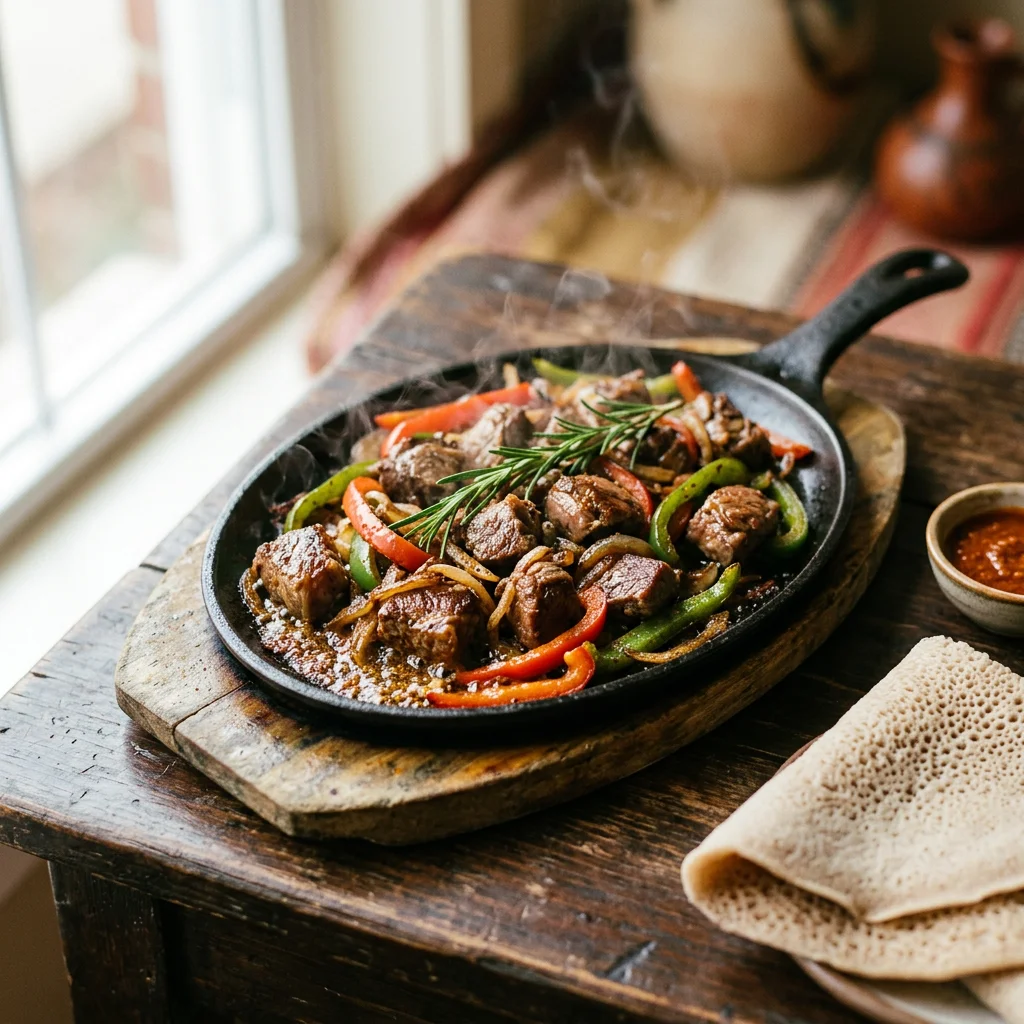
Tibs is the Ethiopian sauteed meat and vegetable dish that represents the faster, more spontaneous side of Ethiopian cooking — a quick, high-heat preparation where cubed meat (traditionally beef or lamb, though chicken and vegetable versions exist) is seared with onions, peppers, tomatoes, garlic, and rosemary until caramelized on the outside and juicy within. Where wots are slow, patient, braise-centric dishes, tibs is fast, hot, and celebratory — the dish of the grill, the roadside restaurant, the impromptu gathering. There are many styles of tibs across Ethiopia. "Derek tibs" is the dry-fried version with minimal sauce, served sizzling on a clay plate. "Zilzil tibs" uses strips of meat rather than cubes. "Awaze tibs" incorporates the fiery awaze paste (berbere mixed with honey wine or tej) for a wet, spicy preparation. What unites them all is the searing technique — meat cooked fast over high heat in niter kibbeh or oil, with aromatic vegetables added in stages to preserve their texture, and a final flourish of fresh rosemary that is distinctly Ethiopian and unlike anything in other African cuisines. The Ayurvedic profile of tibs reflects its preparation: quick-cooked meat retains more of its heating, building properties than long-braised preparations. The high-heat searing creates a slight char that adds a bitter element, while the fresh rosemary, garlic, and ginger provide pungent digestive support. The combination of protein with quick-cooked vegetables creates a meal that is simultaneously nourishing and relatively easy to digest — the meat has not been cooked to the point of heaviness, and the vegetables retain their vitality.
Strongly pacifies Vata. Increases Pitta moderately. Increases Kapha if eaten in large portions, though the spicing and quick-cooking method help.
Ingredients
- 500 g Beef sirloin or lamb (cut into 1-inch cubes)
- 2 large Red onion (cut into thick half-moons)
- 1 large Green bell pepper (cut into chunks)
- 2 medium Tomato (cut into wedges)
- 2 sprigs Fresh rosemary (leaves stripped and roughly chopped)
- 4 cloves Garlic (sliced)
- 1 tbsp Fresh ginger (grated)
- 3 tbsp Niter kibbeh (Ethiopian spiced butter)
- 2 whole Fresh green chili (slit lengthwise)
- 1/2 tsp Black pepper (freshly ground)
- 1 tsp Berbere or mitmita (optional, for a spicier version)
- 1 tsp Salt
Instructions
- Pat the meat cubes thoroughly dry with paper towels. Season with salt and black pepper. Having dry meat is essential for achieving a proper sear rather than a steam.
- Heat a large, heavy skillet or wok over high heat until very hot. Add the niter kibbeh and let it shimmer.
- Add the meat in a single layer, working in batches if necessary to avoid crowding. Sear without moving for 2-3 minutes until a deep brown crust forms on one side. Flip and sear the other side for 2 minutes. The meat should be caramelized outside but still pink inside. Remove and set aside.
- In the same pan, add the sliced onions and sautee for 2-3 minutes until they soften slightly but retain some crunch. Add the garlic, ginger, and green chilies, stirring for 30 seconds.
- Add the bell pepper and tomato wedges. Toss over high heat for 2 minutes — the vegetables should be warmed through but still firm and bright.
- Return the meat to the pan along with the fresh rosemary and optional berbere or mitmita. Toss everything together over high heat for 1-2 minutes, letting the rosemary release its oils.
- Serve immediately on a hot plate or sizzling clay dish. Tibs waits for no one — it should arrive at the table still steaming and fragrant with rosemary.
How This Recipe Affects Each Dosha
Vata
Quick-seared meat in niter kibbeh is deeply grounding and nourishing for Vata. The heavy, warm, oily, and sweet qualities address every Vata deficiency. The protein builds mamsa and asthi dhatus, while the ginger and garlic prevent the heaviness from stagnating in the digestive tract.
Pitta
The searing technique, garlic, ginger, chilies, and niter kibbeh all add heat. Pitta types should enjoy tibs in moderation, especially during cooler months. The fresh rosemary provides a mildly bitter element that partially balances the heat.
Kapha
Meat is generally Kapha-increasing due to its heavy, sweet qualities. However, the quick-cooking method preserves a lighter quality than slow-braised preparations, and the pungent spices help stimulate Kapha digestion. Moderate portions with extra vegetables are appropriate.
The quick searing preserves the meat's natural enzymatic activity while the niter kibbeh spices, garlic, ginger, and rosemary all support digestion. Well-seared tibs is easier to digest than either raw or overcooked meat. The high heat also creates maillard compounds that stimulate appetite.
Nourishes: Mamsa (muscle), Rakta (blood), Asthi (bone), Meda (fat)
Adjustments by Constitution
For Vata Types
Use generous niter kibbeh (4 tablespoons). Omit the green chilies and add a pinch of korarima (Ethiopian cardamom) for warmth without aggression. Use lamb, which is more warming and grounding than beef, and serve with warm injera.
For Pitta Types
Substitute plain ghee for niter kibbeh. Omit garlic, green chilies, and berbere. Increase rosemary and add fresh thyme. Use chicken breast instead of red meat for a cooler protein, and add extra vegetables (zucchini, green beans). Serve alongside ayib and gomen.
For Kapha Types
Reduce niter kibbeh to 1 tablespoon. Add a full tablespoon of mitmita and extra black pepper. Use the leanest cut available and increase the vegetable ratio. Bishop's weed (ajwain), if available, added with the garlic provides extra digestive fire. Serve with gomen instead of injera.
Seasonal Guidance
Best during cooler months when the body needs heavy, warming, grounding foods and agni is naturally stronger. In autumn and winter, make tibs a regular feature with generous niter kibbeh and warming spices. In spring, lighten with more vegetables and less meat. Not ideal for daily summer consumption, though occasional servings with extra vegetables and less spice are fine.
Best time of day: Lunch, when agni is strongest and can handle the heavy protein
Cultural Context
Tibs occupies a different cultural space than wot — where wot is the patient, domestic, traditionally feminine preparation, tibs carries associations with celebration, masculinity, and the outdoors. In Ethiopian cities, tibs houses and grills are gathering places where men socialize over sizzling meat and cold beer. For holidays and special occasions, a whole animal might be slaughtered and served as tibs for the community. The sizzling clay plate presentation — where the tibs arrives still popping and steaming at the table — is a theatrical culinary tradition that turns every serving into a small celebration.
Chef's Notes
The secret to great tibs is screaming-hot heat and not overcrowding the pan. If the pan is too cool or too full, the meat will steam instead of sear, producing a gray, chewy result. Work in batches if needed. Fresh rosemary is non-negotiable — it is the herb that defines tibs and distinguishes it from similar preparations elsewhere. For awaze tibs, mix 2 tablespoons of berbere with 1 tablespoon of honey and 1 tablespoon of tej (honey wine) or dry red wine to make awaze paste, and toss it with the meat at the end. Niter kibbeh is strongly preferred over plain butter — its infused spices (fenugreek, bishop's weed, korarima) create the authentic flavor foundation.
Frequently Asked Questions
Is Tibs good for my dosha?
Strongly pacifies Vata. Increases Pitta moderately. Increases Kapha if eaten in large portions, though the spicing and quick-cooking method help. Quick-seared meat in niter kibbeh is deeply grounding and nourishing for Vata. The searing technique, garlic, ginger, chilies, and niter kibbeh all add heat. Meat is generally Kapha-increasing due to its heavy, sweet qualities.
When is the best time to eat Tibs?
Lunch, when agni is strongest and can handle the heavy protein Best during cooler months when the body needs heavy, warming, grounding foods and agni is naturally stronger. In autumn and winter, make tibs a regular feature with generous niter kibbeh and warming s
How can I adjust Tibs for my constitution?
For Vata types: Use generous niter kibbeh (4 tablespoons). Omit the green chilies and add a pinch of korarima (Ethiopian cardamom) for warmth without aggression. Use For Pitta types: Substitute plain ghee for niter kibbeh. Omit garlic, green chilies, and berbere. Increase rosemary and add fresh thyme. Use chicken breast instead of
What are the Ayurvedic properties of Tibs?
Tibs has Sweet, Pungent, Salty taste (rasa), Heating energy (virya), and Sweet post-digestive effect (vipaka). Its qualities (gunas) are Heavy, Warm, Oily. It nourishes Mamsa (muscle), Rakta (blood), Asthi (bone), Meda (fat). The quick searing preserves the meat's natural enzymatic activity while the niter kibbeh spices, garlic, ginger, and rosemary all support digestion. Well-seared tibs is easier to digest than either raw or overcooked meat. The high heat also creates maillard compounds that stimulate appetite.
What should you eat today?
This recipe has specific effects on each dosha, and the right meal depends on more than general guidelines. Your constitution, the current season, your birth chart's active planetary period, what you ate yesterday, how you slept — it all matters.
With Personal Alignment, you get daily food and meal guidance tailored to:
- Your prakriti and current vikriti
- Your Vedic birth chart and active planetary cycles
- The season, weather, and time of day
- Your food preferences, allergies, and restrictions
- Your feedback — it learns what works for your body and adapts
Not a generic diet plan. A living system that gets smarter about you every day.