Tom Kha Gai
Thai Recipe
Overview
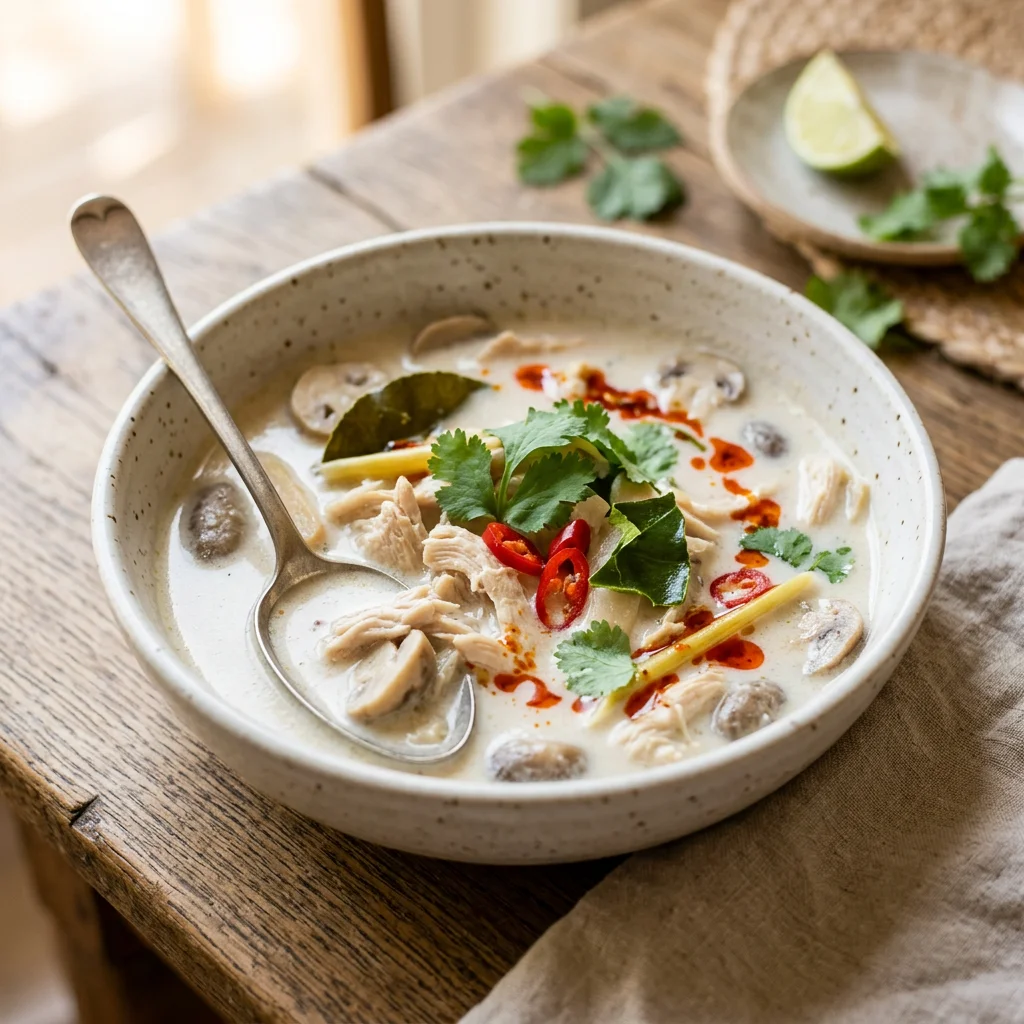
Tom Kha Gai is Thailand's aromatic coconut-galangal chicken soup — a dish that walks the line between medicine and comfort food with extraordinary grace. The name translates literally: tom (boil), kha (galangal), gai (chicken). Unlike the sharper, clearer Tom Yum, Tom Kha wraps its heat and sourness in a blanket of rich coconut milk, creating a soup that is simultaneously warming and cooling, stimulating and soothing. The backbone of the dish is the holy trinity of Thai aromatics: galangal, lemongrass, and kaffir lime leaves. These three ingredients appear together so frequently in Thai cooking that they form a flavor complex as fundamental as the French mirepoix. Galangal is sharper, more camphoraceous, and more medicinally potent than its cousin ginger — it has been used in Southeast Asian herbal medicine for centuries to treat digestive complaints, nausea, and respiratory congestion. From an Ayurvedic perspective, Tom Kha Gai is a remarkably well-balanced soup. The coconut milk provides sweet, cooling, and nourishing qualities that temper the pungent heat of galangal and chili. The lime juice adds sour taste, the fish sauce adds salty, and the palm sugar rounds out the profile. Thai cuisine is often described as achieving harmony among all six tastes, and Tom Kha Gai is one of the clearest examples of that principle in a single bowl.
Strongly pacifies Vata. Mildly increases Pitta and Kapha due to the richness of coconut milk and warming spices.
Used throughout Thailand as a restorative soup during cold and flu season. The galangal-lemongrass combination is a traditional Southeast Asian remedy for respiratory congestion, nausea, and sluggish digestion.
Ingredients
- 2 cans (400ml each) Coconut milk (full-fat, shaken)
- 400 g Chicken thighs (boneless, sliced into thin strips)
- 3 inches Galangal (sliced into thin rounds)
- 3 stalks Lemongrass (cut into 2-inch pieces, bruised with the back of a knife)
- 6 leaves Kaffir lime leaves (torn in half, central rib removed)
- 200 g Oyster mushrooms (torn into strips)
- 3 whole Thai bird chilies (lightly crushed)
- 3 tbsp Fish sauce
- 3 tbsp Fresh lime juice
- 1 tbsp Palm sugar (or coconut sugar)
- 1/4 cup Fresh cilantro (leaves and stems, roughly chopped)
- 3 small Shallots (halved)
Instructions
- Pour one can of coconut milk into a saucepan over medium heat. Add the galangal, lemongrass, kaffir lime leaves, shallots, and chilies. Bring to a gentle simmer and cook for 5 minutes to infuse the coconut milk with the aromatics.
- Add the chicken slices and stir gently to separate them. Simmer for 5-6 minutes until the chicken is just cooked through.
- Pour in the second can of coconut milk and add the mushrooms. Return to a gentle simmer and cook for 3-4 minutes until the mushrooms are tender.
- Remove the pot from heat. Stir in the fish sauce, lime juice, and palm sugar. Taste and adjust — the balance should be creamy, sour, salty, and gently sweet with a background hum of heat.
- Ladle into bowls, making sure each serving gets some of the aromatic solids (galangal, lemongrass, and lime leaves are left in for fragrance but not eaten).
- Garnish with fresh cilantro leaves, an extra squeeze of lime, and a drizzle of coconut cream from the top of an unshaken can if desired.
How This Recipe Affects Each Dosha
Vata
This is one of the best soups for Vata pacification. The oily, warm, smooth coconut broth is deeply grounding. Galangal and lemongrass kindle digestive fire without the harshness that can aggravate Vata, while the sour lime and salty fish sauce both directly reduce Vata. The richness provides the substantive nourishment that Vata craves.
Pitta
The coconut milk base is cooling and sweet, which Pitta appreciates, but the galangal and chilies add pungent heat that can aggravate Pitta during summer or when inflammation is present. The sour lime also increases Pitta mildly. Enjoyable in moderation during cool weather.
Kapha
The heavy, oily quality of full-fat coconut milk can increase Kapha, leading to congestion and sluggishness. However, the pungent galangal and lemongrass help counteract this somewhat by stimulating metabolism and cutting through mucus. Best consumed occasionally, not as a daily staple for Kapha types.
Galangal and lemongrass kindle agni effectively while the coconut milk prevents overstimulation. This creates a gentle stoking of digestive fire — enough to improve digestion without the intensity of a purely pungent dish.
Nourishes: Rasa (plasma), Mamsa (muscle), Meda (fat), Asthi (bone)
Adjustments by Constitution
For Vata Types
Use the full amount of coconut milk and increase the galangal slightly. Add a handful of fresh Thai basil at the end for extra warmth. Use bone-in chicken for deeper nourishment. Serve with jasmine rice to make the meal more grounding.
For Pitta Types
Reduce the chilies to one or omit entirely. Increase the kaffir lime leaves to eight. Swap chicken for tofu or white fish to reduce heating quality. Add a handful of fresh cilantro stems into the broth while simmering for extra cooling. Use lime leaves rather than lime juice for aroma without excess sour taste.
For Kapha Types
Replace one can of coconut milk with chicken bone broth to lighten the dish. Double the galangal and lemongrass. Add a generous amount of fresh Thai bird chilies. Include warming vegetables like daikon radish. Squeeze extra lime at serving to add astringency.
Seasonal Guidance
Best during Vata season (autumn) and the cold months of winter when the body craves warm, rich, oily nourishment. The warming aromatics help counter the cold and dryness of these seasons. In summer, lighten the dish by reducing coconut milk and increasing lime. In spring, it can feel too heavy — opt for the clearer Tom Yum instead.
Best time of day: Lunch or early dinner when digestive fire can handle the richness of coconut milk
Cultural Context
Tom Kha Gai occupies a special place in Thai cuisine as the gentler counterpart to the more famous Tom Yum. While Tom Yum is bracing and clear, Tom Kha is enveloping and rich. The dish originates from central Thailand and reflects the region's access to both coconut palms and the aromatic rhizomes that grow in the country's tropical forests. Galangal has been traded across Southeast Asia for over a thousand years and appears in ancient Thai medicinal texts as a treatment for stomach ailments, cold conditions, and low vitality. In Thailand, this soup is often served family-style in a large shared bowl, with each person ladling portions over their own plate of steamed jasmine rice.
Chef's Notes
The aromatics (galangal, lemongrass, kaffir lime leaves) are for infusing — not eating. Leave them in the bowl for fragrance but push them aside as you eat. Fresh galangal is essential and cannot be replaced by ginger; the flavor profiles are completely different. If you cannot find fresh galangal, frozen is far better than dried. For a richer soup, use the thick cream from the top of an unshaken can for the initial simmer and the thinner liquid for the second addition. The soup should never reach a rolling boil after the coconut milk is added — high heat can cause it to separate.
Frequently Asked Questions
Is Tom Kha Gai good for my dosha?
Strongly pacifies Vata. Mildly increases Pitta and Kapha due to the richness of coconut milk and warming spices. This is one of the best soups for Vata pacification. The coconut milk base is cooling and sweet, which Pitta appreciates, but the galangal and chilies add pungent heat that can aggravate Pitta during summer or when inflammation is present. The heavy, oily quality of full-fat coconut milk can increase Kapha, leading to congestion and sluggishness.
When is the best time to eat Tom Kha Gai?
Lunch or early dinner when digestive fire can handle the richness of coconut milk Best during Vata season (autumn) and the cold months of winter when the body craves warm, rich, oily nourishment. The warming aromatics help counter the cold and dryness of these seasons. In summer, l
How can I adjust Tom Kha Gai for my constitution?
For Vata types: Use the full amount of coconut milk and increase the galangal slightly. Add a handful of fresh Thai basil at the end for extra warmth. Use bone-in chi For Pitta types: Reduce the chilies to one or omit entirely. Increase the kaffir lime leaves to eight. Swap chicken for tofu or white fish to reduce heating quality. A
What are the Ayurvedic properties of Tom Kha Gai?
Tom Kha Gai has Sweet, Sour, Salty, Pungent taste (rasa), Warming energy (virya), and Sweet post-digestive effect (vipaka). Its qualities (gunas) are Oily, Warm, Heavy, Smooth. It nourishes Rasa (plasma), Mamsa (muscle), Meda (fat), Asthi (bone). Galangal and lemongrass kindle agni effectively while the coconut milk prevents overstimulation. This creates a gentle stoking of digestive fire — enough to improve digestion without the intensity of a purely pungent dish.
What should you eat today?
This recipe has specific effects on each dosha, and the right meal depends on more than general guidelines. Your constitution, the current season, your birth chart's active planetary period, what you ate yesterday, how you slept — it all matters.
With Personal Alignment, you get daily food and meal guidance tailored to:
- Your prakriti and current vikriti
- Your Vedic birth chart and active planetary cycles
- The season, weather, and time of day
- Your food preferences, allergies, and restrictions
- Your feedback — it learns what works for your body and adapts
Not a generic diet plan. A living system that gets smarter about you every day.